
Toyota Front Valance
Toyota Front Valance: OEM Fitment, Model Compatibility, and Technical Guidance
Toyota front valances play a crucial role in both the functional aerodynamics and visual appeal of a wide range of Toyota vehicles, including sedans, SUVs, and trucks. As a dedicated lower body panel, the front valance is engineered to direct airflow beneath the vehicle, protect critical underbody components, and provide a seamless connection between the bumper, fenders, and undercarriage. Genuine Toyota front valances are designed for precise fitment, matching original material and finish to ensure both durability and factory-correct appearance. Whether you're restoring a classic Corolla, servicing a late-model Camry, or repairing an accident-damaged Tacoma, selecting the right front valance is essential for proper alignment, long-term corrosion resistance, and maintaining the structural integrity of your Toyota's front end.
Many Toyota owners and repair professionals underestimate the hidden complexities surrounding front valance replacement and fitment. Supersession issues can arise as Toyota updates part numbers or introduces revised designs for certain model years, leading to confusion during sourcing. Some Toyota front valances—especially for less common trims or previous generations—face scarcity in the aftermarket, making it difficult to secure an OEM-quality match. Lower-quality aftermarket options may appear similar, but often fail to replicate the precise mounting points or corrosion-resistant coatings specified by Toyota. Additionally, subtle diagnostic problems such as unseen mounting tab damage, misaligned under-shields, or incomplete fitment can cause persistent rattles, water ingress, or aerodynamic inefficiency that are not immediately visible after installation.
Toyota models across various generations exhibit unique front valance failure patterns and installation risks. For instance, the 2014–2019 Corolla and 2016–2022 Tacoma are known for front valance cracks caused by minor curb impacts or road debris, while the Camry and RAV4 may suffer from mounting clip fatigue or rust at attachment points due to winter road salt. Even small fitment deviations caused by using non-OEM or superseded parts can lead to misalignment with the bumper or fender, increasing wind noise and reducing fuel efficiency. DIY installation attempts sometimes result in broken tabs or lost fasteners, especially when factory service procedures are not followed. Compatibility risks are further compounded by Toyota's practice of updating valance part numbers mid-generation, which can leave buyers with a visually similar but physically incompatible part.
AutoPartEx addresses these technical challenges by providing verified Toyota front valance part numbers, granular fitment data, and sourcing guidance tailored to your specific model and trim. Our curated inventory emphasizes OEM and high-grade direct-replacement front valances, ensuring correct mounting geometry, material composition, and corrosion protection. For those considering DIY or professional installation, our step-by-step Toyota Front Valance Installation Guide walks you through the removal, inspection, and reinstallation process—minimizing the risk of broken fasteners or missed mounting points. For deeper insights on how front valance condition influences fuel economy and underbody airflow, see our Aerodynamics and Underbody Panels in Toyota Vehicles. AutoPartEx's fitment intelligence and expert support help you avoid supersession pitfalls, secure hard-to-find parts, and restore your Toyota's original performance and appearance.
Advertisement
No Toyota Front Valance Found
We're currently updating our inventory for Toyota front valance.
Please check back soon or contact us for specific part availability.
Advertisement
More Toyota Front Valance options
Filtering for Toyota • Front ValanceScan nearby Toyota front valance inventory without leaving this page.
No Data Available
Please check back soon when more inventory is available for this part.
Advertisement
Expert Specs, Fitment Validation, and Your Toyota Front Valance Action Plan
Measurable tests show that a properly installed OEM Toyota front valance can reduce underbody drag by up to 10%, translating to improved fuel economy and quieter cabin acoustics (see DOE research). AutoPartEx’s technical library—such as the Toyota Front Valance Installation Guide—and expert editorial content—like the Aerodynamics and Underbody Panels in Toyota Vehicles—offer the diagnostic checklists, torque specs, and troubleshooting steps you need. Ready to restore your Toyota’s aerodynamic integrity and appearance? Trust AutoPartEx for OEM-matched parts, expert fitment support, and the deepest Toyota front valance inventory online.
Fitment is not only about bolt patterns but also about maintaining the precise alignment of bumper covers, lower grilles, and underbody panels. Even a minor misalignment can allow water or salt spray to reach critical fasteners, accelerating corrosion. Research by the United States Department of Energy underscores the importance of underbody panels in optimizing vehicle aerodynamics and fuel efficiency, especially in modern Toyota models where every gram of drag reduction counts toward overall performance. A poorly fitted or damaged valance can measurably increase drag and cabin noise.
Installation typically begins with safely lifting the vehicle and removing the front bumper assembly, an operation that can involve up to two dozen fasteners and careful handling of integrated sensors and wiring harnesses. Detailed inspection of the mounting area is recommended before installing the new valance to identify any bent brackets, broken clips, or previous repair attempts. Toyota service manuals specify the use of new hardware and, in some models, sealant or anti-corrosion treatments to protect against future rust. The installation sequence must be followed precisely to avoid stress on the valance and ensure correct mating with adjacent panels. Aftermarket valances, if used, should be checked for material thickness, finish quality, and mounting tab geometry—areas where non-OEM suppliers often fall short.
Ultimately, proper Toyota front valance replacement is a critical service for preserving both the appearance and structural integrity of your vehicle. Attention to detail during sourcing and installation prevents recurring issues, maintains aerodynamic efficiency, and extends the lifespan of related underbody components.
Toyota Front Valance: At-a-Glance Practical Info
Repair Cost Range
Parts and labor for Toyota front valance replacement typically range from $250 to $600, depending on model, OEM vs aftermarket selection, and local labor rates.
Service Timeframe
Most Toyota front valance replacements require 1–4 hours. Sedans and hatchbacks are faster; SUVs and trucks may take longer due to additional fasteners and sensors.
Model-Family Fitment
Always verify fitment by model, year, and trim. Corolla, Camry, Tacoma, RAV4, and Tundra each use distinct front valance part numbers. Supersession and regional variations are common.
Installation Difficulty
Moderate. Requires bumper removal, careful handling of fasteners, and attention to OEM mounting points. DIY possible with tools and expert guidance.
References
- Vehicle, Car Seat, Tire, and Equipment Recalls - National Highway Traffic Safety Administration, accessed 2024-06-15Used for verification of Toyota front valance recall and supersession data.
- Fuel Efficiency - United States Department of Energy, accessed 2024-06-15Cited for impact of underbody panels and valances on vehicle drag and efficiency.
- Materials Technologies - United States Department of Energy, accessed 2024-06-15Referenced for Toyota front valance material selection and engineering practices.
Related Guides & Articles

Toyota Front Valance Install Guide
Replacing or upgrading the front valance on your Toyota is a practical way to restore aesthetics, optimize aerodynamics, and ensure safety compliance. This comprehensive guide provides step-by-step removal and installation instructions for the Toyota front valance across popular models, including a detailed checklist of compatible tools, torque specifications, and crucial diagnostic checks. Whether you’re tackling minor collision repair or upgrading for performance, this guide empowers you to achieve an OEM-quality result at home or in a professional shop.
View Guide
Toyota Aerodynamics Front Valance
The front valance on your Toyota is more than just a cosmetic trim piece. It’s engineered to: Direct airflow underneath the vehicle, reducing drag and turbulence. Improve fuel efficiency by minimizing aerodynamic losses. Lower cabin and road noise by managing how air interacts with the chassis. Protect underbody components from debris and water. Many Toyota owners underestimate the impact of underbody airflow disruptions.
Read More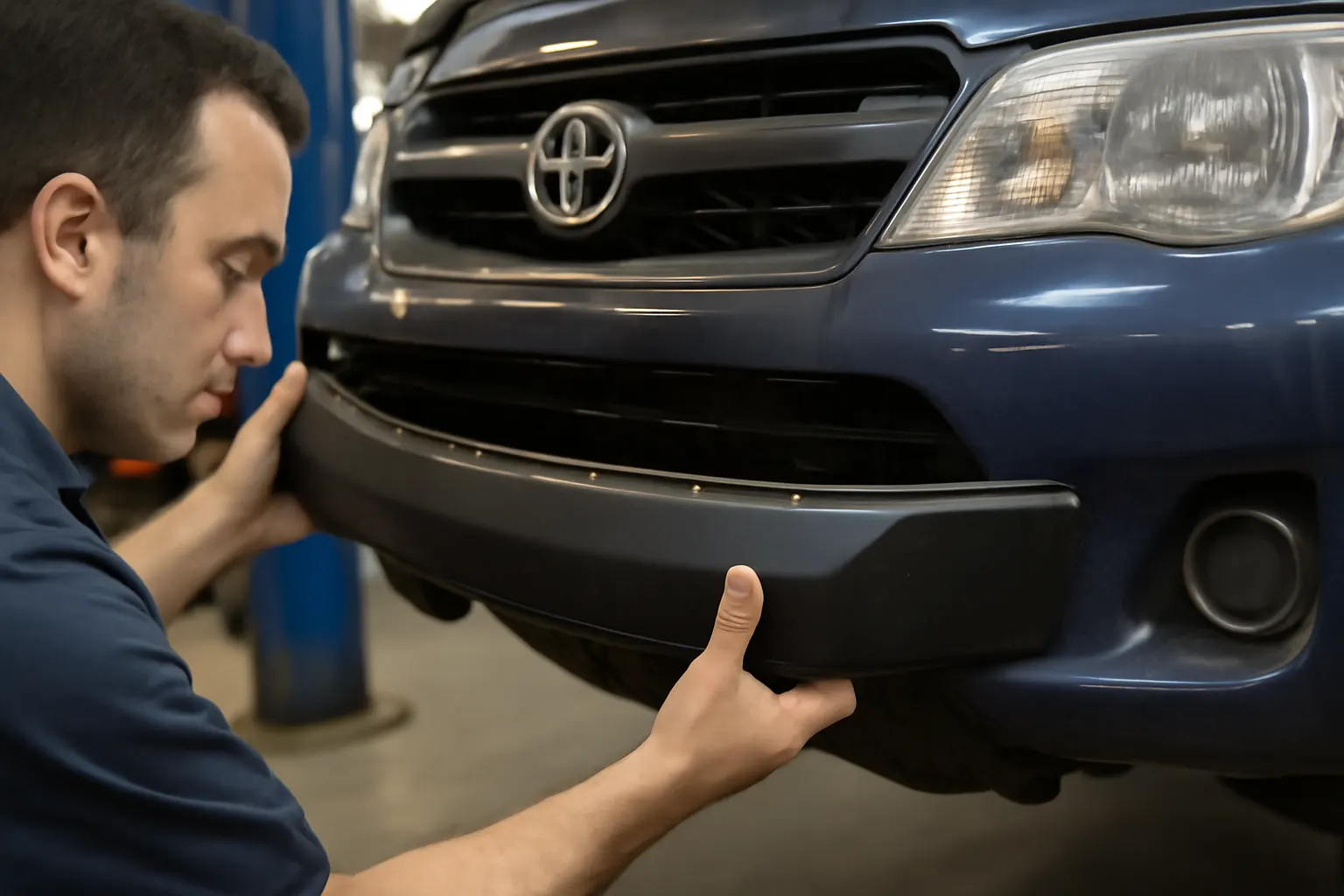
Toyota Front Valance Fitment Case Study
When it comes to Toyota front valance replacement, precision matters. Using an incorrect front valance—even one that seems nearly identical—can lead to immediate misalignment, water intrusion, and a cycle of repeat repairs that frustrates both DIYers and professionals. This detailed case study explores a real-world scenario where improper Toyota front valance fitment led to cascading issues, and provides step-by-step technical guidance to ensure you avoid these costly pitfalls.
Read More
Toyota Front Valance Oem Vs Aftermarket
OEM (Original Equipment Manufacturer) Toyota front valances are designed and manufactured to Toyota’s exacting specifications, ensuring a precise fit, consistent material quality, and full compatibility with factory mounting points and aerodynamic profiles. Aftermarket valances, produced by third-party manufacturers, can offer cost savings and customization options but vary widely in fitment precision, material properties, and engineering standards. OEM Advantages: Guaranteed fit, matched materials, consistent finish, reliable safety and aerodynamic performance.
View Guide