Advertisement
Exhaust leaks in Toyota trucks and SUVs can sneak up on even the most attentive owners, leading to increased noise, diminished fuel economy, and—most critically—premature failure of the exhaust cross pipe. This guide delivers a practical, technically grounded approach to identifying, confirming, and resolving exhaust leaks before they escalate into expensive repairs or safety issues. Whether you’re troubleshooting a suspected leak or proactively maintaining your Toyota’s exhaust system, this resource will walk you through every step, from initial symptoms to expert-level inspection and repair.
If you’re searching for comprehensive fitment, diagnostics, and sourcing information for Toyota exhaust cross pipes, refer to our Toyota Exhaust Cross Pipe: OEM Fitment, Diagnostics & Sourcing category page.
The Immediate Answer: How to Spot and Address Toyota Exhaust Leaks
The fastest way to diagnose an exhaust leak in your Toyota is to pay close attention to changes in sound, smell, and performance. Common signs include:
- Louder or hissing exhaust noise (especially on cold start)
- Noticeable exhaust smell inside or around the vehicle
- Decreased fuel efficiency
- Visible soot, black marks, or corrosion on exhaust components
- Unusual vibrations from under the floor or near the pedals
If you detect any of these symptoms, inspect the exhaust system—especially the cross pipe and its flanges—for signs of leakage. Early detection can prevent failure of the cross pipe and downstream emissions components.
The Hidden Problem: Why Exhaust Leaks Are So Often Missed
Many Toyota owners and even experienced technicians underestimate the impact of small or hidden exhaust leaks. Modern Toyota trucks and SUVs use robust stainless steel and coated exhaust components, but cross pipes and joints remain vulnerable to:
- Thermal cycling (hot/cold expansion and contraction)
- Road salt and moisture
- Physical impacts from off-road use
Small leaks often start as pinholes or hairline cracks at welds, flanges, or flex joints—areas that are hard to spot from a quick visual check. These leaks can worsen over time, accelerating corrosion and causing premature failure of the cross pipe and connected sections.
Expanding the Problem: The Technical and Safety Risks of Ignoring Exhaust Leaks
Ignoring exhaust leaks isn’t just a matter of noise or minor inconvenience. Unaddressed leaks can:
- Trigger oxygen sensor and emissions codes: Leaks upstream of O2 sensors can cause false readings, leading to check engine lights and failed emissions tests.
- Reduce fuel efficiency: According to the U.S. Department of Energy, exhaust leaks can disrupt the air/fuel ratio, causing the engine to run rich and use more fuel.
- Compromise vehicle safety: The National Highway Traffic Safety Administration notes that exhaust leaks can allow carbon monoxide to enter the cabin, posing a serious health risk.
- Accelerate rust and component failure: Moisture ingress at leak points can rapidly corrode pipes, clamps, and even nearby frame sections.
In Toyota trucks and SUVs, the cross pipe is often located in a vulnerable spot—low to the ground, exposed to debris, and sometimes shielded only by thin heat shields or underbody panels. A minor leak here can quickly become a major structural problem.
Understanding the Toyota Exhaust Cross Pipe’s Role and Failure Points
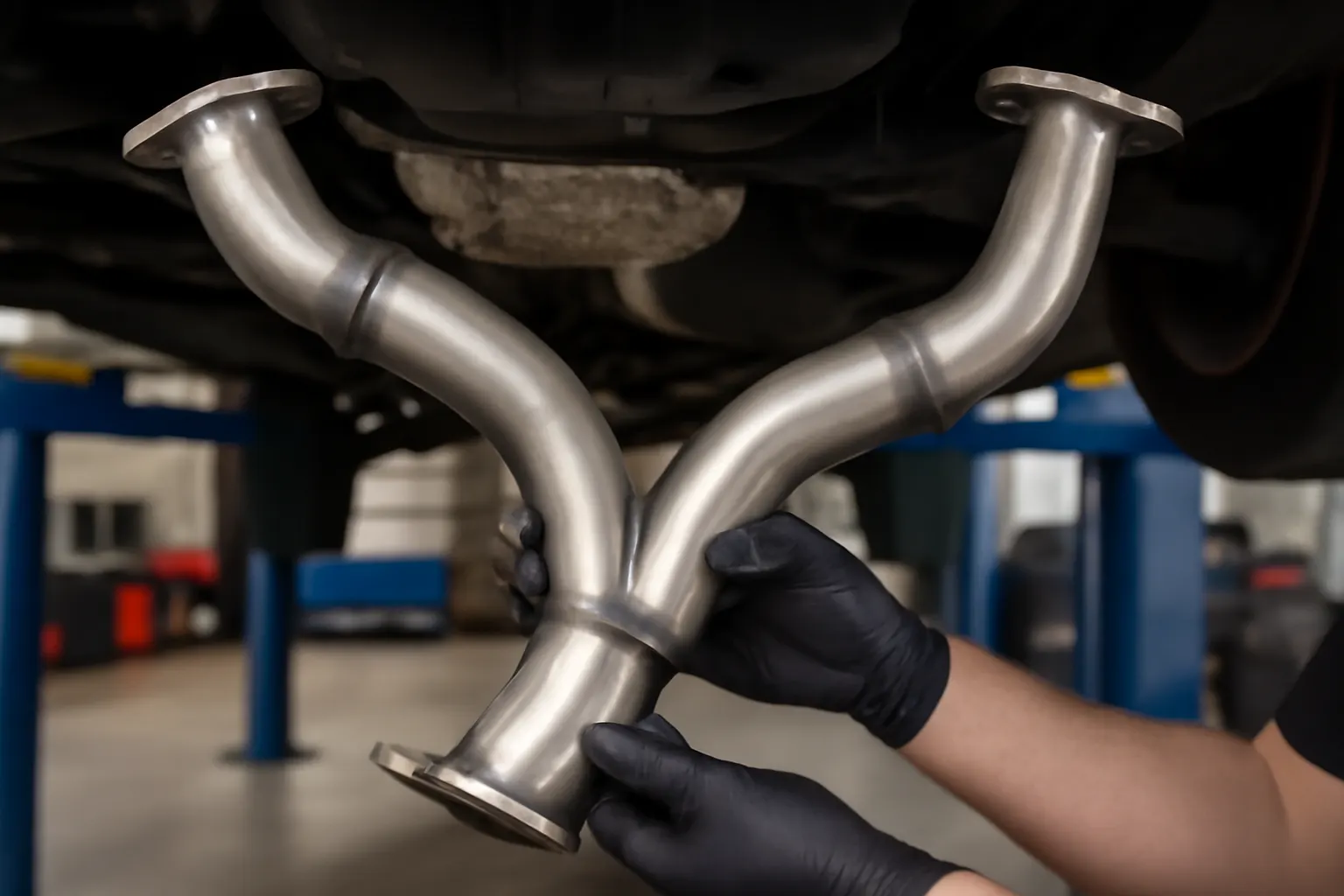
The exhaust cross pipe (sometimes called the crossover pipe or Y-pipe) is a critical junction in Toyota’s exhaust architecture. It connects the two banks of the exhaust manifold (on V6/V8 engines) or links the manifold to the catalytic converter (on inline engines), balancing exhaust pulses and optimizing flow.
Common failure points in Toyota cross pipes include:
- Flange connections: Gaskets and hardware can degrade, especially if exposed to salt or mud.
- Weld seams: Stress from heat cycling can cause cracks.
- Pipe bends and low spots: These collect moisture and are prone to rust-through.
- Flex joints: Designed to absorb engine movement, but the inner mesh can rupture.
Understanding these weak points is key to diagnosing leaks before they result in catastrophic failure or expensive repairs.
Advertisement
Step-by-Step Toyota Exhaust Leak Diagnosis: Checklist
Before you start, ensure your Toyota is parked on a level surface, engine off and cool, and safely supported if you need to get underneath.
Visual and Physical Checks
- Inspect for Soot or Black Marks: Look around flanges, welds, and bends for signs of escaping exhaust gases.
- Check for Rust and Corrosion: Pay close attention to areas close to road spray—especially the cross pipe.
- Feel for Air Leaks: With the engine running (in a well-ventilated area), carefully feel around joints for puffs of escaping air (use gloves and caution—pipes may be hot).
- Listen for Hissing or Ticking: Use a mechanic’s stethoscope or a length of hose to isolate the sound.
- Look for Loose or Missing Hardware: Bolts, clamps, and hangers should be tight and free of rust.
Advanced Diagnostic Techniques
- Smoke Test: Introduce smoke into the exhaust system and watch for leaks.
- Soapy Water Spray: Spray soapy water on suspect joints; bubbles indicate leaks.
- OBD-II Scan: Check for lean/rich codes or O2 sensor errors that may indicate a leak upstream.
Toyota Exhaust Leak Diagnosis Checklist
| Step | What to Check For | Tools Needed |
|---|---|---|
| Visual Inspection | Soot, rust, black marks, cracks, hardware | Flashlight, gloves |
| Physical Inspection | Air puffs, loose flanges, flex joint tears | Gloves, safety glasses |
| Sound Test | Hissing, ticking, pulsing noises | Stethoscope/hose |
| Soapy Water Test | Bubbles at joints/flanges | Spray bottle, soap |
| Smoke Test | Visible smoke escaping from leak | Smoke machine |
| OBD-II Diagnostic | Codes: P0171, P0174, O2 sensor issues | Scan tool |
Pinpointing Cross Pipe Leaks: Toyota-Specific Tips
Toyota exhaust cross pipes are often tucked up tight against the underbody, making them difficult to access. Here’s how to target your inspection:
- Pay attention to the midsection: On 4Runner, Tacoma, Tundra, and Land Cruiser models, the cross pipe runs near the transmission and transfer case. Use a mirror to inspect the top side of the pipe.
- Check flange gaskets: Toyota uses metal or composite gaskets that can degrade or crack, especially after off-road use or repeated removal.
- Inspect after impacts: If you’ve recently bottomed out or driven off-road, check for dents or flattened sections.
- Look for aftermarket modifications: Previous repairs, welds, or non-OEM cross pipes can introduce new leak points.
If you discover a leak, note its location and severity—this will inform your repair or replacement strategy.
The Impact of Exhaust Leaks on Performance and Fuel Economy
A leaky exhaust system isn’t just loud—it can sap your Toyota’s power and efficiency. Here’s why:
- Disrupted O2 Sensor Readings: Upstream leaks allow extra air into the exhaust stream, causing the ECU to compensate with more fuel. This leads to poor mileage and sluggish throttle response.
- Reduced Backpressure: Exhaust leaks alter the system’s backpressure, which is tuned for optimal torque and horsepower. Too little backpressure can hurt low-end power.
- Catalytic Converter Stress: Leaks can cause unburned fuel to enter the converter, overheating and damaging this expensive component.
The U.S. Department of Energy emphasizes that even minor exhaust leaks can negatively affect fuel efficiency, especially in modern engines that rely on precise air/fuel ratios.
Preventing Premature Cross Pipe Failure: Maintenance and Inspection Schedule
Routine inspection is the best defense against exhaust leaks and cross pipe failure. Toyota recommends checking the exhaust system at every oil change, but for trucks and SUVs exposed to harsh conditions, more frequent checks are wise.
Preventive Maintenance Actions:
- Inspect after winter: Salt and moisture accelerate corrosion—check for rust and flaking metal.
- After off-road trips: Look for dents or crushed pipes.
- Listen for new noises: Any change in exhaust note warrants a closer look.
- Check hangers and mounts: Broken mounts allow pipes to flex excessively, leading to leaks.
Advertisement
For detailed installation and maintenance tips, see our Toyota Exhaust Cross Pipe Install Guide.
Choosing the Right Cross Pipe: OEM vs. Aftermarket Considerations
Not all cross pipes are created equal. When replacement is necessary, your options are:
- OEM (Original Equipment Manufacturer): These parts match Toyota’s original specifications for material, fit, and durability. They often use high-grade stainless steel and precise flange geometry.
- Aftermarket: While some aftermarket pipes offer performance or cost advantages, material quality and fitment can vary. Poorly fitting pipes are prone to leaks and premature failure.
Refer to our in-depth Toyota Cross Pipe Oem Vs Aftermarket guide for a breakdown of benefits and trade-offs.
Installation and Sealing Best Practices
When installing a new cross pipe or repairing a leak, attention to detail is crucial:
- Use new gaskets and hardware: Reusing old gaskets is a common source of persistent leaks.
- Torque bolts evenly: Uneven torque can warp flanges and create gaps.
- Apply anti-seize to bolts: This prevents galling and facilitates future removal.
- Check for alignment: Misaligned pipes stress welds and gaskets, leading to failure.
- Sealant caution: Only use exhaust-rated sealants where specified; never substitute for a proper gasket.
If you’re not confident in your ability to perform these steps, professional installation is recommended—especially given the tight clearances around Toyota cross pipes.
Material Technologies and Toyota Exhaust Longevity
Toyota uses advanced materials in their exhaust systems to maximize durability and performance. According to the U.S. Department of Energy’s Materials Technologies initiative, high-nickel stainless steels and aluminized coatings are standard in OEM cross pipes.
Key material features:
- Corrosion resistance: Stainless steel resists rust, but welds and flanges remain vulnerable.
- Thermal stability: High-quality materials withstand repeated heat cycles without cracking.
- Weight optimization: Lighter pipes improve efficiency and reduce stress on mounts.
When sourcing replacement parts, verify material specifications—cheaper pipes may use low-grade steel that corrodes quickly in real-world conditions.
When to Seek Professional Help
Some exhaust leaks are straightforward DIY fixes, but others require advanced tools or welding. Seek professional assistance if:
- The leak is at a welded seam or flex joint
- The cross pipe is severely corroded or crushed
- You lack access to a lift or safe jack stands
- You’re unsure about emissions compliance or sensor placement
Certified repair shops use pressure testing, smoke machines, and OEM service data to ensure a lasting, leak-free repair that meets safety and emissions standards.
Integrating Exhaust Leak Checks Into Your Toyota Maintenance Routine
To maximize the lifespan of your Toyota’s exhaust system—and avoid costly cross pipe failures—integrate these checks into your regular maintenance:
- Include exhaust inspection in your oil change routine
- Address any new noises or smells immediately
- After exposure to salt, mud, or water crossings, wash the underbody and reinspect
- Keep records of repairs and part numbers for future reference
A proactive approach ensures your Toyota remains safe, efficient, and ready for daily driving or off-road adventures.
AutoPartEx: Your Partner for Toyota Exhaust Diagnostics and Sourcing
AutoPartEx brings together technical expertise, verified fitment data, and a curated selection of OEM and high-quality aftermarket exhaust components. Our goal is to empower Toyota owners and technicians with the knowledge and parts needed for safe, reliable repairs.
Explore our Toyota Exhaust Cross Pipe: OEM Fitment, Diagnostics & Sourcing hub for detailed part numbers, installation resources, and expert buying advice. For system-level insights, see our Toyota Exhaust System Article.
Summary: Take Action Against Hidden Exhaust Leaks
Exhaust leaks in Toyota trucks and SUVs are more than a nuisance—they’re a threat to safety, efficiency, and component longevity. By following a systematic diagnostic approach, understanding the unique vulnerabilities of the Toyota cross pipe, and using quality parts and installation methods, you can prevent premature failures and costly repairs.
Don’t wait for a minor leak to become a major problem. Leverage the checklists and resources above, and trust AutoPartEx for the technical depth and sourcing support you need to keep your Toyota performing at its best.
References
Advertisement