Advertisement
Toyota trucks and SUVs are renowned for their reliability, yet owners in snow belt states often face a frustrating reality: rapid exhaust system corrosion. If you own a Toyota Tundra, Tacoma, 4Runner, or Sequoia in the Midwest or Northeast, you may have experienced your exhaust tail pipe or muffler rusting out long before the rest of the truck. Why does this happen, and what can you do to prevent or fix it? This comprehensive AutoPartEx guide delivers immediate answers, exposes the hidden technical and environmental causes, and provides actionable steps for diagnosing, sourcing, and upgrading your Toyota exhaust system for maximum durability.
For a broader look at Toyota exhaust fitment, OEM failures, and advanced replacement strategies, visit our Toyota Exhaust Tail Pipe: OEM Fitment, Failures & Advanced Replacement Guide.
Why Toyota Exhausts Rust So Quickly in Snow Belt States
The immediate answer: Toyota exhaust systems—especially tail pipes and mufflers—rust out quickly in snow belt states due to a combination of harsh winter road treatments (road salt and de-icing chemicals), frequent freeze-thaw cycles, condensation buildup, and the use of non-stainless or lower-grade stainless steel in OEM exhaust components. This accelerates corrosion, often leading to premature failure compared to trucks operated in drier, warmer climates.
The Rapid Corrosion Problem
Owners report that Toyota exhaust pipes, mufflers, and even catalytic converter flanges can develop significant rust perforation in as little as 2–5 years. This is especially true for vehicles regularly exposed to salted roads and short-trip driving, which leaves moisture trapped inside the exhaust system. The result is not just cosmetic damage—rust holes can cause increased noise, failed emissions tests, and even dangerous exhaust leaks.
The Hidden Problem: Material Choices and Environmental Exposure
While Toyota engineers design exhaust systems to meet global standards, real-world U.S. conditions—especially in the Rust Belt—pose unique challenges. Many OEM exhausts use aluminized steel or lower-grade stainless steel (such as 409), which are cost-effective but less resistant to chloride-induced corrosion from road salt. In contrast, higher-grade 304 or 316 stainless steel, commonly found in aftermarket performance systems, offers vastly superior corrosion resistance but at a higher price point.
How Salt and Chemicals Attack Your Exhaust
- Road Salt (Sodium Chloride): The primary de-icing agent used in northern states. Salt acts as an electrolyte, accelerating the electrochemical reactions that cause steel to rust.
- Calcium Magnesium Acetate (CMA) and Other Chemicals: Used as alternatives or supplements to salt, these can also be corrosive, especially when mixed with moisture and oxygen.
- Freeze-Thaw Cycles: Fluctuating temperatures cause water and salt to repeatedly expand and contract in seams and joints, promoting flaking and perforation.
Internal vs. External Corrosion
Most drivers focus on external rust, but internal corrosion is just as destructive. Short trips in cold weather prevent the exhaust system from reaching temperatures high enough to evaporate condensation. Water remains inside the muffler and pipes, mixing with combustion byproducts (including acidic compounds), which accelerates internal rust.
Deeper Technical Explanation: Exhaust System Materials and Corrosion Mechanisms
OEM Toyota Exhaust Materials
Toyota typically uses:
-
Aluminized Steel: Steel coated with an aluminum-silicon alloy for improved resistance to high temperatures and mild corrosion. Effective in dry climates, but the coating can be compromised by salt and impact damage.
-
409 Stainless Steel: Used for some mid-pipes and mufflers. Offers better resistance than mild steel but is still vulnerable to pitting and surface rust in aggressive environments.
-
Flanges, Hangers, and Welds: Often made of lower-grade steel or left uncoated, becoming weak points for rust initiation.
Corrosion Mechanisms in Snow Belt States
- Electrochemical Corrosion: Saltwater acts as an electrolyte, facilitating the flow of electrons between different metal parts and accelerating oxidation.
- Crevice Corrosion: Salt and moisture collect in seams, welds, and between overlapping metal surfaces, creating micro-environments where corrosion rates skyrocket.
- Galvanic Corrosion: Occurs when dissimilar metals (e.g., a stainless muffler welded to a carbon steel flange) are electrically connected in the presence of an electrolyte, causing the less noble metal to corrode faster.
Exhaust System Design Factors
- Drainage: Poorly designed mufflers or pipes can trap water, increasing internal rust.
- Heat Cycling: Frequent heating and cooling cause expansion and contraction, which can crack protective coatings and exacerbate rust at welds and joints.
- Underbody Shielding: Lack of splash shields leaves exhaust components exposed to direct salt spray.
Advertisement
Diagnosing Toyota Exhaust Corrosion: What to Look For
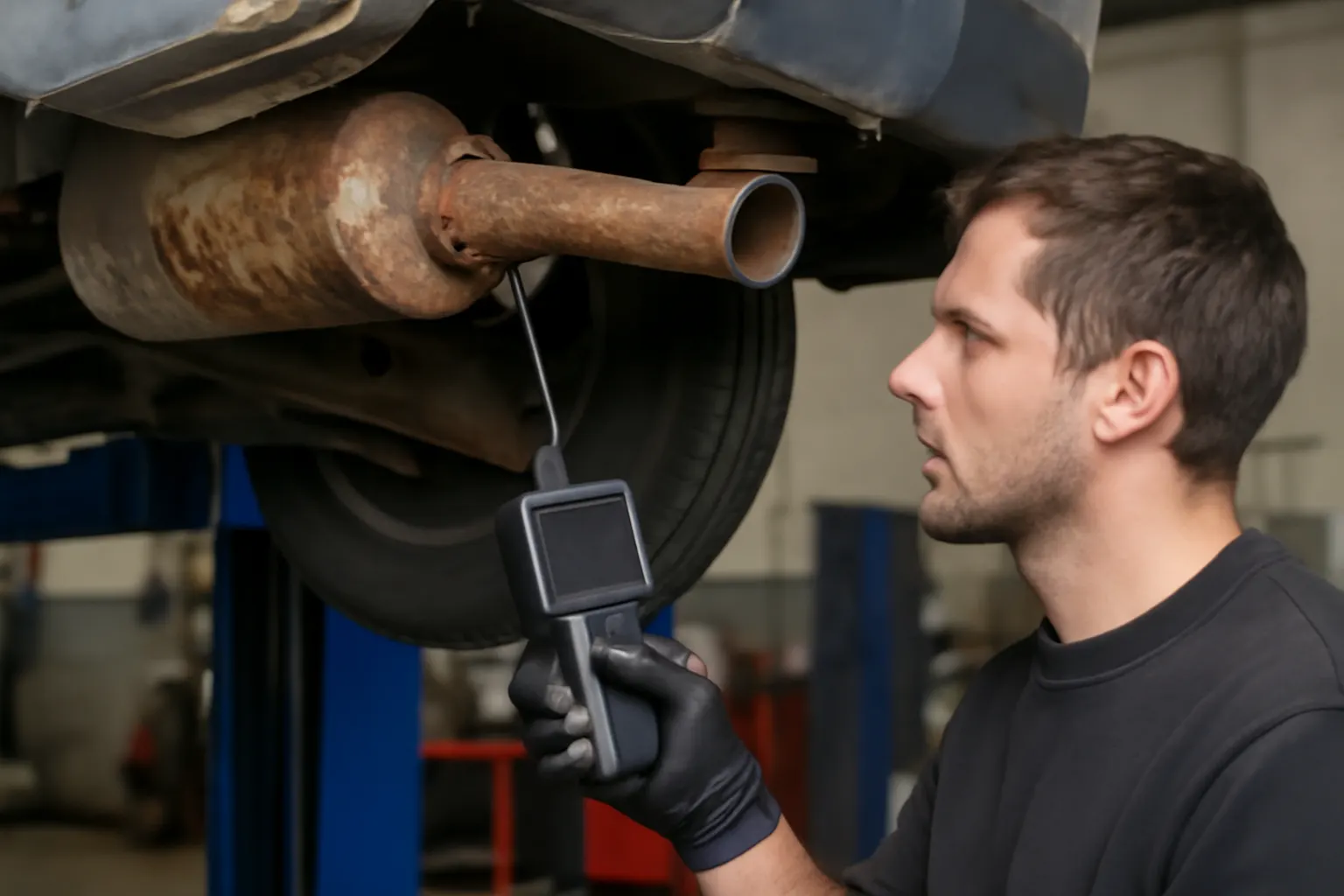
Early detection of exhaust system corrosion can save you from unexpected breakdowns and costly repairs. Here’s a systematic approach to diagnosing exhaust rust on your Toyota:
Visual Inspection Checklist
- Tail Pipe: Look for flaking rust, pinholes, or separation at the tip and bends.
- Muffler: Inspect for bubbling paint, surface rust, and water leaks at seams.
- Flanges and Welds: Check for heavy scaling, missing bolts, and orange or black streaks.
- Hangers and Mounts: Rusted or broken hangers can cause misalignment and rattling.
- Catalytic Converter Flanges: These are notorious rust points, especially where pipes join the converter.
Audible and Performance Clues
- Increased Exhaust Noise: A telltale sign of holes or cracks.
- Rattling or Clunking: May indicate a loose or broken hanger due to rust-through.
- Check Engine Light: In some cases, exhaust leaks can trigger O2 sensor codes.
Underbody Inspection Tips
- Use a flashlight and a lift or ramps for a thorough view.
- Tap suspect areas gently with a rubber mallet; a dull “thud” or crumbling indicates severe rust.
- Inspect after a car wash or rainy day for fresh water tracks indicating leaks.
The Impact of Exhaust Corrosion on Safety, Performance, and Compliance
Corroded exhaust systems are more than a nuisance—they can compromise vehicle safety, performance, and even legal compliance.
Safety Risks
- Exhaust Leaks: Allow carbon monoxide and other gases to enter the cabin, posing a serious health risk.
- Structural Failure: A rusted tail pipe or muffler can detach on the highway, endangering following vehicles.
- Hot Spots: Broken heat shields or exposed pipes can damage underbody components.
Performance and Efficiency
- Loss of Backpressure: Holes and leaks can reduce engine efficiency, leading to poor fuel economy and sluggish acceleration.
- Sensor Malfunction: Leaks upstream of O2 sensors can cause erratic readings, affecting fuel trims and emissions control.
Emissions and Inspection Failures
- Failed State Inspections: Many states require a fully intact exhaust for safety and emissions compliance.
- Increased Emissions: Leaks can allow unfiltered gases to escape before reaching the catalytic converter.
For more on the relationship between exhaust health and fuel efficiency, see Fuel Efficiency - US Department of Energy.
Why Toyota’s Exhaust Corrosion is Worse Than Some Competitors
Many Toyota owners wonder why their trucks seem to rust faster than domestic or other import brands. Several factors contribute:
Material Specification Differences
- Some competitors use higher-grade stainless steel (e.g., 304) for the entire exhaust, while Toyota often reserves premium materials for select models or regions.
- Welded-on exhaust tips and decorative covers can trap moisture, accelerating rust underneath.
Regional Assembly Variations
- U.S.-built Toyotas may have different suppliers or specifications than Japanese or European models, affecting corrosion resistance.
- Aftermarket and dealer-installed “bolt-on” parts may use less durable metals.
Owner Maintenance Habits
- Many Toyota owners keep their trucks for 10+ years, increasing cumulative exposure to harsh conditions.
- Trucks used for plowing or frequent short trips see more rapid exhaust deterioration.
Upgrading Materials: What Works and What Doesn’t
If you’re replacing a corroded Toyota exhaust, the choice of replacement material is critical for longevity.
Material Options
| Material | Corrosion Resistance | Typical Use | Cost |
|---|---|---|---|
| Mild Steel | Poor | Budget replacements | Low |
| Aluminized Steel | Fair | OEM/Aftermarket pipes | Moderate |
| 409 Stainless Steel | Good | OEM/Aftermarket mufflers | Moderate |
| 304 Stainless Steel | Excellent | Premium aftermarket | High |
| 316 Stainless Steel | Best | Marine/Custom | Very High |
Recommendations
- 409 Stainless: Acceptable for most drivers, but expect to replace every 5–8 years in snow belt states.
- 304 Stainless: The gold standard for rust resistance; will often outlast the vehicle if properly installed.
- Aluminized Steel: Only consider if you live outside the snow belt or plan to sell the vehicle soon.
For a deeper dive into advanced materials for automotive exhausts, review Materials Technologies - US Department of Energy.
Preventing Exhaust Corrosion: Maintenance and Protection
While you can’t change the climate, you can take proactive steps to extend your Toyota’s exhaust life.
Preventative Maintenance Checklist
- Regular Undercarriage Washes: Especially after snowstorms or road salting.
- Longer Drives: Periodically drive at highway speeds for 20+ minutes to fully heat and dry the exhaust.
- Inspect and Replace Hangers: Prevents sagging and water pooling.
- Apply High-Temperature Coatings: Ceramic or silicone-based sprays add a corrosion barrier.
- Seal Joints and Flanges: Use exhaust-safe anti-seize and clamps to minimize crevice corrosion.
Advertisement
Aftermarket Upgrades
- Stainless Steel Systems: Invest in a full 304 stainless system for ultimate durability.
- Bolt-On Tips: Avoid decorative tips that trap moisture unless they are vented and made of high-grade stainless.
- Heat Shields and Splash Guards: Install or repair underbody shields to deflect salt spray.
Sourcing the Right Replacement Exhaust for Your Toyota
When it’s time to replace a corroded exhaust, choosing the right part is crucial for fitment, performance, and longevity.
Sourcing Checklist
- Verify Fitment: Match year, model, wheelbase, and engine size. Check flange types and hanger locations.
- OEM vs. Aftermarket: OEM parts offer exact fit but may have the same material weaknesses. Aftermarket options can upgrade materials and design.
- Material Specifications: Confirm the grade of stainless or aluminized steel. Don’t rely on vague “stainless” marketing—ask for 304 or better.
- Warranty: Look for manufacturers offering 5+ year corrosion warranties.
- Bolt-On vs. Weld-On: Bolt-on parts are easier for DIYers but may be more prone to leaks if not installed carefully.
For help with hard-to-find OEM Toyota exhaust parts, see our Hard To Find Toyota Oem editorial.
Installation Considerations: DIY vs. Professional Replacement
Replacing a Toyota exhaust system or tail pipe can be a DIY project, but corrosion complicates the job.
DIY Installation Tips
- Soak All Fasteners: Use penetrating oil for several days beforehand.
- Prepare for Broken Bolts: Have extraction tools and replacement hardware ready.
- Use Stainless Clamps: When possible, avoid reusing old rusted clamps or hangers.
- Seal Joints: Use high-temp anti-seize and exhaust sealant on slip joints.
- Check for Leaks: After installation, run the engine and check all joints for exhaust leaks using soapy water.
When to Choose Professional Installation
- Severely Rusted Flanges: May require torch cutting and welding.
- Custom Bending: For upgraded stainless systems, professional pipe bending ensures perfect fitment.
- Emissions Components: If replacing or reinstalling catalytic converters, professional shops ensure compliance with local laws.
For more step-by-step installation advice, see our Toyota Tail Pipe Installation guide.
Advertisement
Advanced Solutions: Coatings, Wraps, and Custom Fabrication
If you’re seeking maximum longevity, consider advanced anti-corrosion strategies beyond just material upgrades.
Coatings
- Ceramic Coatings: Professionally applied, these provide a hard, heat-resistant barrier against salt and moisture.
- Zinc or Aluminum Sprays: Offer sacrificial protection, but may need periodic reapplication.
Exhaust Wraps
- Thermal Wraps: Retain heat and can reduce underbody temperatures, but if installed incorrectly, may trap moisture and worsen corrosion. Only use on stainless systems and in dry climates.
Custom Fabrication
- Mandrel-Bent 304 or 316 Stainless: Custom shops can build exhausts to your exact specs, eliminating weak points and maximizing durability.
- V-Band Clamps: Replace traditional flanges with V-band connections for better sealing and easier future maintenance.
When to Replace vs. Repair a Rusted Toyota Exhaust
Not all rusted exhausts need full replacement. Here’s how to decide:
Repairable Situations
- Small Holes or Pinholes: Can be patched with exhaust repair kits or welded if the surrounding metal is sound.
- Surface Rust: Wire brush and high-temp paint can slow further corrosion.
Replacement Required
- Large Perforations: Holes larger than a quarter, especially in load-bearing areas, require replacement.
- Flange or Hanger Failure: If attachment points are gone, the system can’t be safely repaired.
- Multiple Sections Affected: If rust is widespread, replacing the entire system is more cost-effective long-term.
The AutoPartEx Approach: Technical Expertise for Lasting Solutions
At AutoPartEx, we understand the unique challenges Toyota owners face in rust-prone regions. Our technical team rigorously tests aftermarket and OEM exhaust solutions for fitment, material quality, and long-term durability. We source direct-fit stainless steel upgrades and provide detailed installation guides, ensuring you get the right part the first time.
- Expert Sourcing: We vet suppliers for true 304/316 stainless—no shortcuts.
- Fitment Guarantee: Our database matches your Toyota’s VIN, trim, and emissions package for perfect fit.
- Technical Support: Our editorial and tech team provides step-by-step guidance, from diagnosis to installation.
Explore our full Toyota Exhaust Tail Pipe category for advanced solutions and in-depth guides.
Conclusion: Protecting Your Toyota’s Exhaust Investment
Exhaust corrosion is a persistent, costly issue for Toyota owners in snow belt states, driven by a combination of material choices, environmental exposure, and harsh winter maintenance practices. By understanding the root causes and selecting the right materials and maintenance strategies, you can dramatically extend the life of your Toyota’s exhaust system. Whether you’re patching a rust hole, upgrading to stainless steel, or investing in professional coatings, knowledge and preparation are your best defense.
For further reading on Toyota exhaust fitment and advanced replacement strategies, check out our Toyota Exhaust Fitment editorial.
References
Advertisement