Saab Turbocharger Replacement: Pitfalls & Expert Tips
Turbocharged Saabs are legendary for their blend of Scandinavian engineering and exhilarating performance. If your Saab’s turbocharger is failing or you’re considering an upgrade, you’re facing one of the most technically demanding and impactful maintenance jobs on these vehicles. This comprehensive guide delivers immediate answers, exposes the most common pitfalls, and arms you with expert technical advice and step-by-step guidance for a successful Saab turbocharger replacement.
Whether you drive a classic 900 Turbo, a 9-3 Aero, or a 9-5 HOT, the right approach to turbocharger replacement protects your investment, restores performance, and ensures safety. If you’re looking for fitment guidance, OEM sourcing, or technical support, Saab Auto Parts: Heritage, Technical Fitment & Sourcing | AutoPartEx is your starting point for trusted parts and expert-backed resources.
Immediate Answers: What Every Saab Owner Should Know Before Turbo Replacement
Turbocharger failure in Saabs typically presents as power loss, excessive smoke, whistling noises, and oil consumption. Replacement is not just a bolt-on job—Saab’s engine bay packaging, unique turbo plumbing, and integrated electronics require precise fitment and attention to detail. The most common pitfalls are:
- Fitting incorrect or low-quality turbochargers, leading to early failure or engine damage.
- Overlooking supporting components: oil feed lines, return hoses, gaskets, and intercooler cleanliness.
- Neglecting the software or ECU updates required for proper boost control.
- Missing critical diagnostic steps that could pinpoint related issues, such as PCV system faults or clogged cat converters.
The right replacement turbo—matched to your Saab’s engine code and build date—restores performance, fuel efficiency, and reliability. Cutting corners can compromise safety, void technical standards, and reduce the lifespan of your powertrain (NHTSA Vehicle Safety and Equipment).
The Hidden Problem: Why Turbo Replacement on a Saab Is Not Like Other Cars
Saab turbo systems are distinct from typical mass-market turbocharged vehicles. Their integrated design philosophy means that many components—oil lines, coolant hoses, and even engine management systems—are specifically tuned for turbo operation. This creates unique challenges:
- Tight packaging: Many Saabs route turbochargers low and close to the firewall, making access difficult and increasing the risk of damaging adjacent wiring or hoses during removal.
- Proprietary hardware: Turbo mounting brackets, banjo bolts, and exhaust flanges are often Saab-specific.
- Heat management: Saab turbos run hot, and heat shields or insulation are critical for preventing heat soak and protecting sensitive engine bay components.
Missing these details can lead to installation errors, leaks, or even catastrophic turbo failure shortly after replacement. Unlike generic turbo swaps, a Saab turbo replacement demands detailed technical knowledge and careful preparation.
Understanding the Saab Turbocharger System: Technical Deep Dive
To replace or upgrade a Saab turbocharger successfully, you must understand the system’s architecture:
Key Components
- Turbocharger unit: Typically a Garrett or Mitsubishi unit, sized for engine displacement and boost targets.
- Oil feed and return lines: Deliver and drain oil for turbo bearing lubrication; any blockage or restriction leads to rapid turbo wear.
- Coolant lines (on water-cooled turbos): Prevent overheating of the turbo bearing housing.
- Boost control solenoid (APC valve): Regulates turbo pressure, critical for engine safety and performance.
- Intercooler and charge piping: Reduce intake air temperature, ensuring optimal combustion and power.
Engine Management
Saabs employ sophisticated Trionic (or, in later models, Trionic 8) engine management, which integrates turbo control with ignition and fueling. Any change to turbo hardware may require recalibration or software updates to maintain drivability and prevent engine knock.
Materials and Durability
Turbocharger housings and rotors are subject to extreme heat and pressure. Modern turbo materials—such as high-nickel alloys and advanced bearings—are designed for longevity and efficiency (DOE Materials Technologies). Selecting a replacement turbo that meets or exceeds OEM material specifications is essential for long-term reliability.
Diagnosing Turbo Failure in Your Saab: Don’t Skip These Steps
Before reaching for tools, confirm that your turbocharger is truly at fault. Many symptoms of turbo failure overlap with other engine issues. Use this diagnostic checklist:
Saab Turbo Failure Diagnostic Checklist
- Power Loss: Is the vehicle sluggish under acceleration? Does it struggle to reach target boost?
- Excessive Smoke: Blue smoke suggests oil is leaking past turbo seals; white smoke could indicate coolant leaks.
- Whining or Siren Noise: High-pitched sounds during spool-up often point to worn turbo bearings.
- Oil Consumption: Is the engine consuming more oil than normal, with no visible external leaks?
- Check Engine Light: Retrieve codes with a Saab-compatible scanner (Saab Engine Diagnostics: Common Codes and Fixes).
- Boost Leaks: Inspect all intercooler and charge pipes for splits or loose clamps.
- PCV System Inspection: A clogged or malfunctioning PCV system can mimic turbo seal failure.
- Exhaust Restrictions: Check for blocked catalytic converters, which can increase backpressure and damage the turbo.
Only after a thorough diagnosis should you commit to turbo replacement. Overlooking related faults can lead to repeat failures or misdiagnosis.
Common Pitfalls: What Goes Wrong in Saab Turbo Replacements
Even experienced technicians can fall into these traps when replacing a Saab turbocharger:
- Using generic or “universal” turbos: Saab-specific units have unique wastegate actuators, mounting flanges, and compressor sizing. Incorrect fitment leads to poor boost control and engine management issues.
- Reusing old oil lines: Sludge or carbon buildup in oil feed lines is a leading cause of premature turbo failure. Always replace or thoroughly clean these lines.
- Improper priming: Failing to prime the new turbo with oil before first startup can destroy bearings within seconds.
- Skipping heat shields: Omission of heat shields or insulation exposes wiring and hoses to damaging temperatures.
- Neglecting software updates: Upgrading to a higher-flow turbo without corresponding ECU adjustments can result in lean running or overboost.
- Ignoring torque specs: Over- or under-tightening turbo fasteners can cause leaks, warping, or catastrophic detachment.
These pitfalls are preventable with careful planning, proper parts sourcing, and adherence to Saab technical standards (SAE Standards).
Selecting the Right Replacement Turbocharger for Your Saab
Turbochargers are not one-size-fits-all. Your Saab’s model year, engine code, and even market destination influence the correct turbo selection.
OEM vs. Aftermarket
- OEM (Original Equipment Manufacturer): Guarantees fitment, reliability, and compatibility with factory engine management. Best for daily drivers and restoration projects.
- Aftermarket/Performance: Offers increased flow and boost capability but may require custom tuning, upgraded fuel systems, and supporting modifications.
Key Fitment Factors
- Engine code and model year: Match turbo part numbers to your exact Saab variant.
- Mounting hardware: Ensure the new turbo includes Saab-specific brackets, gaskets, and fasteners.
- Compressor and turbine sizing: Avoid “bigger is better” thinking—oversized turbos increase lag and may not suit street driving.
- Wastegate actuator calibration: Saab uses unique boost control logic; mismatched actuators can trigger limp mode or boost cut.
For detailed fitment help, consult Saab Parts Categories or your trusted Saab parts specialist.
Sourcing Quality Saab Turbochargers: Avoiding Counterfeits and Low-Grade Units
Saab’s discontinued status has fueled a market for counterfeit and subpar turbochargers. Protect your investment by following these sourcing best practices:
- Buy from reputable suppliers: Trusted specialists like AutoPartEx vet their inventory for quality and compatibility.
- Request documentation: Genuine turbos include manufacturer part numbers, batch codes, and warranty paperwork.
- Inspect packaging: OEM units arrive in branded boxes with tamper-evident seals.
- Beware of bargains: If a new turbo is drastically cheaper than others, it’s likely a knockoff or rebuilt with inferior parts.
- Check recall databases: Occasional recalls affect even reputable brands (NHTSA Recalls). Verify your part number is not affected.
For guidance on identifying authentic Saab parts, see How to Identify Genuine Saab Parts in 2024.
Preparing for Installation: Tools, Parts, and Workspace
A successful Saab turbo replacement starts with meticulous preparation. Gather all necessary tools and replacement parts before beginning:
Essential Tools
- Socket set (metric and SAE)
- Torque wrench (calibrated for small fasteners)
- Line wrenches for oil/coolant fittings
- Pry bars and picks (for stubborn hoses)
- Gasket scraper
- Oil catch pan
- Saab-specific service manual
Replacement Parts Checklist
- New turbocharger (matched to engine code)
- Oil feed and return lines (or cleaning kit)
- Coolant lines (if equipped)
- Complete gasket set (turbo, exhaust manifold, downpipe)
- New banjo bolts and washers
- Replacement heat shields or insulation
- High-temperature anti-seize compound
- Fresh engine oil and filter
- Replacement air filter (if dirty)
A clean, well-lit workspace with adequate clearance is essential. Avoid rushing—Saab turbo swaps often require patience and careful maneuvering.
Step-by-Step Saab Turbocharger Replacement Procedure
While specifics vary by model, the following outlines the general process for most Saab 900, 9-3, and 9-5 turbo models:
- Disconnect the battery. Prevent accidental shorts or ECU damage.
- Raise and secure the vehicle. Use jack stands and wheel chocks for stability.
- Remove intake and charge piping. Label hoses and clamps for reassembly.
- Drain engine oil and coolant. Capture fluids for safe disposal.
- Disconnect oil and coolant lines from the turbo. Use line wrenches to avoid rounding fittings.
- Remove exhaust downpipe bolts. Soak with penetrating oil if corroded.
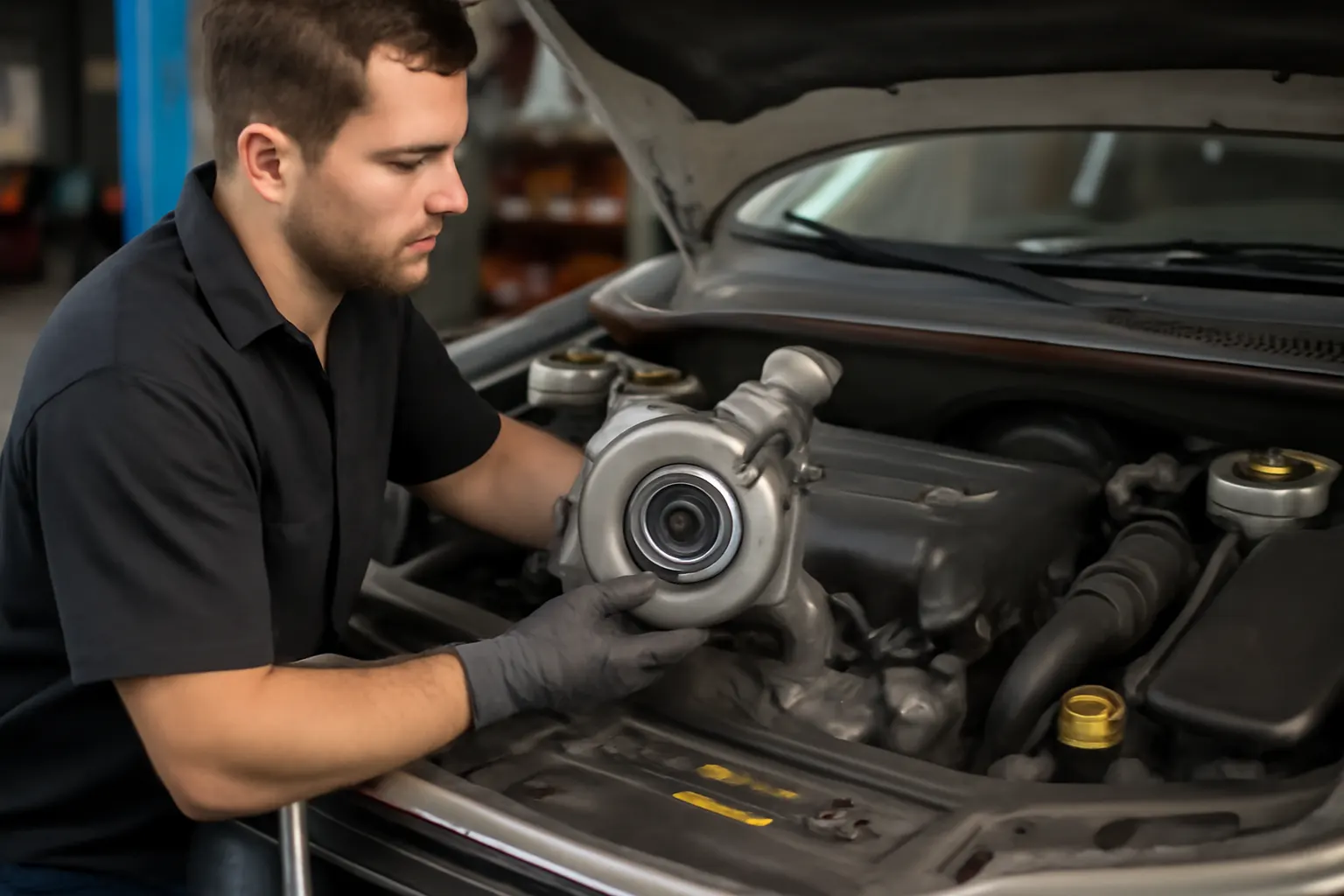
- Unbolt turbo from exhaust manifold and engine block. Support the turbo to prevent damage during removal.
- Remove the old turbocharger. Inspect for signs of failure (scoring, excessive play, oil residue).
- Clean all mating surfaces. Ensure no gasket material or debris remains.
- Install new gaskets and mount the replacement turbo. Tighten fasteners to Saab-specified torque values.
- Reconnect oil and coolant lines with new washers/banjo bolts.
- Prime the turbo with fresh oil. Pour oil directly into the oil inlet and rotate the center shaft by hand.
- Reinstall intake and charge piping.
- Refill engine oil and coolant.
- Double-check all connections. Look for loose clamps, missed bolts, or misplaced hoses.
- Reconnect the battery and start the engine. Allow to idle and check for leaks.
- Test drive and monitor boost levels. Use a scan tool or boost gauge to verify proper operation.
Follow all safety and equipment guidelines as outlined by NHTSA Vehicle Safety and Equipment.
Post-Installation: Break-In, Testing, and Common Issues
A new or rebuilt turbo requires careful break-in and monitoring:
- Idle for 5–10 minutes after first startup to ensure oil flow and check for leaks.
- Avoid full-throttle or high-boost operation for the first 100–200 miles.
- Monitor for abnormal noises, smoke, or check engine lights.
- Recheck oil and coolant levels after initial test drives.
- Inspect all turbo and intercooler connections for leaks or loose fittings.
If you encounter persistent smoke, boost irregularities, or fault codes, revisit the diagnostic checklist. Common post-install issues include:
- Oil leaks: Often caused by improper line installation or failed gaskets.
- Underboost/overboost: May indicate a vacuum leak, misadjusted wastegate, or software mismatch.
- Check engine light: Scan for codes related to boost control or air/fuel ratios.
Maintenance and Longevity: Keeping Your Saab Turbo Healthy
Proper maintenance is the key to turbo longevity and sustained Saab performance:
- Use high-quality, synthetic engine oil and change at intervals recommended in your Saab Maintenance Intervals & DIY Inspection Guide.
- Warm up the engine before driving hard; allow a cool-down period after spirited driving to prevent oil coking.
- Inspect air filters and intake piping regularly to prevent debris from damaging the compressor.
- Check for boost leaks at every oil change.
- Replace PCV and breather components as needed to prevent oil contamination.
- Monitor for early warning signs: subtle changes in boost, noise, or oil consumption can indicate emerging issues.
Routine checks and preventative maintenance will dramatically extend the life of your Saab’s turbo system and protect engine health.
Upgrading Saab Turbos: Performance Tips and Cautions
Performance upgrades are popular among Saab enthusiasts, but require careful planning:
- Match upgrades to your goals: Larger turbos increase top-end power but may sacrifice low-end response.
- Upgrade supporting systems: High-flow fuel injectors, stronger clutches, and larger intercoolers may be necessary.
- Tune engine management: Custom ECU tuning is essential for safe, reliable operation with upgraded turbos.
- Monitor exhaust gas temperatures (EGTs): Excessive EGTs can melt pistons or damage the new turbo.
- Stay within safe boost limits: Saab engines are robust, but excessive boost can lead to detonation or head gasket failure.
Consult with reputable Saab tuners and reference SAE and OEM guidelines to avoid engine damage.
AutoPartEx: Your Partner for Saab Turbocharger Success
When tackling a Saab turbocharger replacement, the right partner makes all the difference. AutoPartEx specializes in genuine and performance Saab parts, technical fitment support, and expert-backed resources. Our curated inventory, technical guides, and customer-first approach ensure your project is done right the first time.
- Technical fitment support: Get help matching turbo part numbers to your specific Saab.
- Verified OEM and performance options: Avoid counterfeits and low-grade units.
- Step-by-step guides and checklists: Benefit from our experience and community insights.
Explore our full range of Saab Auto Parts: Heritage, Technical Fitment & Sourcing | AutoPartEx and stay ahead with the latest maintenance and upgrade information.
Frequently Asked Questions: Saab Turbocharger Replacement
How do I know if my Saab turbo is failing?
Look for symptoms like power loss, excessive smoke, high-pitched noises, increased oil consumption, and check engine lights. Confirm with a detailed diagnostic process.
Can I use a turbo from a different Saab model?
Not always. Saab turbos vary by model, year, and engine code. Always verify part numbers and fitment before purchasing.
Do I need to update the ECU after turbo replacement?
If you’re replacing with an OEM-equivalent turbo, usually not. Upgrading to a larger or different-spec unit typically requires ECU recalibration.
Is it worth upgrading to a performance turbo?
It depends on your goals. Performance turbos offer more power but may require supporting upgrades and tuning. Consult a Saab specialist before proceeding.
References
- Vehicle Safety and Equipment – National Highway Traffic Safety Administration
- Fuel Efficiency – United States Department of Energy
- Materials Technologies – United States Department of Energy
By following this expert guide, you’ll avoid the most common pitfalls and ensure your Saab turbocharger replacement delivers the performance, efficiency, and reliability that made these cars iconic. For tailored support and the highest quality Saab parts, trust AutoPartEx—your technical resource for every stage of your Saab ownership journey.