Advertisement
When it comes to replacing your vehicle’s back glass shocks—also known as gas struts or lift supports—the choice between OEM (Original Equipment Manufacturer) and aftermarket parts can have a significant impact on your vehicle’s safety, reliability, and long-term performance. While aftermarket gas struts may seem attractive due to lower upfront costs, OEM struts are engineered to meet rigorous safety and performance standards, ensuring proper fit, function, and durability. This article examines why quality matters, the risks of cutting corners, and how to make the right choice for your vehicle’s back glass, liftgate, or hatch support system.
For the broadest selection of Back Glass Shock | OEM Gas Struts & Lift Supports, always ensure you’re sourcing from a trusted supplier committed to safety and fitment accuracy.
Why the Right Gas Strut Matters: Immediate Answer
The gas struts supporting your back glass, liftgate, or hatch are critical safety components designed to hold heavy panels open and prevent sudden, dangerous closures. OEM gas struts are engineered to the exact specifications of your vehicle, ensuring reliable performance and proper load handling. Aftermarket gas struts, while often more affordable, may not always provide the same level of fitment precision, force calibration, or long-term reliability. Choosing OEM means you’re prioritizing safety, ease of installation, and peace of mind—especially when dealing with heavy, high-torque panels like rear glass or liftgates.
The Hidden Problem: What’s at Stake with Poor-Quality Struts
Many vehicle owners underestimate the risks associated with subpar gas struts. When a gas strut fails or underperforms, it can result in:
- Sudden closure of the back glass or liftgate, posing injury risks to anyone loading or unloading cargo.
- Inconsistent support, causing panels to sag or slam shut unexpectedly.
- Accelerated wear on hinges, regulators, and mounting points due to improper force distribution.
- Potential for costly damage to glass, paint, or bodywork if the panel drops.
These issues are particularly common with generic aftermarket struts that may not match OEM force ratings or mounting geometries. According to the National Highway Traffic Safety Administration (NHTSA), poorly performing or incorrect replacement parts can compromise vehicle safety and are a leading source of equipment recalls and consumer complaints.[^1]
The OEM vs Aftermarket Divide: Deeper Technical Differences
Engineering and Safety Standards
OEM gas struts are manufactured to meet strict automotive engineering standards, such as those set by SAE International, and must pass rigorous testing for load capacity, cycle life, corrosion resistance, and temperature stability.[^2] They’re designed with your specific vehicle’s weight, geometry, and intended use in mind.
In contrast, many aftermarket struts are designed for broad compatibility and may not undergo the same level of scrutiny or testing. This can result in:
- Incorrect force output (too weak or too strong)
- Inadequate corrosion protection
- Shorter service life
- Poor fitment, leading to installation headaches or even safety hazards
Material Quality and Gas Charge
OEM struts typically use high-grade steel, precision seals, and nitrogen gas charges optimized for the application. Lower-cost aftermarket struts may use inferior materials or inconsistent gas charging, leading to premature failure or erratic operation.
How Gas Struts Work: The Physics Behind the Component
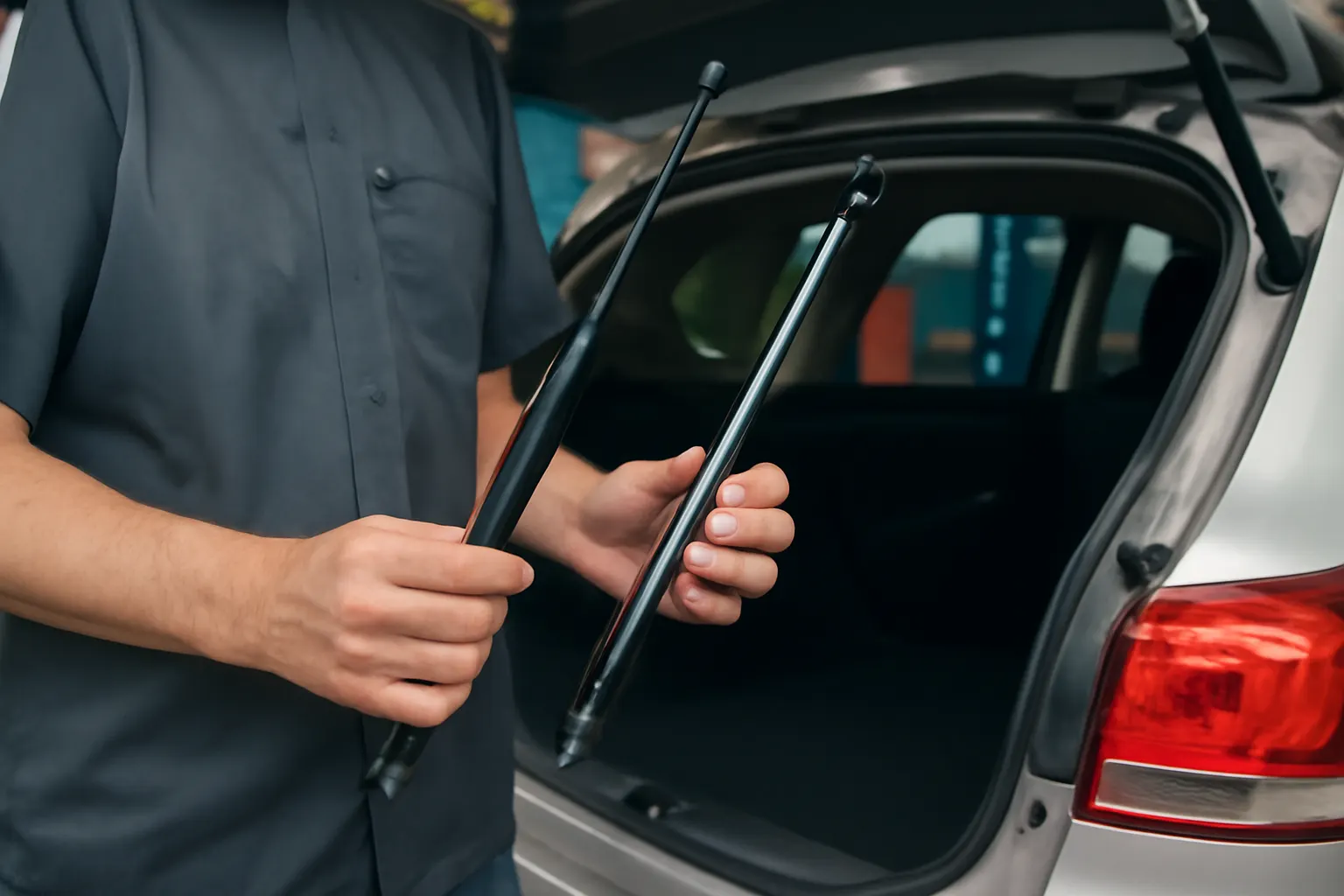
A gas strut is a sealed cylinder filled with pressurized nitrogen gas and a small amount of oil. When you open your back glass or liftgate, the strut’s internal pressure pushes out the piston rod, supporting the panel’s weight and allowing smooth, controlled movement. Key performance factors include:
- Force Rating (Newton or Pound-Force): Must match the panel’s weight and hinge geometry.
- Stroke Length: The strut must extend and compress to the correct lengths for full opening/closing.
- Damping: Oil inside the strut controls the speed of movement, preventing slamming or bouncing.
OEM struts are calibrated to these exact parameters, while aftermarket struts may offer only generic force ratings or imprecise fitment, increasing the risk of mismatch.
Identifying Quality: OEM vs Aftermarket Comparison Checklist
Use this checklist to evaluate your options when shopping for replacement gas struts:
Advertisement
| Criteria | OEM Gas Struts | Aftermarket Gas Struts |
|---|---|---|
| Fitment | Exact match for vehicle year/make/model | May require modification or adjustment |
| Force Rating | Calibrated to OEM specs | Often generic or “universal” rating |
| Material Quality | High-grade steel, corrosion-resistant coatings | Varies; may use lower-cost materials |
| Cycle Life | Tested for 30,000+ cycles | Often untested or lower cycle claims |
| Warranty | Typically 1-3 years, backed by automaker | Varies widely, sometimes limited |
| Safety Standards | Must comply with NHTSA/SAE regulations | Compliance not always clear |
| Installation | Direct bolt-on, no modifications needed | May require shims, brackets, or force |
| Price | Higher upfront cost | Lower cost, but potential hidden costs |
Safety Risks: What Happens When Gas Struts Fail?
When a gas strut loses pressure or fails mechanically, the consequences can be immediate and severe:
- Sudden Hatch/Glass Drop: The most common and dangerous outcome. A heavy liftgate or glass panel can slam shut unexpectedly, causing injury to hands, head, or body.
- Cargo Damage: If the panel falls while loading/unloading, items (including fragile cargo or groceries) can be crushed.
- Vehicle Damage: A dropped panel may shatter glass, dent bodywork, or damage the paint.
- Legal and Recall Risks: Using non-compliant parts may void insurance or cause your vehicle to be subject to recalls, as tracked by the NHTSA.[^3]
Properly selected OEM struts minimize these risks by ensuring the lift support system operates within the vehicle’s safety envelope.
Diagnosing Failing Gas Struts: Signs and Symptoms
Knowing when your back glass shocks need replacement is crucial for safety and convenience. Watch for these warning signs:
- The back glass or liftgate no longer stays open on its own
- A noticeable “creep” or slow closing when the panel is fully open
- Hissing, oil leaks, or visible corrosion on the strut body
- Uneven or jerky motion when opening/closing the panel
- Needing to prop the panel open with a stick or other object
If you observe any of these symptoms, refer to our Signs Your Back Glass Shocks Need Replacement guide for a comprehensive diagnostic checklist.
Installation Differences: Why Fitment and Force Matter
OEM Struts
OEM gas struts are designed for direct replacement—simply unbolt the old strut and bolt in the new one, with no need for adjustments or extra hardware. The mounting brackets, ball studs, and lengths are exact matches, ensuring a secure, rattle-free installation.
Aftermarket Struts
Aftermarket struts may advertise “universal fit,” but this often means:
- The mounting points may not line up perfectly, requiring shims or spacers
- The strut may be too long or too short, affecting opening angle
- The force rating may be off, resulting in a panel that’s hard to lift or slams shut
Improperly installed or mismatched struts can accelerate wear on hinges, regulators, or the back glass regulator, and may even cause mounting hardware to loosen or fail over time.
Maintenance and Longevity: Getting the Most from Your Gas Struts
OEM Struts: Designed for the Long Haul
With proper care, OEM gas struts commonly last 5-7 years or more, depending on climate and usage. To maximize lifespan:
- Keep mounting points clean and lubricated
- Avoid using the strut as a handle; always lift by the panel itself
- Inspect for corrosion or leaks annually
- Replace struts in pairs to maintain balanced support
Aftermarket Struts: Higher Risk of Early Failure
Lower-quality seals, inconsistent gas charging, and inferior materials can cause aftermarket struts to lose pressure or corrode quickly, especially in harsh environments (salt, moisture, extreme temperatures). This can mean more frequent replacements, offsetting any initial cost savings.
Real-World Impact: Recalls and Safety Data
The NHTSA regularly issues recalls for vehicles and equipment related to faulty or non-compliant gas struts and lift supports. Common issues include:
- Incorrect force output leading to unexpected panel closure
- Poor corrosion resistance causing strut failure
- Inadequate cycle testing resulting in premature wear
Using OEM struts helps ensure compliance with federal safety standards and reduces the likelihood of your vehicle being subject to an equipment recall. Always check the NHTSA recalls database before purchasing replacement gas struts, especially if considering aftermarket options.
Advertisement
Fuel Efficiency and Weight Considerations
While gas struts themselves are not major contributors to vehicle weight, using properly engineered OEM components helps maintain the vehicle’s original weight distribution and aerodynamics. According to the U.S. Department of Energy, every component’s weight and function can impact overall fuel efficiency, especially in modern vehicles designed for optimal performance and emissions compliance.[^4] Poorly fitting or excessively heavy aftermarket struts can offset these delicate balances, albeit subtly.
Sourcing the Right Gas Strut: Expert Buying Guide
When shopping for replacement back glass shocks, follow these expert tips:
1. Confirm Exact Fitment
Use your vehicle’s year, make, model, and trim to identify the correct OEM part number. Never rely solely on “universal fit” claims. Cross-reference with reputable online catalogs or consult your dealer.
2. Examine Force Ratings
Check the force output (in Newtons or pound-force) stamped on your original struts. Match this precisely—too strong, and the panel may be hard to close; too weak, and it may not stay up.
3. Inspect Mounting Hardware
Ensure the new struts include the correct ball studs, brackets, and end fittings. OEM struts will always match; aftermarket kits may require adaptation.
4. Verify Safety and Compliance
Look for struts that meet or exceed SAE and NHTSA standards. OEM struts are guaranteed compliant; aftermarket options should clearly state compliance and warranty terms.
5. Consider Total Cost of Ownership
Factor in the cost of premature failure, potential vehicle damage, and labor for frequent replacements when weighing cheaper aftermarket options.
For a complete selection of proven-fit gas struts, browse our Back Glass Shock | OEM Gas Struts & Lift Supports page.
Installation Checklist: Safe Replacement of Back Glass Shocks
Replacing gas struts is typically a straightforward DIY job, but safety and precision matter. Use this checklist for a safe, effective installation:
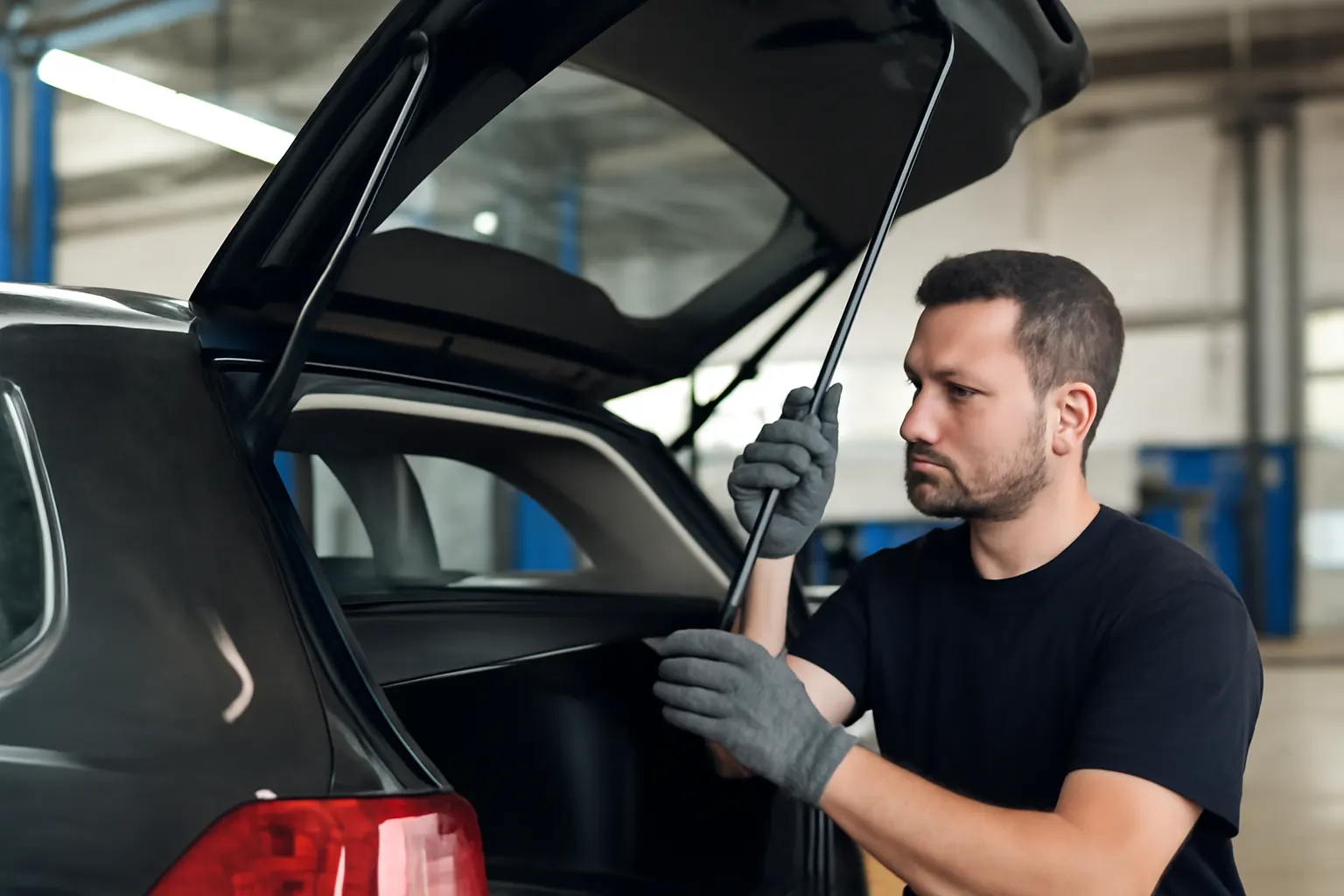
- Support the Panel: Use a prop rod or have an assistant hold the back glass/liftgate securely open.
- Remove Old Struts: Carefully unclip or unbolt the old struts, supporting the panel at all times.
- Inspect Mounts: Check ball studs and brackets for corrosion or wear; replace if needed.
- Install New Struts: Attach the new struts, ensuring the correct orientation and secure fitment.
- Test Operation: Open and close the panel several times to verify smooth, controlled movement.
- Check for Leaks or Noise: Listen for hissing or clicking; inspect for oil leaks or misalignment.
- Dispose of Old Struts Properly: Gas struts are pressurized and should not be incinerated or punctured.
Advertisement
For a detailed, step-by-step guide, see our DIY Back Glass Shock Replacement: Safety First resource.
When Aftermarket Makes Sense—And When It Doesn’t
There are situations where a high-quality aftermarket gas strut from a reputable brand can be a viable alternative—such as for older vehicles where OEM parts are discontinued, or for specialty applications. However, always:
- Choose aftermarket brands with a proven track record and clear fitment data
- Avoid “universal” struts for critical safety applications like back glass or liftgates
- Prioritize safety, warranty, and compliance over the lowest price
For most mainstream vehicles, OEM remains the gold standard for safety and reliability.
AutoPartEx: Your Partner in Safe, Reliable Gas Strut Replacement
At AutoPartEx, we understand that every component supporting your back glass, liftgate, or hatch is vital to your vehicle’s safety and usability. That’s why we stock only OEM and rigorously tested aftermarket gas struts, with detailed fitment data and expert support. Our team can help you identify the correct part for your vehicle, walk you through installation, and provide ongoing maintenance tips to keep your lift support system in peak condition.
Explore our extensive catalog of Back Glass Shock | OEM Gas Struts & Lift Supports, or learn more about Gas Strut Safety: What Every Vehicle Owner Should Know to stay informed and confident in your repair choices.
Conclusion: Prioritize Quality for Safety and Peace of Mind
The temptation to save a few dollars on aftermarket gas struts is understandable, but the risks of poor fitment, premature failure, and compromised safety far outweigh the short-term savings. OEM gas struts are engineered for your vehicle’s exact needs, delivering reliable performance, long service life, and compliance with federal safety standards. For your safety—and the safety of everyone who uses your vehicle—make quality your top priority when replacing back glass shocks or lift supports.
References
Advertisement