Advertisement
Oem Vs Aftermarket Bumper Guards
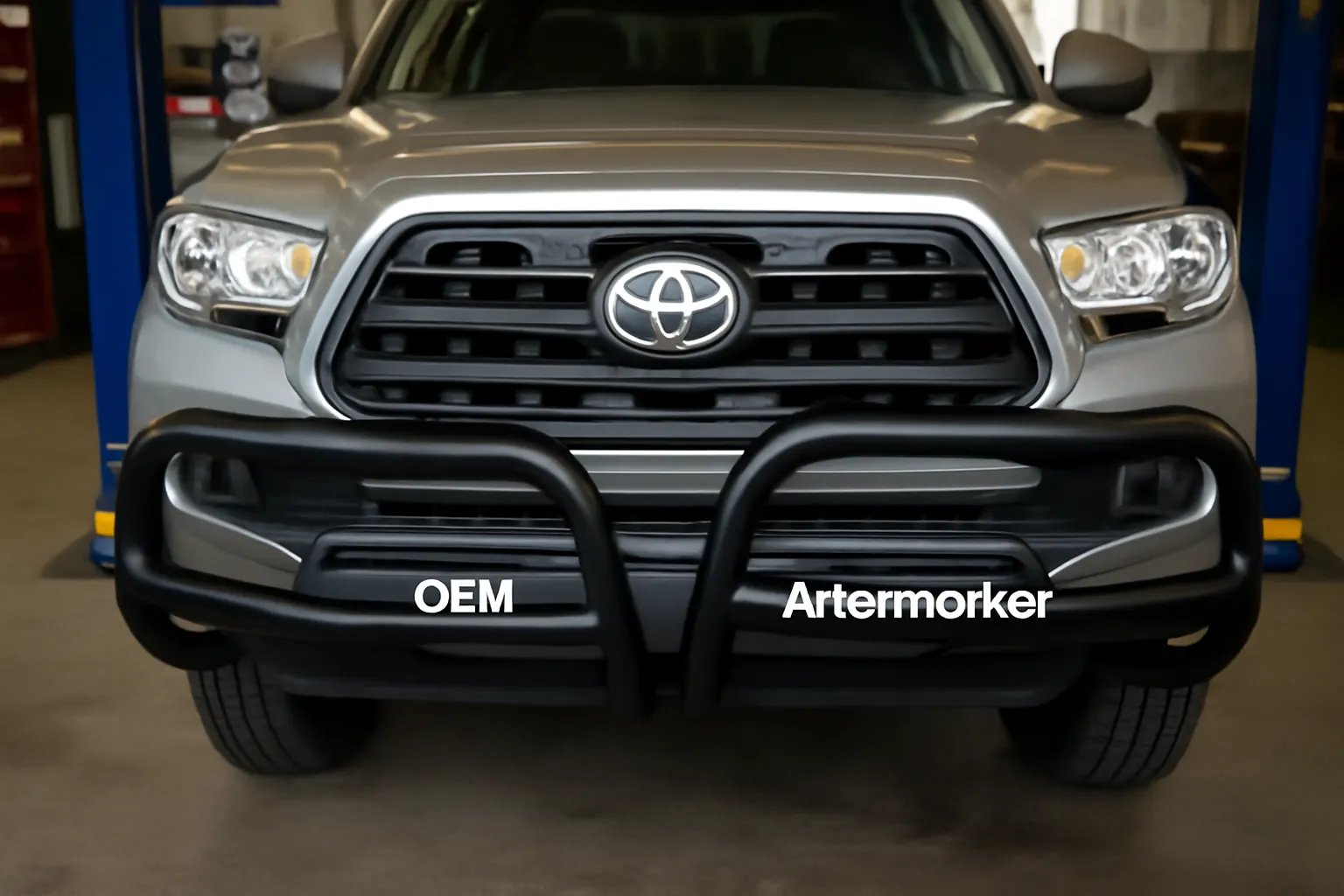
When selecting a bumper guard for your Toyota, the choice between OEM (Original Equipment Manufacturer) and aftermarket options is critical. For the majority of Toyota owners, OEM bumper guards offer guaranteed fitment, proven material quality, and reliable integration with safety systems. In contrast, aftermarket bumper guards provide broader style and price options, but often introduce risks in compatibility, material durability, and even vehicle safety system performance. Understanding these differences is essential for making an informed purchase and ensuring your vehicle’s protection and compliance.
For detailed compatibility charts, model-specific fitment, and installation guidance, refer to our Toyota Front Bumper Guard: OEM Fitment, Technical Guidance & Model Compatibility resource.
Why the OEM vs Aftermarket Debate Matters
At first glance, a bumper guard may seem like a simple accessory—a bolt-on shield to protect your Toyota’s front end from low-speed impacts, scratches, or parking mishaps. However, the choice between OEM and aftermarket products carries deeper implications. This decision affects not only your vehicle’s appearance but also its safety, long-term maintenance costs, and even the reliability of advanced driver-assistance systems (ADAS). Many owners discover too late that poorly engineered or ill-fitting aftermarket bumper guards can cause more harm than good, leading to improper sensor function, accelerated corrosion, or failed safety inspections.
The Hidden Pitfalls of Non-OEM Bumper Guards
The real issue with bumper guard selection lies beneath the surface. Aftermarket guards often promise universal fitment and lower prices, but this “one size fits all” approach can result in:
- Misaligned mounting points that stress the bumper or interfere with crash energy absorption.
- Material incompatibility leading to rust, paint damage, or premature wear.
- Obstructed or miscalibrated ADAS sensors (such as those used for collision avoidance, adaptive cruise control, or parking assistance).
- Unverified safety performance that may not meet Toyota’s engineering standards or federal safety requirements.
These risks are not always obvious during installation but can manifest during everyday driving or—critically—during a collision event.
OEM Bumper Guards: Engineering, Materials, and Fitment
Precision Engineering and Crash Compatibility
OEM bumper guards are designed by Toyota or its authorized suppliers and engineered specifically for each model. This ensures:
- Perfect alignment with factory mounting points for structural integrity.
- Retention of designed crumple zones and crash energy management.
- No interference with airbag sensors, ADAS modules, or engine cooling.
Toyota’s engineering teams test OEM guards under the same standards as the rest of the vehicle, ensuring that the addition of the guard does not compromise the car’s safety profile.
Materials: What Sets OEM Apart
OEM bumper guards typically use high-grade materials tailored to the specific vehicle platform:
- Corrosion-resistant steel, aluminum, or reinforced polymers matched to the vehicle’s body structure (DOE Materials Technologies).
- Factory-applied coatings for UV resistance and paint compatibility.
- Integration with Toyota’s paint codes for seamless appearance.
These material choices are validated for durability in real-world environments, from road salt in northern climates to intense sunlight in the south.
Seamless Sensor Integration
Modern Toyotas increasingly rely on front-facing sensors for safety and convenience features. OEM bumper guards are designed in conjunction with these systems, ensuring:
- No obstruction or reflection of radar, ultrasonic, or camera signals.
- Precise cutouts or mounting provisions for sensors.
- Pre-approval for use with ADAS calibration procedures.
This is especially critical for models equipped with Toyota Safety Sense or similar packages. For more on this topic, see our Adas Sensor Calibration Toyota guide.
Aftermarket Bumper Guards: Variety, Value, and Vulnerabilities
Appeal of Aftermarket Options
Aftermarket bumper guards come in a wide range of styles, finishes, and price points. For some owners, the ability to customize the look of their Toyota or save on initial costs is attractive. Brands may offer:
- Unique styling cues (blackout, chrome, custom shapes).
- Universal or semi-universal fitment for multiple Toyota models.
- Lower price points compared to OEM.
Advertisement
Material and Construction Risks
However, the diversity of aftermarket options means quality and material selection can vary dramatically:
- Unverified alloys or plastics may not match Toyota’s corrosion resistance.
- Welds and fasteners may lack the strength or finish of OEM parts.
- Paint or powder coatings may not withstand road debris or winter chemicals.
According to the U.S. Department of Energy, material selection and processing are key to vehicle body durability and performance (DOE Materials Technologies). Aftermarket parts may not undergo the same rigorous testing as OEM components.
Fitment and Installation Challenges
Aftermarket guards often claim “universal” fit, but this can lead to:
- Gaps between the guard and the bumper, allowing moisture and debris to accumulate.
- Stress on bumper brackets or mounting points not designed for the added load.
- Difficult or irreversible installation, including drilling or modification of factory parts.
This can compromise both the appearance and the function of the bumper guard, as well as the underlying bumper itself.
Safety, Recalls, and Regulatory Considerations
NHTSA Standards and Recalls
All bumper guards, whether OEM or aftermarket, must comply with federal safety standards. The National Highway Traffic Safety Administration (NHTSA) monitors vehicle equipment for compliance and issues recalls when defects are found (NHTSA Recalls). However, aftermarket manufacturers may not be subject to the same level of scrutiny as OEM suppliers.
- OEM guards are covered by Toyota’s recall process and safety notifications.
- Aftermarket guards depend on the manufacturer’s testing and willingness to issue recalls, which can vary widely.
Compatibility with Advanced Safety Systems
A bumper guard that interferes with ADAS sensors can disable critical safety features, such as automatic emergency braking or adaptive cruise control. The NHTSA provides equipment standards for aftermarket parts, but enforcement and testing are inconsistent (NHTSA Equipment).
Real-World Durability: OEM vs Aftermarket in Use
Laboratory Testing vs Real-World Abuse
OEM bumper guards are tested for:
- Salt spray resistance
- UV aging
- Impact absorption
- Paint adhesion and finish durability
Aftermarket guards may or may not be tested to similar standards. In practice, this means:
- OEM guards typically maintain their appearance and protection for the life of the vehicle.
- Aftermarket guards may rust, fade, or loosen after one or two winters, especially in harsher climates.
Owner Experiences and Case Studies
Feedback from Toyota owners highlights several patterns:
- OEM guards fit seamlessly and require minimal adjustment during installation.
- Aftermarket guards often require “tweaking” to align properly, with some owners reporting rattles or visible gaps.
- Long-term, OEM guards are less likely to develop corrosion at mounting points or interfere with bumper sensors.
Diagnostic Checklist: Evaluating Your Bumper Guard Needs
Before purchasing any bumper guard, use this checklist to clarify your needs and minimize risk:
| Diagnostic Step | OEM Guard | Aftermarket Guard |
|---|---|---|
| Confirm model/year fitment | Guaranteed | May require modification |
| Check ADAS sensor compatibility | Designed for sensors | May require manual calibration or sensor relocation |
| Assess material quality | Factory-certified | Varies (check for corrosion resistance) |
| Review warranty/recall coverage | Backed by Toyota | Depends on vendor |
| Inspect mounting method | Bolt-on, no drilling | May require drilling or bracket adaptation |
| Color/finish match | Matched to factory paint | May require repainting or touch-up |
| Long-term durability | Lab-tested | Highly variable |
Installation Guidance: Steps and Pitfalls
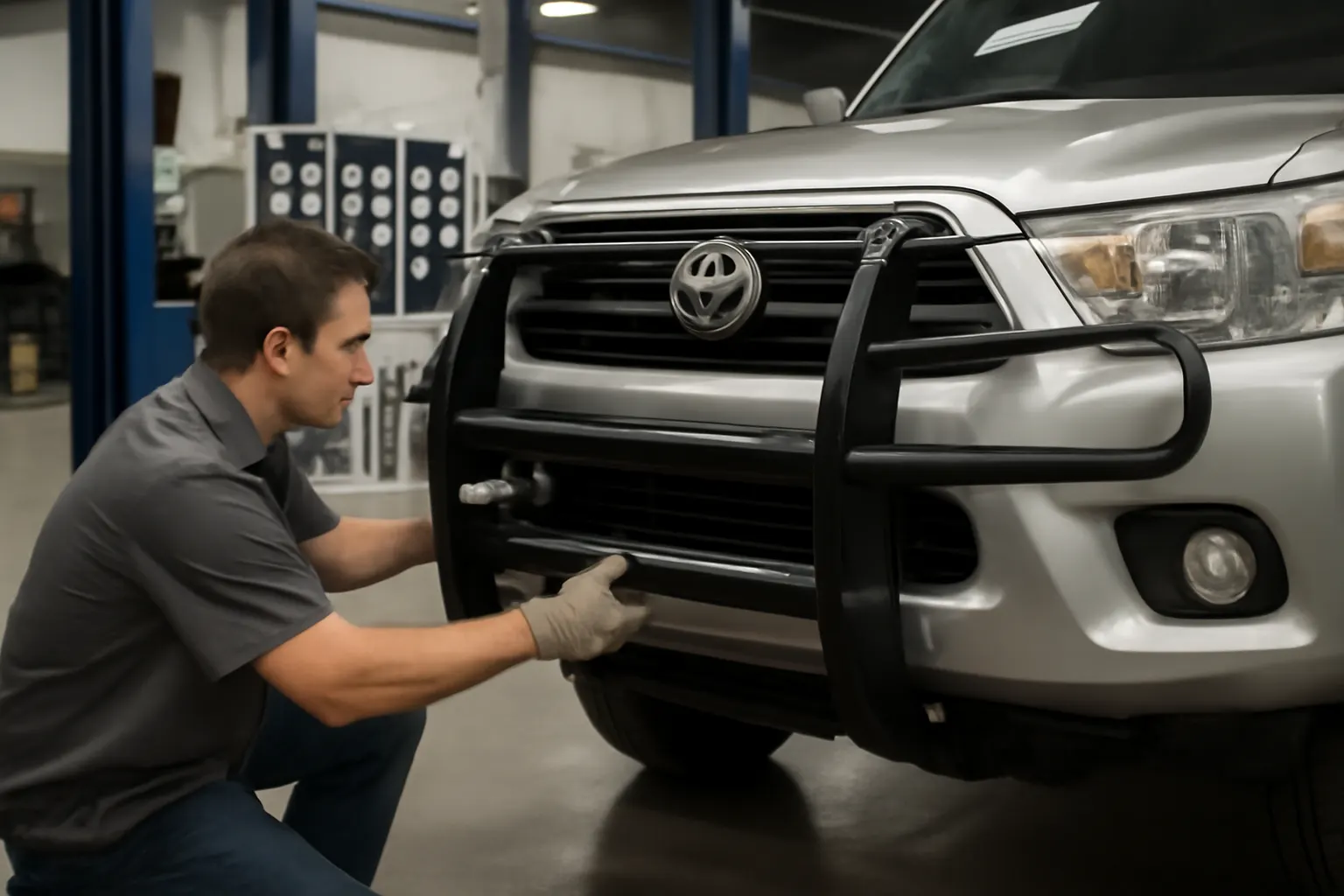
OEM Bumper Guard Installation
- Gather factory instructions—Toyota provides step-by-step installation guides.
- Use existing mounting points—no modification required.
- Check torque specs—tighten bolts per manufacturer recommendations.
- Verify sensor alignment—confirm that ADAS sensors are unobstructed.
- Inspect for gaps—ensure flush fitment to prevent debris accumulation.
Aftermarket Bumper Guard Installation
- Read all included instructions—these can vary by brand.
- Test-fit before drilling—universal kits may not align perfectly.
- Be prepared for additional hardware—some kits require extra brackets or spacers.
- Check for sensor interference—run ADAS calibration if sensors are affected.
- Seal exposed metal—paint or treat any drilled holes to prevent rust.
Advertisement
For a more detailed guide, see our Front Bumper Guard Installation article.
Fitment Risks: ADAS, Airbags, and Structural Integrity
ADAS Sensor Calibration
Aftermarket bumper guards may require recalibration of front sensors. If sensors are blocked or misaligned, the following systems may be affected:
- Adaptive Cruise Control
- Lane Departure Warning
- Automatic Emergency Braking
Recalibration can be complex and may require dealer-level diagnostic tools. For Toyota-specific procedures, refer to our Adas Sensor Calibration Toyota resource.
Airbag Deployment and Crash Performance
Bumper guards that alter the front-end structure can affect how the vehicle absorbs impact during a crash. OEM guards are crash-tested with the vehicle; aftermarket guards are not always tested for compatibility with airbag sensors or crumple zones.
Structural Mounting Points
Improper mounting can weaken the bumper assembly or transfer impact forces to unintended areas. Always verify that mounting points are reinforced and intended for accessory use.
Maintenance and Long-Term Ownership Considerations
Cleaning and Corrosion Prevention
- OEM guards: Use standard car wash techniques. Factory coatings resist corrosion and UV damage.
- Aftermarket guards: Inspect regularly for paint chips, rust, or loose hardware. Touch up as needed to maintain protection.
Periodic Inspections
- Check torque on mounting bolts every oil change.
- Inspect for signs of rust or abrasion at contact points.
- Verify that sensors remain unobstructed after winter driving or off-road use.
Replacement and Part Number Supersession
If a bumper guard is damaged, OEM parts are easily sourced by VIN and part number, with guaranteed supersession and compatibility. For more on this, see our Toyota Part Number Supersession editorial.
Sourcing Tips: How to Buy the Right Bumper Guard
For OEM Bumper Guards
- Order from authorized Toyota dealers or certified online retailers.
- Use your VIN to confirm exact fitment.
- Request documentation on ADAS compatibility if your vehicle is equipped.
For Aftermarket Bumper Guards
- Research the manufacturer’s reputation and warranty policy.
- Ask for detailed installation instructions and ADAS compatibility statements.
- Inspect product reviews for reports of fitment or durability issues.
- Avoid “universal” listings for late-model Toyotas with advanced sensors.
Cost Comparison: Upfront Price vs Long-Term Value
OEM Cost Factors
- Higher initial price due to engineering, testing, and warranty coverage.
- Lower risk of fitment issues or safety system interference.
- Potentially lower long-term cost due to reduced maintenance and fewer replacements.
Aftermarket Cost Factors
- Lower upfront price, especially for basic models or older vehicles.
- Higher risk of installation headaches, sensor problems, or premature wear.
- Possible added cost for professional installation or sensor recalibration.
When Aftermarket Makes Sense (and When It Doesn’t)
Aftermarket bumper guards are a reasonable choice when:
- The vehicle is out of warranty and used primarily in low-risk environments.
- Custom styling or off-road protection is more important than sensor integration.
- The owner is prepared to handle minor fitment or maintenance issues.
However, for late-model Toyotas equipped with advanced safety systems, or for owners who prioritize long-term durability and seamless integration, OEM remains the safer bet.
AutoPartEx Guidance: Your Partner in Toyota Bumper Guard Selection
At AutoPartEx, our technical team recommends prioritizing OEM bumper guards for any Toyota equipped with ADAS or under factory warranty. We provide comprehensive fitment charts, installation guides, and sourcing options to ensure your bumper guard delivers both protection and peace of mind. For those considering aftermarket options, we offer vetted recommendations and detailed compatibility notes to help you avoid common pitfalls. Explore our Toyota Front Bumper Guard: OEM Fitment, Technical Guidance & Model Compatibility category for model-specific advice.
The Expert’s Next Steps
- For late-model Toyotas or vehicles with ADAS: Choose OEM bumper guards to ensure safety and compatibility.
- If considering aftermarket: Research thoroughly, prioritize brands with proven durability, and confirm sensor compatibility.
- Always perform a test fit and inspect mounting points before final installation.
- Consult AutoPartEx resources for up-to-date fitment and installation guidance.
By weighing the long-term benefits of OEM engineering against the short-term value of aftermarket options, Toyota owners can make a confident, informed decision—protecting both their vehicle’s appearance and its advanced safety systems.
References
Advertisement