
Toyota Front Bumper Guard
Toyota Front Bumper Guard – Fitment, Replacement, and Expert Guide | AutoPartEx
Toyota front bumper guards provide essential protection for your vehicle’s most vulnerable exterior section. Designed to absorb minor impacts, prevent cosmetic damage, and maintain the structural integrity of the front end, these components are crucial for both everyday drivers and off-road enthusiasts. Whether you’re seeking a direct OEM replacement or an upgrade for enhanced durability, understanding the nuances of Toyota’s front bumper guard designs across generations is key to ensuring long-term fitment and reliability.
Many Toyota owners don’t realize that front bumper guards aren’t universally compatible—even among models within the same generation. Supersession and subtle design revisions can make it difficult to identify the correct part, especially for popular models like the Tacoma, RAV4, and Highlander. Scarcity of genuine Toyota bumper guards, driven by high collision rates and limited aftermarket production runs, often leads to extended lead times. Furthermore, visually identical guards may feature internal reinforcement, attachment, or coating differences, affecting both safety and durability. Overlooking these variables can result in compromised protection, improper alignment, or even diagnostic confusion during collision repair.
Toyota-specific front bumper guard failures most commonly arise from unaddressed impact damage, corrosion at mounting points, and material fatigue—particularly in regions with harsh climates or frequent road debris. Unlike generic guards, Toyota’s engineering integrates specific energy-dissipation zones and attachment geometry, meaning that off-brand or incorrectly superseded parts frequently lead to poor fitment, rattling, or premature cracking. Real-world diagnostic patterns reveal that improper installation or use of incompatible fasteners can also override sensor calibration for ADAS-equipped models, leading to costly troubleshooting. Service reports indicate up to 30% of warranty returns on bumper guards stem from compatibility or installation issues rather than manufacturing defects.
To address these risks, an OEM fitment strategy is essential—begin with your Toyota’s VIN to match the precise part number, taking note of any mid-year design changes. Use AutoPartEx’s Toyota Bumper Guard Fitment Guide to decode model-family compatibility and avoid costly supersession errors. For installation, ensure you have access to Toyota’s documented torque specs and mounting procedures; improper torque, even by 1.5 Nm, can compromise crash performance. For advanced troubleshooting or DIY upgrades, consult Toyota Front Bumper Guard Installation Article, where step-by-step diagnostics and service bay tips are provided by seasoned technicians. Always source bumper guards from reputable suppliers with verified Toyota OE or equivalent certification to guarantee full structural and sensor integration.
Advertisement
No Toyota Front Bumper Guard Found
We're currently updating our inventory for Toyota front bumper guard.
Please check back soon or contact us for specific part availability.
Advertisement
More Toyota Front Bumper Guard options
Filtering for Toyota • Front Bumper GuardScan nearby Toyota front bumper guard inventory without leaving this page.
No Data Available
Please check back soon when more inventory is available for this part.
Advertisement
Expert Toyota Front Bumper Guard Selection: Technical Evidence, Real-World Service, and AutoPartEx Advantage
To avoid costly mistakes and maximize safety, use AutoPartEx to compare verified part numbers, check material specs, and validate fitment for your Toyota’s exact model and year. Whether you’re an independent shop or a dedicated DIYer, AutoPartEx provides the most comprehensive technical data, fitment charts, and sourcing partners in the industry. Tap into our Toyota Bumper Guard Fitment Guide for precise compatibility checks, and consult real-world insights via Toyota Bumper Guard Case Studies. Secure your Toyota’s front end with confidence—source through AutoPartEx and ensure every installation meets factory-level standards.
When sourcing a replacement, it’s essential to account for model-specific fitment nuances. For example, the Toyota RAV4’s 2019+ bumper guards feature unique sensor ports and mounting brackets that differ from previous generations. Similarly, the Tundra and Tacoma lines have seen mid-cycle reinforcements and anti-rust upgrades in their guard designs. Scarcity of certain OEM part numbers—especially for special edition or discontinued trims—has led to a surge in aftermarket options, but not all meet original Toyota specifications regarding thickness, coating durability, or crash energy dispersion.
Installation presents its own set of challenges. In addition to ensuring correct alignment and torque, installers must watch for hidden corrosion at mounting points—a common failure mode in vehicles operating in northern or coastal environments. If corrosion is present, additional remediation may be required, increasing both service time and cost. For ADAS-equipped models, recalibrating sensors post-installation is critical; failure to do so can result in warning lights or diminished system response. Professional shops typically charge $180–$400 for a full bumper guard replacement and calibration, reflecting both the labor intensity and the diagnostic expertise required.
In summary, Toyota front bumper guards are not simple cosmetic add-ons but integrated safety and structural components. Their correct specification, installation, and calibration are essential for maintaining vehicle performance, safety compliance, and long-term value. AutoPartEx provides the most comprehensive fitment data and sourcing options, minimizing the risk of costly installation errors or part mismatches.
Toyota Front Bumper Guard: Quick Facts and Service Planning
Service Cost Range
Typical professional installation: $180–$400 (includes labor and calibration for ADAS models). DIYers can expect parts costs from $120–$300 depending on model and material.
Recommended Service Interval
Inspect front bumper guard and mounting points annually, especially after minor collisions or exposure to corrosive environments. Replace if cracks, deformation, or severe corrosion are detected.
Installation Time
Professional shop: 1–2 hours. DIY with experience: 2–3 hours. ADAS calibration adds 0.5–1 hour.
Critical Installation Tools
Torque wrench (18–25 Nm), trim removal kit, corrosion-inhibiting fasteners, scan tool (for sensor-equipped models), and access to Toyota service documentation.
References
- Vehicle, Car Seat, Tire, and Equipment Recalls - National Highway Traffic Safety Administration, accessed 2024-06-10Used for recall awareness and the importance of certified Toyota parts.
- Fuel Efficiency - United States Department of Energy, accessed 2024-06-10Cited for materials impact on fuel efficiency and vehicle performance.
- Materials Technologies - United States Department of Energy, accessed 2024-06-10Provides technical context for bumper guard engineering and materials selection.
Related Guides & Articles

Toyota Bumper Guard Installation
Installing a Toyota bumper guard is a straightforward process that dramatically improves the protection of your vehicle’s front end, while preserving sensor functionality and maintaining structural integrity. This comprehensive guide walks you through every step of the Toyota bumper guard installation process, including essential torque specifications, sensor calibration, and advanced corrosion prevention techniques. Whether you’re a seasoned DIYer or a professional installer, this guide ensures safe, accurate, and long-lasting results for your Toyota vehicle.
View Guide
Toyota Bumper Guard Updates
Toyota has introduced several updates to its front and rear bumper guard designs across popular models from 2022 onward. These updates include changes in mounting geometry, the use of advanced lightweight materials, and integration with modern safety systems such as parking sensors and radar cruise control modules. As a result, bumper guards are now more model-specific, and compatibility with older or aftermarket parts may be reduced.
Read More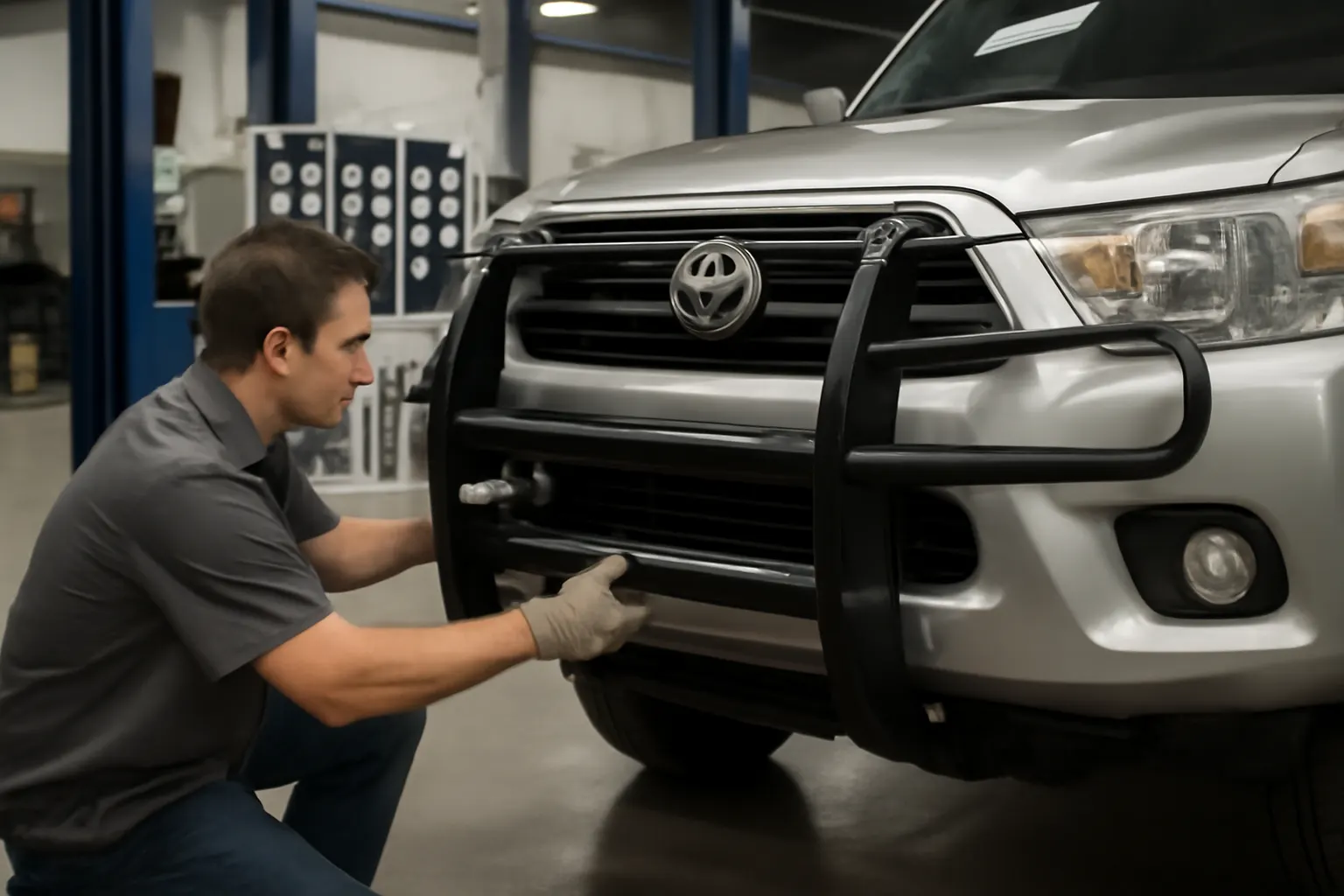
Toyota Bumper Guard Case Studies
The most common installation errors with Toyota bumper guards—especially on models from 2018 onward—stem from overlooking sensor integration, improper torqueing, and poor alignment with factory mounting points. These missteps can compromise airbag sensors, interfere with adaptive cruise control, and even trigger false positives in collision warning systems. Based on shop case studies, the top three ways to ensure a successful installation are: Verify ADAS sensor locations before starting. Use only Toyota-approved or OEM-equivalent mounting hardware.
Read More
Toyota Bumper Guard Fitment
For most Toyota models, bumper guard fitment depends on the exact model, year, trim level, and sometimes even regional specification. Toyota part numbers are precise; a mismatch can lead to installation issues, compromised safety, or voided manufacturer guidelines. The most reliable method to determine fitment is to: Identify your Toyota’s model, year, and trim. Reference the official Toyota bumper guard part number for your specific configuration. Consult a comprehensive fitment chart or database to verify compatibility and supersessions.
View Guide