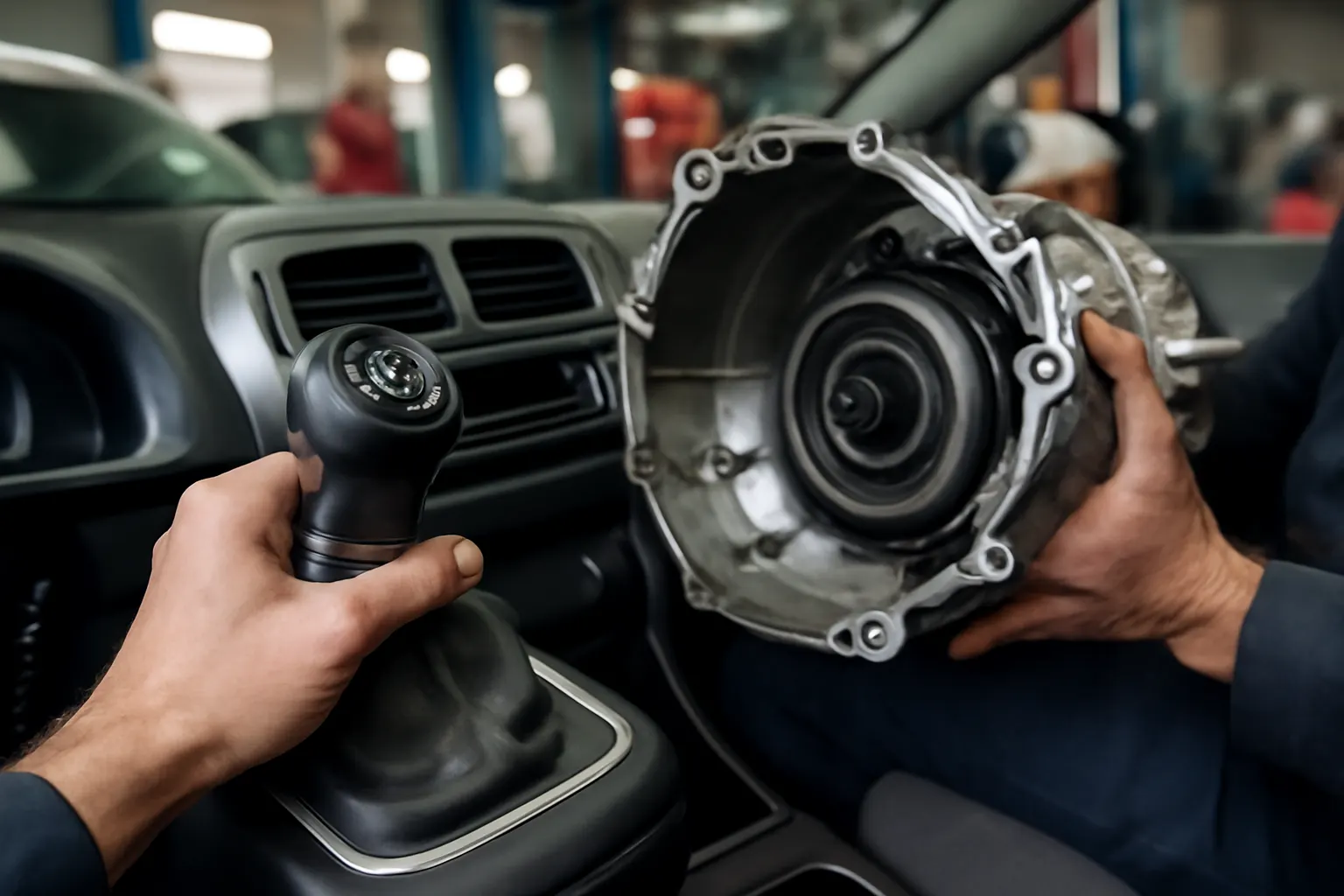
Manual vs. Automatic: Which Transmission is Right for You?
Choosing between a manual and automatic transmission is one of the most consequential decisions you’ll make when purchasing, maintaining, or upgrading a vehicle. Each transmission type offers a unique blend of driving experience, efficiency, maintenance requirements, and long-term reliability. Understanding these differences is essential for drivers, enthusiasts, and professionals alike. In this comprehensive AutoPartEx guide, we’ll break down the real-world pros and cons, hidden pitfalls, and technical factors that determine which transmission is right for your needs. For those seeking performance, reliability, or the best fit for everyday driving, this article provides a data-driven roadmap to the right decision. And if you’re ready to shop, explore our Transmissions: OEM & Performance Transmission Parts | AutoPartEx for trusted solutions.
The Immediate Answer: Key Differences at a Glance
At its core, the choice between manual and automatic transmissions comes down to control, convenience, and your specific driving environment.
- Manual transmissions offer direct driver engagement, often better fuel efficiency in certain driving conditions, and a lower initial purchase and maintenance cost.
- Automatic transmissions provide ease of use, smoother operation in heavy traffic, and, in modern variants, sophisticated performance that rivals or exceeds manual gearboxes.
But the best transmission for you depends on your driving style, maintenance preferences, local terrain, and long-term reliability needs.
The Hidden Problem: It’s Not Just About Preference
Many drivers approach the manual vs. automatic debate as a matter of personal taste. While preference is important, the consequences of choosing the wrong type can manifest in unexpected ways:
- Maintenance costs: Unexpected repairs or neglected service intervals can offset any initial savings.
- Fuel efficiency: Modern automatics may outperform older manuals, reversing traditional wisdom.
- Resale value: Market demand for transmission types varies by region and model.
- Component compatibility: Upgrades, replacements, and sourcing OEM or performance parts differ significantly.
Failing to consider these hidden factors can lead to higher costs, subpar performance, or reliability headaches down the road.
Deeper Dive: How Transmissions Work and Why It Matters
Manual Transmissions: The Mechanical Connection
A manual transmission uses a driver-operated clutch and gear selector to engage gears directly. The driver controls gear changes, engine speed, and torque delivery. This direct mechanical connection gives enthusiasts a sense of control and, in some cases, improved fuel efficiency due to reduced parasitic losses.
Key technical features:
- Clutch assembly: Manually disengages engine from transmission.
- Synchromesh gears: Match gear speeds for smooth shifts.
- Shift linkage: Connects shifter to transmission internals.
Automatic Transmissions: Complex, Adaptive, and Evolving
Automatics use a torque converter, planetary gearsets, and hydraulic or electronic controls to shift gears without driver input. Early automatics sacrificed efficiency for convenience, but advances in materials, electronics, and design have transformed them.
Key technical features:
- Torque converter: Fluid coupling between engine and transmission.
- Valve body: Directs hydraulic pressure for gear changes.
- ECU integration: Modern automatics use sensors and computer controls for adaptive shifting.
Materials and design advances—as highlighted by the U.S. Department of Energy—have improved automatic transmission performance and durability, narrowing the gap with manuals.
Driving Experience: Engagement vs. Effortlessness
Manual: For Enthusiasts and Purists
- Pros: Full control over gear selection, direct feedback, and a more engaging experience—especially on winding roads or track days.
- Cons: Demanding in stop-and-go traffic, steeper learning curve for new drivers, and potential for clutch wear if not operated correctly.
Automatic: For Comfort and Convenience
- Pros: Seamless operation, ideal for urban environments and long commutes, accommodates a wider range of drivers.
- Cons: Some drivers find automatics less engaging; performance automatics have improved, but may still lack the tactile feedback of a manual.
Expert tip: If you value spirited driving or want to learn advanced vehicle control (like heel-toe downshifting), a manual remains the gold standard. For pure convenience and ease, especially in traffic-heavy areas, automatics shine.
Maintenance and Reliability: What You Need to Know
Manual Transmission Maintenance
- Simplicity: Fewer moving parts, less reliance on electronics.
- Service intervals: Typically require periodic clutch replacement (50,000–100,000 miles depending on use).
- Fluids: Gear oil changes every 30,000–60,000 miles; see our Transmission Fluid Types & Best Practices for details.
Automatic Transmission Maintenance
- Complexity: More components—torque converter, valve body, solenoids, electronic sensors.
- Service intervals: Fluid and filter changes every 30,000–60,000 miles are crucial. Neglect leads to costly repairs.
- Diagnostics: Modern automatics often require scan tools for troubleshooting; see How to Diagnose Transmission Problems.
Reliability note: While manuals are generally more robust, modern automatics designed with advanced materials (see Materials Technologies) can offer comparable longevity—provided maintenance is not skipped.
Fuel Efficiency: The Modern Reality
Conventional wisdom once held that manuals were always more fuel-efficient. However, according to the U.S. Department of Energy:
- Modern automatics—especially those with more gears (6, 8, or even 10 speeds) and lock-up torque converters—often match or exceed manuals in fuel economy due to optimized shift points and adaptive controls.
- Older automatics may still lag behind manuals, particularly in smaller vehicles or those with fewer gears.
Key factors that affect transmission fuel efficiency:
- Number of gears (more gears = better efficiency range)
- Lock-up torque converter (reduces slippage)
- Weight and design of transmission components (advanced materials reduce losses)
- Integration with vehicle electronics and engine management
Performance and Drivability: Not Just for Racers
Acceleration and Power Delivery
- Manuals: Offer quicker throttle response and direct power delivery, favored in motorsports and performance driving.
- Automatics: Modern performance automatics shift faster than most humans, supporting advanced launch control and paddle shifting.
Towing and Load Handling
- Manuals: Can offer better engine braking and control for precise towing, but require skill to avoid clutch burnout.
- Automatics: Preferred for heavy towing due to torque multiplication and ease of use; many trucks and SUVs are now automatic-only for this reason.
Safety Considerations: Beyond the Basics
According to the National Highway Traffic Safety Administration, transmission choice can impact safety both directly and indirectly:
- Manuals: Require both hands and feet, potentially distracting new drivers. However, the need for engagement can discourage multitasking (like texting).
- Automatics: Allow drivers to keep both hands on the wheel, improving reaction times in emergencies. Advanced automatics may integrate with driver-assist and safety systems for features like automatic emergency braking.
Expert insight: For new drivers or those with mobility challenges, automatics offer a clear safety edge. For experienced drivers, manuals can provide greater vehicle control in specific scenarios.
Longevity and Cost of Ownership
Upfront Costs
- Manuals are usually less expensive to purchase due to simpler design and fewer parts.
- Automatics add cost, especially in vehicles with advanced multi-speed or dual-clutch systems.
Long-Term Costs
- Manuals: Clutch replacements are the main expense; gearboxes themselves are robust if serviced.
- Automatics: Fluid changes and potential for costly repairs (valve body, solenoids, torque converter) if neglected.
Resale value: In some markets, manuals are less desirable, affecting resale. In enthusiast circles or for certain models, manuals can command a premium.
Transmission Sourcing: OEM vs. Aftermarket and Fitment
When it’s time to replace or upgrade your transmission, sourcing the right unit is crucial.
OEM (Original Equipment Manufacturer) Transmissions
- Pros: Guaranteed fit and function, meets manufacturer specs, easier warranty support.
- Cons: Higher cost, limited performance upgrades.
Performance and Aftermarket Transmissions
- Pros: Custom gearing, improved materials, higher torque capacity.
- Cons: May require modifications, careful fitment checks, and expert installation.
Fitment checklist:
- Verify vehicle year, make, model, and engine type.
- Check transmission code and gear ratios.
- Ensure compatibility with driveshaft, mounts, and electronic controls (especially for automatics).
- Consult Transmissions: OEM & Performance Transmission Parts | AutoPartEx for vehicle-specific options.
Diagnostic and Troubleshooting: Early Warning Signs
Regardless of type, transmissions exhibit warning signs before failure. Early detection saves money and hassle.
Common symptoms of transmission trouble:
- Delayed or harsh shifting
- Grinding or whining noises
- Fluid leaks (red or brown stains under vehicle)
- Burning smell
- Dashboard warning lights (especially in automatics)
For a step-by-step approach, see our Top 5 Signs Your Transmission Needs Service and How to Diagnose Transmission Problems.
Maintenance Essentials: Fluids, Filters, and Service Intervals
Proper maintenance is the single most important factor in transmission longevity. Here’s what every owner should know:
Manual Transmission
- Fluid: Change gear oil per manufacturer interval, typically every 30,000–60,000 miles.
- Clutch: Inspect for slippage, replace as needed, often 50,000–100,000 miles.
- Linkage: Lubricate and adjust periodically.
Automatic Transmission
- Fluid: Use only manufacturer-specified fluid; see transmission fluids for options.
- Filter: Replace filter at each fluid change; see transmission filters.
- Electronics: Scan for trouble codes during service.
Maintenance checklist:
- Check fluid level and condition monthly.
- Schedule fluid and filter changes per owner’s manual.
- Inspect for leaks, noises, or shifting issues.
- Address warning lights or error codes promptly.
- Use only high-quality, vehicle-specific parts.
Installation and Upgrade Guidance
Upgrading or replacing a transmission is a significant project. Here’s how to ensure success:
- Preparation: Gather all required parts—transmission, mounts, fluids, gaskets, sensors.
- Tools: Ensure access to a lift or jack stands, transmission jack, and specialty tools.
- Documentation: Reference service manuals, torque specs, and wiring diagrams.
- Programming: Many modern automatics require ECU programming or adaptation post-install.
- Test drive: After installation, perform a careful break-in and monitor for leaks or abnormal noises.
For DIYers, thorough research and patience are essential. For complex installs or performance upgrades, professional installation is strongly recommended.
Transmission Buying Guide: Decision Factors
Choosing the right transmission involves multiple considerations. Use this checklist to guide your decision:
| Factor | Manual Transmission | Automatic Transmission |
|---|---|---|
| Driving Style | Engaged, performance-oriented | Effortless, comfort-focused |
| Commute Type | Light traffic, open roads | Heavy traffic, urban environments |
| Maintenance | Simpler, clutch replacement | Fluid/filter changes, more complex |
| Reliability | Fewer parts, robust | Modern automatics are reliable if maintained |
| Cost | Lower purchase/repair cost | Higher purchase/repair cost |
| Fuel Efficiency | Traditionally higher, now similar | Modern automatics often match/exceed |
| Learning Curve | Steeper, requires skill | Easier, accessible for all drivers |
| Resale Value | Model/market dependent | Typically higher for mainstream models |
AutoPartEx Advantage: Your Trusted Transmission Partner
Whether you’re searching for an OEM replacement, a performance upgrade, or simply the best parts for routine maintenance, AutoPartEx offers a curated selection of manual and automatic transmissions, fluids, and filters for virtually every make and model. Our technical team stays up-to-date with the latest standards and materials innovations, as outlined by the U.S. Department of Energy and SAE International.
- Expert fitment guidance: Find parts that match your vehicle’s exact specifications.
- Educational resources: From Transmission Fluid Types & Best Practices to How to Diagnose Transmission Problems, our library empowers you to make informed decisions.
- Quality assurance: We source only from reputable manufacturers and stand behind every product.
Ready to explore? Visit our Transmissions: OEM & Performance Transmission Parts | AutoPartEx to get started.
Conclusion: Making the Right Choice
The manual vs. automatic transmission debate is more nuanced than ever. Thanks to advances in materials, electronics, and design, both types offer compelling benefits for different drivers and scenarios. By considering your driving style, maintenance preferences, performance needs, and long-term cost of ownership, you can make a confident, informed decision. And with AutoPartEx as your partner, you’ll have access to the parts, expertise, and support needed for a smooth, reliable ride—no matter which transmission you choose.