Advertisement
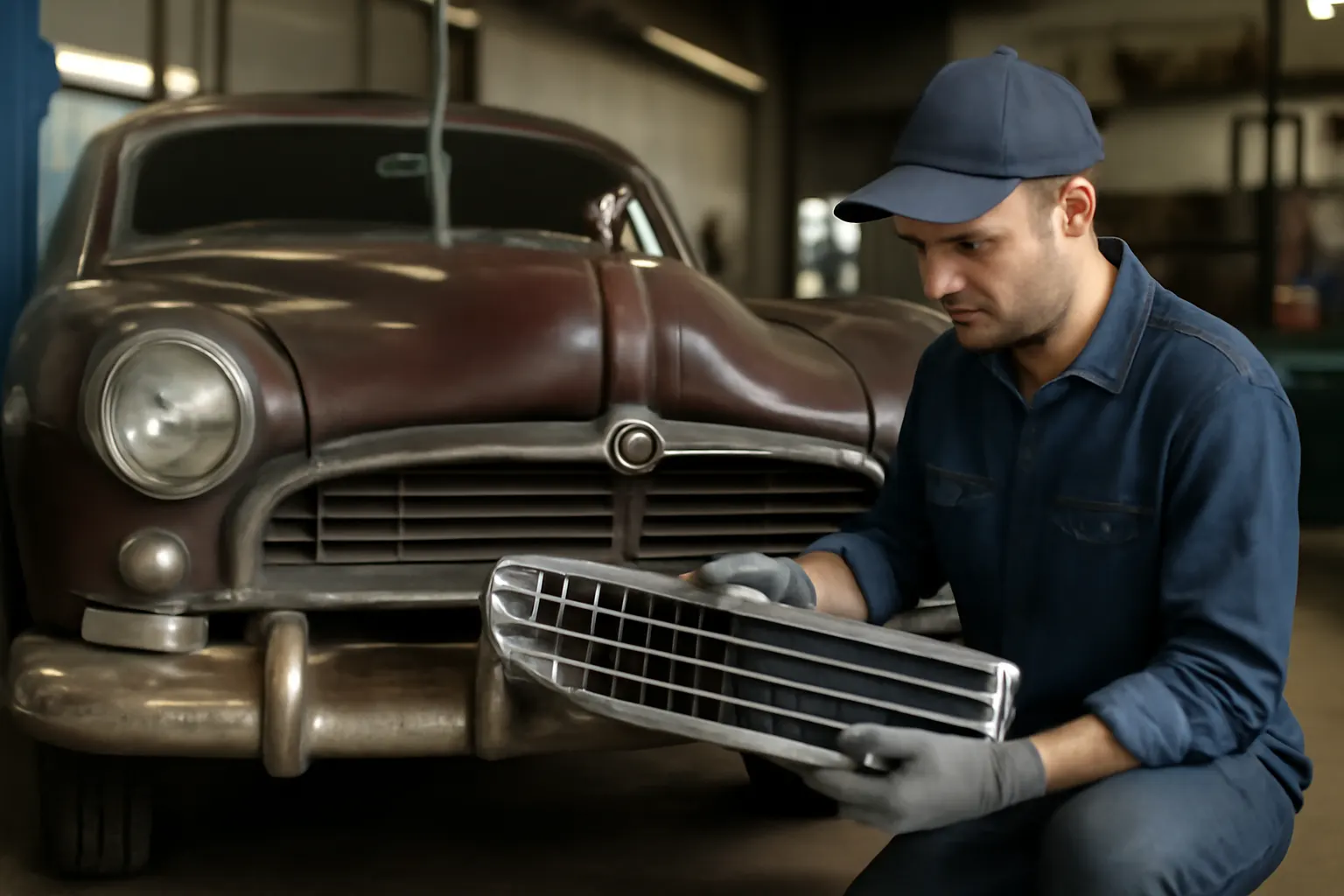
Tracking down authentic, OEM-grade Hudson parts is a challenge that every serious restorer faces. Whether you’re working on a 1948 Commodore, a Step-Down chassis, or a Hornet Twin H-Power, finding the right part—verified, safe, and true to Hudson’s heritage—can make or break your restoration. In this comprehensive field report, we share real-world stories and actionable strategies from the shop floor: how seasoned Hudson restorers source rare components, verify authenticity, avoid counterfeits, and ensure that every bolt and bracket meets both fitment and safety standards.
If you’re looking for a broader overview, see our Hudson Auto Parts: OEM-Grade Heritage, Fitment Risks & Authenticity | AutoPartEx page for the essential context on Hudson’s unique parts ecosystem. But here, we go deep into the trenches—with practical advice and expert checklists for anyone sourcing rare Hudson OEM parts.
The Immediate Answer: How to Source Rare Hudson OEM Parts
The most effective way to source rare Hudson OEM parts is to combine multiple strategies: leverage established Hudson club networks, utilize reputable specialist suppliers, cross-reference part numbers with authoritative guides, and execute a rigorous authenticity verification process before installation. Always prioritize parts with documented provenance, and never compromise on safety-critical components.
Quick checklist for sourcing rare Hudson parts:
- Join Hudson-Essex-Terraplane club forums and classified sections.
- Consult verified suppliers with a track record in vintage Hudsons.
- Cross-check every part number with a trusted fitment reference.
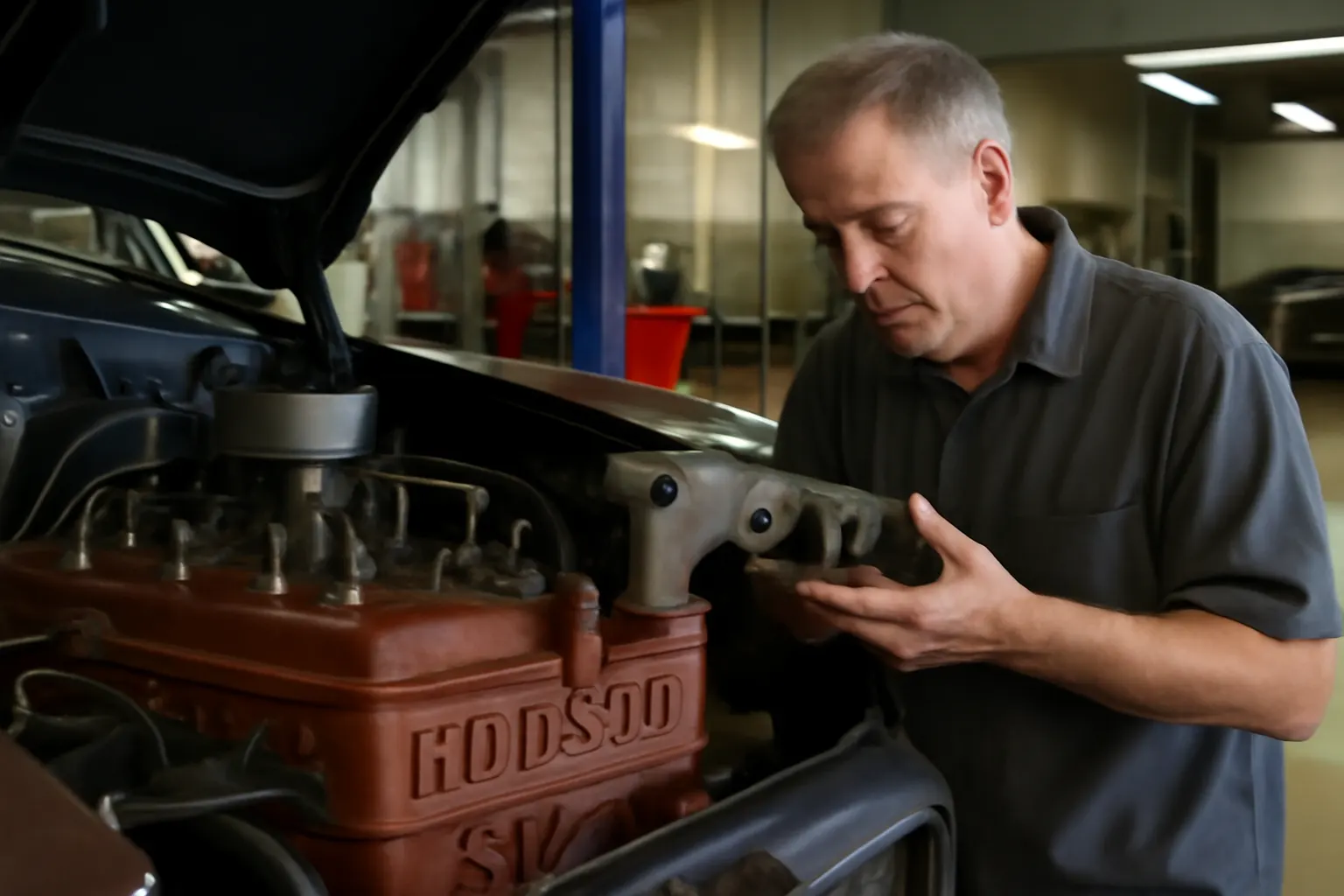
- Inspect for OEM markings, casting numbers, and materials consistency.
- Require seller documentation or provenance for rare or safety-related parts.
- Avoid “too good to be true” deals—counterfeits are common.
- Use NHTSA safety equipment guidelines when evaluating critical items.
The Hidden Problem: Counterfeits, Reproductions, and Misidentified Parts
While the Hudson community is passionate and resourceful, the scarcity of original parts opens the door to a persistent threat: counterfeits and poorly made reproductions. Many sellers, especially online, may offer parts that are mislabeled as OEM, when in reality they are aftermarket reproductions, incorrect model-year substitutions, or outright fabrications.
The most dangerous risk is with safety-critical components—brake drums, steering linkages, and suspension arms—where non-OEM materials or incorrect machining can lead to catastrophic failure. Even cosmetic trim, if not correct for the year or model, can undermine the authenticity and value of a restoration.
Why Sourcing Hudson OEM Parts is Uniquely Challenging
Hudson’s independent engineering and pre-merger manufacturing quirks mean that parts interchangeability is limited, even across adjacent model years. Unlike Ford or GM, where parts bins were shared, Hudson’s unique chassis, suspension, and drivetrain designs mean that a 1950 Hornet’s control arm might not fit a 1952, and a Commodore’s trim is often one-year-only.
This makes using generic “Hudson” parts from auctions or classified ads risky. The only reliable approach is to verify each part’s fitment with authoritative sources such as the Hudson Model-Year Fitment Reference and original factory parts manuals, and to seek out community expertise for confirmation.
Field Story: The Search for a Step-Down Chassis Front Suspension Arm
When restoring a 1949 Hudson Super Six, restorer Mike H. faced the notorious challenge of sourcing a front suspension arm. After months of browsing online listings, he found what appeared to be a match on a well-known auction site. The seller claimed it was NOS (New Old Stock), but the part number was faint and the casting marks were partially ground off.
Mike consulted the Hudson Step-Down Chassis Restoration Guide and cross-referenced the part number with a club archivist. The verdict: the arm was a reproduction, using incorrect alloy and lacking the factory heat treatment. By walking away, Mike avoided a potentially dangerous installation—and eventually sourced an authentic arm from a documented club member, complete with photos of the original Hudson box and casting numbers.
Understanding Hudson Part Numbering and Authenticity Markers
Hudson’s OEM parts are distinguished by a specific numbering system, unique casting marks, and factory-applied finishes. Here’s what to look for:
Advertisement
- Part Numbers: Hudson used a five- or six-digit part number, often cast or stamped directly onto the part. Cross-reference with the factory parts manual or the Hudson Model-Year Fitment Reference.
- Casting Marks: Genuine parts have distinctive casting or forging marks, sometimes including the Hudson “triangle H” logo.
- Machining and Finish: Hudson’s factory finishes varied by year, but most structural parts will have a specific phosphate or enamel coating.
- Material: OEM parts used period-correct steel or alloy. Reproductions may use modern materials or incorrect casting techniques.
Always ask sellers for detailed photos of these markers before purchasing. If in doubt, consult with a recognized Hudson expert or club technical advisor.
Sourcing Channels: Where Real Restorers Find Hudson OEM Parts
1. Hudson Club Networks
The Hudson-Essex-Terraplane Club (HET) and regional Hudson clubs are the backbone of authentic parts sourcing. Their classified ads, swap meets, and member-to-member sales are the most reliable channels for finding genuine parts with provenance.
2. Specialist Vintage Suppliers
A handful of specialist suppliers maintain inventories of NOS and good used Hudson parts. These businesses typically provide documentation, part number verification, and sometimes even historical background on the part’s origin.
3. Salvage Yards and Estate Sales
Vintage salvage yards and estate sales occasionally yield rare Hudson components, particularly in regions where Hudsons were popular. Always inspect parts in person, and bring reference materials for on-the-spot verification.
4. Online Marketplaces—With Caution
Auction sites, online classifieds, and social media groups can be sources of rare finds, but the risk of counterfeits is high. Only purchase from sellers with a track record in the Hudson community, and always insist on clear photos and part number confirmation.
Avoiding Counterfeits: A Restorer’s Inspection Checklist
Use this checklist before purchasing any rare Hudson OEM part:
| Step | Action Required | Red Flags |
|---|---|---|
| 1. Verify Part Number | Cross-reference with factory manual or fitment guide | Missing, altered, or faint |
| 2. Inspect Markings | Look for Hudson logo, casting/forging marks | No logo, generic marks |
| 3. Assess Materials | Compare weight, alloy, machining to OEM spec | Lightweight, odd texture |
| 4. Check Finish | Confirm period-correct coating or plating | Bare, pitted, modern paint |
| 5. Request Provenance | Ask for history, photos, or documentation | Seller unwilling/unable |
| 6. Confirm Seller Reputation | Seek references or community feedback | Negative or no feedback |
| 7. Evaluate Price | Compare to known values for rarity | Suspiciously low/high |
| 8. Inspect for Wear/Repairs | Look for cracks, welds, or modifications | Obvious repairs, hidden damage |
Safety and Performance: Why Only OEM-Grade Parts Matter
The National Highway Traffic Safety Administration (NHTSA) underscores that vehicle safety equipment—steering, suspension, brakes, and structure—must meet original engineering standards to ensure safe operation Vehicle Safety and Equipment. Installing counterfeit or substandard parts can compromise not only the vehicle’s safety but also its handling and performance.
For Hudsons, whose unique “Step-Down” chassis and advanced suspension were ahead of their time, using incorrect parts can lead to improper geometry, unpredictable ride characteristics, and even structural failure. Always prioritize OEM-grade parts for any system that affects safety, handling, or structural integrity.
Technical Deep Dive: Materials and Fitment in Hudson OEM Parts
Hudson’s engineering legacy is built on innovative use of materials and precise fitment. According to the U.S. Department of Energy’s Materials Technologies, period-correct materials affect not only weight and structural integrity but also how the vehicle responds to stress and fatigue.
For example, Hudson’s control arms and suspension components were forged from high-strength steel alloys, heat-treated to specific tolerances. Reproduction parts made from generic cast iron or low-grade steel lack the fatigue resistance and ductility engineered by Hudson. Even small deviations in material or machining can lead to premature wear, cracking, or failure.
Always cross-reference material specifications with period documentation, and when in doubt, consult with a metallurgist or restoration specialist.
The Fitment Trap: Model-Year and Trim-Level Variations
One of the most common pitfalls in Hudson restoration is assuming that a part labeled “Hudson” will fit any model or year. In reality, Hudson’s engineering evolved rapidly, and even within the Step-Down era (1948–1954), there are significant differences in suspension geometry, drivetrain layout, and body mounting points.
Advertisement
Before purchasing, always use a detailed fitment guide (such as the Hudson Model-Year Fitment Reference) to confirm compatibility. Double-check measurements, mounting hole locations, and any engineering changes noted in factory bulletins. Never rely solely on seller descriptions—verify for yourself.
Installation Best Practices for Sourced Hudson OEM Parts
Even after sourcing a verified OEM part, correct installation is crucial to preserving safety and performance. Here are practical tips from experienced Hudson restorers:
- Pre-Installation Inspection: Clean and visually inspect every part for cracks, corrosion, or hidden damage.
- Test Fit: Before final assembly, test-fit the component to ensure perfect alignment and clearance.
- Torque Specs: Use factory torque specifications for all fasteners—over- or under-tightening can compromise structural integrity.
- Lubrication and Protection: Apply period-correct lubricants and corrosion inhibitors to moving or exposed parts.
- Documentation: Record installation details, including part numbers and sources, for future reference and provenance.
Maintaining Authenticity and Value Through Proper Documentation
For collectors and serious restorers, maintaining a detailed provenance file for each rare part is critical. This not only helps verify authenticity for future owners but also preserves the historical value of the vehicle.
What to document:
- Part numbers and casting marks (with photos)
- Seller’s name, contact, and reputation
- Date and method of acquisition
- Installation date and mileage
- Any restoration work or repairs performed
This documentation can be invaluable if you ever show or sell the vehicle, or if questions arise about originality.
When to Consider Quality Reproductions (and When Not To)
While OEM parts are always preferred, there are cases—especially with non-safety-critical trim or weatherstripping—where high-quality reproductions may be the only available option. In these cases:
- Only source from suppliers with a documented history of accurate reproductions.
- Ensure the reproduction matches OEM materials, finish, and fitment as closely as possible.
- Never use reproductions for suspension, steering, or brake components unless they are manufactured to meet or exceed OEM standards and have been independently tested.
For more on the risks and tradeoffs, see our editorial on Hudson Restoration Pitfalls: Authenticity & Aftermarket Risks.
Fuel Efficiency and Performance: The OEM Parts Advantage
The U.S. Department of Energy emphasizes that original or OEM-grade components are critical for maintaining designed fuel efficiency and performance characteristics Fuel Efficiency. Non-OEM parts can introduce inefficiencies, increase friction, or disrupt airflow and fuel delivery—issues that are especially pronounced in Hudson’s advanced inline-six and Twin H-Power engines.
When restoring or maintaining powertrain components, always use OEM or equivalent-grade gaskets, carburetor parts, and ignition components to preserve both originality and drivability.
AutoPartEx: Your Partner in Authentic Hudson Restoration
At AutoPartEx, we recognize the unique challenges facing Hudson restorers. Our commitment is to provide only OEM-grade or verified reproduction parts, backed by expert sourcing, rigorous fitment verification, and transparent documentation. Whether you’re searching for a rare suspension arm or a period-correct trim piece, our network and technical expertise help ensure your Hudson restoration meets the highest standards of safety, authenticity, and value.
Explore our Hudson Auto Parts: OEM-Grade Heritage, Fitment Risks & Authenticity | AutoPartEx page for a curated selection of verified parts, restoration guides, and technical resources.
Expert Action: Steps to Secure Your Next Rare Hudson OEM Part
- Join the Community: Become active in Hudson clubs and forums for insider access to authentic parts and expertise.
- Prepare Your References: Keep factory parts manuals, fitment guides, and technical bulletins at hand.
- Vet Every Seller: Prioritize established suppliers and club members with a proven track record.
- Insist on Documentation: Require clear photos, part numbers, and provenance before purchase.
- Inspect Before Installing: Use the checklist above to verify authenticity and condition.
- Document Everything: Maintain a provenance file for every rare part installed.
- Consult Experts: When in doubt, reach out to technical advisors or restoration specialists.
- Trust, But Verify: Even trusted sources can make mistakes—always double-check fitment and specifications.
By following these steps and leveraging the collective knowledge of the Hudson restoration community, you can secure the rare OEM parts that will keep your Hudson safe, authentic, and true to its heritage for generations to come.
References
Advertisement