
Advertisement
Diagnosing exhaust system failures in Toyota vehicles is crucial for maintaining safety, fuel efficiency, and compliance with modern standards. Whether you drive a Corolla, Camry, Tacoma, or any Toyota model, understanding the common failure modes, diagnostic methods, and practical solutions can prevent costly repairs and keep your vehicle running at peak performance. This guide delivers actionable steps, field-tested checklists, and advanced sourcing strategies for addressing recurring Toyota exhaust fitment issues. For a broader overview of Toyota exhaust pipe fitment, failure patterns, and sourcing, see our Toyota Exhaust Pipe: Genuine Fitment, Failure Patterns & Advanced Sourcing page.
Why Exhaust System Diagnostics Matter
The exhaust system in your Toyota is more than just a pipe for channeling gases. It is a complex assembly that impacts:
- Safety: Prevents harmful fumes from entering the cabin and ensures compliance with NHTSA safety standards.
- Fuel Efficiency: A healthy exhaust supports optimal engine performance and fuel economy, as detailed by the U.S. Department of Energy.
- Longevity: Early detection of leaks or corrosion extends the lifespan of your vehicle’s components.
- Noise Reduction: Properly functioning mufflers and resonators keep your Toyota quiet and comfortable.
- Emissions Compliance: Ensures your vehicle meets regulatory standards and avoids costly fines or failed inspections.
Hidden Problems: Why Toyota Exhaust Failures Are Often Overlooked
Exhaust issues can develop gradually, making them hard to detect until they escalate. Many Toyota owners miss early warning signs such as subtle noise changes or minor performance drops. Additionally, Toyota’s robust engineering can mask minor leaks or corrosion for years before symptoms become severe. These hidden problems, if left unchecked, can result in:
- Dangerous carbon monoxide leaks
- Decreased fuel efficiency
- Failed emissions tests
- Accelerated wear on catalytic converters and O2 sensors
- Increased risk of costly repairs due to neglected small issues
Understanding the Toyota Exhaust System: Components and Weak Points
A typical Toyota exhaust system comprises several interconnected components:
- Exhaust Manifold: Bolts directly to the engine, funneling exhaust gases from cylinders.
- Front Pipe (Downpipe): Connects the manifold to the catalytic converter.
- Catalytic Converter: Reduces harmful emissions.
- Mid-Pipe/Center Pipe: Bridges the catalytic converter and muffler.
- Muffler and Resonator: Reduce exhaust noise.
- Tailpipe: Discharges gases at the rear of the vehicle.
- Oxygen Sensors: Monitor exhaust gases to optimize engine performance.
Common Toyota weak points include:
- Flange joints (prone to rust and leaks)
- Weld seams on mufflers and catalytic converters
- Heat shield fasteners
- Mounting hangers and rubber isolators
Common Toyota Exhaust Failures: Patterns and Case Studies
Through extensive field studies and owner reports, several recurring Toyota exhaust failures have been documented:
- Corrosion at Flange Joints: Particularly in regions with road salt usage, flange joints on Camrys and Tacomas often exhibit premature rust, leading to leaks.
- Manifold Cracking: Some older Toyota 4Runners and Corollas report cracked exhaust manifolds, especially in high-mileage units or those exposed to thermal cycling.
- Catalytic Converter Theft and Damage: Prius and Tacoma models are frequent targets for theft, resulting in exhaust leaks and sensor faults.
- Heat Shield Rattle: Loose or corroded heat shield fasteners on RAV4 and Highlander models cause rattling noises and potential shield detachment.
- O2 Sensor Bung Failure: Cross-threaded or corroded O2 sensor bungs can create exhaust leaks and trigger check engine lights.
Field Example:
A 2017 Toyota Camry owner in the Midwest reported a persistent “ticking” noise. Inspection revealed a corroded flange gasket between the mid-pipe and muffler, causing exhaust gas to escape and triggering a downstream O2 sensor error code (P0420).
Diagnostic Methods: Step-by-Step Toyota Exhaust Inspection
A systematic approach is essential to identify exhaust system issues before they escalate. Follow this diagnostic checklist for your Toyota:
Advertisement
Toyota Exhaust System Diagnostic Checklist
-
Visual Inspection
- Inspect the entire exhaust route from the manifold to tailpipe.
- Look for rust, holes, cracks, or black soot marks (indicating leaks).
- Check for missing or broken hangers and brackets.
-
Sound Test
- Listen for hissing, ticking, or loud roaring noises during idle and acceleration.
- Rattling noises may indicate loose heat shields or internal muffler failure.
-
Feel for Leaks
- With the engine running (use caution), pass a gloved hand near joints and seams to feel for escaping air.
- Avoid direct contact with hot components.
-
Smell Test
- Detect any strong exhaust odor inside or outside the cabin, which may indicate a leak.
-
OBD-II Scan
- Use a diagnostic scanner to check for fault codes related to O2 sensors, catalytic converter efficiency, or misfires.
-
Check for Vibration
- Unusual vibrations or resonance felt in the cabin can signal exhaust misalignment or loose mounts.
-
Inspect Heat Shields
- Ensure heat shields are secure and not contacting other components.
-
Evaluate Catalytic Converter
- Listen for rattling (broken substrate) and check for external damage or discoloration.
-
Examine Tailpipe Emissions
- Excessive smoke or unusual color may indicate engine or exhaust issues.
-
Monitor Fuel Economy
- Sudden drops in MPG may be traced to exhaust restrictions or leaks.
Advanced Diagnostic Tools and Techniques
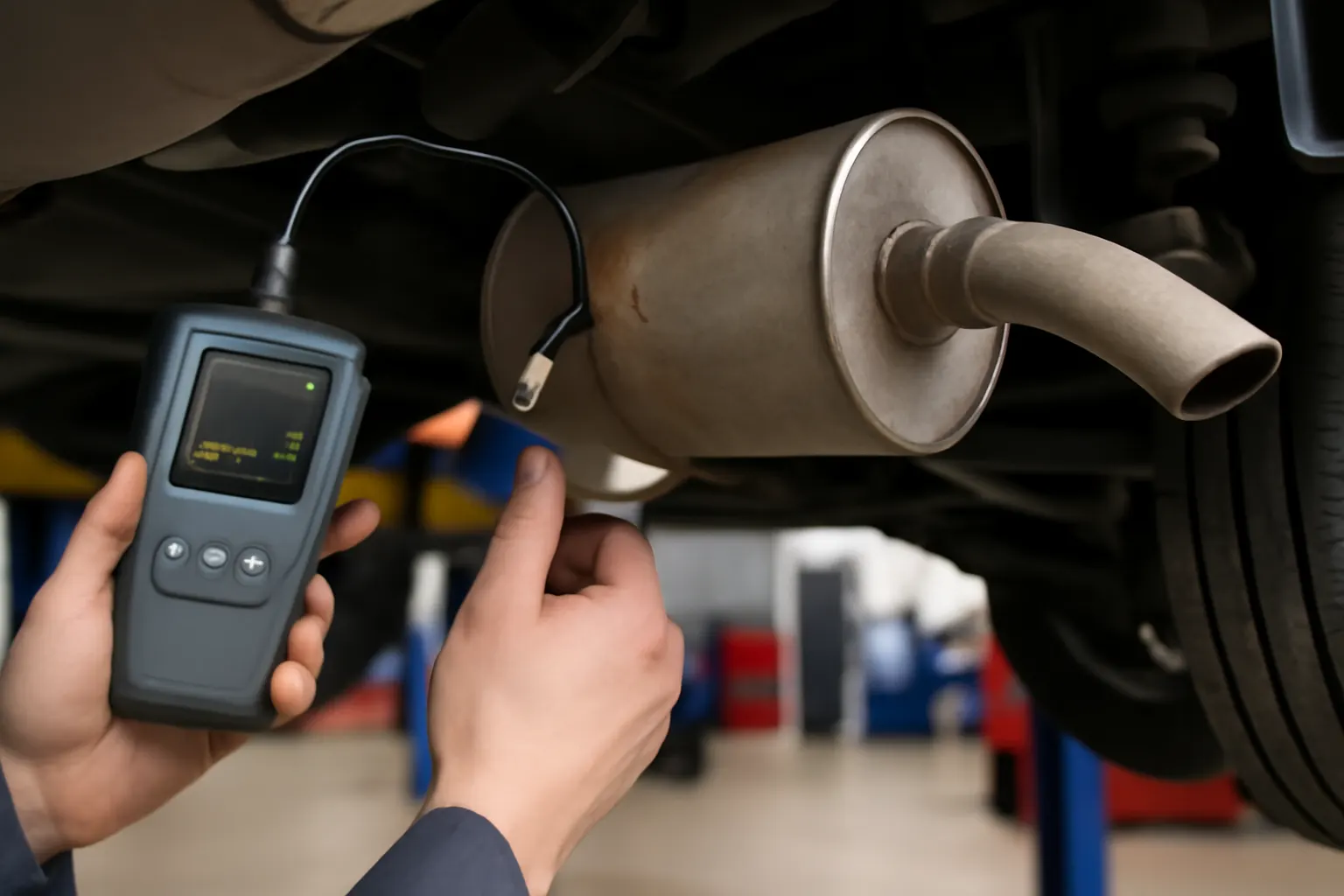
While visual and auditory checks catch many issues, advanced diagnostics yield more precise results:
- Smoke Machines: Introduce non-toxic smoke into the exhaust to reveal hard-to-find leaks.
- Infrared Thermometers: Measure surface temperatures along the exhaust to spot blockages or hot spots.
- Ultrasonic Leak Detectors: Detect high-frequency sound waves from escaping gases, useful for pinpointing small leaks.
- Backpressure Gauges: Assess for blockages in catalytic converters or mufflers that can reduce engine efficiency.
Pro Tip:
Professional shops often use a combination of these tools in conjunction with OBD-II data for a complete assessment.
Recurring Fitment Problems Across the Toyota Lineup
Fitment issues are a common source of headaches when replacing Toyota exhaust components. Even with OEM parts, minor production variances, model-year changes, and supersession updates can create:
- Misaligned Flanges: Resulting in exhaust leaks and stress on gaskets.
- Incorrect Pipe Diameters: Causing installation difficulties or performance issues.
- Bracket and Hanger Mismatch: Leading to vibration, noise, and premature wear.
- Sensor Port Location Changes: Complicating O2 sensor installation or wiring.
These problems are especially prevalent when sourcing aftermarket or superseded parts. For a deeper dive into material considerations and sourcing, review Toyota Exhaust Pipe Materials and our Toyota Exhaust Supersession editorial.
Field Case Study: 2015 Toyota Tacoma Mid-Pipe Replacement
Scenario:
A 2015 Toyota Tacoma owner attempted to replace a rusted mid-pipe using an aftermarket part labeled as a direct fit. During installation, the following issues were encountered:
- The flange bolt pattern was off by 2mm, preventing proper sealing.
- The O2 sensor bung was located 3cm further downstream, requiring wire extension.
- The rubber hanger brackets were misaligned, causing the pipe to contact the frame during acceleration.
Resolution:
The shop sourced an updated OEM mid-pipe, which fit perfectly. Additional heat-resistant wiring was used to extend the O2 sensor harness safely. All hangers were replaced with new OEM rubber isolators. The result was a noise-free, leak-free installation with restored performance.
The Role of Materials and Corrosion Resistance
Toyota exhaust components are engineered for durability, but material choices vary by model and year:
- Aluminized Steel: Common in base models, offers moderate corrosion resistance but can rust quickly in harsh climates.
- Stainless Steel: Found in higher trims and performance models, provides superior longevity and resistance to road salt.
- Ceramic Coatings: Occasionally used on manifolds for thermal management.
Corrosion typically starts at welds, flanges, and mounting points where protective coatings are weakest. Upgrading to stainless steel components can provide long-term savings, especially in regions with heavy winter salt use.
Advertisement
For more on material science and longevity, see our Toyota Exhaust Pipe Materials guide.
Solutions to Recurring Toyota Exhaust Fitment Problems
Addressing fitment issues requires a combination of careful sourcing, pre-installation checks, and sometimes minor modifications. Here’s how to ensure a successful repair or upgrade:
Sourcing Tips
- Verify Part Numbers: Always cross-reference your Toyota’s VIN and production date with OEM part numbers.
- Check Supersessions: Toyota frequently updates part numbers; confirm compatibility using manufacturer databases.
- Inspect Before Installation: Test-fit components before tightening bolts to catch misalignments early.
- Choose Quality Suppliers: Use reputable sources for aftermarket parts; avoid “universal fit” unless absolutely necessary.
Installation Best Practices
- Replace Gaskets and Hardware: Old gaskets and rusted bolts compromise the new installation.
- Use Anti-Seize Compound: Apply to bolts and sensor threads to ease future removal and ward off corrosion.
- Align Components Before Tightening: Hand-tighten all fasteners, align the system, then torque to spec.
- Double-Check Hanger Placement: Ensure all rubber isolators are properly seated to prevent vibration.
Preventive Maintenance for Toyota Exhaust Systems
Routine maintenance extends the life of your exhaust and prevents unexpected failures. Incorporate these practices:
- Annual Inspections: Especially in rust-prone areas, check for corrosion, leaks, and loose hardware.
- Wash Undercarriage: Remove road salt and debris after winter months.
- Monitor for Unusual Noises: Address new sounds promptly to avoid escalation.
- Replace Damaged Heat Shields: Prevents heat damage to nearby components.
- Check for Recalls: Regularly review NHTSA recall listings for your model.
When to Replace vs. Repair Toyota Exhaust Components
Not all exhaust issues require full replacement. Use this decision matrix:
| Condition | Recommended Action |
|---|---|
| Minor surface rust | Clean and treat |
| Small leak at gasket/flange | Replace gasket |
| Cracked manifold or pipe | Replace component |
| Corroded/missing hangers | Replace hangers |
| Damaged catalytic converter | Replace converter |
| Heat shield rattle | Re-secure or replace |
| Sensor bung damage | Repair or replace bung |
Tip:
If multiple components are affected by corrosion or damage, a full system replacement may be more cost-effective than piecemeal repairs.
Understanding Toyota Exhaust Supersession and Compatibility
Toyota regularly updates exhaust part numbers for improved fitment, materials, or regulatory compliance. Supersession refers to a new part number replacing an older design. This process can cause confusion during sourcing:
- Check Manufacturer Databases: Always confirm the latest supersession for your VIN.
- Beware of Aftermarket “Direct Fit” Claims: Even slight design changes can affect installation.
- Consult Technical Service Bulletins (TSBs): Toyota issues TSBs for known exhaust system updates.
For a comprehensive guide, visit Toyota Exhaust Supersession.
The Impact of Exhaust Health on Fuel Efficiency and Performance
A compromised exhaust system can significantly impact your Toyota’s fuel economy and drivability. According to the U.S. Department of Energy, exhaust leaks and restrictions:
- Reduce engine efficiency by altering air-fuel ratios
- Cause the ECU to adjust fueling, decreasing MPG
- Lead to sluggish acceleration and increased emissions
Maintaining a leak-free, properly functioning exhaust system is critical for maximizing your Toyota’s fuel efficiency and ensuring long-term reliability.
AutoPartEx: Your Partner in Toyota Exhaust Diagnostics and Sourcing
At AutoPartEx, we combine industry expertise with advanced sourcing tools to help you:
- Identify and diagnose exhaust failures quickly
- Source genuine and high-quality aftermarket Toyota exhaust components
- Navigate part supersessions and compatibility challenges
- Access step-by-step installation guides and technical support
Explore our Toyota Exhaust Pipe: Genuine Fitment, Failure Patterns & Advanced Sourcing hub for in-depth resources, or contact our technical team for personalized assistance with your exhaust system project.
Conclusion: Proactive Diagnostics for Toyota Exhaust Longevity
Exhaust system diagnostics are not just about fixing problems—they’re about preventing them. By understanding failure patterns, using advanced diagnostic techniques, and following best practices for sourcing and installation, Toyota owners and technicians can ensure long-lasting performance, safety, and efficiency. Regular inspections, prompt repairs, and strategic upgrades based on your driving environment will keep your Toyota’s exhaust system trouble-free for years to come.
References
Advertisement
