AMC AC Compressor Troubleshooting Guide
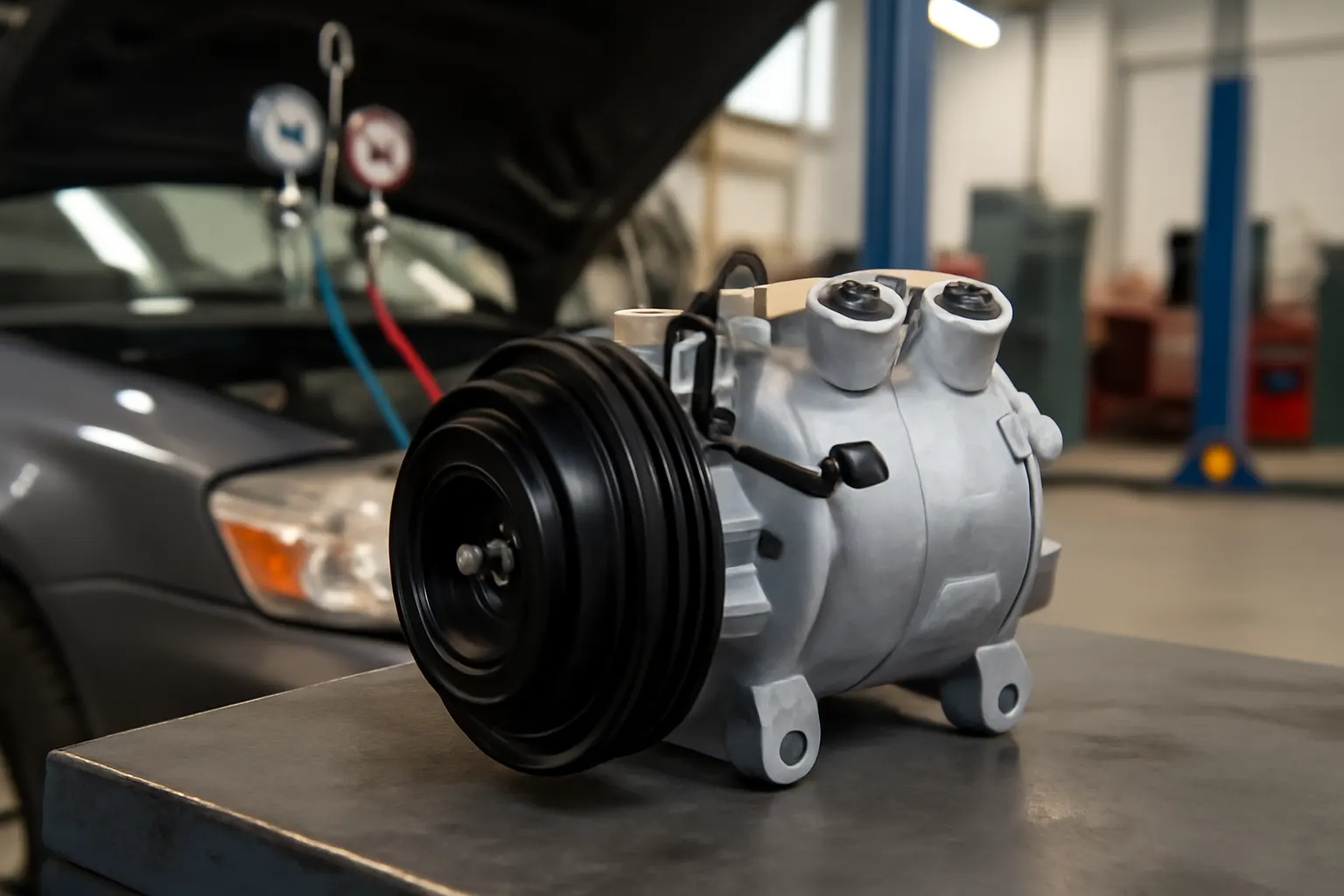
When your AMC’s air conditioning isn’t providing the cooling power you expect, the AC compressor is often at the heart of the issue. This comprehensive troubleshooting guide delivers immediate, actionable steps to diagnose and resolve common AMC AC compressor problems—restoring optimal cabin comfort and system reliability. Whether you’re a seasoned technician or a dedicated AMC owner, you’ll find expert insights, detailed checklists, and proven techniques for effective diagnostic and repair. For a broader overview of AMC compressor systems, see the AMC AC Compressor Guide.
Immediate Answer: Fast-Track AMC AC Compressor Diagnosis
If your AMC’s AC isn’t cooling, the most common causes linked to the compressor include:
- Compressor clutch not engaging (electrical fault or low refrigerant)
- Unusual noises (bearing failure, internal damage)
- Insufficient cooling (worn compressor, internal leakage)
- Visible leaks (seal or hose failure)
- Frequent cycling or no operation (pressure switch or relay issues)
Quick Diagnostic Checklist:
- Check AC clutch engagement: With the engine running and AC on, does the clutch engage?
- Listen for abnormal noises: Grinding, squealing, or knocking sounds from the compressor?
- Inspect for leaks: Look for oily residue around compressor and hoses.
- Feel for cooling: Is air from the vents cold with the system on max?
- Monitor cycling: Does the compressor start and stop rapidly, or not operate at all?
If any of these quick checks indicate a problem, follow the detailed troubleshooting steps below to pinpoint the root cause and restore your AMC’s AC performance.
The Hidden Problem: Why AMC AC Compressors Fail
While initial symptoms may seem straightforward, underlying AMC AC compressor failures are often caused by a combination of mechanical wear, material degradation, and electrical faults. Many AMC models—especially those with higher mileage or infrequent AC use—are prone to:
- Clutch coil burnout due to age or electrical overload
- Internal seal wear leading to refrigerant and oil leaks
- Contamination from deteriorating hoses or system debris
- Overheating from insufficient lubrication or airflow obstructions
Ignoring subtle warning signs can result in catastrophic compressor failure, requiring a full AC system overhaul rather than a targeted repair. Understanding these hidden issues is essential for preventing repeat failures and costly downtime.
Expanding the Problem: Technical Roots of AMC AC Compressor Issues
Mechanical Wear and Material Fatigue
AMC compressors, like all automotive AC units, rely on precision-fit pistons, swash plates, and bearings. Over time, even robust materials degrade due to:
- High-pressure cycling during normal operation
- Thermal expansion and contraction from engine bay heat
- Lubricant breakdown from age or incorrect refrigerant
Material fatigue leads to increased internal friction, loss of compression, and ultimately, failure to generate sufficient refrigerant flow. According to the U.S. Department of Energy’s Materials Technologies brief, advanced materials can improve performance, but original AMC designs may not benefit from recent advances in composite or lightweight metals.
Electrical Faults and Control Failures
Modern AC compressors rely on a network of relays, pressure switches, and electronic modules. Common electrical issues include:
- Clutch coil failure from overheating or corroded connectors
- Relay and fuse blowouts from voltage spikes
- Pressure switch errors that prevent compressor activation
These faults often masquerade as mechanical failures, so electrical diagnostics are a critical component of troubleshooting.
Refrigerant and Lubricant Issues
Low refrigerant charge or contaminated lubricant can:
- Reduce cooling efficiency
- Cause internal scoring or seizure
- Trigger system safety cutoffs
It’s vital to check for correct refrigerant levels and quality, as improper servicing can introduce air or moisture—leading to acid formation and rapid compressor degradation.
Step-by-Step Troubleshooting: Diagnosing AMC AC Compressor Problems
A systematic approach ensures accurate diagnosis and minimizes unnecessary part replacement. Use this structured process to isolate the issue:
1. Visual and Physical Inspection
- Check for leaks: Inspect compressor body, hose connections, and service ports for oily residue.
- Assess belt tension and wear: A slipping or damaged belt can mimic compressor failure.
- Look for clutch movement: With AC on max, the clutch should engage and spin.
2. Electrical System Test
- Test for voltage at the clutch: Use a multimeter to verify 12V at the compressor clutch wiring with the system activated.
- Inspect fuses and relays: Replace any blown fuses or faulty relays in the AC circuit.
- Check pressure switch continuity: A failed switch can interrupt compressor operation.
3. System Pressure Measurement
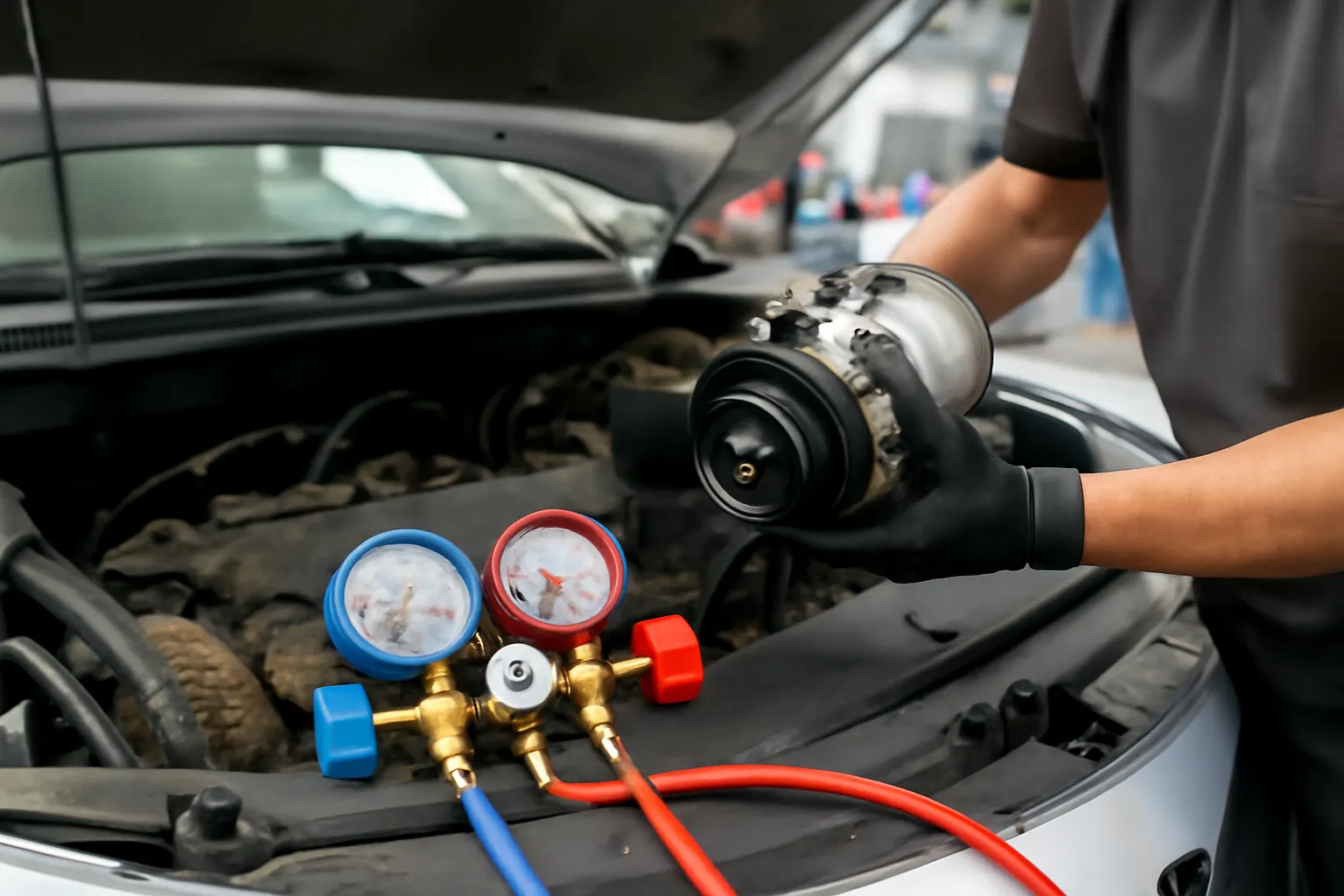
- Connect manifold gauges: Read both low- and high-side pressures with the system running.
- Interpret readings:
- Low pressures on both sides: Indicates low refrigerant or failed compressor.
- Normal low, high high: Possible condenser blockage or overcharge.
- High low, low high: Internal compressor damage.
4. Performance and Noise Evaluation
- Listen for abnormal sounds: Grinding or squealing suggests bearing or internal component failure.
- Monitor vent temperature: Compare actual output to expected cooling; a rise signals loss of compression.
5. Leak Detection
- Use UV dye or electronic leak detector: Pinpoint hard-to-see leaks at seals, hoses, or compressor body.
Common AMC AC Compressor Failure Modes
Understanding the most frequent compressor failure modes in AMC vehicles helps target repairs and prevent recurrence.
Clutch and Pulley Failures
- Symptoms: No clutch engagement, burning smell, or metallic noise.
- Causes: Coil burnout, pulley bearing wear, or seized compressor.
Internal Seizure
- Symptoms: Loud knocking, engine stalling when AC engaged, blown AC fuse.
- Causes: Lack of lubrication, foreign debris, or excessive heat.
Refrigerant Leaks
- Symptoms: Gradual loss of cooling, visible oil at joints.
- Causes: Aged seals, cracked hoses, or corrosion at fittings.
Excessive Cycling
- Symptoms: Compressor rapidly turns on and off.
- Causes: Low refrigerant, faulty pressure switch, or incorrect thermostat calibration.
Professional Troubleshooting Techniques
Advanced diagnostic methods can distinguish between component and system-wide failures. Consider these techniques for reliable results:
Electrical Diagnostics
- Load test the clutch coil: Measure resistance and check for open circuits.
- Bypass relays temporarily: To verify if the clutch or wiring is at fault.
System Flushing and Inspection
- Flush AC lines: Remove debris and contaminants after a compressor failure.
- Inspect for metal shavings: Presence indicates internal compressor breakdown—system cleaning and drier replacement required.
Pressure and Temperature Profiling
- Log pressure readings under various engine speeds: Identify intermittent compressor performance drops.
- Use infrared thermometer: Check temperature differentials across the condenser and evaporator.
Detailed Troubleshooting Checklist
Use this comprehensive checklist during AMC AC compressor diagnosis:
| Step | Action | Expected Result | Possible Faults if Abnormal |
|---|---|---|---|
| 1 | Inspect compressor clutch | Engages with AC on | Faulty clutch coil, relay, or low refrigerant |
| 2 | Measure voltage at clutch | 12V present | Electrical fault, bad switch, blown fuse |
| 3 | Observe belt condition | Tight, no cracks | Loose/slipping belt, noise, or non-operation |
| 4 | Check for leaks | No visible oil | Seal/hose failure, refrigerant loss |
| 5 | Gauge system pressures | Manufacturer spec | Low refrigerant, internal damage, blockage |
| 6 | Listen for noise | Quiet operation | Bearing failure, internal damage |
| 7 | Test vent temperature | Cold air | Low refrigerant, compressor inefficiency |
When to Repair vs. Replace Your AMC AC Compressor
Not all compressor issues require full replacement. Use these criteria:
- Repair: Clutch or electrical faults, minor leaks at serviceable seals, belt or pulley issues.
- Replace: Internal seizure, extensive leakage, contamination (metal shavings), repeated electrical failures.
Always flush the system after compressor replacement to prevent new component damage from residual debris.
Sourcing Quality AMC AC Compressor Parts
Choosing the right replacement compressor is crucial for long-term reliability. Consider these factors:
- OEM vs. Aftermarket: OEM compressors ensure direct fit and performance, but quality aftermarket units can offer cost savings if they meet SAE standards (SAE Standards).
- Material and design improvements: Look for compressors utilizing advanced materials for improved wear resistance (Materials Technologies).
- Warranty and support: Reputable suppliers offer warranties and technical support.
For detailed installation best practices, see the AMC AC Compressor Installation Guide.
Preventing Future AC Compressor Failure
Proactive maintenance extends the life of your AMC’s AC system:
- Regularly inspect and replace belts and hoses before visible wear.
- Check refrigerant charge and oil level annually.
- Run the AC at least once a month to keep seals lubricated.
- Replace the receiver/drier or accumulator whenever the system is opened.
For a full preventive schedule, refer to the AMC AC Compressor Maintenance Schedule.
Safety and Environmental Considerations
Proper AC compressor service is critical for vehicle safety and environmental compliance:
- Wear protective eyewear and gloves when working with refrigerants.
- Use certified refrigerant recovery equipment to prevent atmospheric release.
- Dispose of old compressors and refrigerant according to local regulations.
For more on equipment safety and standards, review the NHTSA Vehicle Safety and Equipment guidelines.
Advanced AMC AC Compressor Troubleshooting Tips
- Check for TSBs and Recalls: Some AMC models may have manufacturer bulletins or recalls related to AC compressor design or performance. Consult the NHTSA Recalls Database.
- Monitor for system contamination: After a catastrophic failure, replace the expansion valve/orifice tube and flush all lines.
- Relearn or reset control modules: If your AMC has electronic climate control, perform necessary resets after compressor replacement.
Fitment and Compatibility: Ensuring the Right AMC AC Compressor
Fitment errors can lead to premature failure or poor performance. Always:
- Cross-reference part numbers with your AMC’s model, year, and engine code.
- Compare mounting points and pulley configurations before installation.
- Check refrigerant type compatibility (R-12 vs. R-134a conversions).
For a technical breakdown of compressor engineering and fitment, see AMC AC Compressor: Engineering and Performance.
The AutoPartEx Advantage
At AutoPartEx, we combine deep technical expertise with a commitment to quality and fitment accuracy. Our curated selection of AMC AC compressors and components is backed by industry standards and real-world testing. Whether you need diagnostic support, installation guidance, or help sourcing the right part, our technical editorial team and customer service specialists are ready to assist. Browse our full AMC AC Compressor Guide for more resources, or connect with our experts for one-on-one troubleshooting.
Expert Action: Restore and Upgrade Your AMC AC System
If your AMC’s AC compressor is underperforming or has failed, don’t delay diagnostics or repairs. Use the checklists and procedures above to identify root causes, select the right replacement, and restore optimal cooling. For complex issues or persistent failures, consult a qualified automotive HVAC technician and leverage AutoPartEx’s resources for the latest technical updates, fitment data, and parts availability.