
Supercharger/Turbocharger
Supercharger and Turbocharger Selection and Service Guide
Many drivers focus on engine upgrades but overlook the unique demands of superchargers and turbochargers. These forced induction components play a critical role in both performance and reliability. Understanding their selection, service, and potential issues is essential for anyone considering repair or replacement. This guide helps you navigate the process with practical steps and evidence-based advice, ensuring you make informed decisions for your vehicle’s forced induction system.
Showing 1–8 of 134 products


More Supercharger/Turbocharger options
Filtering for Supercharger/TurbochargerBrowse nearby inventory for this category without leaving the page. Use search to filter by price, part number, or city.
No Data Available
Please check back soon when more inventory is available for this part.
Supercharger and Turbocharger Selection and Service Guide
Why Forced Induction Components Deserve Special Attention
When discussing vehicle performance, enthusiasts often highlight horsepower gains and tuning, but the supercharger or turbocharger itself is rarely the first topic. Yet, these components are responsible for delivering the increased airflow that makes those power gains possible. Their operation under extreme heat and pressure means that even minor issues can have outsized effects on engine health and performance. Overlooking the unique maintenance and selection needs of these parts can lead to missed opportunities for reliability and efficiency.
Many owners assume that a supercharger or turbocharger is a set-and-forget upgrade, but these systems require careful consideration throughout their lifespan. From initial selection to ongoing maintenance, the right approach can prevent costly repairs and optimize vehicle performance. The complexity of forced induction systems also means that diagnosing issues is not always straightforward. Symptoms like reduced power, increased exhaust smoke, or unusual noises may point to a failing component, but pinpointing the cause takes more than a casual inspection.
It’s easy to underestimate the importance of proper part selection and service for superchargers and turbochargers. Not all units are created equal, and compatibility can vary widely even within a single model year. Understanding the nuances of these components—how they interact with your engine, what maintenance they require, and how to spot early signs of trouble—can make the difference between a reliable upgrade and a persistent headache. This guide will help you navigate those nuances with confidence.

Understanding Supercharger and Turbocharger Challenges
Superchargers and turbochargers are among the most demanding components in any modern performance vehicle. They operate at high speeds and temperatures, forcing more air into the engine to boost power. However, this increased stress means they are also more susceptible to wear, leaks, and failures than naturally aspirated components. A minor issue in a forced induction system can quickly escalate, potentially leading to engine damage if not addressed promptly.
One of the main challenges with these components is their complex integration into the engine system. Turbochargers rely on exhaust gas flow, while superchargers are mechanically driven. Both require precise oiling, cooling, and mounting. A failure in any of these support systems can compromise the forced induction unit itself. For example, oil starvation can cause bearing failure, while improper mounting can lead to misalignment and rapid wear. These risks make it essential to understand the specific requirements of your vehicle’s setup.
Diagnosing issues with superchargers and turbochargers is often more complicated than with other engine parts. Symptoms such as a sudden drop in boost pressure, excessive smoke, or whining noises may indicate a problem, but these signs can also result from unrelated issues like vacuum leaks or sensor malfunctions. Without a systematic approach, owners may misdiagnose the root cause, leading to unnecessary part replacements or further damage.
The risk of selecting an incompatible or subpar replacement part is another significant concern. Aftermarket options abound, but not all are engineered to the same standards or for the same applications. Using a supercharger or turbocharger that does not match your engine’s specifications can result in poor performance, increased emissions, or even catastrophic failure. It is crucial to verify fitment, quality, and compatibility before making a purchase.
Maintenance requirements for forced induction systems are often overlooked. Unlike standard engine components, superchargers and turbochargers may have unique service intervals, lubrication needs, and inspection points. Neglecting these can shorten the lifespan of the unit and impact the overall reliability of your vehicle. Owners should familiarize themselves with the recommended maintenance procedures for their specific system and adhere to them rigorously.
Finally, the stakes for proper repair and replacement are high. A failed supercharger or turbocharger can lead to significant engine damage, costly repairs, and extended downtime. Given the investment in performance and reliability, taking shortcuts or relying on guesswork is never advisable. Instead, a methodical approach to diagnosis, selection, and service is essential to protect both your vehicle and your wallet.
A Practical Guide to Forced Induction Diagnosis and Selection
The first step in addressing supercharger or turbocharger issues is a thorough and systematic diagnosis. Begin by documenting all symptoms, such as loss of power, unusual noises, smoke, or check engine lights. Use a scan tool to retrieve any diagnostic trouble codes (DTCs) that may be present. These codes can provide valuable clues about sensor readings, boost pressure, or airflow anomalies, helping to narrow down the potential causes.
Next, perform a visual inspection of the forced induction system. Check for obvious signs of oil leaks, damaged hoses, or loose connections. Pay special attention to the intercooler and piping, as leaks in these areas can cause a drop in boost pressure and affect engine performance. If you suspect a boost leak, a pressure test can help identify the exact location of the problem. See the guide on Boost Pressure Testing for Forced Induction Engines for step-by-step instructions.
If the visual inspection does not reveal the issue, consider more advanced diagnostic techniques. For turbochargers, inspect the turbine and compressor wheels for damage or excessive play. Check the wastegate and actuator for proper operation. For superchargers, listen for abnormal bearing noises and check the drive belt for wear or slippage. If you are unsure about any findings, consult a professional with experience in forced induction systems for a second opinion.
Once the root cause has been identified, it’s time to select the appropriate replacement part. Start by verifying the exact make, model, and engine code of your vehicle. Even small differences in engine configuration can affect compatibility. Use reputable parts catalogs and cross-reference OEM part numbers to ensure a proper match. If considering aftermarket options, research the manufacturer’s reputation and look for independent reviews or test data.
When comparing new, remanufactured, and salvage parts, weigh the pros and cons carefully. New parts typically offer the greatest reliability but at a higher cost. Remanufactured units can be a cost-effective alternative if rebuilt to high standards. Salvage parts may be suitable for budget-conscious repairs but carry higher risks due to unknown history. The FTC: Auto Repair Basics recommends understanding the type of part you are purchasing and obtaining a written estimate detailing parts and labor.
Before installation, review the manufacturer’s instructions and any technical service bulletins related to your vehicle’s forced induction system. Some installations may require additional steps, such as priming the turbocharger with oil or resetting the engine control module. Follow all torque specifications and use new gaskets and seals where recommended. After installation, perform a thorough check for leaks and proper operation before returning the vehicle to service.
Routine maintenance is key to extending the life of your supercharger or turbocharger. Follow the service intervals outlined in your owner’s manual or by the component manufacturer. This may include regular oil changes, inspection of hoses and clamps, and periodic cleaning of the intercooler. Keep detailed records of all maintenance and repairs, as this information can be invaluable for future diagnostics or warranty claims.
Finally, stay informed about recalls or safety notices related to your vehicle’s forced induction system. Use the NHTSA: Vehicle Recalls database to check for any open recalls by VIN. If a recall is issued, follow the manufacturer’s instructions for free repair or replacement. This proactive approach helps ensure both safety and compliance with federal regulations.
Evidence-Based Guidance for Forced Induction Repairs
The Federal Trade Commission (FTC) provides clear recommendations for consumers facing complex or expensive auto repairs, such as supercharger or turbocharger replacement. The FTC: Auto Repair Basics document advises obtaining a written repair estimate that identifies the condition to be repaired, the parts needed, and anticipated labor charges. This step is especially important for forced induction repairs, as costs can vary widely depending on the part type—new, remanufactured, or salvage—and the complexity of the installation. The FTC also recommends considering a second opinion for complicated repairs and ensuring the technician has experience with your specific make or model. This guidance does not guarantee a particular repair outcome but helps consumers make informed decisions and avoid unnecessary expenses.
The FTC further distinguishes between new, remanufactured/rebuilt/reconditioned, and salvage parts. New parts generally provide the highest reliability, while remanufactured units can be a cost-effective alternative if rebuilt to high standards. Salvage parts, sourced from other vehicles without alteration, may be less expensive but carry greater risk due to unknown wear or damage. The FTC advises consumers to understand the type of part being purchased and to get all warranty terms in writing. This distinction is crucial when selecting a supercharger or turbocharger, as the wrong choice can lead to premature failure or compatibility issues. However, the FTC document does not provide technical specifications for any specific vehicle or part; it offers only general consumer advice.
The National Highway Traffic Safety Administration (NHTSA) offers a robust process for identifying and addressing safety defects in vehicle components, including forced induction systems. According to NHTSA: Vehicle Recalls, owners can use their vehicle identification number (VIN) to check for open recalls related to superchargers, turbochargers, or associated components. This process helps ensure that known safety issues are addressed by the manufacturer at no cost to the owner. While the NHTSA database is a valuable resource, it does not confirm that a specific vehicle or part is currently under recall unless a VIN search indicates an open campaign. It is therefore essential for owners to check their vehicle’s status regularly, especially after purchasing or installing a replacement part.
The NHTSA also outlines the recall process, which begins with consumer complaints and may lead to investigations and, if warranted, manufacturer-initiated recalls. If a forced induction component is found to create an unreasonable safety risk or fails to meet minimum safety standards, the manufacturer must announce a recall and provide a remedy—typically repair, replacement, or refund. Owners are notified by mail and should follow any interim safety guidance provided. This process ensures that widespread defects in superchargers or turbochargers are addressed systematically, but it does not cover non-safety-related issues or components more than 15 years old, except where extended coverage is offered. Thus, recall checks should be part of a broader maintenance and inspection routine.
In addition to these consumer resources, technical guides such as How to Diagnose Turbocharger Failures and Boost Pressure Testing for Forced Induction Engines provide step-by-step instructions for diagnosing and addressing common issues in forced induction systems. These guides emphasize the importance of methodical testing, including pressure checks, visual inspections, and component-specific diagnostics. While these resources do not substitute for professional expertise, they empower owners to participate actively in the diagnostic process and communicate more effectively with repair shops. They also highlight the value of documenting symptoms and test results before proceeding with repairs.
When comparing supercharger and turbocharger options, the Supercharger vs. Turbocharger: Pros, Cons, and Application article offers a detailed overview of the operational differences, advantages, and drawbacks of each system. This information can help owners decide which type of forced induction is best suited to their driving needs and maintenance preferences. However, the article does not provide vehicle-specific fitment data or endorse particular brands; it serves as a general comparison tool for informed decision-making. Owners should supplement this information with vehicle-specific research and consultation with experienced technicians.
Finally, the Evolution of Forced Induction: From Roots Blowers to Modern Turbos blog post traces the development of forced induction technology and explains how modern systems have improved in efficiency, reliability, and serviceability. Understanding this evolution can help owners appreciate the technical advances in current supercharger and turbocharger designs and set realistic expectations for maintenance and performance. However, as with other general resources, this article does not substitute for a detailed review of your vehicle’s specific requirements or a professional diagnostic assessment.
Take the Next Step Toward Reliable Forced Induction
If you’re considering a supercharger or turbocharger replacement, start by gathering detailed information about your vehicle and documenting any symptoms. Use reputable guides and resources to inform your diagnostic process, and consult experienced technicians when in doubt. Always verify part compatibility before purchase and keep records of all repairs and maintenance. For more information, explore our Supercharger/Turbocharger category and related diagnostic guides to ensure your next upgrade or repair is a success.
References
- NHTSA: Vehicle Recalls
- FTC: Auto Repair Basics
References
- NHTSA: Vehicle Recalls - NHTSA, accessed 2026-11-01
- FTC: Auto Repair Basics - FTC, accessed 2026-11-01
Related Guides & Articles

How to Diagnose Turbocharger Failures
To quickly determine if your turbocharger is failing, follow these steps: Listen for Unusual Noises: Whining, siren sounds, or metallic scraping from the turbo area. Check for Excessive Smoke: Blue, black, or white smoke from the exhaust, especially under boost. Monitor Boost Pressure: Use a gauge or scan tool to see if the turbo is making proper boost. Inspect for Oil Leaks: Look for oil in the intake, intercooler, or exhaust.
View Guide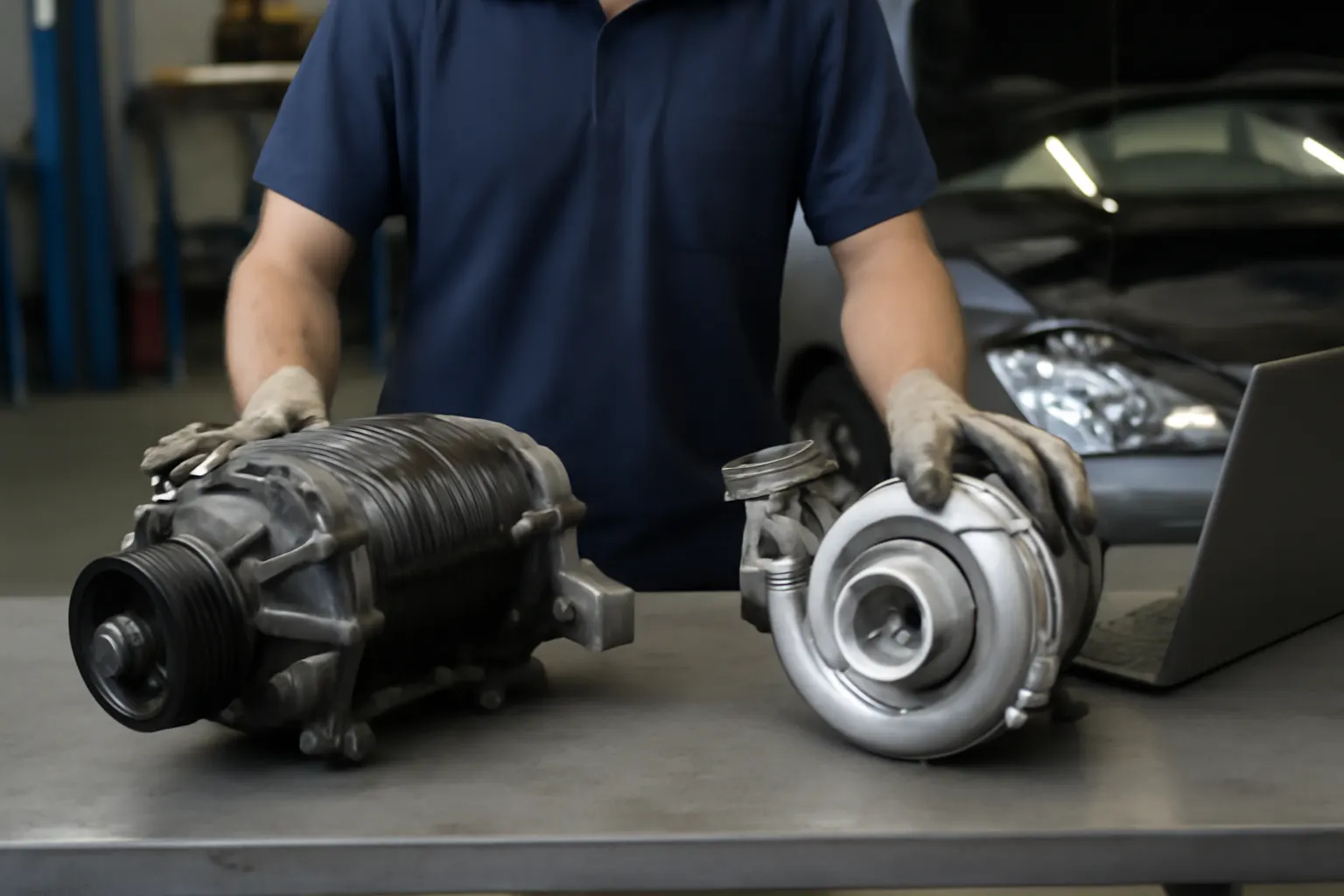
Supercharger vs. Turbocharger: Choosing the Right Upgrade
When it comes to extracting more power from your engine, forced induction reigns supreme. The two leading contenders—superchargers and turbochargers—promise significant gains in horsepower and torque, but each system offers unique advantages and trade-offs. Whether you’re building a street machine, prepping a track car, or simply want more passing power for your daily driver, understanding the differences between superchargers and turbochargers is critical to making the right upgrade for your vehicle and driving style.
Read More
Boost Pressure Testing for Forced Induction Engines
Boost pressure testing is the cornerstone of diagnosing, tuning, and maintaining any forced induction engine—whether supercharged or turbocharged. By accurately measuring and analyzing boost levels with the right tools, you can reveal hidden faults, optimize performance, and protect your investment in performance upgrades. This comprehensive AutoPartEx guide walks you through practical boost pressure testing using boost gauges and pressure testers, with clear diagnostic checklists, actionable troubleshooting steps, and insider tips for both enthusiasts and professionals.
View Guide
The Evolution of Forced Induction: From Roots Blowers to Modern Turbos
Forced induction has revolutionized automotive performance, transforming the way engines deliver power, efficiency, and responsiveness. From the rudimentary Roots blowers of the early 20th century to today’s electronically controlled, twin-scroll turbochargers, the journey of superchargers and turbochargers is a testament to relentless engineering progress. Whether you’re upgrading your project car or seeking to understand the technology under your hood, knowing the evolution of forced induction provides crucial context for making informed decisions about repairs, upgrades, and maintenance.
Read More