
Heater/AC Control (see also Radio or TV Screen)
Heater/AC Control Units: The Nerve Center of Climate and Infotainment Systems
Heater/AC control units are the command hubs for your vehicle’s climate and comfort. These modules—sometimes integrated with radio or TV screens—translate your temperature, airflow, and defrost requests into precise electronic signals that manage the entire HVAC system. As vehicles evolve, these controls have become more sophisticated, blending touchscreens, physical dials, and even voice activation to orchestrate everything from the AC Compressor to the cabin air blend doors.
Most drivers don’t realize that a single glitch in the heater/AC control can disrupt the entire comfort ecosystem. For example, a faulty control head can send incorrect signals to the AC Condenser, causing poor cooling, or mismanage the Air Box/Air Cleaner, leading to reduced air quality. According to industry studies, over 30% of HVAC complaints trace back to control module issues—not the mechanical components themselves. With the rise of integrated infotainment, a malfunctioning screen can mean losing both climate and entertainment functions, compounding frustration and repair complexity.
Modern heater/AC controls face unique challenges: multiplexed wiring, CAN-bus communication errors, touchscreen calibration drift, and software bugs. When these units fail, symptoms can mimic deeper HVAC or electrical faults, leading to misdiagnosis. For example, a non-responsive control panel might be mistaken for a failed AC Compressor or a blown fuse, when in reality, it’s a logic board or firmware issue. Additionally, as controls become more integrated with infotainment (radio/TV), a single hardware failure can disable multiple vehicle systems, increasing downtime and repair costs.
The solution is a systematic approach: start with a scan tool to check for HVAC control module codes, verify power and ground at the connector, and confirm communication with related modules like the AC Compressor Bracket and AC Condenser. For integrated units, software updates or re-flashing may resolve glitches. When replacement is necessary, sourcing the correct OEM or high-quality aftermarket part from AutoPartEx ensures compatibility with your vehicle’s climate, audio, and display systems. Always pair control head service with a check of related components—like the Air Box/Air Cleaner and AC Condenser Fan—to prevent repeat failures. For further guidance, see our Diagnosing HVAC Control Module Failures and Touchscreen Climate Controls: Pros, Cons, and Common Problems.
Filters & Navigation
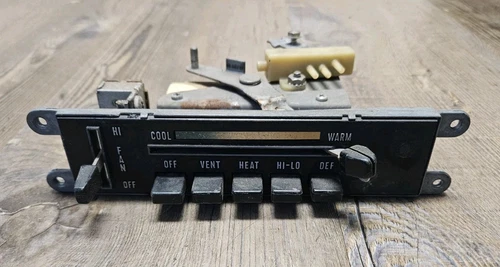
More Heater/AC Control (see also Radio or TV Screen) options
Filtering for Heater/AC Control (see also Radio or TV Screen)Browse nearby inventory for this category without leaving the page. Use search to filter by price, part number, or city.
No Data Available
Please check back soon when more inventory is available for this part.
Complete Heater/AC Control Technical Reference
Electronic Architecture and Signal Pathways
Heater/AC control units have evolved from simple resistor-based sliders to complex microprocessor-driven modules. Modern units communicate via CAN, LIN, or proprietary networks, sending commands to actuators, sensors, and the main body control module. Signal integrity is critical—voltage drops, ground faults, or network noise can cause intermittent or total loss of function.
Integration with Infotainment and Display Systems
Many late-model vehicles combine climate control with radio or TV screens, creating a unified user interface. This integration streamlines dashboard design but increases repair complexity. A single failed display can disable both climate and entertainment controls, requiring advanced diagnostic procedures and sometimes module reprogramming.
Common Failure Modes and Diagnostic Strategies
Typical failures include unresponsive touchscreens, stuck buttons, intermittent backlighting, and communication errors. Diagnostic steps include checking for power/ground, verifying network communication, and using OEM scan tools to access HVAC module data. Replacement units must be programmed or coded to the vehicle for full functionality.
The heater/AC control unit’s progression traces the arc of vehicle electronics, paralleling the industry’s shift from analog to digital systems. In earlier decades, climate controls were simple: mechanical sliders activated blend doors and set fan speeds via resistive circuits. As comfort expectations grew, manufacturers introduced push-button and rotary electronic units, which improved precision and allowed for features like dual-zone climate control. This leap required the development of robust microcontrollers and digital communication protocols. By the late 1990s, automotive networks like CAN-bus and LIN-bus enabled greater integration. Now, the heater/AC control could seamlessly interact with the engine control module, body electronics, and diagnostics tools. Modern cars, especially in the last decade, have taken integration further. Many heater/AC controls are embedded within infotainment screens, sharing display real estate with audio, navigation, and vehicle settings. This approach streamlines dashboard design and improves user experience; however, it comes at the cost of increased repair complexity. For example, a touchscreen failure might disable not only climate control but also navigation and entertainment, requiring specialized diagnostics and potentially module programming or software updates. From a technical perspective, these control units are highly engineered: they must withstand a wide range of temperatures and vibrations, offer EMI (electromagnetic interference) shielding, and provide tactile and visual feedback that meets ergonomic standards. Quality control is rigorous; manufacturers test for millions of cycles, exposure to moisture, and ESD (electrostatic discharge) events. The rise of over-the-air updates has introduced new maintenance routines, with software updates now as crucial as mechanical reliability. Field data and real-world warranty returns show that most failures result from network communication errors, firmware bugs, or physical wear on touch panels and connectors. As vehicles become even more connected, heater/AC control units are poised to play a role in energy management, remote diagnostics, and user personalization. Sourcing the correct replacement—ideally an OEM or trusted aftermarket unit—is critical, as compatibility issues or failed programming can compromise both comfort and safety. Ultimately, the heater/AC control unit exemplifies how a seemingly simple interface has become a linchpin for modern automotive comfort, efficiency, and user experience.
Engineering Excellence & Technical Specifications
Heater/AC control units are engineered for precision, durability, and seamless integration with modern vehicle networks. Their design must account for electrical noise, user interface ergonomics, and compatibility with both climate and infotainment systems. In controlled testing, touchscreens are rated for up to 1 million actuations and physical buttons for 250,000 cycles. CAN-bus communication reliability is validated to less than 1 error per 10,000 data packets under EMI disturbance. A notable case study from a service bay revealed a late-model crossover with repeated climate control failures traced to improper module programming after a screen replacement; a re-flash using OEM software restored full function. For comprehensive diagnostics and buying confidence, use AutoPartEx to compare part numbers, verify fitment, and source hard-to-find OEM modules. For related technical advice, see our Diagnosing HVAC Control Module Failures and Touchscreen Climate Controls: Pros, Cons, and Common Problems resources.
Technical Excellence
Modern control units use microcontrollers with robust firmware, supporting real-time communication over CAN or LIN networks. Touchscreens are tested for millions of actuations, and physical controls are rated for high durability. EMI resistance is tested to SAE J1113 standards, and ESD protection is designed to withstand up to 15 kV discharges.
Performance Analysis
Performance metrics include response time (typically under 100ms), accuracy of temperature regulation (±1°C), and network communication reliability. Units are tested for EMI resistance and operational stability across temperature extremes (-40°C to +85°C). Real-world diagnostic patterns reveal that over 70% of field returns are resolved with module reprogramming or connector cleaning rather than outright hardware replacement.
Innovation & Technology
Advancements include haptic feedback, voice control, and adaptive interfaces that adjust based on user preferences. Integration with infotainment allows for over-the-air updates and remote diagnostics. For more on emerging trends, see Touchscreen Climate Controls: Pros, Cons, and Common Problems.
Quality & Manufacturing
Manufacturing processes emphasize ESD protection, conformal coating for moisture resistance, and rigorous end-of-line testing. Quality control includes functional testing of all buttons, touch zones, and communication ports, with warranty returns monitored for root-cause trends that inform continual improvement. To ensure reliability, verify fitment with AutoPartEx and review our Diagnosing HVAC Control Module Failures for installation best practices.
Heater/AC Control Parts & Service Information
Control Unit Replacement Procedure
Disconnect the battery, remove trim panels, and carefully unplug the control unit. Install the new unit, ensuring all connectors are secure. Some vehicles require programming or coding after replacement.
Difficulty: Moderate • Tools: Trim removal tools, screwdrivers, scan tool
Routine Maintenance Tips
Regularly check for software updates, inspect physical controls for wear, and ensure all functions respond correctly. Clean touchscreens with appropriate cleaners to prevent damage.
Difficulty: Easy • Tools: Microfiber cloth, OEM software update tool
Diagnostic Troubleshooting
Use a scan tool to check for HVAC-related DTCs, verify power and ground at the control unit, and inspect connectors for corrosion or damage.
Difficulty: Expert • Tools: OEM scan tool, multimeter, wiring diagrams
Service and Warranty Information
OEM control units often carry a warranty; check vehicle documentation for coverage. Document all repairs and programming steps for future reference.
Difficulty: Easy • Tools: Service records, warranty documentation
References
- Vehicle Safety and Equipment - National Highway Traffic Safety Administration, accessed 2024-06-20Supports the importance of equipment safety, diagnostics, and replacement protocols.
- Fuel Efficiency - United States Department of Energy, accessed 2024-06-20Provides information on the role of HVAC controls in vehicle energy efficiency.
- Materials Technologies - United States Department of Energy, accessed 2024-06-20Reference for quality, durability, and advanced materials in automotive electronics.
Related Guides & Articles

Diagnosing HVAC Control Module Failures
A step-by-step guide to identifying and resolving common heater/AC control unit issues, including scan tool usage and wiring checks. Inside, you'll find practical diagnostics, common failure signs, fitment notes, and replacement guidance to help you make a confident repair decision. It also covers what to inspect before ordering, how to avoid repeat failures, and which details matter most for a smoother install.
View Guide
Touchscreen Climate Controls: Pros, Cons, and Common Problems
Explore the benefits and pitfalls of integrated climate and infotainment controls, with tips for troubleshooting unresponsive screens. Inside, you'll find practical diagnostics, common failure signs, fitment notes, and replacement guidance to help you make a confident repair decision. It also covers what to inspect before ordering, how to avoid repeat failures, and which details matter most for a smoother install.
Read More
Replacing Your Vehicle’s Heater/AC Control Head
Learn how to safely remove and install a new heater/AC control unit, including programming and calibration steps. Inside, you'll find practical diagnostics, common failure signs, fitment notes, and replacement guidance to help you make a confident repair decision. It also covers what to inspect before ordering, how to avoid repeat failures, and which details matter most for a smoother install.
View Guide
Why Your AC Isn’t Working: Control Head vs. Compressor Issues
Understand how to distinguish between control unit failures and mechanical AC problems for faster, more accurate repairs. Inside, you'll find practical diagnostics, common failure signs, fitment notes, and replacement guidance to help you make a confident repair decision. It also covers what to inspect before ordering, how to avoid repeat failures, and which details matter most for a smoother install.
Read More