Isuzu Reach Auto Parts
Isuzu Reach: Key Considerations for Reliable Auto Parts Selection
When maintaining an Isuzu Reach, overlooked details can impact both safety and long-term reliability. Owners and fleet managers often focus on obvious repairs, but understanding how to verify part suitability and recall status is just as critical. This guide highlights practical steps and evidence-backed resources to help you make informed decisions about sourcing and servicing Isuzu Reach components, ensuring your vehicle remains dependable on the road. For more focused reading, explore Isuzu Maintenance Intervals and Service Checklist and Isuzu D-Max Performance Upgrades: What Works?.
Many Isuzu Reach owners and fleet managers prioritize scheduled maintenance and visible repairs, but may not consider the importance of verifying part compatibility and recall status before ordering or installing components. In the rush to keep vehicles operational, it’s easy to overlook the subtle but significant risks associated with using parts that might not be specifically suited for your model or that could be subject to open recalls. These overlooked steps can have a major impact on both safety and long-term vehicle performance.
The Isuzu Reach is widely used in commercial fleets, where uptime and reliability are crucial. While it’s common to focus on routine wear items like brakes or filters, the process of confirming whether a particular part is the right fit or has an outstanding recall can be neglected. This is especially true when parts are sourced from multiple suppliers or when maintenance is performed outside of dealership networks. Without careful verification, even a well-intentioned repair can introduce new risks.
Understanding how to check for recalls and document repairs is not just a matter of compliance—it’s an essential part of responsible vehicle stewardship. By making recall checks and repair documentation a regular habit, owners can protect their investment and ensure the safety of drivers and cargo. This guide will walk you through the practical steps and resources available to support informed parts selection and maintenance for your Isuzu Reach.
One of the most significant issues in commercial vehicle maintenance is the assumption that any part labeled for the Isuzu Reach will be a perfect fit and free from defects. In reality, parts catalogs and supplier listings do not guarantee compatibility or safety. Even reputable sources may not reflect recent recalls, technical service bulletins, or manufacturer updates. This can lead to the installation of components that may not perform as expected or, in rare cases, pose safety risks.
The process of managing a fleet of Isuzu Reach vehicles involves juggling multiple priorities, from minimizing downtime to controlling costs. However, neglecting to verify the recall status of a part or vehicle can result in costly repairs, liability issues, or even regulatory penalties. According to the National Highway Traffic Safety Administration (NHTSA), vehicle recalls are initiated when a safety defect or noncompliance with federal standards is identified. These recalls can affect a wide range of components, from airbags to electrical systems, and may not be immediately obvious during routine inspections.
Advertisement
0 Isuzu Reach Auto Parts
No Products Found
We're currently updating our inventory for Isuzu Reach parts.
Please check back soon or contact us for specific part availability.
More Isuzu Reach options
Filtering for Isuzu ReachBrowse nearby inventory for this model without leaving the page. Use search to filter by price, part number, or city.
No Data Available
Please check back soon when more inventory is available for this part.
Advertisement
A Hidden Factor in Isuzu Reach Maintenance Decisions
Many Isuzu Reach owners and fleet managers prioritize scheduled maintenance and visible repairs, but may not consider the importance of verifying part compatibility and recall status before ordering or installing components. In the rush to keep vehicles operational, it’s easy to overlook the subtle but significant risks associated with using parts that might not be specifically suited for your model or that could be subject to open recalls. These overlooked steps can have a major impact on both safety and long-term vehicle performance.
The Isuzu Reach is widely used in commercial fleets, where uptime and reliability are crucial. While it’s common to focus on routine wear items like brakes or filters, the process of confirming whether a particular part is the right fit or has an outstanding recall can be neglected. This is especially true when parts are sourced from multiple suppliers or when maintenance is performed outside of dealership networks. Without careful verification, even a well-intentioned repair can introduce new risks.
Understanding how to check for recalls and document repairs is not just a matter of compliance—it’s an essential part of responsible vehicle stewardship. By making recall checks and repair documentation a regular habit, owners can protect their investment and ensure the safety of drivers and cargo. This guide will walk you through the practical steps and resources available to support informed parts selection and maintenance for your Isuzu Reach.
Why Overlooking Recall and Part Verification Can Be Costly
One of the most significant issues in commercial vehicle maintenance is the assumption that any part labeled for the Isuzu Reach will be a perfect fit and free from defects. In reality, parts catalogs and supplier listings do not guarantee compatibility or safety. Even reputable sources may not reflect recent recalls, technical service bulletins, or manufacturer updates. This can lead to the installation of components that may not perform as expected or, in rare cases, pose safety risks.
The process of managing a fleet of Isuzu Reach vehicles involves juggling multiple priorities, from minimizing downtime to controlling costs. However, neglecting to verify the recall status of a part or vehicle can result in costly repairs, liability issues, or even regulatory penalties. According to the National Highway Traffic Safety Administration (NHTSA), vehicle recalls are initiated when a safety defect or noncompliance with federal standards is identified. These recalls can affect a wide range of components, from airbags to electrical systems, and may not be immediately obvious during routine inspections.
Another challenge is the variability in part quality and provenance. The Federal Trade Commission (FTC) distinguishes between new, remanufactured, and salvage parts, each with different implications for reliability and warranty coverage. Salvage parts, for example, are taken from another vehicle without alteration and may not meet the latest safety or performance standards for your Isuzu Reach. Without clear documentation or a written repair order, it can be difficult to track which type of part was installed and whether it meets the necessary specifications.
Fleet managers and independent owners alike may rely on third-party repair shops, which can introduce further uncertainty. Not all technicians have experience with the Isuzu Reach, and recommendations for extra services or non-OEM parts may not align with the manufacturer’s maintenance schedule. The FTC advises comparing shop recommendations with the official schedule and asking for justification when additional work is proposed. Failure to do so can result in unnecessary expenses or missed critical repairs.
The consequences of overlooking these verification steps can extend beyond immediate repair costs. An unrepaired recall, for instance, can compromise vehicle safety and expose owners to legal liability in the event of an accident. Furthermore, incomplete or inaccurate repair records can complicate future maintenance, resale, or warranty claims. For commercial operators, these risks are magnified by the potential for lost revenue due to vehicle downtime or regulatory noncompliance.
Ultimately, the problem is not just about finding the right part—it’s about ensuring that every component installed on your Isuzu Reach is safe, compliant, and properly documented. By understanding the limitations of catalog listings and the importance of recall checks, owners can avoid common pitfalls and maintain the integrity of their fleet. The next section outlines practical steps to address these challenges and make informed maintenance decisions.
Practical Steps for Selecting and Verifying Isuzu Reach Parts
The first step in responsible parts selection for your Isuzu Reach is to identify your vehicle’s unique 17-character Vehicle Identification Number (VIN). This number, typically located on the lower left of the windshield or on your registration card, is essential for accurate recall checks and parts compatibility verification. Using the VIN ensures that you are searching for information specific to your exact vehicle, rather than relying on general model-year data that may not reflect mid-year changes or special configurations.
Once you have your VIN, visit the official NHTSA recall lookup tool to check for any open recalls associated with your Isuzu Reach. The NHTSA database allows you to search by VIN or license plate, providing information on unrepaired recalls that require immediate attention. It’s important to note that this tool only displays recalls that have not yet been addressed; completed recalls and some recently announced campaigns may not appear right away. Therefore, it’s wise to check regularly, especially before major repairs or parts purchases.
When sourcing parts, request a written estimate from your repair shop or supplier that clearly identifies the condition to be repaired, the specific parts needed, and anticipated labor charges. The FTC recommends this approach to help you compare options and avoid misunderstandings about what is being installed on your vehicle. For expensive or complex repairs, consider seeking a second opinion or consulting a technician with documented experience working on Isuzu Reach vehicles. This extra step can help confirm the necessity and suitability of the proposed parts and services.
Understanding the type of part you are purchasing is also critical. New parts are manufactured to original specifications, while remanufactured or rebuilt parts have been restored to working condition. Salvage parts, in contrast, are removed from other vehicles without alteration and may have unknown histories. Ask your supplier or shop to specify which category your part falls into, and request documentation to support their claims. This information is vital for assessing reliability and warranty coverage.
After the repair or installation, obtain a completed repair order that lists the work performed, the parts used (including part numbers and descriptions), all associated costs, and the vehicle’s odometer reading. This documentation not only provides a record for future reference but also supports warranty claims and resale value. If your Isuzu Reach is part of a commercial fleet, maintaining detailed records can streamline compliance with regulatory requirements and facilitate preventive maintenance planning.
Compare any shop-recommended services with the manufacturer’s maintenance schedule, which can be found in your owner’s manual. If additional services are proposed, ask the technician to explain why they are necessary and how they differ from standard recommendations. This step helps ensure that you are not paying for unnecessary work and that critical maintenance is not overlooked. For the Isuzu Reach, following the official schedule is especially important given the vehicle’s commercial usage and the demands placed on its components.
If you encounter a safety problem or suspect a defect in a part or system, report it to NHTSA using their online complaint form. Your report contributes to the public database and may help initiate investigations or recalls if similar issues are reported by other owners. This process is a key part of the national vehicle safety system and helps protect all Isuzu Reach operators from emerging risks.
Finally, consider registering your Isuzu Reach with NHTSA’s SaferCar app or email alert system. These tools provide timely notifications about new recalls or safety issues affecting your vehicle. Staying informed allows you to address problems promptly and maintain the safety and reliability of your fleet. By following these practical steps, you can make confident, evidence-based decisions when selecting and servicing parts for your Isuzu Reach.
Published Guidance on Recall Checks and Repair Documentation
The National Highway Traffic Safety Administration (NHTSA) provides a comprehensive recall lookup tool that allows owners to check for open recalls using their vehicle’s VIN or license plate. According to the NHTSA, searching by VIN will reveal any unrepaired recalls for your specific Isuzu Reach, while searching by model and year provides general recall and investigation information. It is important to understand that the NHTSA tool will not display recalls that have already been repaired or some recently announced recalls for which not all VINs have been identified. This means that owners should check regularly, especially before purchasing or installing new parts, to ensure that no outstanding recalls are missed. The NHTSA also emphasizes the importance of registering your vehicle and checking for recalls at least twice a year to stay informed about new safety issues. This guidance applies to all vehicles covered by NHTSA, including commercial models like the Isuzu Reach. NHTSA: Vehicle Recalls
NHTSA’s recall process begins with owner complaints, which are added to a public database after personal information is removed. If multiple complaints about a particular product or vehicle are received, NHTSA may open an investigation to determine if a safety-related defect exists. If a recall is warranted, manufacturers are required to notify registered owners by mail and offer a remedy, which may include repair, replacement, refund, or, in rare cases, repurchase of the vehicle. NHTSA monitors the effectiveness of recalls and ensures that owners receive safe, free, and effective remedies. This process underscores the importance of keeping your contact information current and responding promptly to recall notifications. For Isuzu Reach owners, this means that proactive recall checks and prompt action on notifications are essential for maintaining vehicle safety and compliance. NHTSA: Vehicle Recalls
The Federal Trade Commission (FTC) offers general consumer advice on auto repairs, emphasizing the importance of obtaining a written repair estimate that identifies the condition to be repaired, the parts needed, and anticipated labor charges. The FTC also advises consumers to ask whether technicians have experience with their specific make or model, which is particularly relevant for Isuzu Reach owners given the vehicle’s commercial applications. For expensive or complicated repairs, the FTC recommends seeking a second opinion to ensure that the proposed work is necessary and appropriate. This guidance helps owners avoid unnecessary expenses and ensures that repairs are performed to a high standard. FTC: Auto Repair Basics
The FTC distinguishes between new, remanufactured/rebuilt, and salvage parts, noting that salvage parts are taken from other vehicles without alteration and may not meet the latest safety or performance standards. This distinction is crucial for Isuzu Reach owners who may be offered a choice of parts with different histories and reliability profiles. The FTC’s advice to request documentation and clarification about the type of part being installed helps consumers make informed decisions and assess the potential risks and benefits of each option. This evidence supports the recommendation to verify part provenance and obtain written records for all repairs. FTC: Auto Repair Basics
Repair documentation is another key area addressed by the FTC. The agency recommends that consumers obtain a completed repair order listing the work performed, parts used, costs, and odometer readings. This documentation serves multiple purposes: it provides a record for future maintenance, supports warranty claims, and can enhance the resale value of the vehicle. For Isuzu Reach fleet operators, detailed repair records are especially valuable for managing preventive maintenance and demonstrating compliance with regulatory requirements. The FTC’s guidance is not specific to any one vehicle but applies broadly to all vehicles, including commercial models like the Isuzu Reach. FTC: Auto Repair Basics
While the NHTSA and FTC provide robust guidance on recall checks and repair documentation, neither source offers technical specifications or failure rates for specific Isuzu Reach components. This means that owners should not assume that a part is compatible or defect-free based solely on catalog listings or supplier claims. Instead, the evidence supports a cautious, documentation-driven approach: verify recall status using the VIN, request detailed repair estimates, confirm technician experience, and maintain thorough records. These steps are grounded in published consumer protection guidance and are applicable to all Isuzu Reach maintenance scenarios.
In summary, the available evidence from NHTSA and FTC establishes a clear framework for responsible parts selection and maintenance: use the VIN to check for recalls, obtain written repair estimates and documentation, verify the type and provenance of parts, and compare shop recommendations with the manufacturer’s schedule. While these sources do not provide vehicle-specific failure data or guarantee part fitment, they offer practical, actionable steps that help Isuzu Reach owners minimize risks and maintain vehicle reliability. By following this evidence-based approach, owners can confidently manage their maintenance needs and protect their investment.
Take Control of Your Isuzu Reach Maintenance Today
Staying proactive with recall checks, repair documentation, and part verification is essential for the safety and longevity of your Isuzu Reach. Use your VIN to check for open recalls, request detailed repair documentation, and consult trusted consumer resources before authorizing repairs or parts purchases. By following these evidence-backed steps, you can ensure that your vehicle remains reliable, compliant, and ready for the demands of commercial service. For more information and parts selection support, visit our Isuzu Reach catalog page.
References
- NHTSA: Vehicle Recalls
- FTC: Auto Repair Basics
References
- NHTSA: Vehicle Recalls - NHTSA, accessed 2026-11-01
- FTC: Auto Repair Basics - FTC, accessed 2026-11-01
Related Guides & Articles

Isuzu Maintenance Intervals and Service Checklist
Isuzu trucks and SUVs are recognized for their robust engineering, longevity, and practical utility in both commercial and personal applications. To maximize your Isuzu’s reliability, performance, and safety, adhering to manufacturer-recommended maintenance intervals and understanding key service checkpoints is essential. This guide delivers a comprehensive overview of Isuzu maintenance intervals, common wear points, and essential service parts—empowering you to keep your vehicle running at peak efficiency and safety.
View Guide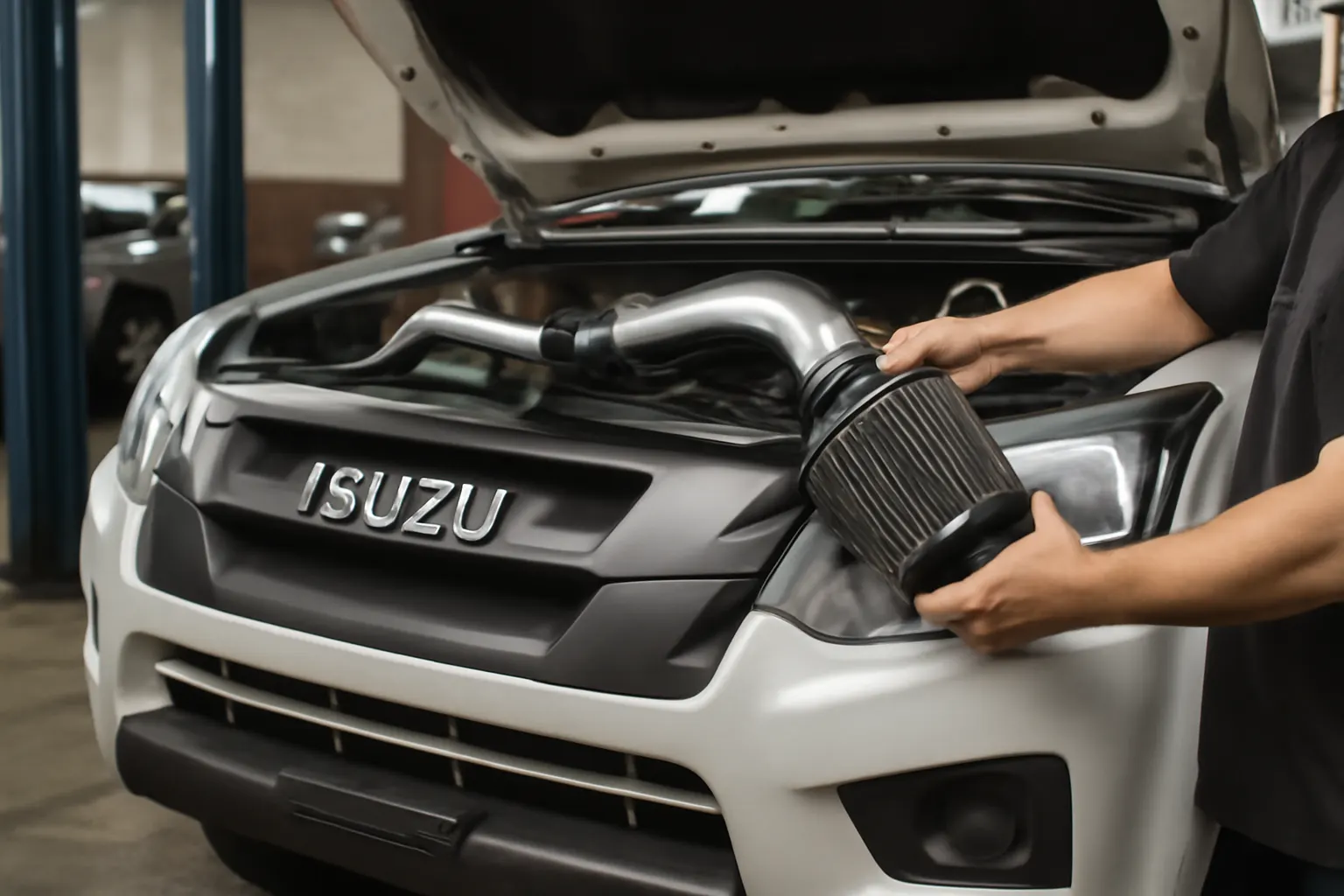
Isuzu D-Max Performance Upgrades: What Works?
Looking to enhance your Isuzu D-Max’s performance without sacrificing its legendary reliability? Proven upgrades—like intake, exhaust, ECU tuning, and suspension enhancements—can deliver noticeable gains in power, drivability, and efficiency. However, the key is balancing performance with the D-Max’s robust OEM engineering. This guide breaks down which upgrades genuinely work, where pitfalls lie, and how to maintain the reliability that makes the D-Max a global favorite. What performance upgrades actually work for the Isuzu D-Max?
Read More
Identifying Genuine Isuzu Parts: A Buyer’s Guide
When you need to replace a part on your Isuzu—whether it’s a D-Max, NPR, or another model—installing genuine components is critical for safety, reliability, and long-term performance. Counterfeit or substandard parts can compromise your vehicle’s operation, void manufacturer recommendations, and even put your safety at risk. This comprehensive guide from AutoPartEx will show you how to confidently identify authentic Isuzu parts, avoid common pitfalls, and ensure every replacement upholds the engineering standards that define your vehicle.
Read More
Asuna Platform Cross-Reference: Suzuki, Isuzu, and Geo
When searching for replacement parts for your Asuna, you’re often not just shopping for “Asuna” components. Due to the brand’s unique heritage as a North American badge engineered from Suzuki, Isuzu, and Geo platforms, many Asuna models share mechanical and body parts with these more widely available brands. This guide delivers a comprehensive, practical cross-reference for Asuna owners, technicians, and parts managers—so you can confidently source, install, and verify the correct components for successful repairs and maintenance.
View Guide