
Amc American Engines Parts
AMC Rambler American Engine Assembly: Model-Specific Solutions for the Compact Pioneer
The AMC Rambler American engine assembly evolved from the early 195.6 inline-six (L-head and OHV) to the later 199/232 inline-sixes and, in select years, optional small-block V8 power. Understanding Rambler American–specific fitment, cooling, and accessory-drive differences is essential to keeping these compact pioneers reliable and enjoyable on modern roads.
What Most Rambler American Owners Don't Realize About Engine Assembly: Early 195.6 engines came in both L-head and OHV forms with different cylinder head, manifold, and accessory patterns that are not directly interchangeable. Mid-1964+ chassis revisions supporting the 199/232 family require different mounts and throttle/kickdown linkages. Many owners also overlook unleaded-fuel valve seat recession on high-mileage heads, and rope-style rear main seals that can leak if not installed with model-correct tools and procedures.
Rambler American powertrains present year- and family-specific service challenges. The 195.6 cooling passages and head gasketing require careful surface prep and torque sequencing to prevent hot spots, while 199/232 timing set wear and distributor advance issues can cause drivability complaints that mimic carburetion problems. Optional V8 models demand V8-specific front springs, cooling, and exhaust routing to avoid heat soak and detonation under load.
Smart Rambler American owners protect their investment by selecting genuine-spec Rambler American engine components and following engine-family-specific procedures. Prioritize timing system parts inspection on 199/232 engines, address valve train components and hardened seats during head work on 195.6/232, and ensure cooling system components meet capacity for V8 applications. Verifying mount geometry and accessory brackets by model year prevents misalignment and premature wear.
Advertisement
0 AMC American Engines Parts
No Products Found
We're currently updating our inventory for AMC American engines parts.
Please check back soon or contact us for specific part availability.
More Engines options for AMC American
Filtering for AMC American • EnginesBrowse nearby inventory for this model and category without leaving the page.
No Data Available
Please check back soon when more inventory is available for this part.
Advertisement
Rambler American Engine Technical Specifications & Analysis
Rambler American Engine Evolution and What It Means for Reliability
The Rambler American (1958–1969) spanned three primary engine eras, each with unique service considerations.
195.6 Inline-Six (L-head and OHV)
The early 195.6 engines offered robust low-speed torque for compact-car duty. Field reliability depends on proper cooling-system service, correct head-gasket selection (L-head vs. OHV), and precise torque patterns to avoid localized overheating. Valve train noise often traces to lifter wear or incorrect valve lash (OHV), while rope rear main seals require careful installation to seal properly.
199/232 Inline-Six (1964+)
The new seven-bearing six introduced improved breathing, smoother operation, and better parts availability today. Common age-related issues include timing set stretch (retards cam timing and reduces drivability) and distributor vacuum/centrifugal advance sticking, which can masquerade as carburetor troubles. When serviced to spec, these engines deliver excellent longevity.
Optional Small-Block V8 (late-model American)
Select later American models could be ordered with V8 power, which imposes added thermal load and chassis requirements. Correct radiator core thickness, shroud fitment, and heat management are essential for stop-and-go drivability. Reinforcing fuel, ignition timing, and exhaust clearances prevents pre-ignition during hot weather and grade climbs.
Across all eras, reliability hinges on family-correct parts, attention to cooling capacity, and careful setup of ignition timing and valve train geometry.
Rambler American Engine Installation & Maintenance Guide
Identify Engine Family & Year Changes
Verify 195.6 L-head vs. OHV, or 199/232 family, and note mid-year bracket/mount differences before ordering parts.
Timing & Ignition Baseline (199/232)
Replace worn timing sets, confirm distributor advance curves, and baseline ignition timing to spec for drivability.
Cooling Capacity & Sealing
Pressure test radiator, confirm shroud fitment, and use family-correct head gasket/torque patterns on 195.6; ensure V8 systems meet thermal load.
Related Guides & Articles

Amc American Suspension Upgrades
AMC American vehicles—produced from 1958 through the early 1970s—are iconic for their compact size, robust drivetrains, and distinctive American engineering. However, their original suspension systems, especially the early kingpin front ends, often fall short of modern safety and handling expectations. Upgrading the suspension not only revitalizes road manners but also dramatically improves safety, tire life, and driving confidence.
Read More
History Abs American Cars
The evolution of anti-lock brake systems (ABS) in American vehicles is a story of innovation, adaptation, and, at times, rare applications—none more unique than the AMC Ambassador’s early foray into ABS technology. This article delivers a comprehensive, technical exploration of ABS history in the US, with a sharp focus on the AMC Ambassador’s anti-lock brake pump, its fitment, failure patterns, and replacement strategies.
Read More
Abs Evolution 1970s American Cars
In the late 1970s, American automakers began integrating anti-lock braking systems as a response to increasing safety standards and consumer demand for advanced driver aids. While ABS technology had been explored earlier in aviation and high-end European vehicles, the American market saw broader adoption and innovation during this period. AMC, Ford, General Motors, and Chrysler each developed early ABS variants—sometimes called "antilock" or "sure-track" systems—aimed at improving vehicle control during emergency stops and on slippery surfaces.
Read More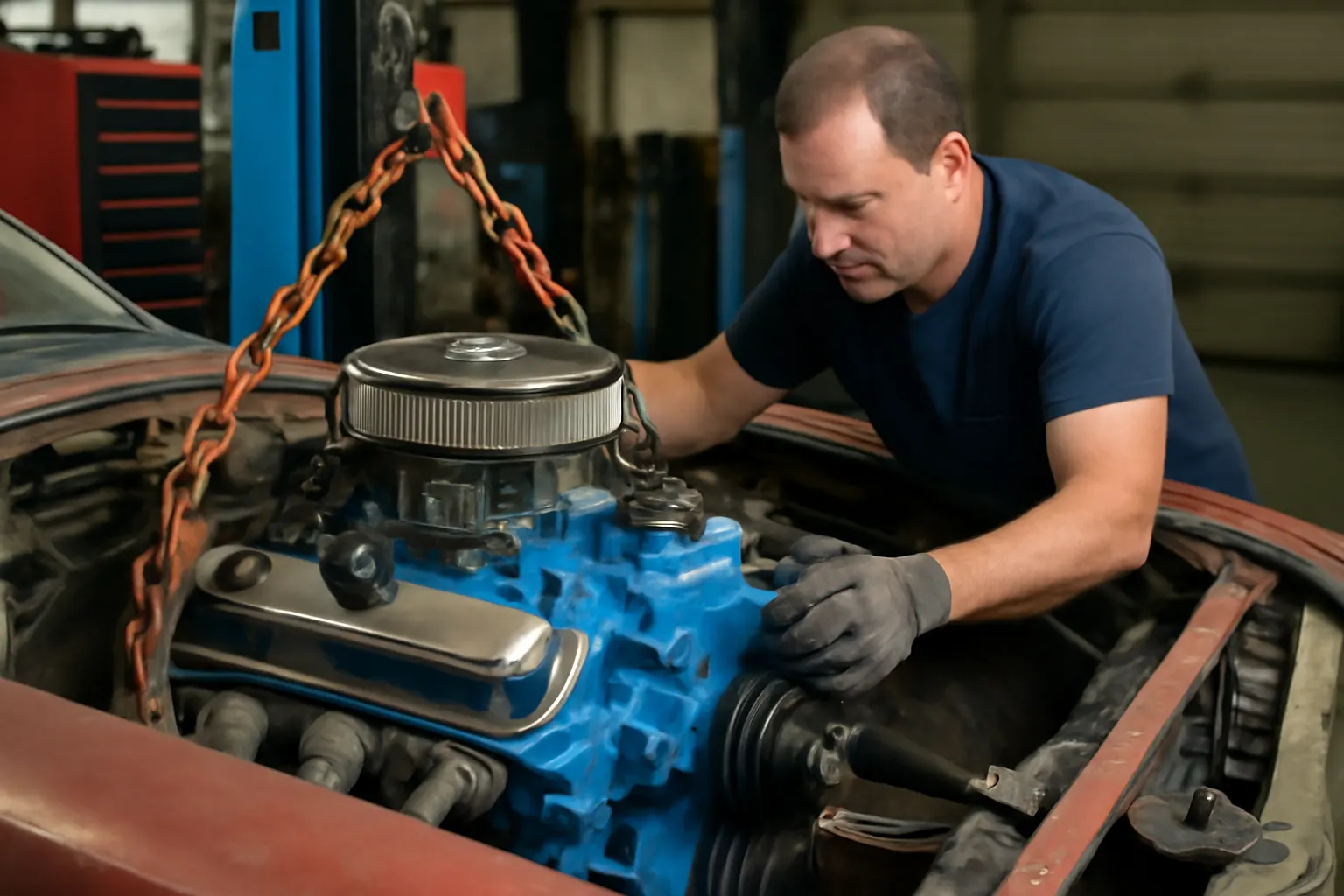
Amc American Engine Swap Tips
Swapping an engine into a classic AMC American can unlock new levels of performance, reliability, and enjoyment—if you know how to navigate the platform’s unique challenges. The AMC American’s compact unibody construction, distinct engine bay geometry, and era-specific drivetrain design require careful planning for a successful engine swap. This comprehensive guide delivers actionable tips for choosing compatible engines, adapting mounts, modifying cooling systems, and ensuring safe, roadworthy results.
Read More