
Amc Ambassador Front Backing Plate Parts
AMC Ambassador Front Backing Plate: Fitment, Issues, and Expert Replacement Guidance
The front backing plate is a crucial yet often overlooked component of the AMC Ambassador’s braking system. Regardless of your model year or trim, this stamped steel part acts as a shield and structural support for the front drum or disc brake assemblies, directly impacting braking consistency, noise control, and component longevity. If you own an AMC Ambassador—from early 1960s classics to late 1970s models—understanding the unique fitment, typical failure symptoms, and best replacement practices for the front backing plate is essential for safe and reliable driving.
Many AMC Ambassador owners are unaware that front backing plate compatibility is not universal across all production years and trims. Significant design updates were introduced through the 1960s and 1970s, with variations tied to engine options (e.g., 232, 258, 304, 360, 401), front axle types, and brake system choices (drum vs. disc). Year-breaks—such as the introduction of front disc brakes in later models—impact both the shape and mounting of the backing plate. Sourcing the right part is further complicated by scarce NOS (new old stock) availability and a shrinking pool of core-quality used parts. Installation risks include warping during removal, misalignment, or using a plate not matched to your spindle and brake assembly, which can lead to uneven braking, premature pad or shoe wear, and compromised safety.
Front backing plates on AMC Ambassadors are susceptible to several age-related and usage-specific issues. Corrosion—due to decades of exposure to water, salt, and debris—can weaken the plate, causing it to flex or crack. Damaged or misaligned plates may rub against the rotor or drum, creating noise or heat spots, and can compromise the effectiveness of your dust seals and hardware. Diagnosing a failing plate is challenging: symptoms often mimic worn pads, warped rotors, or seized calipers. Owners and technicians sometimes overlook the backing plate when troubleshooting brake noise, vibration, or inconsistent stopping, risking repeated failures if the underlying cause is not addressed. Furthermore, many reproduction plates lack precise AMC factory tolerances, making compatibility checks critical before installation.
Verifying fitment for the AMC Ambassador’s front backing plate requires careful attention to your vehicle’s model year, VIN, axle code, and brake type. Sourcing OEM or high-quality reproduction plates is vital, as poorly fitting parts can cause alignment issues or interfere with brake hardware. At AutoPartEx, we provide detailed compatibility data and side-by-side OEM cross-references to help you select the exact plate for your Ambassador’s trim and engine. Our replacement strategy emphasizes cleaning mating surfaces, inspecting spindle and hardware condition, and using factory-correct fasteners. Service guidance for AMC models includes rust-proofing the new plate and re-torquing mounting bolts to spec, reducing the risk of future corrosion or misalignment. Detailed installation instructions and practical tool recommendations are available in our technical library (see Ambassador Front Backing Plate Guide). For further insights into brake system evolution and the impact of plate design changes, refer to our in-depth article on the topic (see Ambassador Brake System Evolution).
Advertisement
0 AMC Ambassador Front Backing Plate Parts
No Products Found
We're currently updating our inventory for AMC Ambassador front backing plate parts.
Please check back soon or contact us for specific part availability.
More Front Backing Plate options for AMC Ambassador
Filtering for AMC Ambassador • Front Backing PlateBrowse nearby inventory for this model and category without leaving the page.
No Data Available
Please check back soon when more inventory is available for this part.
Advertisement
Expert Specs, Practical Action, and AutoPartEx Value
Corrosion is the primary threat to longevity. In regions where salt is used on roads, rust can eat through the plate at mounting holes, compromising its structural integrity. Once weakened, the plate may flex, rub against the rotor or drum, or fail to properly support springs and hardware, resulting in noise, pedal pulsation, or uneven braking. Warpage can also occur if mounting bolts are overtightened or if the plate is bent during removal. These issues are often misdiagnosed as pad or rotor problems, leading to repeated failures if the underlying plate is not replaced.
Unlike some modern vehicles, AMC Ambassadors require backing plates matched precisely to the spindle and brake assembly. Differences in spindle offset, caliper type, and hardware mounting mean that a plate from a 1972 V8 disc brake model may not fit a 1968 six-cylinder drum brake car, even if the bolt pattern appears similar. Sourcing correct NOS or high-quality reproduction plates can be challenging, as AMC-specific parts are increasingly scarce. When selecting a replacement, always cross-reference AMC part numbers, brake type, axle code, and engine family. Avoid generic or universal plates, as improper fitment can cause hardware interference and unsafe braking.
Installation is best tackled by experienced enthusiasts or professional mechanics. Key steps include supporting the vehicle securely, removing the wheel and brake assembly, and carefully extracting the old plate without damaging surrounding components. Clean all mating surfaces, inspect the spindle and hardware, and ensure the new plate sits flush before torquing bolts to spec. Rust-proof exposed metal and re-check fasteners after initial use. For a detailed walkthrough, see the illustrated guide at Ambassador Front Backing Plate Guide. Regularly inspect the plate at every brake service, replacing it at the first sign of significant corrosion, warping, or cracking. Proper care and fitment ensure safe, consistent braking performance for your AMC Ambassador.
AMC Ambassador Front Backing Plate: Practical Info
Model-Year Fitment
Fitment varies by model year, engine, and brake type. Always verify disc or drum configuration, trim, and axle code before ordering. See Ambassador Front Backing Plate Guide for a full compatibility chart.
Common Failure Signs
Watch for rust-through, warping, scraping noises, and uneven brake wear. Inspect the plate at every major brake service and replace at the first sign of damage or deformation.
Installation Tools
Required tools include a socket set, torque wrench, breaker bar, brake spring tool (for drums), wire brush, and penetrating oil. Anti-seize compound is recommended for all hardware.
Service Tips
Clean all mounting surfaces, rust-proof the new plate, and torque bolts to AMC specs. Re-inspect after 100 miles to ensure secure fitment and proper brake operation.
References
- Vehicle Safety and Equipment - National Highway Traffic Safety Administration, accessed 2024-06-28Used for factual information about brake system safety, equipment, and diagnostic standards.
- Vehicle, Car Seat, Tire, and Equipment Recalls - National Highway Traffic Safety Administration, accessed 2024-06-28Reference for historical safety recalls and manufacturer equipment standards.
- Fuel Efficiency - United States Department of Energy, accessed 2024-06-28Provided context for the relationship between proper brake hardware and fuel efficiency.
Related Guides & Articles

Amc Ambassador Front Backing Plate Replacement
Replacing the front backing plates on your AMC Ambassador is a critical maintenance task that directly impacts brake safety, system longevity, and vehicle reliability. This comprehensive AutoPartEx guide delivers a model year-inclusive, step-by-step walkthrough for AMC Ambassador front backing plate replacement. Whether you’re restoring a classic or maintaining a daily driver, you’ll find detailed tool lists, model-specific tips, and expert troubleshooting throughout.
View Guide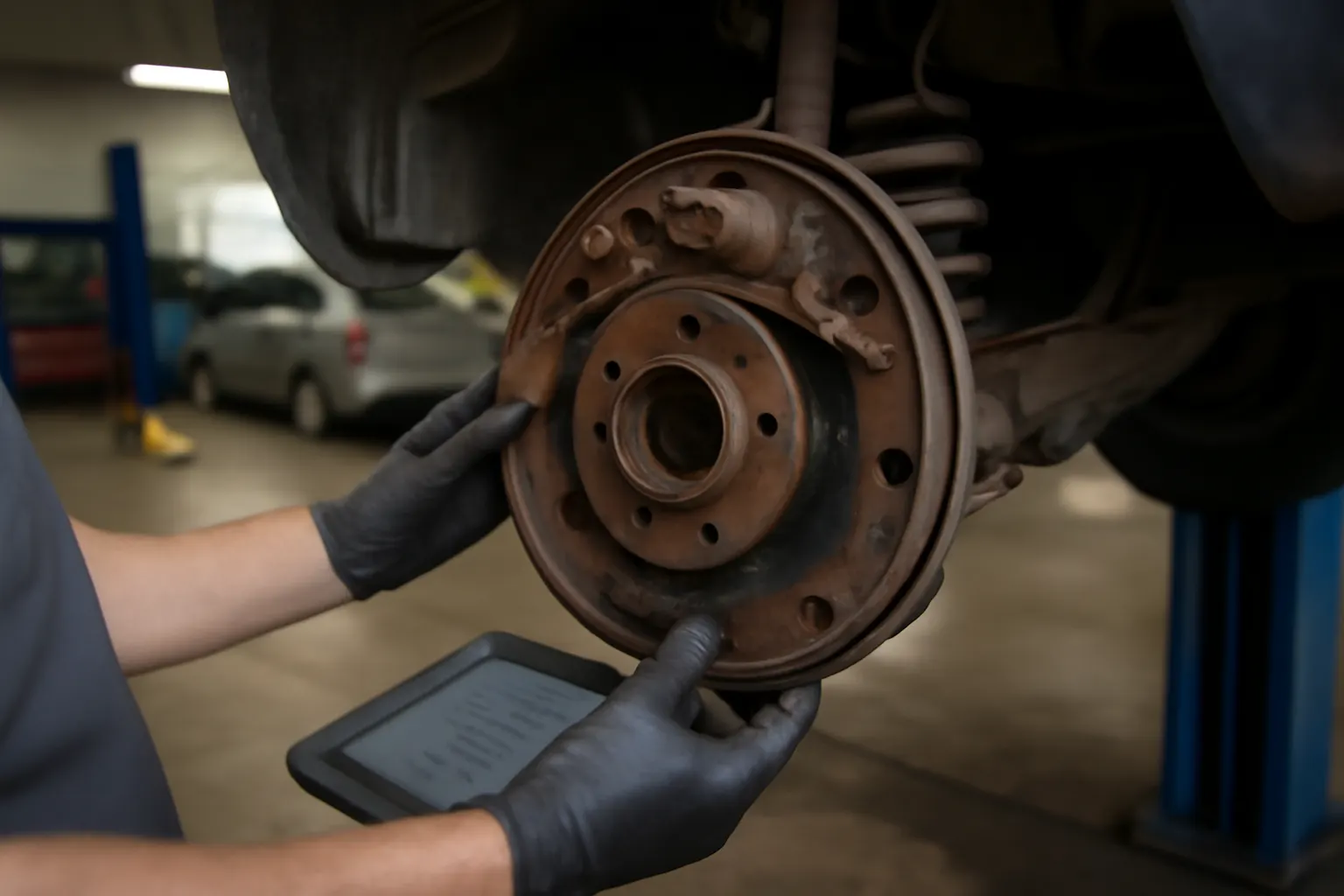
Amc Ambassador Brake System Evolution
The AMC Ambassador’s brake system has undergone significant evolution, impacting everything from safety and performance to restoration parts sourcing. Understanding how backing plate variations and brake hardware changed across model years is crucial for anyone maintaining, restoring, or upgrading an AMC Ambassador. This comprehensive guide reveals the key changes, explains why backing plate fitment is complex, and provides expert diagnostic and replacement advice for enthusiasts and restorers.
Read More
Amc Ambassador Backing Plate Diagnostics
The front backing plate in your AMC Ambassador is a critical, often-overlooked component that supports proper brake shoe alignment and protects vital brake hardware from debris and moisture. Early warning signs of failure include: Unusual brake noises: Persistent scraping, grinding, or metallic noises during braking or while driving. Visible rust or distortion: Corrosion, cracks, or warping on the plate itself.
Read More
Amc Ambassador Brake Parts Sourcing
The AMC Ambassador’s brake system evolved significantly from its early 1960s origins through the end of production in the 1970s. Early models used four-wheel drum brakes, while later years introduced front disc brakes and revised hardware. Even among drum-equipped models, changes in backing plate design, shoe width, self-adjuster hardware, and wheel cylinder sizing are common. For a technical breakdown of these changes, the Amc Ambassador Brake System Evolution editorial provides a deep-dive.
View Guide