
Amc Ambassador Brake Shoes and Pads Parts
AMC Ambassador Brake Shoes and Pads: Precision Fitment & Comprehensive Buyer’s Guide
The AMC Ambassador, a staple of American automotive history from 1958 to 1974, demands reliable stopping power to match its robust engineering and period-correct character. Whether you’re restoring a classic or maintaining a daily driver, sourcing the correct brake shoes and pads for your specific Ambassador model year and trim is vital for safety and original driving feel. This guide delivers a comprehensive resource focused on AMC Ambassador brake shoes and pads, offering in-depth fitment data, compatibility considerations, and critical technical insights to help you make informed decisions.
Many AMC Ambassador owners may not immediately realize the complexity involved in sourcing brake shoes and pads. Factory fitment can vary not just by model year but by body style (sedan, wagon, convertible), engine displacement (from inline-six to V8), and trim levels, especially given mid-year running changes and rare option packages. Scarcity of OE-grade parts, particularly for pre-1970 drum configurations, increases the risk of incorrect installation or mismatched friction material. Overlooked differences—such as shoes for 9-inch versus 10-inch drums or early disc brake conversions—can result in poor braking performance or accelerated wear. Even seasoned mechanics may face challenges with hardware compatibility, e-brake linkage fit, and sourcing return spring kits for certain years.
AMC Ambassadors exhibit several model-specific brake wear and failure patterns, often compounded by the age and rarity of original components. Common diagnostic issues include uneven shoe wear due to misadjusted star wheels, brake pull from contaminated linings, and premature pad glazing on later disc-equipped models. Compatibility constraints arise from subtle year-over-year changes—such as revised backing plate design in 1967 or the introduction of self-adjusting mechanisms in select 1971+ models. Owners frequently encounter confusion around interchangeability with other AMC vehicles or aftermarket parts that do not precisely match Ambassador’s unique hardware tolerances. Misfit shoes or pads can lead to noise, vibration, or even partial brake failure, particularly under repeated stops or high-load conditions.
Verifying exact fitment is crucial—always cross-check part numbers, shoe length, width, and friction material against your specific year, trim, and axle configuration. Sourcing OE-spec or reputable aftermarket replacements ensures safe operation and period-correct braking response. When replacing brake shoes and pads, it’s advisable to service related hardware (springs, hold-down pins, adjusters) and inspect drums or rotors for wear beyond service limits. Our Amc Ambassador Brake Fitment Guide details fitment checks, while Brake Pad Technology Article covers advances in friction material science to help you evaluate modern versus classic options. For installation, refer to trusted shop manuals and use appropriate tools (spring pliers, brake spoon, torque wrenches) to avoid hardware damage or improper adjustment.
Advertisement
0 AMC Ambassador Brake Shoes and Pads Parts
No Products Found
We're currently updating our inventory for AMC Ambassador brake shoes and pads parts.
Please check back soon or contact us for specific part availability.
More Brake Shoes and Pads options for AMC Ambassador
Filtering for AMC Ambassador • Brake Shoes and PadsBrowse nearby inventory for this model and category without leaving the page.
No Data Available
Please check back soon when more inventory is available for this part.
Advertisement
Expert AMC Ambassador Brake Shoes and Pads Selection, Service, and Action Plan
For AMC Ambassador Brake Shoes and Pads, long-term reliability depends on verified fitment, periodic inspection of wear components, and disciplined preventive maintenance. Confirm part numbers by VIN, check supersession notes, and compare mounting points before installation. Review service bulletins and historical failure patterns to prioritize high-risk systems, especially electrical connectors, seals, cooling components, and drivetrain interfaces.
For AMC Ambassador Brake Shoes and Pads, long-term reliability depends on verified fitment, periodic inspection of wear components, and disciplined preventive maintenance. Confirm part numbers by VIN, check supersession notes, and compare mounting points before installation. Review service bulletins and historical failure patterns to prioritize high-risk systems, especially electrical connectors, seals, cooling components, and drivetrain interfaces.
AMC Ambassador Brake Shoes and Pads: Practical Tips
Essential Tools for Brake Service
Use a drum brake spring tool, hold-down pliers, brake spoon, and a torque wrench to ensure correct installation and adjustment on all AMC Ambassador models.
Year/Trim Fitment Checklist
Always confirm drum or rotor diameter, shoe width, and hardware style for your Ambassador’s model year, trim, and axle before ordering parts. Cross-reference factory brake codes.
Hardware Replacement Best Practices
Replace all return springs, hold-down pins, and adjusters during brake service. Do not reuse corroded or fatigued hardware to avoid noise and premature wear.
Break-In and Testing
After installation, bed-in new shoes or pads by performing a series of gentle stops from 30 mph. Road test for noise, pedal feel, and proper parking brake function before returning to service.
References
- Vehicle Safety and Equipment - National Highway Traffic Safety Administration, accessed 2024-06-20Provides official guidance on vehicle safety equipment, including brake system inspection and replacement.
- Vehicle, Car Seat, Tire, and Equipment Recalls - National Highway Traffic Safety Administration, accessed 2024-06-20Details recalls and known issues related to automotive brake components, relevant for AMC Ambassador owners.
- Fuel Efficiency - United States Department of Energy, accessed 2024-06-20Highlights the importance of properly maintained brakes in achieving optimal fuel efficiency.
Related Guides & Articles

Amc Ambassador Brake Fitment Guide
The AMC Ambassador, produced across multiple generations (1958–1974), was offered with both drum and disc brake configurations. The most common braking setups by year include: 1958–1964: Four-wheel drum brakes (leading/trailing shoe design) 1965–1972: Front disc (optional) or drum brakes, rear drum brakes standard 1973–1974: Front disc brakes standard, rear drum brakes Key fitment points: Front Brakes: Verify drum or disc type by model year and trim. Rear Brakes: All models use drum brakes; shoe size and hardware vary by axle.
View Guide
Brake Pad Technology Article
Brake pads are the linchpin of any vehicle’s braking system, and for classic cars like the AMC Ambassador, their evolution in material science and engineering directly influences safety, performance, and driving enjoyment. Whether you’re restoring a vintage Ambassador or maintaining a cherished daily driver, understanding brake pad technology is crucial for effective upgrades and reliable service. This article demystifies brake pad advancements, explores material breakthroughs, and provides detailed, practical insight for AMC owners.
Read More
Amc Drum Disc Brake Installation
To install drum or disc brakes on a vintage AMC vehicle, follow this high-level procedure: Raise and secure the vehicle on jack stands, remove wheels. Disassemble the existing brake system (drum or disc) using proper tools. Inspect and clean the mounting surfaces and associated hardware. Install new brake components (shoes/pads, drums/rotors, calipers/wheel cylinders) with attention to factory torque specs and alignment. Bleed the braking system and adjust as necessary. Reinstall wheels, torque lug nuts, and perform a safety check.
View Guide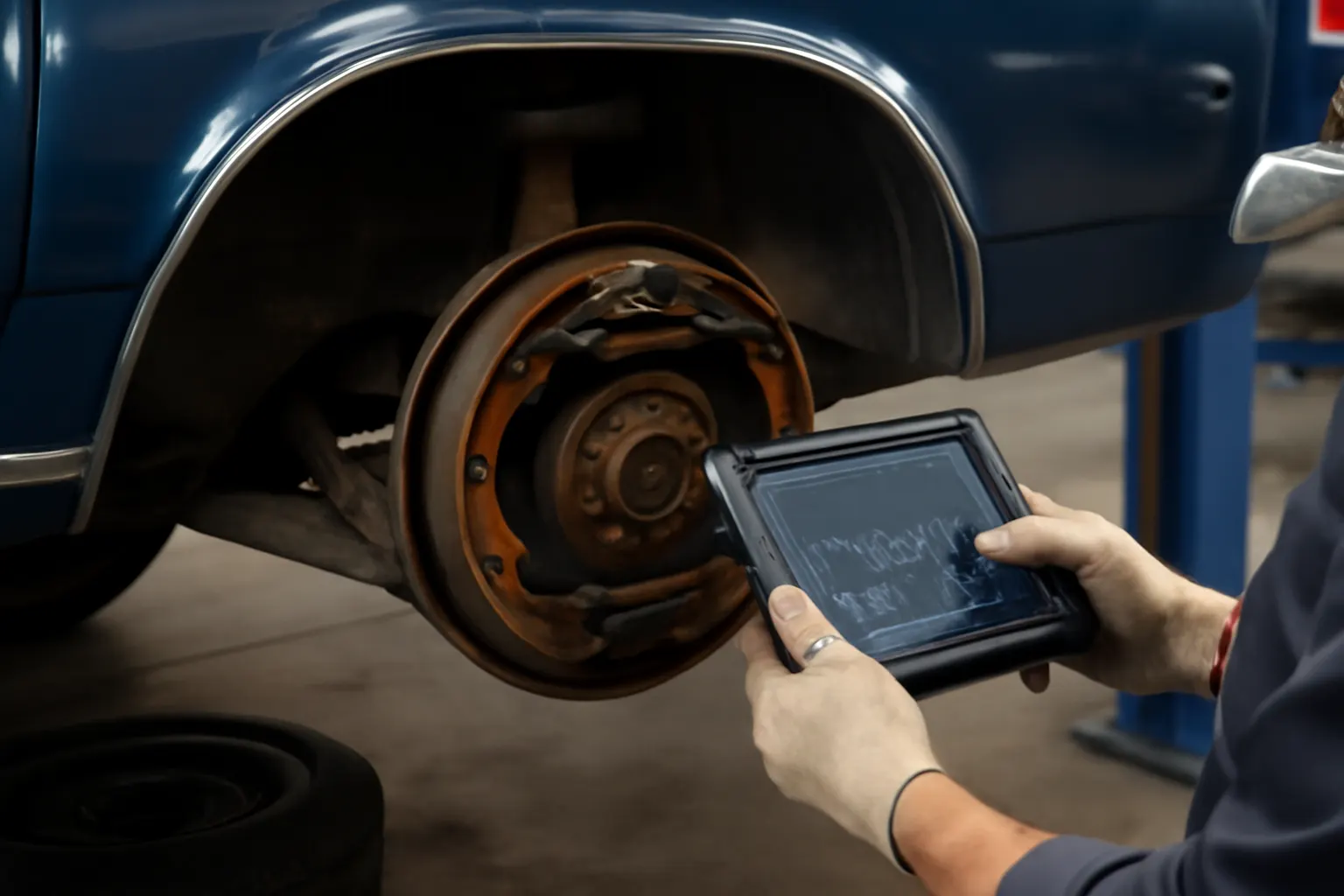
Amc Ambassador Brake Diagnostic Field Report
Field data and customer reports consistently point to four primary brake failure modes in AMC Ambassadors: Premature Pad and Shoe Wear: Pads or shoes wearing out within 10,000–15,000 miles, often due to improper bedding, mismatched friction material, or hardware incompatibility. Brake Pull and Uneven Stopping: The vehicle veers during braking, typically from seized hardware, uneven shoe adjustment, or incorrect pad fitment. Persistent Squeal or Grinding: Chronic noise, even after pad replacement, frequently signals hardware misalignment or contaminated friction surfaces.
Read More