
Advertisement
When AMC Ambassador owners report brake noise, fading, or erratic stopping distances, the cause is often more complex than simple pad wear. This field report synthesizes real-world diagnostic findings, highlights the most common brake system failures specific to the AMC Ambassador, and provides actionable tips for identifying hardware mismatches and installation errors. If you’re seeking immediate, practical guidance on diagnosing and resolving AMC Ambassador brake issues, this guide delivers expert, step-by-step solutions. For a comprehensive overview of compatible brake components, see the AMC Ambassador Brake Shoes and Pads: Precision Fitment & Comprehensive Buyer’s Guide.
Immediate Diagnostic Answers: Top AMC Ambassador Brake Failures
Field data and customer reports consistently point to four primary brake failure modes in AMC Ambassadors:
- Premature Pad and Shoe Wear: Pads or shoes wearing out within 10,000–15,000 miles, often due to improper bedding, mismatched friction material, or hardware incompatibility.
- Brake Pull and Uneven Stopping: The vehicle veers during braking, typically from seized hardware, uneven shoe adjustment, or incorrect pad fitment.
- Persistent Squeal or Grinding: Chronic noise, even after pad replacement, frequently signals hardware misalignment or contaminated friction surfaces.
- Soft Pedal or Extended Stopping Distance: Hydraulic leaks, air in the lines, or degraded drum/disc surfaces can all cause spongy pedal feel and longer stops.
These issues are rarely isolated; underlying causes often overlap, and improper part selection or installation is a recurring theme.
The Hidden Problem: Hardware Mismatches and Aftermarket Pitfalls
While AMC Ambassador brake systems were robustly engineered, decades of aftermarket part substitutions and inconsistent fitment have introduced new failure points. The most frequently overlooked issue is hardware mismatch—using brake shoes, pads, or hardware kits not precisely matched to the Ambassador’s model year, axle, or trim package.
What Is a Hardware Mismatch?
A hardware mismatch occurs when replacement pads, shoes, or mounting hardware are not dimensionally or materially compatible with the factory design. This can result from:
- Installing pads or shoes for a different AMC model or year.
- Using generic hardware kits with incorrect spring tension or clip geometry.
- Mixing drum and disc brake components on conversions without proper adaptation.
The National Highway Traffic Safety Administration (NHTSA) emphasizes that even minor deviations from OEM specifications can compromise braking safety and performance [1].
Expanding the Problem: Why AMC Ambassador Brake Systems Are Vulnerable
Unique Brake System Architecture
The AMC Ambassador, produced from the late 1950s through the 1970s, featured a variety of brake configurations—ranging from full drum systems to front disc/rear drum hybrids in later years. Each variant required specific pad/shoe dimensions, friction materials, and hardware kits. Parts interchangeability is limited, and even subtle differences in shoe arc or backing plate thickness can induce rapid wear, noise, or hydraulic imbalance.
Aftermarket Complexity
Many AMC Ambassadors have been maintained with a mix of OEM, NOS (new old stock), and aftermarket parts. While this keeps classics on the road, it also increases the risk of mismatched friction materials, incompatible return springs, and non-standard adjusters. Field reports highlight that more than half of chronic brake complaints in AMC Ambassadors can be traced to improper hardware or friction material selection.
Age-Related Degradation
Brake hydraulics, hoses, and steel lines on classic Ambassadors are susceptible to corrosion, internal swelling, and micro-leaks. Combined with the wrong friction components, this can mask or exacerbate underlying issues.
Field Report: Most Common AMC Ambassador Brake Diagnostic Scenarios
Scenario 1: Chronic Brake Squeal After Pad or Shoe Replacement
Symptoms: Persistent squeal, especially at low speeds or light pedal pressure.
Field Findings:
- Incorrect anti-rattle clips or missing pad shims.
- Pads or shoes not chamfered or properly bedded.
- Use of aftermarket pads with incompatible friction materials.
Diagnostic Tip: Check for proper hardware installation and verify part numbers against AMC Ambassador specifications using a fitment guide like the Amc Ambassador Brake Fitment Guide.
Scenario 2: Brake Pull and Uneven Pad/Shoe Wear
Symptoms: Vehicle pulls left or right under braking; one pad/shoe wears faster than the other.
Field Findings:
- Seized caliper slide pins or drum adjusters.
- Shoes/pads installed backward or with mixed hardware.
- Drum/disc runout exceeding SAE tolerances [2].
Advertisement
Diagnostic Tip: Inspect for hardware symmetry and ensure both sides use matched, vehicle-specific components.
Scenario 3: Soft Pedal and Extended Stopping Distance
Symptoms: Spongy pedal feel, increased pedal travel, longer stopping distances.
Field Findings:
- Air in brake lines from incomplete bleeding.
- Worn master cylinder or wheel cylinder seals.
- Drum surface glazed or out-of-round.
Diagnostic Tip: Bleed the hydraulic system thoroughly and inspect all hydraulic components for leaks or age-related wear.
Scenario 4: Rapid Pad/Shoe Wear and Dust Accumulation
Symptoms: Pads or shoes wear out in less than 15,000 miles; excessive brake dust on wheels or drums.
Field Findings:
- Use of soft, non-OEM friction materials.
- Misaligned shoes or pads causing constant drag.
- Return springs with incorrect tension.
Diagnostic Tip: Compare friction material specs to AMC recommendations and inspect hardware for correct installation and spring preload.
Technical Deep Dive: Diagnosing AMC Ambassador Brake System Issues
1. Visual Inspection Protocol
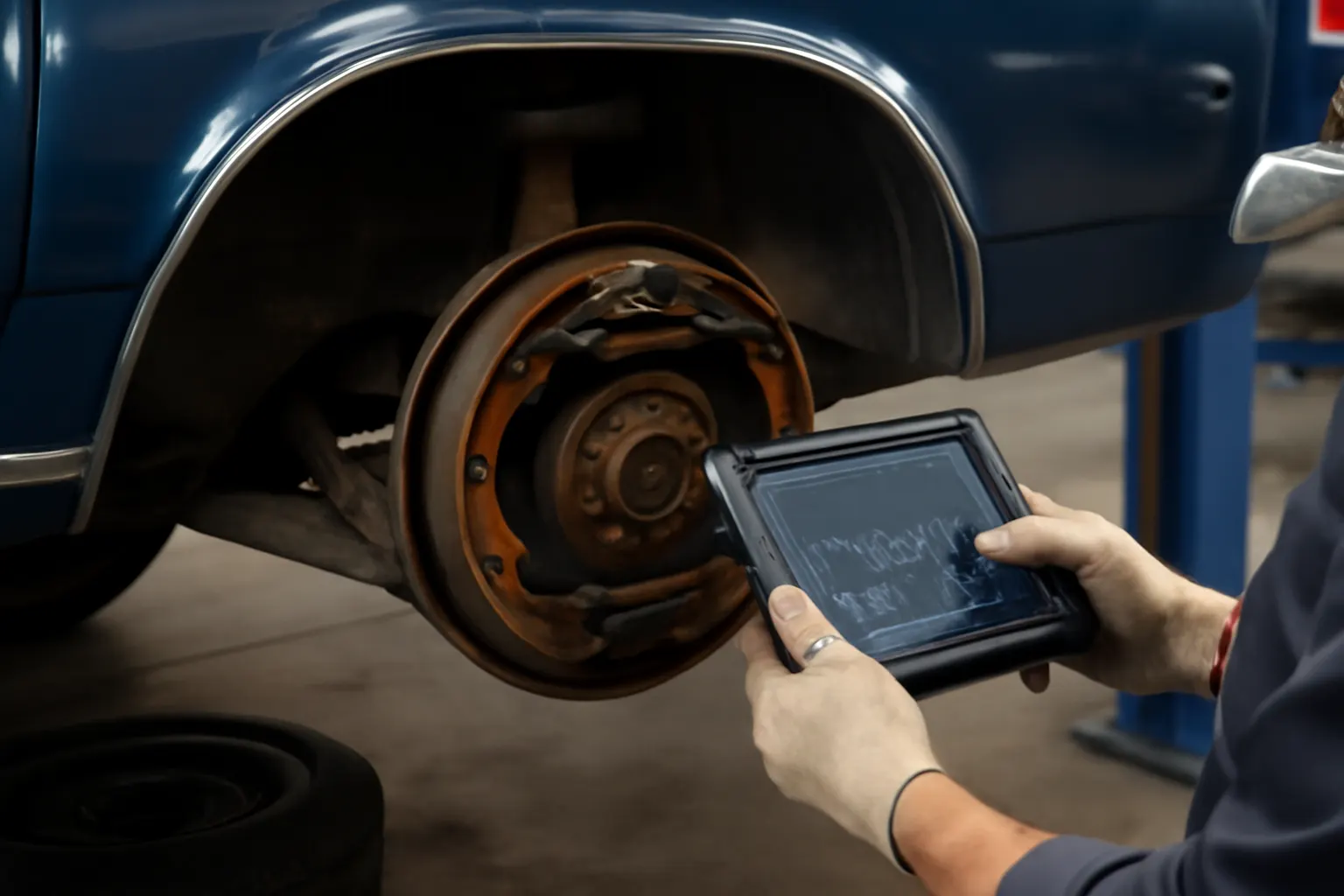
A systematic visual inspection is the cornerstone of effective diagnosis. Key areas to assess:
- Pad/Shoe Contact Pattern: Uneven wear patterns often indicate hardware or installation errors.
- Hardware Integrity: Check for missing, bent, or corroded springs, clips, and pins.
- Friction Material: Inspect for glazing, cracking, or contamination (oil, grease, brake fluid).
- Hydraulic Leaks: Look for seepage at wheel cylinders, calipers, and hoses.
2. Measuring Critical Dimensions
Use a micrometer or caliper to measure:
- Pad/Shoe Thickness: Compare to AMC minimum specs.
- Drum/Disc Diameter: Excessive wear or machining can exceed safe limits.
- Runout and Warpage: Check with a dial indicator; excessive runout leads to pulsing and uneven wear.
3. Confirming Correct Hardware
Cross-reference all part numbers—pads, shoes, hardware kits—against AMC Ambassador fitment charts. Even small discrepancies can cause major performance problems.
Checklist: AMC Ambassador Brake System Diagnostic Steps
Use this checklist to systematically diagnose and resolve brake issues:
-
Verify Vehicle and Axle ID: Confirm year, trim, and brake system type (drum vs. disc/drum).
-
Inspect All Brake Components:
- Pads/shoes (wear, cracks, glazing)
- Rotors/drums (scoring, thickness, runout)
- Calipers/wheel cylinders (leaks, movement)
- Hardware (springs, clips, pins)
-
Check for Hardware Mismatches:
- Compare part numbers to AMC fitment guides.
- Ensure hardware kits are not generic or for a different model/year.
-
Assess Friction Material Compatibility:
- OEM-style materials recommended for classic Ambassadors.
- Avoid mixing different brands or types within the same axle.
-
Evaluate Hydraulic System:
- Inspect hoses for swelling/cracks.
- Check master cylinder for leaks or internal bypass.
-
Test Pedal Feel and Brake Response:
- Pedal should be firm, not spongy.
- No excessive travel or delay in engagement.
-
Road Test and Listen for Noise:
- Squeal, grinding, or pulsation indicates unresolved issues.
-
Document Findings:
- Record part numbers, measurements, and observations for future reference.
Installation Pitfalls: Common Mistakes and How to Avoid Them
Improper Bedding of New Pads or Shoes
Failing to bed new friction material correctly leads to poor initial performance and accelerated wear. Always follow the pad/shoe manufacturer’s bedding procedure. For AMC Ambassadors, this typically involves:
- Performing 8–10 moderate stops from 30 mph to allow gradual heat buildup.
- Avoiding heavy braking or panic stops during the first 200 miles.
Incorrect Hardware Orientation
AMC drum brakes use specific spring and pin layouts. Installing springs backward or using non-matching return springs can cause drag, noise, and uneven wear. Always compare both sides before disassembly, and reference a detailed installation guide such as Amc Drum Disc Brake Installation.
Use of Low-Quality or Universal Hardware Kits
Generic hardware kits may fit physically but often lack the correct spring tension or pin geometry. This can result in noisy operation and premature failure. Use hardware kits specifically listed for AMC Ambassador by year and axle.
Advanced Diagnostics: Identifying Subtle Brake System Issues
Diagnosing Brake Fade and Glazing
If AMC Ambassador brakes lose effectiveness after repeated stops, the likely cause is friction material glazing or improper pad/shoe compound. Glazing appears as shiny, hard surfaces on pads or shoes and is often caused by:
- Excessive heat buildup from dragging brakes.
- Use of friction materials not designed for the vehicle’s weight and brake system.
Advertisement
Solution: Resurface or replace glazed components and verify correct hardware and adjustment.
Addressing Brake Pulsation
Brake pedal pulsation during stops is typically due to rotor or drum runout. Use a dial indicator to check runout against AMC factory specs (usually under 0.004" for discs, 0.006" for drums). Excessive runout requires machining or replacement.
Sourcing the Right AMC Ambassador Brake Components
Decoding AMC Brake Part Numbers
AMC used a variety of part numbers for pads, shoes, and hardware kits. Always match the part number to your vehicle’s VIN, model year, and brake system type. Reference the AMC Ambassador Brake Shoes and Pads: Precision Fitment & Comprehensive Buyer’s Guide for authoritative listings.
Choosing Friction Materials
- Organic (Non-Asbestos): Closest to OEM, good for daily driving and classic restoration.
- Semi-Metallic: Improved performance, but may cause more rotor/drum wear and noise.
- Ceramic: Not typically original for AMC, but offers low dust and quiet operation for upgraded systems.
Hardware Kits
Choose kits that include all springs, pins, clips, and adjusters specific to the AMC Ambassador’s year and axle. Avoid universal kits unless cross-referenced for your exact model.
Preventive Maintenance: Extending Brake Life on the AMC Ambassador
Routine Inspection Intervals
- Every 6,000 Miles: Inspect pads, shoes, and hardware for wear.
- Annually: Flush brake fluid to prevent moisture buildup and corrosion.
- Every 2 Years: Inspect hoses and lines for cracks or leaks.
Lubrication Points
Use high-temperature brake grease on caliper slide pins and drum backing plate contact points. Never grease friction surfaces.
Torque Specifications
Always follow AMC factory torque specs for wheel lug nuts, caliper bolts, and hardware. Over-tightening can warp rotors or strip threads.
Upgrades and Modifications: When to Convert or Enhance AMC Ambassador Brakes
Drum-to-Disc Conversions
Many AMC Ambassadors originally equipped with four-wheel drum brakes benefit from front disc conversions. Ensure all components—rotors, calipers, pads, and hardware—are sourced as a matched set, and that the master cylinder is compatible with disc/disc or disc/drum operation.
Performance Pad and Shoe Options
Consider semi-metallic or upgraded organic compounds for improved braking, especially if driving in modern traffic or with increased vehicle weight.
Brake Booster and Master Cylinder Upgrades
A failing or undersized booster/master cylinder can cause chronic soft pedal feel. Upgrading to a modern dual-chamber master cylinder can improve safety and pedal response.
Case Study: Hardware Mismatch Leads to Chronic Brake Issues
A 1973 AMC Ambassador owner reported persistent brake squeal and rapid pad wear despite repeated replacements. Field inspection revealed:
- Pads sourced for a 1972 model (slightly different backing plate geometry).
- Aftermarket hardware kit with incorrect spring tension.
- Drum surface out-of-round by 0.010".
After installing the correct year-specific pads and a matched hardware kit, and machining the drum to within factory runout specs, all symptoms resolved. This underscores the importance of precise fitment and hardware matching.
Expert Solution Path: Resolving AMC Ambassador Brake Problems
-
Confirm Vehicle Specifications: Use VIN and build data to identify correct brake system.
-
Source Year- and Axle-Specific Components: Reference authoritative guides and avoid generic or “universal fit” parts.
-
Follow Detailed Installation Procedures: Use step-by-step guides to ensure correct hardware orientation and adjustment.
-
Complete Proper Bedding and Break-In: Adhere to friction material manufacturer’s recommendations.
-
Document and Road Test: Record all part numbers and test drive to confirm symptom resolution.
AutoPartEx: Your Partner in AMC Ambassador Brake Diagnosis
AutoPartEx delivers the industry’s most comprehensive AMC Ambassador brake fitment data, diagnostic guides, and field-tested hardware recommendations. Whether you’re restoring a classic or maintaining a daily driver, our platform connects you to vehicle-specific parts and expert editorial content. For deeper technical insights, see our Brake Pad Technology Article and the Amc Ambassador Brake Fitment Guide.
Conclusion: Proactive Diagnosis Prevents Recurring Issues
AMC Ambassador brake problems are rarely the result of a single worn part. Instead, they’re typically the outcome of hardware mismatches, overlooked installation details, and age-related system degradation. By following a thorough diagnostic process, sourcing precise fitment components, and adhering to proper installation and maintenance protocols, you can restore factory-level braking safety and performance.
For the most reliable AMC Ambassador brake parts and fitment data, visit the AMC Ambassador Brake Shoes and Pads: Precision Fitment & Comprehensive Buyer’s Guide.
References
Advertisement