
Amc Ambassador Brake Proportioning Valve Parts
AMC Ambassador Brake Proportioning Valve – Fitment, Failure Patterns & Expert Replacement Guide
The brake proportioning valve is a critical safety component in every AMC Ambassador, managing the hydraulic pressure between front and rear brakes to optimize stopping power and prevent wheel lockup. Whether you drive a 1966 Ambassador sedan with the 327 V8 or a late-model 1974 Brougham, a correctly functioning proportioning valve is essential for safe, predictable braking. AMC’s engineering evolved across each generation, meaning part fitment and system design can vary significantly by year, trim, and engine option. This page provides an authoritative resource on selecting, diagnosing, and replacing the correct brake proportioning valve for your AMC Ambassador.
Many AMC Ambassador owners are unaware of the hidden risks that come with brake proportioning valve replacement. Subtle differences in brake system design appeared throughout the Ambassador’s production run (1958–1974), including year-specific changes in brake line routing, master cylinder sizing, and rear axle configurations. Certain trims—such as the SST, DPL, or 401-powered models—may utilize unique valve calibrations or connectors. Even experienced technicians can be caught off-guard by mid-year engineering changes, rare factory service bulletins, or aftermarket part shortages. In addition, installation often requires precise bleeding and adjustment procedures, and incorrectly matched valves can introduce brake bias problems or even system failure, especially in emergency stops.
AMC Ambassadors are now classic vehicles, and their brake proportioning valves are a known failure point due to internal corrosion, external contamination, and rubber seal degradation. Many owners report spongy pedal feel, rear wheel lockup, erratic brake response, or chronic warning light activation—symptoms that can trace back to a malfunctioning or seized valve. Diagnosing these issues is complicated by poor access, the lack of new-old-stock (NOS) parts, and the prevalence of incorrect aftermarket substitutions. Compatibility constraints are further complicated by changes between drum and disc brake setups, factory options, and rare limited-slip rear ends. For example, a 1972 Ambassador with front disc brakes and a 360 V8 may require a proportioning valve not interchangeable with a 1971 model, despite similar appearances.
Verifying fitment for the AMC Ambassador’s brake proportioning valve starts with confirming your exact model year, engine, trim, and brake configuration. Use the Amc Ambassador Brake Proportioning Valve Fitment Guide to decode casting numbers and connector thread sizes unique to your build. Sourcing OEM or high-quality remanufactured valves is crucial—read our Brake Valve Oem Vs Aftermarket Article for a breakdown of sourcing pitfalls and trusted suppliers. Replacement strategy must include full system flushing, careful torque application (typically 15–22 ft-lbs at the line fittings), and a thorough post-install leak and performance check. For best results, follow a service manual and consider referencing Ambassador Brake System Service Guide for step-by-step walkthroughs and recommended tools.
Advertisement
0 AMC Ambassador Brake Proportioning Valve Parts
No Products Found
We're currently updating our inventory for AMC Ambassador brake proportioning valve parts.
Please check back soon or contact us for specific part availability.
More Brake Proportioning Valve options for AMC Ambassador
Filtering for AMC Ambassador • Brake Proportioning ValveBrowse nearby inventory for this model and category without leaving the page.
No Data Available
Please check back soon when more inventory is available for this part.
Advertisement
Expert AMC Ambassador Brake Proportioning Valve Selection & Action Plan
Model-year and trim compatibility are especially complex for the Ambassador. Early models (1958–1966) used simpler, often integrated valves, while mid-1960s to early-1970s cars saw a succession of unique designs as AMC adapted to evolving safety standards and the advent of front disc brakes. For example, the introduction of the dual-circuit brake master cylinder in 1967 required new valve designs, and the 1970 shift to front discs on higher trims meant further differentiation. Even within a single year, options like towing packages, axle ratios, and limited-slip differentials could influence the ideal valve calibration.
Serviceability is further complicated by scarcity of authentic replacement valves. New-old-stock units are rare, and many aftermarket units offer only generic calibration. It is recommended to source valves from reputable suppliers that can confirm year, trim, and engine compatibility—as documented in the Ambassador Brake System Service Guide. Installation, while straightforward for experienced technicians, can pose challenges for the DIYer: removing old brake lines without damaging their threads, ensuring proper orientation, and bleeding the system fully are all essential steps. Flare nut wrenches, a line-pressure gauge, and a factory service manual are invaluable in achieving a professional result.
Neglecting proportioning valve health can have serious consequences. Drivers may experience increased stopping distances, erratic brake behavior, or even fail safety inspections. The National Highway Traffic Safety Administration (NHTSA) has repeatedly emphasized the importance of brake system maintenance (NHTSA Equipment). In summary, an accurate, high-quality replacement, combined with methodical installation and testing, is essential to preserving both the safety and drivability of your AMC Ambassador.
Practical AMC Ambassador Brake Proportioning Valve Service Tips
Model-Year & Trim Compatibility
Verify your Ambassador’s year, engine, and trim before ordering. Early and late models use different valves—always cross-reference part numbers with trusted charts.
Common Failure Signs
Watch for rear wheel lockup, erratic brake response, or chronic warning lights. These often indicate internal corrosion or seal failure in the valve.
Essential Service Tools
You’ll need flare nut wrenches, a torque wrench (15–22 ft-lbs), a pressure bleeder, and new sealing washers for installation.
Professional Installation Advice
Bleed the system thoroughly after replacement and always test braking on a safe surface before regular driving.
References
- Vehicle Safety and Equipment - National Highway Traffic Safety Administration, accessed 2024-06-15Covers general brake system safety, maintenance advice, and component-level guidance.
- Vehicle, Car Seat, Tire, and Equipment Recalls - National Highway Traffic Safety Administration, accessed 2024-06-15Reference for AMC brake system recalls and safety campaigns.
- Fuel Efficiency - United States Department of Energy, accessed 2024-06-15Discusses the relationship between brake system performance and vehicle efficiency.
Related Guides & Articles

Amc Ambassador Brake System Service Guide
The AMC Ambassador brake system—across all generations—relies on a coordinated set of hydraulic and mechanical components: master cylinder, brake lines, proportioning valve, front disc or drum brakes, rear drum brakes, wheel cylinders, and a host of hardware. The proportioning valve is the linchpin for balanced braking, preventing rear-wheel lockup and ensuring that pressure is distributed according to load and design. Service intervals, component compatibility, and proper diagnostics are vital for safe operation.
View Guide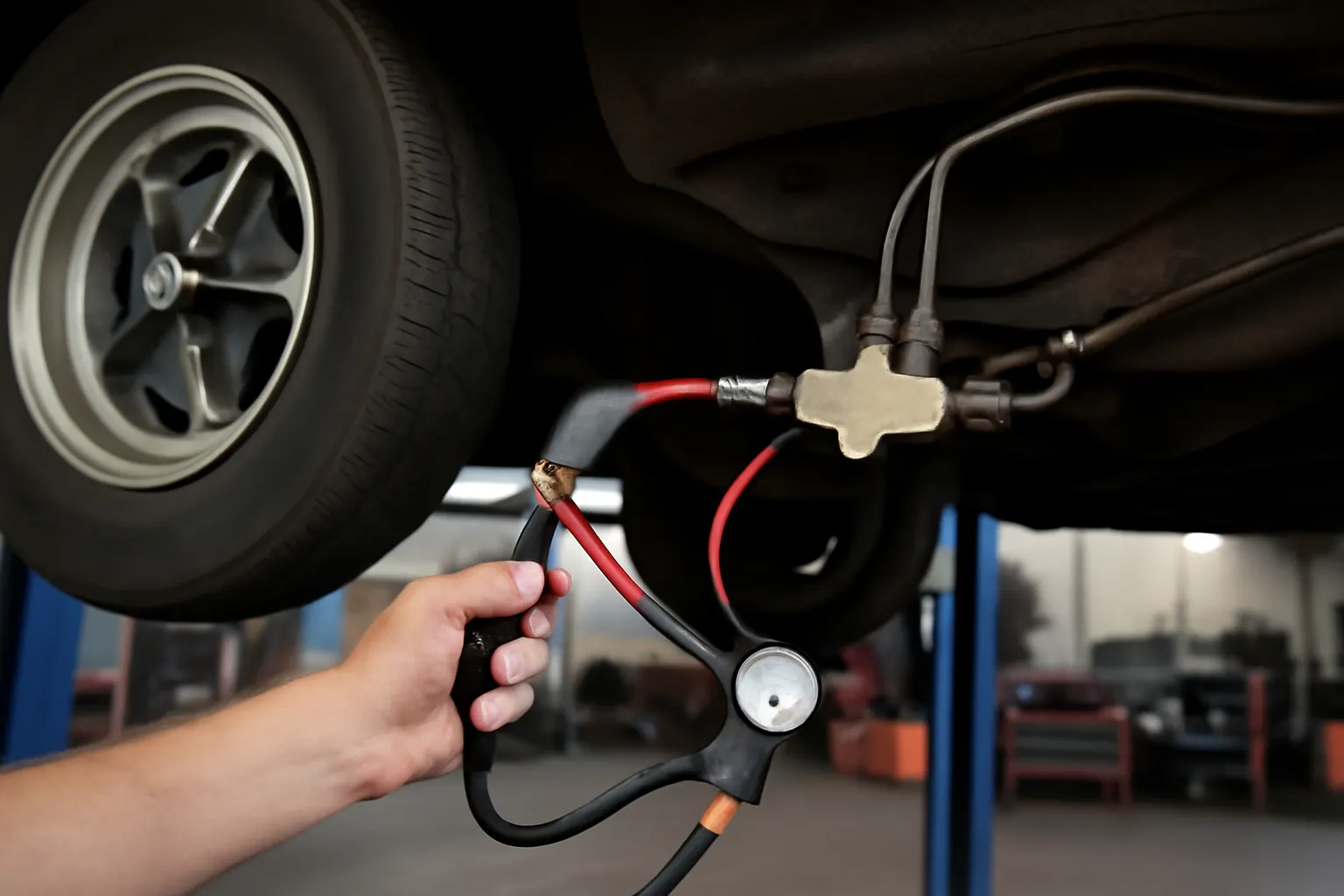
Amc Ambassador Brake Evolution
AMC’s Ambassador line underwent key brake system advancements from the early 1960s through the late 1970s, transitioning from simple single-circuit drum brakes to sophisticated dual-circuit hydraulic systems with proportioning valves and, eventually, disc brakes. Each era introduced new components, safety features, and service requirements. Understanding these changes is crucial for sourcing correct parts and ensuring restored vehicles meet modern safety expectations. Key Evolutionary Milestones: Early 1960s: Single-circuit all-drum brake systems. Mid-1960s: Introduction of dual-circuit master cylinders.
Read More
Brake Valve Oem Vs Aftermarket Article
Choosing between OEM and aftermarket brake proportioning valves is a pivotal decision for any AMC Ambassador owner or restorer. The brake proportioning valve is central to safe, balanced braking, and the right choice ensures optimal performance, reliability, and authenticity for your vintage vehicle. This article delivers a comprehensive comparison of OEM versus aftermarket brake proportioning valves for AMC Ambassador models, including sourcing strategies and performance insights.
Read More
Amc Ambassador Brake Proportioning Valve Fitment Guide
Proper brake proportioning valve fitment is essential for safe and reliable braking performance on your AMC Ambassador. This guide delivers a step-by-step process for verifying fitment, decoding OEM casting numbers, understanding trim and engine compatibility, and avoiding common pitfalls. Whether you’re restoring a classic Ambassador or maintaining a daily driver, correct valve selection ensures balanced brake pressure and maximized safety.
View Guide