
Amc Ambassador Brake Booster Parts
AMC Ambassador Brake Booster: Fitment, Compatibility, and Replacement Insights
The brake booster is a vital component in your AMC Ambassador’s braking system, providing the necessary vacuum assist to ensure smooth and effective stopping power. Whether you drive a classic 1967 Ambassador with a 343 V8 or a final-year 1974 model equipped with a 401, the correct brake booster is fundamental to safe operation. Because the Ambassador spanned multiple generations and powertrain configurations, precise fitment is critical for proper function and driver confidence.
Many AMC Ambassador owners are unaware of the nuanced differences between brake booster applications across various model years, trims, and engine options. Fitment risks arise due to mid-year changes, especially between 1967–1974, and the presence of manual vs. power brake systems. Scarcity is a growing issue, as OE-style boosters are no longer mass-produced, and aftermarket options may not always match original specifications. Installers must also be cautious of firewall mounting patterns, pushrod lengths, and vacuum port locations, which can vary by engine and trim level. Overlooking these subtleties can lead to poor pedal feel or even safety-critical loss of braking assist.
Model-specific failure patterns on the AMC Ambassador include internal diaphragm leaks, check valve deterioration, and corrosion from moisture ingress—especially prevalent in vehicles stored in humid conditions or driven infrequently. Diagnosis is complicated by overlapping symptoms with master cylinder failure, such as a hard brake pedal or hissing noise under the dash. Compatibility constraints include variations in booster diameter, master cylinder mounting flange, and pedal linkage length. Some aftermarket units require custom adaptation or modification, risking improper pedal ratio or booster preload. Owners should also be alert for vacuum supply issues, which may originate from engine-specific manifold ports, especially on high-displacement V8s.
To ensure correct fitment, start with a VIN-based lookup to determine your AMC Ambassador’s exact model year, trim, and engine. Cross-reference OE part numbers and measure existing booster dimensions, including bolt pattern and pushrod length. Where possible, source remanufactured or NOS units that match original AMC specifications. For hard-to-find applications, consider adapters or adjustable linkage kits—but always consult a technical resource such as AMC Ambassador Brake Booster Fitment Guide for detailed compatibility charts. For best results, review installation walk-throughs like AMC Brake Booster Installation Article to avoid common pitfalls and ensure proper vacuum routing. Always bench-test the booster for leaks before final installation.
Advertisement
0 AMC Ambassador Brake Booster Parts
No Products Found
We're currently updating our inventory for AMC Ambassador brake booster parts.
Please check back soon or contact us for specific part availability.
More Brake Booster options for AMC Ambassador
Filtering for AMC Ambassador • Brake BoosterBrowse nearby inventory for this model and category without leaving the page.
No Data Available
Please check back soon when more inventory is available for this part.
Advertisement
AMC Ambassador Brake Booster: Expert Specs, Service Evidence, and Sourcing with AutoPartEx
AutoPartEx enables owners to verify fitment using year/engine/trim lookup, compare technical specs, and source rare or remanufactured boosters directly from trusted suppliers. For further in-depth guidance, see AMC Ambassador Brake Booster Fitment Guide or walk through a detailed installation at AMC Brake Booster Installation Article. Use AutoPartEx to compare part numbers, confirm technical specifications, and access professional resources for your AMC Ambassador’s brake system restoration.
When selecting a booster, always measure the center-to-center distance of the mounting studs on the firewall, plus the depth of the pushrod extension at rest. Compare these to both OE and aftermarket specifications before installation. If the correct booster is unavailable, some owners have successfully used adjustable linkage adapters, but this requires precise measurement and trial fitting—a process best documented in technical manuals and enthusiast forums.
Installation requires careful bench bleeding of the master cylinder (if removed), and torqueing all fasteners to manufacturer specifications (typically 15–25 lb-ft for mounting nuts). Inspect the vacuum supply hose for soft spots or internal collapse, and always replace the check valve if it shows any sign of vacuum loss. Post-installation, test pedal feel with the engine both off and running to verify correct booster operation. For brake boosters sourced through specialty suppliers or salvage, always pressure test the unit before installation to avoid repeat labor.
Ultimately, AMC Ambassador brake booster replacement is a rewarding project for detail-oriented enthusiasts. With correct fitment research, attention to detail, and periodic inspection, the new booster should deliver reliable service for decades on classic AMC iron.
For AMC Ambassador Brake Booster, long-term reliability depends on verified fitment, periodic inspection of wear components, and disciplined preventive maintenance. Confirm part numbers by VIN, check supersession notes, and compare mounting points before installation. Review service bulletins and historical failure patterns to prioritize high-risk systems, especially electrical connectors, seals, cooling components, and drivetrain interfaces.
AMC Ambassador Brake Booster: Quick Reference
Model-Year Compatibility
Fits AMC Ambassador models 1967–1974, with engine and trim-specific variations in booster type, mounting, and linkage.
Installation Time & Tools
Typical replacement requires 2–3 hours and tools including torque wrench (15–25 lb-ft), flare nut wrench, long extension, and bench bleeder kit.
Common Failure Signs
Hard pedal, hissing noise, poor vacuum assist, and visible corrosion indicate booster or check valve failure.
Service Interval
Inspect every 30,000 miles; replace booster every 60,000–90,000 miles or at first sign of degraded assist.
References
- Vehicle Safety and Equipment - National Highway Traffic Safety Administration, accessed 2024-06-25Used for background on brake booster function, diagnostics, and equipment standards.
- Vehicle, Car Seat, Tire, and Equipment Recalls - National Highway Traffic Safety Administration, accessed 2024-06-25Referenced for model-specific patterns and manufacturer equipment changes.
- Fuel Efficiency - United States Department of Energy, accessed 2024-06-25Referenced for engine-vacuum system context and impact of brake booster on drivability.
Related Guides & Articles

Amc Ambassador Brake Booster Installation
If your AMC Ambassador’s brake pedal feels hard, braking distance has increased, or you hear hissing from the firewall, your brake booster may be failing. In most Ambassador models from the late 1960s through the 1974 production end, the booster is a vacuum-assisted, dual-diaphragm unit located on the firewall, directly behind the master cylinder. Immediate Solution: Disconnect the battery and relieve vacuum pressure. Remove the master cylinder (without disturbing brake lines if possible).
View Guide
Amc Brake System Upgrades
Upgrading the brake system on a vintage AMC—such as the classic Ambassador—can dramatically improve safety, pedal feel, and everyday drivability. Whether you’re restoring a survivor, building a restomod, or simply seeking more confidence behind the wheel, targeted brake system upgrades like improved boosters, modern master cylinders, and enhanced friction materials deliver immediate results. This article provides a comprehensive guide for AMC owners, with a focus on pedal feel, booster options, and fitment compatibility.
Read More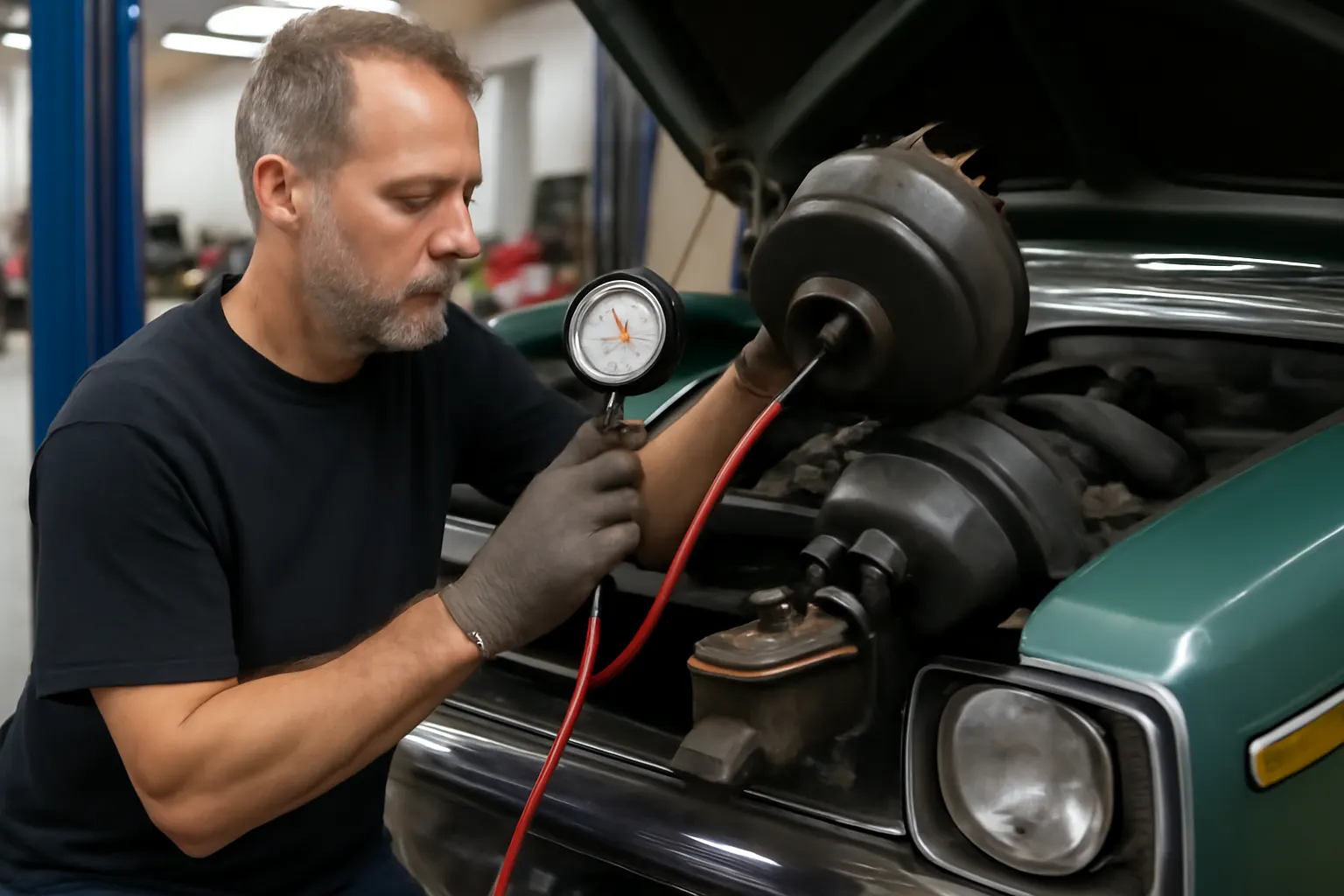
Ambassador Hard Pedal Case Study
A hard brake pedal can turn an iconic 1972 AMC Ambassador from a classic cruiser into a safety liability. In this hands-on case study, we walk through a real-world shop scenario: a customer’s Ambassador arrives with a stiff, unresponsive brake pedal. We’ll cover the full diagnostic workflow, uncover the root causes, and detail the brake booster replacement process—empowering you to restore safe, confident braking to your AMC classic.
Read More
Ambassador Brake Booster Fitment Guide
A properly matched brake booster is critical to the safety and drivability of your AMC Ambassador. The booster multiplies pedal force, making braking responsive and manageable. A mismatch in fitment—whether in mounting flange, pushrod length, or vacuum port orientation—can lead to hard pedal feel, uneven braking, or even brake failure. The National Highway Traffic Safety Administration (NHTSA) underscores the safety-critical nature of brake system components, including boosters, due to their direct effect on stopping distances and vehicle control .
View Guide