
Amc Ambassador Brake and Clutch Pedal Parts
AMC Ambassador Brake and Clutch Pedal – Model-Specific Fitment, Service Guidance, and Failure Patterns
The AMC Ambassador’s brake and clutch pedals serve as the critical link between driver input and mechanical response, directly influencing both safety and drivability. Whether you own a classic 1960s Ambassador or a late-model iteration, sourcing correct-fit pedal assemblies, pads, and bushings is essential for confident stopping and smooth gear changes. This page provides AMC Ambassador owners with the technical background, compatibility details, and practical information needed to select and install brake and clutch pedal assemblies that match your vehicle’s year, engine, and trim.
Many AMC Ambassador owners overlook the nuanced fitment challenges associated with brake and clutch pedals. Across production years, AMC introduced mid-cycle changes affecting pedal arm length, mounting bracket shape, return spring tension, and pad design. Variations between automatic and manual transmission models, as well as differences among base, SST, DPL, and Brougham trims, introduce hidden risks when sourcing replacements. Engine configurations (232, 258, 304, 360, 401) can further impact pedal geometry and clearances. Scarcity is an increasing challenge: AMC-specific pedal assemblies and hardware are rarely available new, and used or NOS components may exhibit wear or model-year incompatibility. Improperly matched pedals can lead to alignment issues, reduced braking force, or impaired clutch disengagement. Installation complexity is often underestimated, as pedal swaps may require steering column removal or firewall reinforcement.
AMC Ambassador pedal assemblies are prone to several model-specific failure patterns. Common issues include worn pivot bushings leading to side-to-side play, cracked pedal arms (especially in heavy-use clutch applications), and degraded rubber pads reducing grip. On models produced between 1968 and 1974, corrosion on the mounting bracket or pedal shaft can cause stiffness or sticking, particularly in vehicles stored in humid climates. Some Ambassadors experience premature pedal return spring fatigue, resulting in incomplete pedal release or spongy brake feel. Diagnosing pedal problems can be challenging: abnormal pedal travel may be mistaken for hydraulic system faults, while subtle alignment errors may only be apparent after installation. Compatibility constraints are significant—pedal assemblies from other AMC models (Matador, Rebel, Javelin) may look similar but rarely fit the Ambassador without modification. Service documentation for these systems is limited, increasing the risk of incorrect part selection or incomplete repair.
To ensure correct fitment on your AMC Ambassador, begin by verifying your vehicle’s exact year, transmission type, and trim level. Use VIN decoding and cross-reference OE part numbers before purchasing any pedal assembly or component. AutoPartEx provides detailed compatibility tools and technical guides, including the Ambassador Pedal Fitment Guide and Brake Clutch Pedal Installation Tips, to help identify the right hardware and avoid costly rework. When sourcing, prioritize OEM or high-quality reproduction parts to meet original performance standards. Inspect all associated hardware—bushings, return springs, pedal pads, and brackets—for wear or deformation during replacement. If tackling installation yourself, prepare for moderate to advanced mechanical work: you may need a steering wheel puller, long-handle wrenches, torque wrench, and access to the pedal box area. For models with power brakes or factory clutch assist, confirm that all linkage and assist mechanisms are compatible with the new assembly. Consider consulting a professional or using AutoPartEx’s expert support for troubleshooting, especially if you encounter unusual pedal feel or resistance after installation.
Advertisement
0 AMC Ambassador Brake and Clutch Pedal Parts
No Products Found
We're currently updating our inventory for AMC Ambassador brake and clutch pedal parts.
Please check back soon or contact us for specific part availability.
More Brake and Clutch Pedal options for AMC Ambassador
Filtering for AMC Ambassador • Brake and Clutch PedalBrowse nearby inventory for this model and category without leaving the page.
No Data Available
Please check back soon when more inventory is available for this part.
Advertisement
Expert AMC Ambassador Brake and Clutch Pedal Guidance: Specs, Real-World Evidence, and Next Steps
Fitment risks increase when attempting to use pedal assemblies from donor vehicles or non-Ambassador models. While AMC often shared components across its lineup, the brake and clutch pedal assemblies are among the least interchangeable due to differences in floorpan stamping, steering column angle, and exhaust routing. Owners should be particularly wary of used parts with unknown mileage or history, as worn pivot bushings and stress cracks can render an otherwise rare pedal arm unsafe for continued use.
Service intervals for pedal-related hardware are rarely specified in original AMC documentation, but field experience suggests inspecting pivot bushings and return springs at least every 30,000 miles, and replacing pedal pads when rubber hardness exceeds 80 Shore A or grip is visibly diminished. Installation requires workspace access to the lower dash and pedal box area, removal of the driver’s seat for clearance, and careful attention to alignment to avoid binding or increased wear.
When servicing or replacing pedals, thoroughly clean the pedal box and inspect surrounding firewall metal for signs of fatigue or cracking, especially if a stiff aftermarket clutch is installed. Use only high-quality bushings—preferably with oil-impregnated bronze or modern polymer inserts—to restore original pedal smoothness. After installation, always test pedal travel, return, and alignment before driving, as even slight misalignment can cause rapid bushing wear or impact brake/clutch effectiveness.
AutoPartEx’s catalog and technical resources, such as the Ambassador Pedal Fitment Guide and Pedal Compatibility Blog, provide essential cross-reference tools and installation best practices for AMC Ambassador owners. Leveraging these resources can dramatically reduce the risk of fitment errors or incomplete repairs compared to general aftermarket parts suppliers.
Practical Service Tips: AMC Ambassador Brake and Clutch Pedals
Check Model-Year and Trim
Always verify your AMC Ambassador’s production year, trim, engine, and transmission before ordering pedal assemblies or hardware. Use VIN decoding and factory documentation.
Inspect Pivot Bushings
Every 30,000–40,000 miles, inspect and replace pedal pivot bushings to prevent side-to-side play and ensure smooth operation.
Prepare Tools and Workspace
Pedal replacement requires a steering wheel puller, long-handle ratchet, 1/2-inch drive sockets, torque wrench (12–25 ft-lbs), and adequate workspace under the dash.
Leverage Technical Guides
Use AutoPartEx’s technical resources and installation guides to confirm correct fitment, avoid common errors, and streamline the service process.
References
- Vehicle Safety and Equipment - National Highway Traffic Safety Administration, accessed 2024-06-30Reference for safety-critical equipment, diagnostics, and replacement practices.
- Vehicle, Car Seat, Tire, and Equipment Recalls - National Highway Traffic Safety Administration, accessed 2024-06-30Source for known AMC Ambassador equipment recalls and model-specific hardware updates.
- Fuel Efficiency - United States Department of Energy, accessed 2024-06-30Background for drivetrain, engine, and pedal system integration.
Related Guides & Articles

Amc Ambassador Brake Clutch Pedal Install
Replacing the brake and clutch pedals on your AMC Ambassador is a job that demands precision, the right tools, and a methodical approach to ensure safety and optimal pedal response. This comprehensive guide from AutoPartEx delivers a detailed, step-by-step process for AMC Ambassador owners aiming to install new brake or clutch pedal assemblies, including expert tips on alignment and best practices to avoid common pitfalls.
View Guide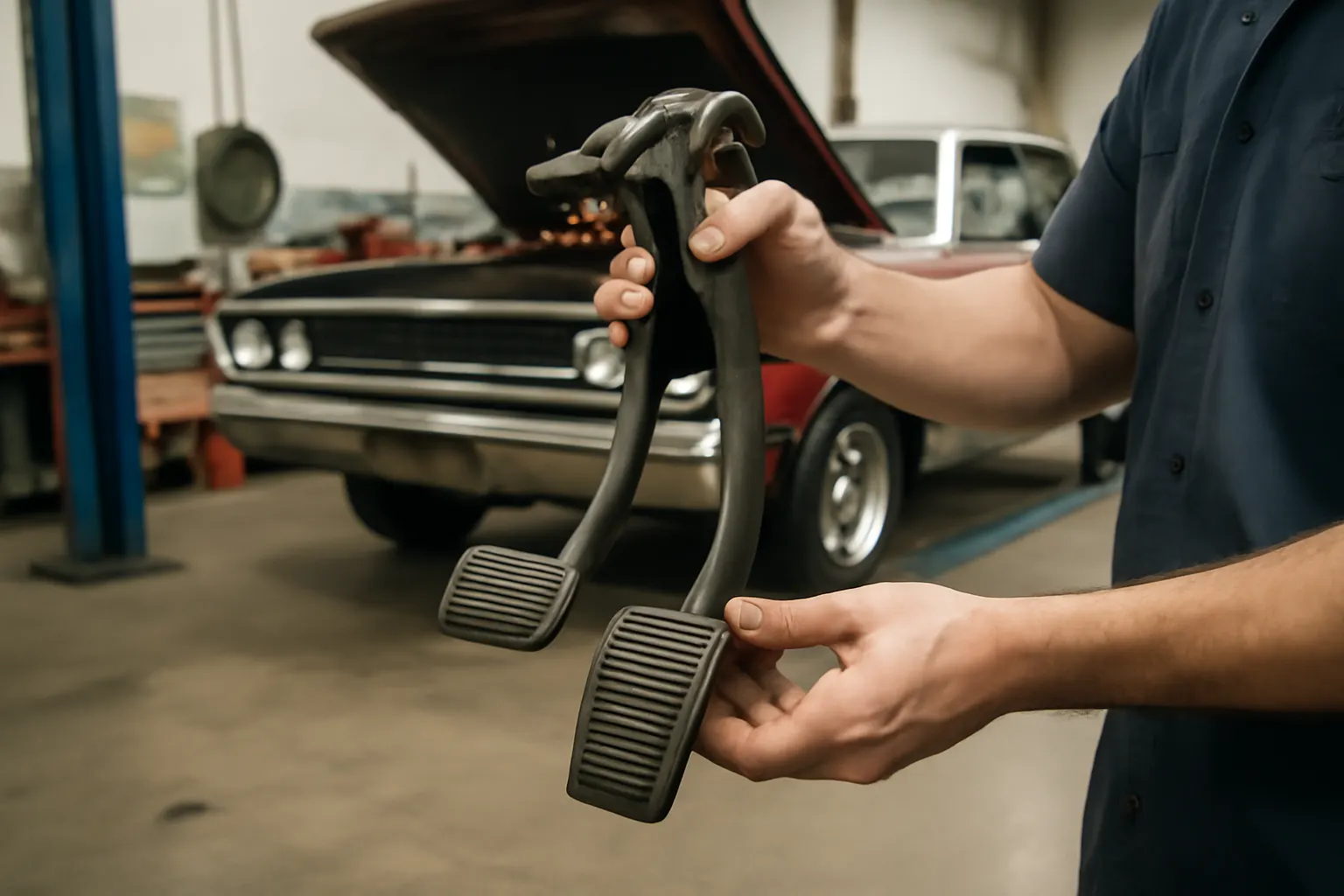
Ambassador Pedal Compatibility
When servicing or restoring an AMC Ambassador, understanding brake and clutch pedal compatibility is critical for vehicle safety, reliability, and drivability. Immediate, model-specific fitment guidance can save hours in the shop and prevent costly mistakes. This comprehensive guide explores AMC Ambassador pedal compatibility, drawing on real-world failure patterns, field data, and shop-proven strategies. Whether you’re troubleshooting a soft brake pedal, sourcing replacement clutch pedals, or confirming fitment across Ambassador model years, this article delivers actionable answers—right from the start.
Read More
Ambassador Vin Fitment
Decoding the VIN and factory build sheets is the single most reliable way to identify the correct brake and clutch pedal assemblies for your AMC Ambassador. This article details exactly how to read your Ambassador’s VIN, interpret build sheet data, and match these identifiers to the right pedal assemblies—ensuring a precise, safe, and OE-quality fit. If you’re restoring, repairing, or upgrading your Ambassador’s pedal system, this VIN-based approach eliminates guesswork and costly mistakes.
Read More
Ambassador Pedal Fitment Guide
For any AMC Ambassador, the most reliable pedal fitment comes from matching the part number, year, and transmission type (manual or automatic) to the vehicle’s VIN and build sheet. Original AMC part numbers and pedal assemblies are often stamped or tagged, and reproduction components are widely available but may require cross-referencing to ensure compatibility. When in doubt, use manufacturer fitment charts and VIN decoding tools to verify part applicability.
View Guide