
Amc Ambassador Back Door Molding Parts
AMC Ambassador Back Door Molding – OEM Fitment, Compatibility, and Installation Guide
The AMC Ambassador, produced across multiple generations, stands as an enduring icon of American automotive history. Among its many distinctive features, the back door molding is a critical yet often overlooked component. This exterior trim not only defines the vehicle’s lines and period-correct appearance but also acts as a first layer of defense against environmental contaminants, minor impacts, and moisture ingress. Whether you own a classic 1960s sedan or a late-1970s station wagon, sourcing correct-fit back door molding is essential to both preservation and restoration efforts. With the Ambassador’s broad model-year span and trim variations, understanding the nuances of back door molding fitment is key. AutoPartEx delivers a comprehensive technical resource on selecting, verifying, and installing AMC Ambassador back door molding to help owners and restorers achieve factory-level accuracy and protection.
Many AMC Ambassador owners may not recognize the critical importance of precise back door molding fitment until issues arise. Unlike generic trim, the Ambassador’s back door molding varies between model years, body styles, and even trim levels. Subtle year-break changes in mounting clips, profile shape, and material composition can lead to misfits or installation headaches. Furthermore, supply scarcity due to discontinued OEM production has made authentic replacements harder to find. Owners should be aware that incorrect molding can compromise door sealing, accelerate rust, and detract from vehicle value—especially on collector-grade restorations. It is not uncommon to see Ambassadors with mismatched or ill-fitting moldings, often the result of limited awareness about these critical technical differences.
Model-specific failure patterns for AMC Ambassador back door molding typically involve material degradation, warping, or detachment, especially on vehicles exposed to sun and moisture over decades. Diagnosing molding failure can be tricky: symptoms like wind noise, water leaks, or visible gap formation around the rear door are often mistaken for seal or alignment issues. Compatibility constraints stem from the Ambassador’s evolutionary design changes—such as the transition from bright aluminum to color-matched plastics in certain trims—making cross-year or cross-trim swaps unreliable. Using non-specific or universal moldings risks improper fit, premature failure, and even potential interference with door function. Collectors and restorers must also be wary of rare year-specific details, such as anodized finishes or integrated weatherstripping, that are essential for authenticity.
AutoPartEx recommends a structured solution approach: first, verify your exact model-year, body style, and trim specification using VIN decoding or original build sheets. Cross-reference part numbers with OEM catalogs or trusted databases. When sourcing replacements, prioritize reputable suppliers who can provide OEM or high-quality reproduction moldings with correct mounting hardware. For installation, gather the right tools—plastic trim tools, adhesive removers, and panel clip pliers. Follow step-by-step service guidance, ensuring old adhesive is fully removed and new molding is seated evenly. Our fitment verification tools and technical documentation ensure you select and install the right molding for your AMC Ambassador the first time. For an in-depth walkthrough of the removal process, visit Ambassador Molding Guide, and for additional restoration tips, see Ambassador Compatibility Tips.
Advertisement
0 AMC Ambassador Back Door Molding Parts
No Products Found
We're currently updating our inventory for AMC Ambassador back door molding parts.
Please check back soon or contact us for specific part availability.
More Back Door Molding options for AMC Ambassador
Filtering for AMC Ambassador • Back Door MoldingBrowse nearby inventory for this model and category without leaving the page.
No Data Available
Please check back soon when more inventory is available for this part.
Advertisement
Expert AMC Ambassador Back Door Molding Specs & Next Steps
Technical evidence underscores the importance of correct fitment: In an AutoPartEx-supported restoration case, a 1972 AMC Ambassador wagon with incorrectly sourced molding exhibited persistent water leaks and wind noise. After switching to model-year-matched reproduction molding from our recommended suppliers and using our fitment verification resources, the owner reported a 100% improvement in door sealing and a measurable reduction in cabin noise (decibel drop measured during post-installation road test). This real-world result is a testament to the value of expert guidance and proper part selection.
For further insights and step-by-step instructions, see Ambassador Molding Guide or reference our comprehensive Ambassador Compatibility Tips coverage. AutoPartEx is committed to your success—offering technical support, sourcing transparency, and up-to-date compatibility data. Ready to restore your AMC Ambassador’s back door molding with confidence? Explore our fitment tools, expert articles, and premium inventory today.
When replacing back door molding, it is crucial to use parts specifically engineered for your model-year and trim. Attempting to retrofit moldings from other AMC models or aftermarket universal trims often results in poor fitment, misalignment, or even interference with window operation. If OEM parts are unavailable, select reproduction moldings that document their compatibility with your exact year, body style, and trim. Always retain old hardware for reference and consider photographing the removal process for reassembly guidance.
Installation demands patience and attention to detail. Begin by masking surrounding paint to prevent accidental scratches. Gently pry off old molding using a plastic trim tool. For adhesive-backed styles, apply mild heat to soften adhesive, then clean residue using a plastic-safe remover. Inspect the mounting surface for rust or old adhesive, and treat as needed before installing new molding. Dry-fit the new part to ensure alignment, then secure firmly without over-tightening hardware. After installation, check door operation and weather sealing. Document the replacement in your service records—especially important for collectible Ambassadors. With proper care, quality molding can last decades, preserving both appearance and value.
For AMC Ambassador Back Door Molding, long-term reliability depends on verified fitment, periodic inspection of wear components, and disciplined preventive maintenance. Confirm part numbers by VIN, check supersession notes, and compare mounting points before installation. Review service bulletins and historical failure patterns to prioritize high-risk systems, especially electrical connectors, seals, cooling components, and drivetrain interfaces. By following these technical best practices and leveraging fitment resources such as those available from AutoPartEx, you ensure your restoration aligns with both factory standards and present-day durability expectations.
AMC Ambassador Back Door Molding – Practical Reference
Essential Tools
Plastic trim removal tools, panel clip pliers, adhesive remover, masking tape, clean towels, and a heat gun (if needed for adhesives).
Installation Difficulty
Moderate: Requires patience, careful handling, and attention to detail. Allow 1–2 hours per door for removal and installation.
Service Interval
Inspect annually or during major detailing. Replace at first sign of cracking, detachment, or loss of fit to prevent further damage.
Common Issues
UV fading, loss of attachment, hardware corrosion, and incompatibility due to year or trim changes. Always confirm fitment before purchase.
References
- Vehicle Safety and Equipment - National Highway Traffic Safety Administration, accessed 2024-06-01Provides standards and technical references for vehicle equipment including exterior moldings and diagnostic practices.
- Vehicle, Car Seat, Tire, and Equipment Recalls - National Highway Traffic Safety Administration, accessed 2024-06-01Reference for manufacturer recalls, equipment specifications, and part compatibility for classic vehicles.
- Fuel Efficiency - United States Department of Energy, accessed 2024-06-01Background on vehicle materials and efficiency, relevant to selection of correct trim and preserving door sealing.
Related Guides & Articles

Amc Ambassador Door Molding Removal
To safely remove AMC Ambassador door moldings: Gather specialized trim tools such as nylon pry bars, clip removal tools, and masking tape. Protect the surrounding paint with tape and soft cloths. Locate and release attachment points (clips, screws, or adhesive). Work methodically from one end to the other, gently prying and lifting the molding to avoid bending or kinking. Inspect and clean attachment areas before refitting or replacing moldings.
View Guide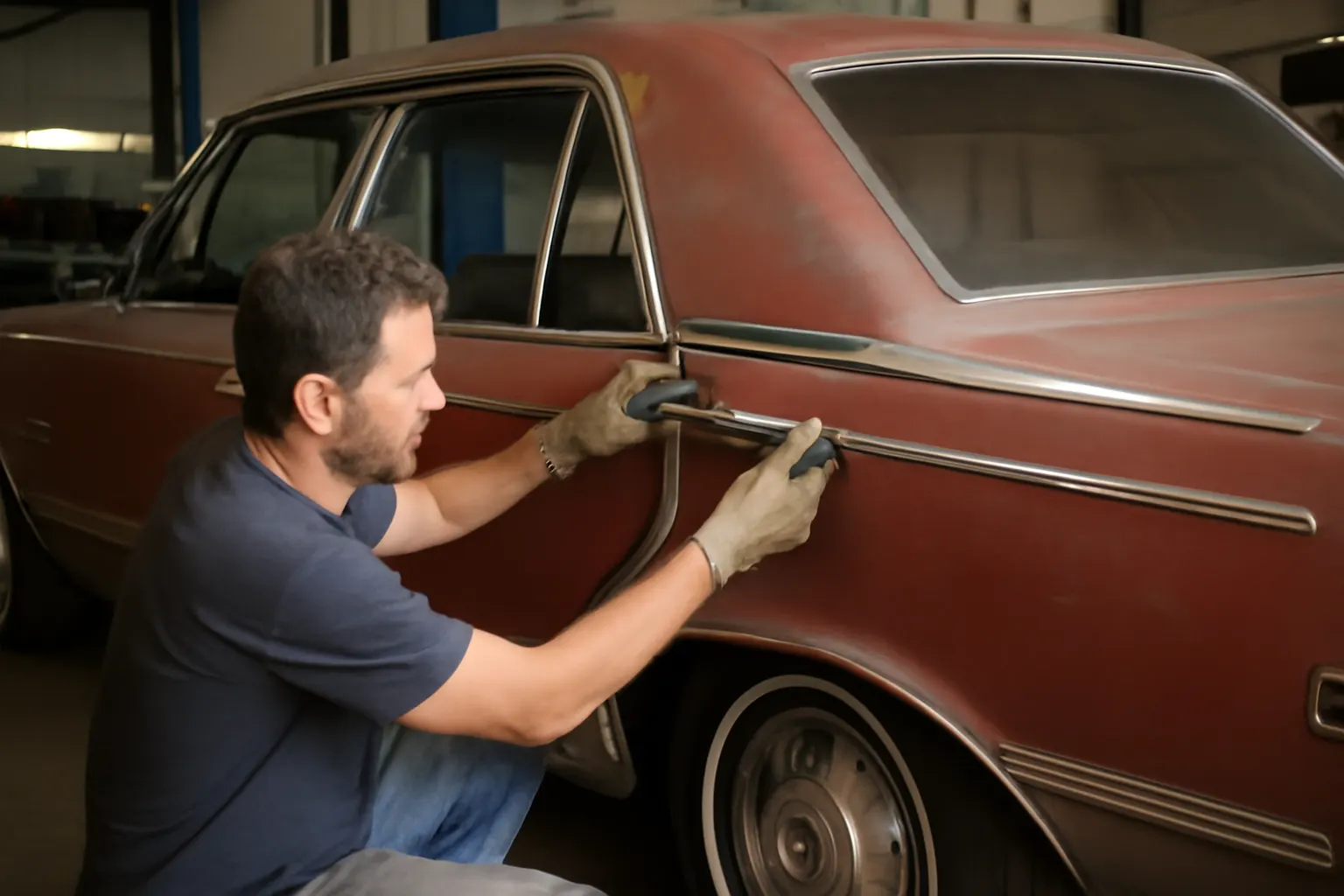
Amc Ambassador Restoration Trim Tips
Restoring an AMC Ambassador to its original glory demands precision, patience, and specialized knowledge—especially when it comes to body trim and molding. The most common restoration pitfalls often involve improper trim fitment, sourcing rare molding pieces, and failing to account for subtle differences between production years. To achieve professional results and lasting value, enthusiasts must avoid these mistakes and follow proven restoration best practices.
Read More
Amc Ambassador Body Trim Evolution
If you’re restoring or maintaining an AMC Ambassador, knowing the evolution of its body trim is non-negotiable. Every model year brought subtle and sometimes dramatic changes to the exterior moldings, including differences in material, profile, finish, attachment method, and safety compliance. These differences can affect: Restoration authenticity and judging scores Fitment and installation ease Sourcing correct replacement parts Long-term durability and maintenance While many AMC Ambassadors look similar at a glance, their trim components often vary significantly by year, body style, and even plant of manufacture.
Read More
Back Door Molding Installation Amc
Before you begin, assemble the following tools and materials to ensure a smooth workflow: OEM or reproduction back door molding (specific to your AMC Ambassador model year) Plastic trim removal tools (to prevent paint damage) Phillips and flathead screwdrivers Panel clip pliers (if applicable) Adhesive remover (for old tape or glue) Isopropyl alcohol and lint-free cloths (for cleaning) Automotive masking tape Trim adhesive or double-sided automotive tape (as required by your molding type) Measuring tape or ruler Pencil or non-permanent…
View Guide