
Toyota Front Door Moulding
Toyota Front Door Moulding – Genuine Fitment, Quality, and Service Guidance | AutoPartEx
Toyota front door mouldings serve an essential function in safeguarding your vehicle’s bodywork, improving aerodynamics, and preserving the factory-fresh appearance of your car or truck. As a precision-engineered trim piece, Toyota’s original equipment front door mouldings are designed to contour perfectly with each model’s unique door geometry, providing both visual continuity and critical protection against door dings, environmental contaminants, and water ingress. Whether you own a Camry, Corolla, Tacoma, or any other Toyota model, the correct front door moulding is vital for maintaining your vehicle’s structural and aesthetic integrity.
Many Toyota owners and even experienced technicians underestimate the complexity and importance of front door mouldings. While often perceived as simple decorative strips, these mouldings are engineered for precise fitment—model, year, and trim-level specific. Hidden pitfalls include supersession of part numbers (where Toyota updates moulding designs or materials mid-generation), regional scarcity of certain variants, and the presence of subtle quality differences between OE and aftermarket options. Improper or mismatched installation can result in wind noise, water leaks, corrosion at the door seam, and even diminished fuel efficiency due to minor aerodynamic disruption. Diagnostic challenges also arise—subtle moulding damage may be overlooked, yet can lead to progressive issues like premature rust or paint delamination.
Toyota front door mouldings are subject to unique stressors such as UV exposure, temperature cycling, and frequent mechanical contact (e.g., from adjacent car doors or road debris). Certain model families, such as the 2007–2017 Camry and 2014–2021 Corolla, are prone to specific failures: adhesive bond deterioration, plastic warping, and clip fatigue are recurring patterns. Inaccurate part selection—often due to superseded Toyota part numbers—can lead to misaligned mouldings, compromised door seal, and even interference with window operation. Installation issues are compounded by the integration of hidden fasteners and unique Toyota clip systems, requiring specialized removal and reinstallation techniques. Compatibility risks are heightened when attempting to interchange mouldings between model years or trim levels, with even minor dimensional variances resulting in poor fit or functional compromise.
Addressing Toyota front door moulding issues requires a methodical, OEM-focused approach. Begin by decoding your VIN to confirm exact model and trim—this is crucial for accurate part selection given Toyota’s frequent supersessions and running changes. Leverage AutoPartEx’s detailed fitment database for cross-referencing part numbers and identifying compatible alternatives. For diagnostic best practices, consult our Toyota Door Moulding Diagnostics Guide and explore installation walkthroughs like Common Toyota Door Moulding Failures. Service procedures should include careful inspection of door flange integrity, removal of old adhesive residue, and use of Toyota-specified clips or fasteners. When sourcing, opt for OE or manufacturer-approved mouldings to ensure material compatibility and long-term durability. AutoPartEx offers certified Toyota mouldings with full fitment transparency, technical documentation, and expert guidance to minimize installation risk and maximize service quality.
Advertisement
Showing 1–1 of 1 Toyota front door moulding parts

Advertisement
More Toyota Front Door Moulding options
Filtering for Toyota • Front Door MouldingScan nearby Toyota front door moulding inventory without leaving this page.
No Data Available
Please check back soon when more inventory is available for this part.
Advertisement
Technical Precision, Real-World Results – Why AutoPartEx is the Professional’s Source for Toyota Front Door Moulding
Our commitment to technical accuracy and service transparency is underpinned by in-depth fitment data, model-specific installation guidance, and access to verified OE-quality parts. Whether you’re a collision repair shop, dealership technician, or advanced DIYer, AutoPartEx supports your success with technical resources—including Toyota Front Door Moulding Fitment Guide—and a robust customer support ecosystem. For further insight, see Common Moulding Failures for a compilation of real-world failure patterns and expert corrective strategies.
Partner with AutoPartEx for:
- Precise VIN-based compatibility lookup
- Up-to-date part supersession tracking
- Model-specific technical documentation
- Access to certified Toyota mouldings and installation kits
Take action now: use our fitment guide to select the right part, review installation best practices, and order with confidence from AutoPartEx—the trusted source for Toyota trim and body components.
Service professionals frequently encounter cases where mismatched or poorly installed mouldings have led to chronic water leaks, escalated corrosion, or recurring wind noise complaints. In one documented case, a 2015 Toyota Camry presented with persistent water intrusion after a body shop installed a non-OE moulding that lacked the correct clip profile—resulting in a 1mm gap and repeated customer callbacks. Proper diagnosis in such scenarios involves removing the door trim, inspecting for correct clip alignment, and checking for adhesive residue or paint damage along the flange.
Another technical challenge is the handling of Toyota’s unique clip systems, which vary not only by model but also by production date and trim level. For example, a 2017 RAV4 XLE uses a different retention system from the 2017 RAV4 Limited, reflecting Toyota’s ongoing refinement of part design. This complexity underscores the importance of professional-grade parts lookup and technical documentation, both of which are integrated into AutoPartEx’s sourcing and service support ecosystem.
The replacement process demands attention to several critical steps:
1. Accurate VIN-based part identification, accounting for supersessions and production splits.
2. Use of OE-specified clips and adhesives for secure, long-lasting installation.
3. Surface preparation, including removal of all old adhesive and corrosion inspection.
4. Careful alignment—using masking tape or jigs where needed to ensure perfect flushness.
5. Post-installation inspection for wind noise, water ingress, and visual continuity.
Service time varies but generally falls between 45 minutes and 2 hours per door, depending on model and technician experience. For vehicles exposed to harsh climates or where prior repairs have altered door geometry, additional adjustment and inspection may be necessary. AutoPartEx supports both professionals and advanced DIYers with in-depth fitment data, installation tips, and verified OE-quality mouldings for all major Toyota model families.
Toyota Front Door Moulding – Quick Reference
Model Coverage
Supports all major Toyota models: Camry, Corolla, Highlander, Tacoma, Prius, Avalon, RAV4, and more. Detailed fitment notes ensure precise match for year, body style, and trim.
Service Timeframe
Professional replacement typically takes 30 minutes to 2 hours depending on model complexity and moulding type. Allow extra time for surface prep and inspection.
Cost Range
OE front door moulding replacement costs range from $180 to $400 per door (parts + labor). DIY cost varies with tool and clip requirements.
Installation Difficulty
Moderate. Requires trim tools, surface prep, and knowledge of Toyota-specific fastener systems. Follow OE procedures for best results and longevity.
References
- Vehicle, Car Seat, Tire, and Equipment Recalls - National Highway Traffic Safety Administration, accessed 2024-06-10Provides recall and safety bulletin context for Toyota exterior components and trim.
- Fuel Efficiency - United States Department of Energy, accessed 2024-06-10Details the impact of exterior design and materials on vehicle aerodynamics and efficiency.
- Materials Technologies - United States Department of Energy, accessed 2024-06-10Gives technical context for advanced polymers and materials used in automotive body mouldings.
Related Guides & Articles

Toyota Door Moulding Diagnostics Guide
Toyota door mouldings serve as a first line of defense against dents, chips, and weather-induced corrosion. A compromised moulding can lead to premature paint and bodywork degradation, increased cabin noise, and even reduced resale value. Immediate diagnostics and timely replacement are essential to preserve both vehicle safety and appearance. Key Roles of Door Mouldings: Protect door edges and lower panels from impact and abrasion. Seal gaps, reducing wind noise and water intrusion.
View Guide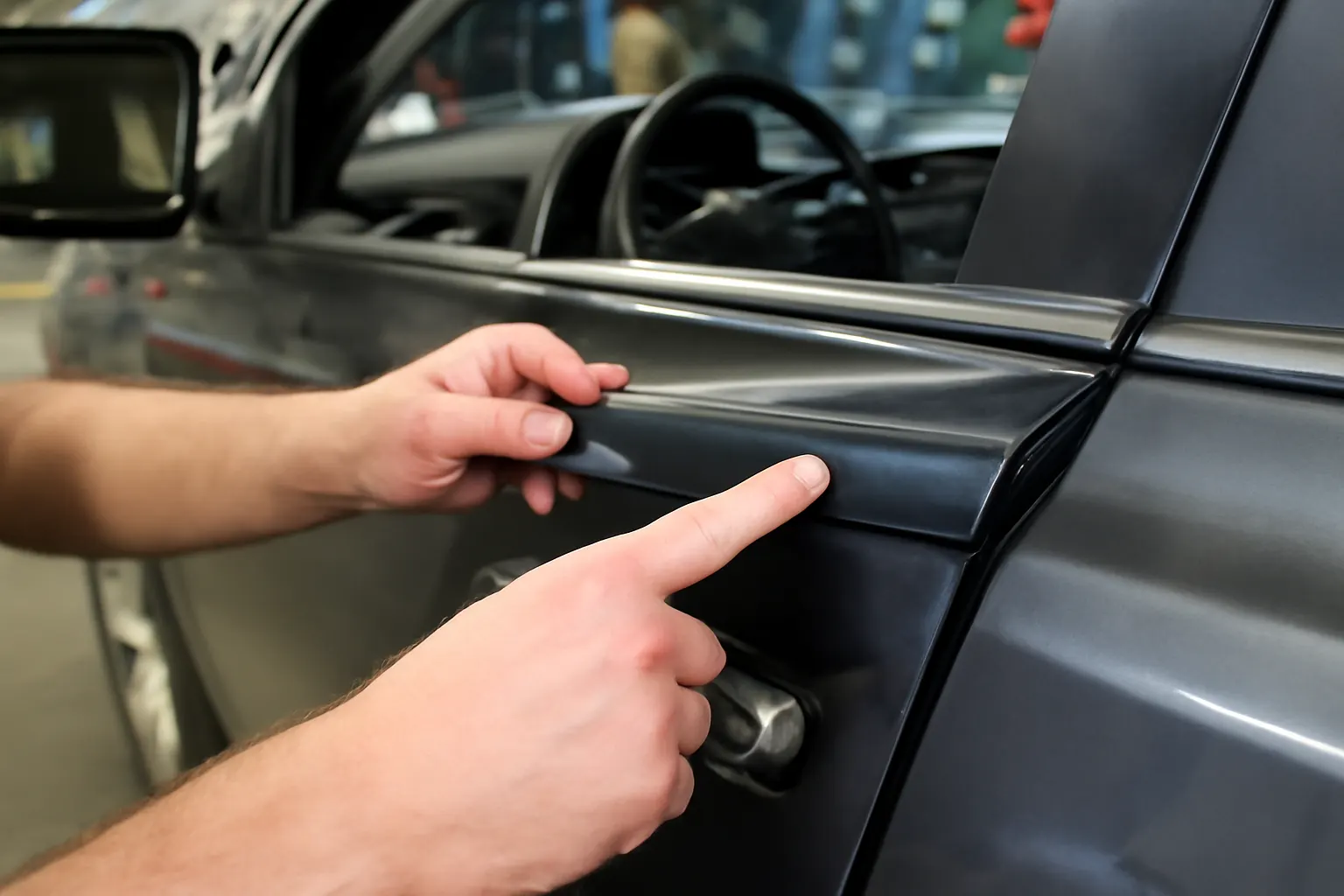
Common Moulding Failures
The most frequent Toyota front door moulding failures include: Adhesive separation and detachment Warping or deformation due to material fatigue Incorrect installation leading to gaps or misalignment Weather-related deterioration (UV, heat, moisture) Physical damage from impact or abrasion Rust or corrosion at mounting points Loss of noise and water sealing function While a loose or damaged door moulding might seem minor, it often signals deeper issues—such as improper installation technique, substandard materials, or underlying structural misalignment.
Read More
Toyota Materials Exterior Trim
Toyota’s exterior trim, including front door mouldings, is engineered using a blend of advanced polymers, elastomers, and metal reinforcements. These materials are selected for their lightweight properties, resistance to UV and chemical exposure, and ability to maintain structural integrity through years of environmental stress. For technicians, body shops, and DIYers, understanding these material choices is essential for: Selecting the correct replacement part or repair method. Ensuring proper adhesion, fitment, and finish. Maximizing the lifespan and appearance of the trim.
Read More
Toyota Front Door Moulding Fitment Guide
Toyota front door moulding is a critical exterior trim component, providing both protection and aesthetic continuity for a wide range of Toyota vehicles. This guide delivers immediate, actionable fitment information—covering part number cross-references, model-specific notes, and installation best practices—to ensure you achieve a genuine-quality result. Whether you’re a technician, body shop, or a dedicated Toyota owner, this resource covers every aspect of sourcing, diagnosing, and fitting front door mouldings accurately.
View Guide