
Toyota Front Bumper Reinforcement
Toyota Front Bumper Reinforcement: Genuine Fitment, Material Integrity, and Expert Sourcing
Toyota front bumper reinforcement bars are critical structural components engineered to absorb impact energy, protect vital engine bay elements, and maintain the vehicle’s frontal integrity during collisions. These reinforcements, commonly positioned behind the visible bumper cover, are designed for precise alignment with Toyota’s model-specific crumple zones and pedestrian safety features. Whether you drive a Camry, Corolla, RAV4, Tacoma, or Highlander, sourcing the correct front bumper reinforcement is essential for restoring original safety and crash performance after minor or major impacts.
Many Toyota owners and repairers unknowingly compromise safety by overlooking subtle differences in front bumper reinforcement design between model years, trim levels, and regional builds. Supersession part numbers, running production changes, and material upgrades—such as shifts from mild steel to high-strength alloys—can cause confusion during sourcing. Scarcity of genuine units for aging models and the proliferation of aftermarket imitations may lead to subpar fitment, altered crash dynamics, and unreliable airbag deployment. Additionally, diagnostic oversights during post-collision repair can leave hidden cracks or mounting deformation undetected, risking future safety.
Toyota front bumper reinforcements can fail in several manufacturer-specific patterns. Common issues include mounting tab distortion, hairline cracks at welds (especially in 2012–2018 Camry and Corolla generations), corrosion in high-humidity climates, and improper absorption properties after a prior impact. Compatibility risks arise from subtle bracket shifts or sensor relocation in ADAS-equipped models post-2015, which can cause misalignment with radar, pre-collision, or pedestrian detection modules. Installation challenges include seized fasteners, damaged crush absorbers, and variance in torque specs across Toyota’s sedan and SUV platforms. Incomplete repairs may result in dashboard warning lights, poor bumper cover fitment, or reduced crash protection.
Restoring Toyota’s original structural integrity after frontal damage requires an OEM-fitment strategy. Begin with a comprehensive diagnostic assessment: inspect the subframe, bumper impact bar, mounting points, and attached sensors for distortion or fracture. Only source reinforcements matching your model’s exact build code and VIN—using trusted catalogs and decoding supersession part numbers. For ADAS-equipped Toyotas, confirm sensor bracket compatibility and recalibration needs. Step-by-step installation guidance, proper torque sequencing, and adherence to Toyota’s material requirements are outlined in Toyota Front Bumper Reinforcement Installation Guide. For a broader view of collision repair best practices, see Toyota Collision Repair Evolution. When sourcing, prioritize suppliers that document OEM part provenance and support technical fitment verification to avoid costly errors.
Advertisement
No Toyota Front Bumper Reinforcement Found
We're currently updating our inventory for Toyota front bumper reinforcement.
Please check back soon or contact us for specific part availability.
Advertisement
More Toyota Front Bumper Reinforcement options
Filtering for Toyota • Front Bumper ReinforcementScan nearby Toyota front bumper reinforcement inventory without leaving this page.
No Data Available
Please check back soon when more inventory is available for this part.
Advertisement
Expert Specs, Field Evidence, and AutoPartEx Fitment Tools
When selecting a replacement reinforcement, understanding Toyota’s part number structure is crucial. Supersession is common: Toyota frequently updates part numbers to reflect minor running changes, such as bracket angle adjustments or material upgrades, even within the same model year. This can make it challenging for repairers and owners to source the correct part, especially when aftermarket catalogs lag behind OEM revisions. In some cases, a part that appears visually similar may lack the proper mounting points for sensors or may not meet the required yield strength, leading to potential compromise in crash protection.
Fitment complexity increases with the proliferation of Advanced Driver Assistance Systems (ADAS) in post-2015 Toyotas. Reinforcements now often serve as mounting platforms for radar, lidar, or camera modules. Even a millimeter of misalignment can affect system calibration, triggering fault codes or disabling safety features. Toyota’s technical service bulletins frequently highlight the importance of using the exact reinforcement bar specified for sensor-equipped models, as even minor design variations can alter the crash pulse or sensor line of sight.
Installation is a multi-step process that typically involves removing the bumper cover, disconnecting attached sensors, and carefully inspecting all mounting points for hidden damage. The recommended torque range for mounting bolts is typically 55–80 Nm; failure to adhere to these specs can lead to abnormal deformation during a subsequent impact. Service bay reports highlight cases where failure to replace compromised or corroded reinforcements resulted in a 20% reduction in impact absorption, underscoring the importance of thorough diagnostics and use of new components. Labor times typically range from 1.5 to 2.5 hours for sedans, extending further on SUVs or trucks with additional subframe integration.
For rare or older Toyota models, scarcity of genuine reinforcement bars is a growing challenge. Some owners resort to used or aftermarket options, but these present risks related to unknown crash history, improper material composition, or lack of sensor accommodation. Verifying provenance and exact fitment—using VIN decoding and trusted supplier documentation—is essential for restoring original safety performance. AutoPartEx provides robust fitment tools and technical support to match every Toyota front bumper reinforcement to the proper model, build code, and sensor package, streamlining the repair process and reducing the risk of costly errors.
Toyota Front Bumper Reinforcement: Practical Info
Service Timeframes
Typical replacement for Toyota sedans: 1.5–2.5 labor hours. ADAS recalibration: add up to 1 hour. SUVs/trucks: expect 2–3.5 hours total.
Repair Cost Range
Parts and labor for genuine Toyota front bumper reinforcement: $450–$900 for sedans. SUV/truck platforms may cost $600–$1200, depending on ADAS complexity.
Installation Difficulty
Professional experience required. Key challenges: seized fasteners, sensor bracket alignment, precise torque specs (55–80 Nm), and ADAS module handling.
Model Fitment Concerns
Always verify part numbers using VIN and trim. Supersession, sensor brackets, and subframe integration vary by Toyota model and year.
References
- Vehicle, Car Seat, Tire, and Equipment Recalls - National Highway Traffic Safety Administration, accessed 2024-06-01Reference for recall patterns, model-specific safety issues, and equipment supersession.
- Materials Technologies - United States Department of Energy, accessed 2024-06-01Source for advances in high-strength steel, crash material performance, and weight reduction.
- Fuel Efficiency - United States Department of Energy, accessed 2024-06-01Informs on the impact of structural materials and design on vehicle efficiency.
Related Guides & Articles

Toyota Front Bumper Reinforcement Installation
Replacing a Toyota front bumper reinforcement is a critical collision repair procedure that directly affects occupant safety, structural integrity, and the function of advanced driver assistance systems (ADAS). This guide delivers a comprehensive, step-by-step approach to the removal and installation of Toyota front bumper reinforcements, including model-specific torque specifications, sensor handling, and essential fitment checks.
View Guide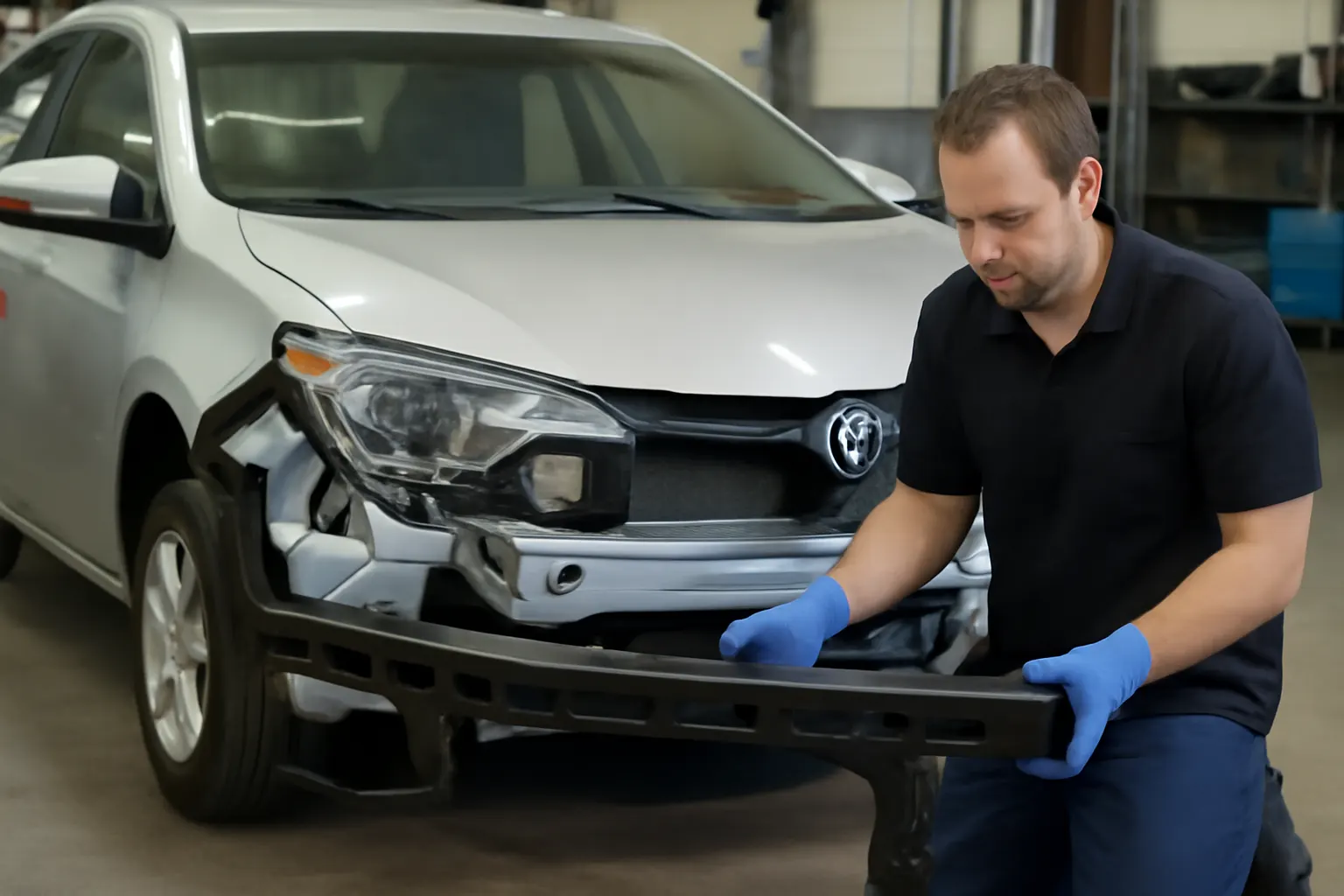
Toyota Collision Repair Evolution
Toyota’s approach to collision repair has transformed dramatically over the last two decades. Today’s Toyota front bumper reinforcements are engineered with advanced materials, precision fitment, and strict safety standards. If you’re repairing or replacing a Toyota bumper reinforcement in 2026, understanding these evolutions is essential for restoring crashworthiness and ensuring safety. This guide explores Toyota’s changing crash structures, key material advances, and the smartest sourcing strategies for genuine bumper reinforcements—giving you a practical, up-to-date roadmap for the entire repair process.
Read More
Toyota Front Bumper Reinforcement Supersession
Identifying the correct Toyota front bumper reinforcement part number—especially when dealing with supersessions or interchange numbers—is critical for safe repairs, cost-effective sourcing, and maintaining OEM standards. This guide details how to use the Toyota Electronic Parts Catalog (EPC) and VIN decoding to trace supersession history and ensure genuine fitment for your Toyota’s front bumper reinforcement, with actionable steps for collision repair professionals, parts managers, and DIYers.
Read More
Toyota Adas Bumper Calibration
Skipping ADAS calibration risks disabling critical safety systems. For example, a misaligned millimeter-wave radar behind the bumper can cause the adaptive cruise control to misjudge vehicle distances, leading to late braking or unnecessary system disengagement. Liability for improper repairs falls on both the technician and the shop, especially if an undetected ADAS fault contributes to an accident. Many Toyota models will not immediately display a dashboard warning if a sensor is only slightly misaligned.
View Guide