
Toyota Front Bumper Cover
Toyota Front Bumper Cover: OEM Fitment, Diagnostics & Sourcing Guide
Toyota front bumper covers are critical exterior components engineered for both protection and aesthetics. Designed to absorb minor impacts, streamline aerodynamics, and integrate with advanced driver-assistance systems (ADAS), an authentic Toyota bumper cover ensures factory-fit appearance and optimal front-end performance across models like Camry, Corolla, RAV4, Tacoma, and more. Whether you’re dealing with collision repair or refreshing worn exterior trim, selecting an OEM-grade bumper cover preserves Toyota’s original engineering standards and maintains vehicle value.
Many Toyota owners are unaware that not all bumper covers are engineered with the same material technology, impact performance, or sensor compatibility as the original factory unit. Subtle changes in model-year styling, mounting structure, and sensor port layout can lead to hidden fitment mismatches. Scarcity of genuine Toyota covers for older or specialty trims often results in reliance on aftermarket units, which may lack proper bracket alignment or paint prep. Supersession issues—where Toyota updates part numbers or construction—can further complicate sourcing. In addition, a damaged or poorly fitted front bumper cover can affect ADAS sensor calibration, fuel efficiency, and even compliance with safety recalls.
Front bumper covers on Toyota models frequently experience damage from low-speed impacts, parking mishaps, and road debris. Certain model years, such as 2012-2017 Camry and 2016-2019 RAV4, have documented patterns of mounting tab breakage and premature paint delamination, especially in climates with extreme temperature swings. Installation difficulties increase when dealing with multi-part front fascias that integrate grilles, fog light bezels, and radar sensor cutouts. Compatibility risks are elevated for hybrid, TRD, or XLE trims with unique lower valances or parking sensors, and for vehicles subject to manufacturer recalls involving front structure or pedestrian safety equipment.
To ensure proper restoration of your Toyota’s appearance and safety features, use an OEM fitment strategy: confirm your VIN-specific part number, check for any supersessions, and verify that the replacement bumper cover matches sensor, headlamp washer, and trim port requirements. For accurate installation and ADAS calibration, consult Toyota’s service literature and consider professional paint matching. Detailed diagnostic and installation tips are available in our Toyota Front Bumper Cover Guide and Toyota Bumper Cover Installation Blog, which outline best practices for sourcing, prepping, and installing bumper covers on Toyota vehicles. Source only through trusted suppliers—such as AutoPartEx—to guarantee genuine fit and material quality for your specific Toyota model.
Advertisement
Showing 0 of 0 Toyota front bumper cover parts
No Toyota Front Bumper Cover Found
We're currently updating our inventory for Toyota front bumper cover.
Please check back soon or contact us for specific part availability.
Advertisement
More Toyota Front Bumper Cover options
Filtering for Toyota • Front Bumper CoverScan nearby Toyota front bumper cover inventory without leaving this page.
No Data Available
Please check back soon when more inventory is available for this part.
Advertisement
Expert Toyota Bumper Cover Sourcing & Installation—AutoPartEx Advantage
Sourcing strategies must account for Toyota’s history of part number supersession and mid-cycle styling updates. For example, a 2014 Camry bumper cover may not fit a 2017 model due to minor changes in grille shape or sensor layout. Scarcity of OEM covers for discontinued production runs leads to increased reliance on aftermarket suppliers, but these may not meet Toyota’s original material or fitment standards. Installation difficulty varies by model: base trims with simple one-piece covers may require only basic tools and 2–3 hours of labor, while higher trims with multi-part fascias, parking sensors, or radar modules may add 1–2 hours and require advanced diagnostics for ADAS recalibration.
Repair costs for Toyota front bumper cover replacement typically range from $350–$950 (parts and labor), with the largest variables being paint/blending and the need for sensor calibration. Service timeframes depend on part availability and shop scheduling, but most repairs are completed within one business day for common models. For rare trims or color-matched covers, sourcing and paint-matching may extend the process by 3–5 days. Always verify recall status with NHTSA prior to installation, as certain model years are subject to safety equipment or pedestrian protection recalls that may affect bumper cover design or mounting hardware.
Toyota Front Bumper Cover: Quick Technical Facts & Service Tips
Material Specs
OEM Toyota covers use advanced polypropylene or TPO blends tested for -40°F to 140°F temperature range and UV stability.
Repair Cost Range
Typical replacement costs: $350–$950 (parts, paint, labor). Advanced trims or ADAS calibration add to the total.
Installation Timeframe
Standard models: 2–3 hours. Multi-part or sensor-equipped fascias: 4–5 hours and possible same-day turnaround.
Fitment Cautions
Always verify part number by VIN, check for sensor and trim port compatibility, and consult NHTSA for recall updates.
References
- Vehicle, Car Seat, Tire, and Equipment Recalls - National Highway Traffic Safety Administration, accessed 2024-06-18Used for recall and safety compliance verification procedures.
- Materials Technologies - United States Department of Energy, accessed 2024-06-18Referenced for OEM plastic composition, durability, and environmental performance metrics.
- Fuel Efficiency - United States Department of Energy, accessed 2024-06-18Supports discussion of aerodynamic and weight impact on vehicle efficiency.
Related Guides & Articles

Toyota Front Bumper Cover Guide
Replacing or upgrading your Toyota's front bumper cover is more than a cosmetic fix—it's a crucial safety, fitment, and technology-sensitive repair. This comprehensive guide walks you through identifying the correct Toyota front bumper cover, ensuring proper fitment, handling ADAS sensor alignment, and achieving a seamless paint blend. Whether you're a DIYer or a professional technician, you'll find step-by-step instructions and expert insights for a trouble-free installation.
View Guide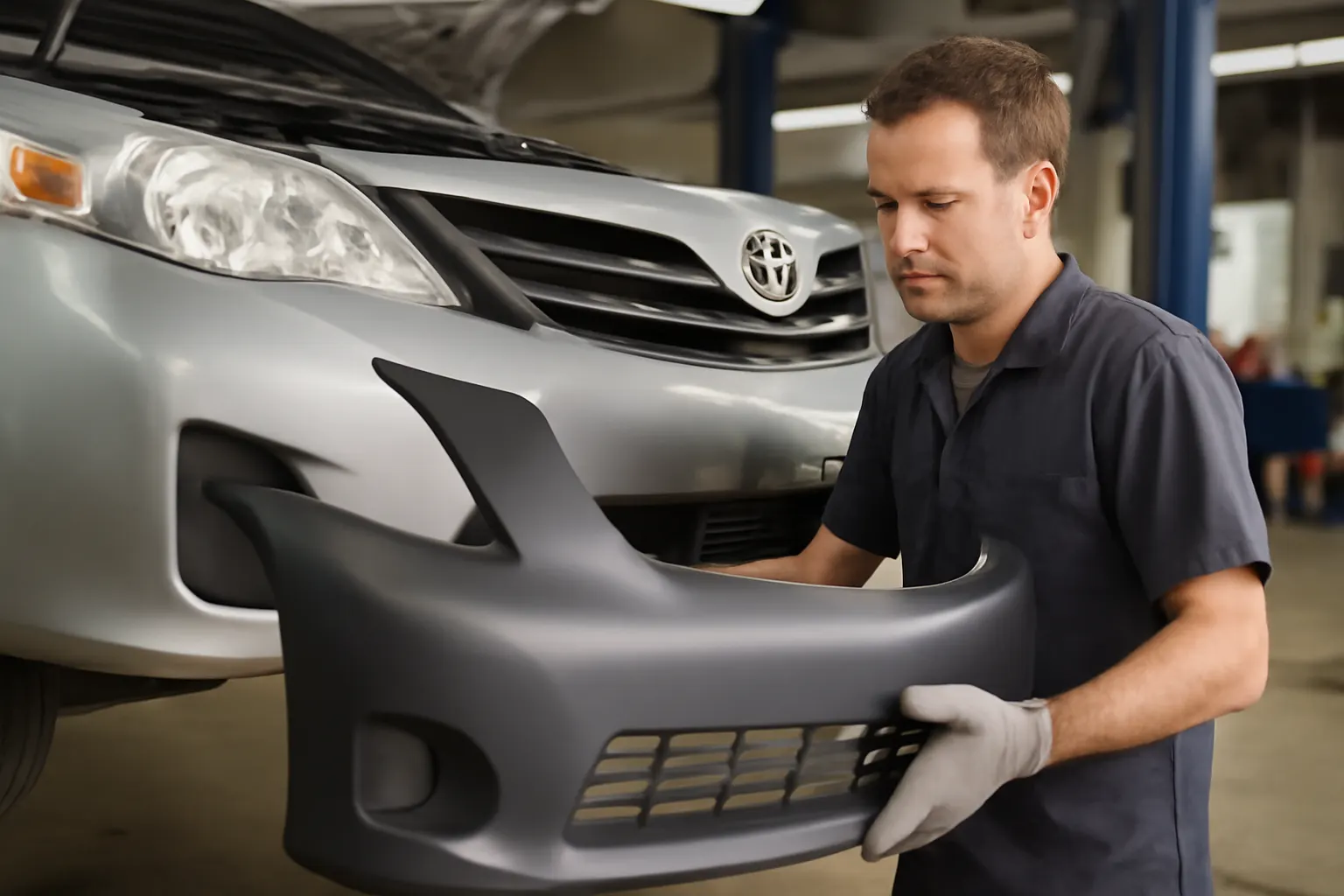
Bumper Cover Installation Blog
Replacing a Toyota front bumper cover is a task that seems straightforward on the surface, but professional installers know that the difference between a seamless fit and a problematic repair often comes down to attention to detail, diagnostic accuracy, and understanding modern vehicle systems. In this comprehensive guide, the AutoPartEx Technical Editorial Team distills years of installer experience into actionable advice, checklists, and technical insights.
Read More
Oem Vs Aftermarket Toyota Bumper Covers
When it comes to replacing a Toyota front bumper cover, the most immediate question is whether to choose an OEM (Original Equipment Manufacturer) part or an aftermarket alternative. For Toyota owners and repair professionals, the answer is rarely simple: both options have distinct advantages and drawbacks regarding material quality, fitment precision, long-term durability, safety compliance, and overall value. This comprehensive AutoPartEx guide delivers a technical, practical, and unbiased comparison to help you make an informed decision for your Toyota vehicle.
Read More
Toyota Part Supersession Guide
Toyota part supersession refers to the process where Toyota replaces an older part number with a new one, often as a result of design improvements, supply chain updates, regulatory changes, or compatibility consolidations. For owners and repairers, this means the original part number listed in your owner’s manual or on your factory bumper cover may no longer be valid. Instead, a new superseded part number is used for orders and service.
View Guide