
Toyota Exhaust Fluid Pump
Toyota Exhaust Fluid Pump: OEM Fitment, Failure Patterns, and Sourcing Guide
Toyota’s advanced exhaust fluid pumps are essential to the Selective Catalytic Reduction (SCR) systems in modern diesel models, including the Tundra, Tacoma, and Land Cruiser. These precision-engineered pumps deliver diesel exhaust fluid (DEF, commonly called AdBlue) under high pressure to the exhaust stream, reducing nitrogen oxide (NOx) emissions and ensuring compliance with strict environmental standards. With an OEM Toyota exhaust fluid pump, your vehicle maintains optimal emissions performance, fuel efficiency, and long-term reliability.
Many Toyota owners are unaware of potential issues lurking within the exhaust fluid pump system. Fitment intricacies across model years, part supersessions, and variations in SCR system design mean that not all pumps are interchangeable. In addition, genuine Toyota pumps can be scarce in secondary markets due to limited production runs and high demand for replacement parts—especially in popular diesel models. Subtle early warning signs—like inconsistent DEF consumption, check engine lights, or mild performance drops—often go misdiagnosed, leading to unnecessary repairs or emissions failures. Without precise diagnostics and up-to-date technical information, selecting an incorrect or inferior pump can cause compatibility issues, further component wear, or even trigger regulatory non-compliance.
Toyota exhaust fluid pumps are subject to specific failure patterns. Common issues include internal seal degradation, electronic control module (ECM) communication faults, and contamination from poor-quality DEF or tank debris. For example, 2016–2021 Toyota diesel models equipped with Denso SCR systems have reported increased warranty claims for premature pump failures, often traced to water ingress or voltage irregularities. Installation challenges are also model-dependent: some Toyota vehicles require partial exhaust disassembly or reprogramming via Techstream, while others may need updated wiring harnesses. Attempting to install a mismatched or superseded pump can result in erroneous DTCs (Diagnostic Trouble Codes), limp mode, or failed OBD readiness checks. The risk of compatibility problems is compounded by overlapping part numbers and periodic Toyota part number changes.
The optimal approach to sourcing and servicing a Toyota exhaust fluid pump starts with VIN-based OEM part lookup and reference to the latest Toyota service bulletins. Thorough diagnostics—including checking for active DTCs (e.g., P2BA9, P20E8, P204F), pump output testing, and DEF quality analysis—are essential before replacement. When installing a new pump, follow Toyota’s torque specifications and ensure all electrical connectors are clean and properly seated. If your Toyota model requires SCR ECU calibration, a factory-grade scan tool or Techstream is highly recommended. For additional technical depth on Toyota emissions system diagnostics, see Toyota Diesel SCR System Guide. For a comprehensive troubleshooting process, refer to Exhaust Fluid Pump Troubleshooting. Sourcing a genuine Toyota pump through trusted channels like AutoPartEx ensures you receive a part that matches your model’s precise emissions and fitment specifications.
Advertisement
Showing 0–0 of 0 Toyota exhaust fluid pump parts
No Toyota Exhaust Fluid Pump Found
We're currently updating our inventory for Toyota exhaust fluid pump.
Please check back soon or contact us for specific part availability.
Advertisement
More Toyota Exhaust Fluid Pump options
Filtering for Toyota • Exhaust Fluid PumpScan nearby Toyota exhaust fluid pump inventory without leaving this page.
No Data Available
Please check back soon when more inventory is available for this part.
Advertisement
Expert-Level Toyota Exhaust Fluid Pump Specs, Service Evidence, and Action Plan
Repair costs for Toyota exhaust fluid pump replacement generally range from $600 to $1,200, depending on model and labor rates. Service time varies, with straightforward access on trucks but more intensive labor required on SUVs with underbody shielding. DEF pump failure can cause a 10–15% reduction in fuel economy due to fallback emissions calibration, and extended operation in a failed state may lead to irreparable catalyst damage. Installation difficulty is rated as moderate: the job requires access to the DEF tank/pump assembly, safe draining of DEF fluid, electrical connector handling, and sometimes exhaust removal. Toyota’s modular design means proper part selection is critical—using the wrong pump can trigger new DTCs or fail to clear existing ones even after replacement.
Model-family fitment is a recurring challenge. For instance, 2016–2019 Tundra and Land Cruiser models share similar SCR system architecture but differ in wiring harness orientation and mounting brackets. Always use VIN-based lookup and reference Toyota’s most recent technical bulletins for part supersessions. Scarcity of genuine pumps in the aftermarket can tempt owners to try non-OEM parts, but these may lack the correct pressure regulation, leading to persistent readiness monitor failures. For further technical troubleshooting, see Exhaust Fluid Pump Troubleshooting. Sourcing through AutoPartEx ensures you get the right OEM or validated OE-equivalent pump for your Toyota, backed by detailed fitment and service support.
Toyota Exhaust Fluid Pump: Key Technical and Service Facts
OEM Pressure and Flow Specs
Toyota exhaust fluid pumps operate at 5–9 bar and deliver DEF at 100–200 ml/min. Precision is critical for emissions compliance and fuel efficiency.
Common Failure Patterns
Seal degradation, water ingress, and electrical faults are leading causes of failure. Look for DTCs P20E8 or P204F and inspect for leaks or wiring corrosion.
Installation and Service Time
Replacement takes 1.5–3 hours, requiring moderate skill. Some models need exhaust or shield removal and post-installation SCR calibration.
Part Number and Fitment Guidance
Toyota exhaust fluid pump part numbers are model and year specific. Always use VIN-based lookup and verify supersession before ordering.
References
- Vehicle, Car Seat, Tire, and Equipment Recalls - National Highway Traffic Safety Administration, accessed 2024-06-01Provides recall and safety bulletin background on Toyota emissions system components.
- Fuel Efficiency - United States Department of Energy, accessed 2024-06-01Details the relationship between emissions system health and overall vehicle fuel efficiency.
- Materials Technologies - United States Department of Energy, accessed 2024-06-01Provides technical context on corrosion-resistant materials used in OEM emissions components.
Related Guides & Articles

Toyota Diesel Scr Guide
Toyota’s diesel SCR (Selective Catalytic Reduction) systems are engineered to reduce nitrogen oxide (NOx) emissions by injecting Diesel Exhaust Fluid (DEF, commonly known as AdBlue) into the exhaust stream. The DEF is stored in a dedicated tank and delivered by an exhaust fluid pump to a dosing injector. When the engine is running and the exhaust temperature is optimal, the injected DEF reacts with NOx in the SCR catalyst, converting it into harmless nitrogen and water vapor.
View Guide
Exhaust Fluid Pump Troubleshooting
If your Toyota diesel vehicle displays a dashboard warning related to the exhaust fluid (DEF/AdBlue) system, experiences reduced engine power, or fails an emissions test, the exhaust fluid pump is a likely suspect. The most common symptoms of a failing pump include: Malfunction Indicator Lamp (MIL) or “Check Engine” light Exhaust System, SCR, or DEF warning messages Unexpected increases in DEF fluid consumption Engine derating or limp mode activation Unusual pump noise or cycling DTCs (Diagnostic Trouble Codes) for low…
Read More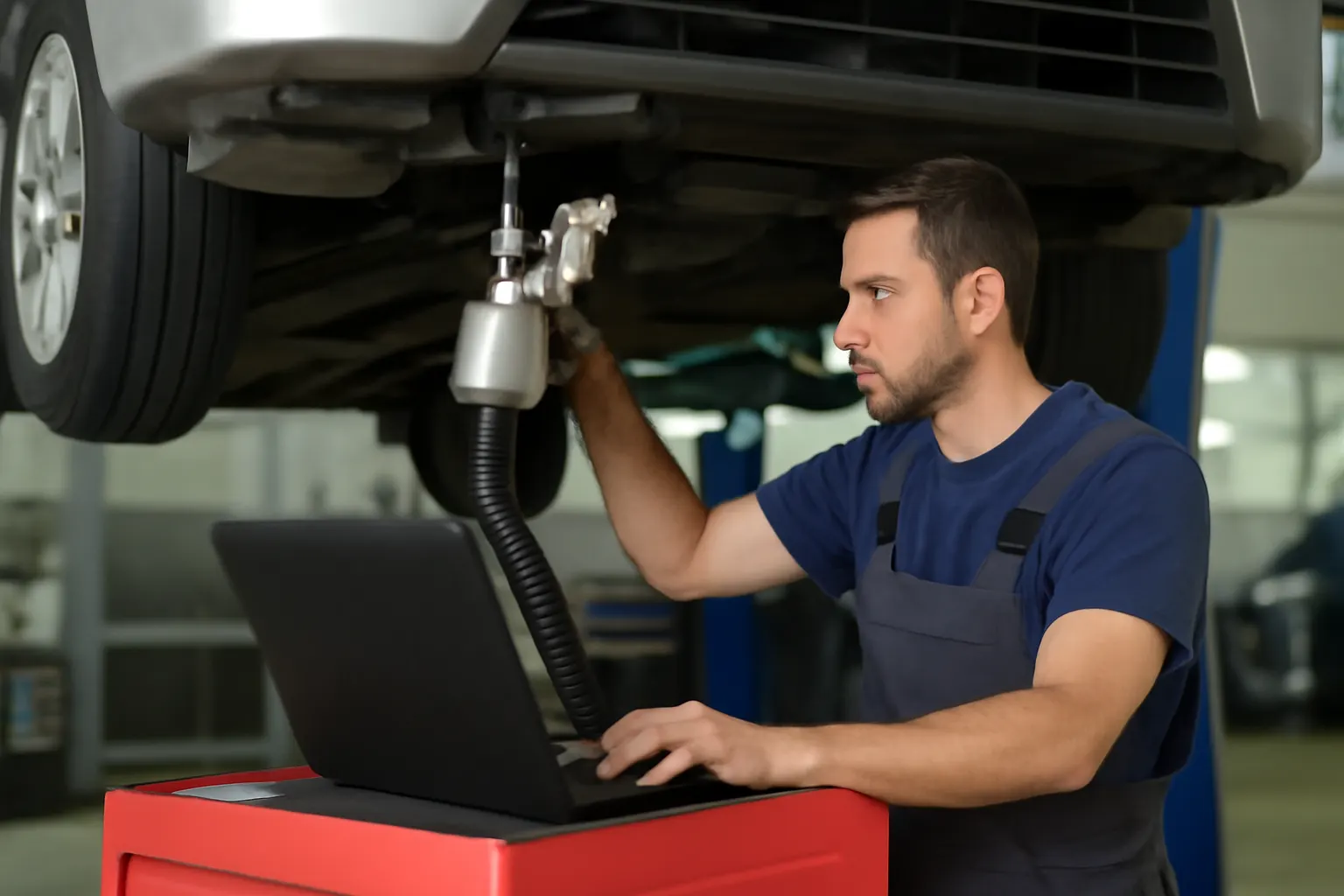
Toyota Emissions Updates
Toyota continues to update its emissions control systems, integrating advanced aftertreatment solutions such as Selective Catalytic Reduction (SCR), improved Exhaust Gas Recirculation (EGR), and robust monitoring sensors. The most notable recent changes include: Upgraded exhaust fluid (DEF/AdBlue) delivery systems: Newer models use more reliable, higher-flow exhaust fluid pumps and improved line heaters to prevent cold-weather crystallization.
Read More
Toyota Exhaust Fluid Pump Fitment
The fastest and most reliable way to determine the correct exhaust fluid pump for your Toyota is by using your Vehicle Identification Number (VIN). The VIN encodes year, model, engine type, emissions system, and sometimes even regional configuration—each of which can affect exhaust fluid pump specification. By inputting your VIN into an OEM parts catalog or a trusted supplier’s database, you’ll receive the exact part number(s) compatible with your vehicle.
View Guide