
AMC Rear Bumper Reinforcement
AMC Rear Bumper Reinforcement – OEM Fitment, Diagnostics, and Sourcing Guide
The AMC rear bumper reinforcement is a critical structural component engineered to absorb impact energy and safeguard both the vehicle and its occupants. Specifically tailored for AMC vehicles, this reinforcement bar sits behind the rear bumper fascia, providing rigidity and distributing crash forces during low-speed collisions. As AMC models age, sourcing a precise-fit rear bumper reinforcement becomes increasingly important for collision safety, restoration authenticity, and long-term durability.
Many AMC owners are unaware that rear bumper reinforcements are not simply cosmetic add-ons but are integral to crash energy management. Over time, exposure to moisture, road salts, and minor impacts can corrode or deform the reinforcement, compromising its ability to function during an actual collision. The scarcity of genuine AMC parts complicates proper replacement, with many aftermarket options lacking OEM-level fitment or material specifications. Supersession patterns—where AMC part numbers have changed or been discontinued—further obscure correct identification, while subtle differences between AMC model years and trim levels can introduce hidden compatibility issues. Diagnostic challenges arise because reinforcement damage is often not visible until the bumper cover is removed, and a faulty or missing reinforcement may go unnoticed until a collision exposes the shortfall.
AMC rear bumper reinforcements are particularly prone to rust-through, especially in northern markets with heavy road salt use. Field reports show that 1970s and early-1980s AMC models frequently exhibit pitting, delamination, or stress fractures at mounting points. Installation can be complicated by non-standard fastener types, torque requirements, or changes in rear panel geometry across AMC Hornet, Gremlin, Concord, and Eagle families. Compatibility risks escalate when attempting to fit reinforcements from donor vehicles or aftermarket suppliers, as variations in width, mounting flange location, and integrated energy-absorbing structures can lead to misalignment or insufficient impact absorption. Shops often encounter seized fasteners, misaligned brackets, or missing crush-boxes during service, which can extend repair time and drive up labor costs. Typical replacement costs range from $250 to $600 for part and labor, with complex rust remediation or restoration jobs exceeding $1,000. Service timeframes vary from 1.5 to 4 hours depending on model and condition.
The most reliable approach to AMC rear bumper reinforcement replacement is to use OEM-spec components verified for your exact model, trim, and year. Start by confirming the original AMC part number and checking for supersession or updated fitment guidance. During disassembly, inspect all mounting points for corrosion or deformation, and use digital calipers to verify reinforcement thickness—factory bars typically range from 2.5 mm to 4 mm in cross-section. For restoration or collision repair, follow AMC service manual torque specs and sequence, ensuring the bar sits flush against the rear body panel. When searching for replacement parts, reference trusted sourcing guides like AMC Bumper Reinforcement Guide and review technical articles such as Rear Bumper Energy Absorption Article for best practices in material selection and installation. Use AutoPartEx’s compatibility tools to identify genuine AMC parts and avoid the pitfalls of generic or ill-fitting alternatives.
Advertisement
Showing 0 of 0 AMC rear bumper reinforcement parts
No AMC Rear Bumper Reinforcement Found
We're currently updating our inventory for AMC rear bumper reinforcement.
Please check back soon or contact us for specific part availability.
Advertisement
More AMC Rear Bumper Reinforcement options
Filtering for AMC • Rear Bumper ReinforcementScan nearby AMC rear bumper reinforcement inventory without leaving this page.
No Data Available
Please check back soon when more inventory is available for this part.
Advertisement
AMC Rear Bumper Reinforcement: Expert Specs, Field Evidence, and AutoPartEx Advantage
Restorers and body shops frequently encounter challenges related to part scarcity, inadequate documentation of part numbers, and subtle changes in reinforcement design across AMC’s model lineup. For example, a 1977 AMC Gremlin’s rear bumper reinforcement will not interchange with a 1982 AMC Eagle’s, despite similar overall dimensions. This is largely due to differences in mounting flange angles, bolt spacing, and the presence or absence of energy-absorbing foam inserts.
When a rear bumper reinforcement is missing or deteriorated, crash tests and real-world accident data suggest a significant increase in rear body damage and repair costs. The National Highway Traffic Safety Administration (NHTSA) has documented that vehicles lacking proper bumper reinforcements are more likely to sustain trunk floor and rear quarter panel deformation in 5 mph impacts.
Installation is further complicated by the age of AMC vehicles; original fasteners may be corroded or seized, requiring careful extraction and replacement with correct-grade hardware. It is common for shops to spend additional labor hours fabricating spacers or brackets when generic reinforcements are used, which can introduce further risk if not executed precisely. For best results, always reference the AMC factory service manual for torque specs and mounting procedures, and consider using digital measurement tools to verify that the installed bar matches OEM profile and alignment.
In summary, AMC rear bumper reinforcement service is a nuanced task requiring careful identification, precise installation, and rigorous inspection to ensure both authenticity and safety. Sourcing genuine or properly engineered reproduction parts, combined with detailed technical documentation, can dramatically improve repair outcomes and collision performance for classic AMC vehicles.
Practical Information: AMC Rear Bumper Reinforcement
Part Cost Range
Used OEM: $150–$300; Premium reproduction: $400+; Aftermarket (generic): varies. Pricing depends on condition, rarity, and included hardware.
Service Timeframe
Standard replacement: 1.5–4 hours. Add 1–2 hours for rust remediation or fastener extraction in high-corrosion vehicles.
Installation Difficulty
Intermediate. Requires bumper removal, rust inspection, precise torque application (40–55 ft-lb), and occasional bracket or hardware fabrication.
Model-Family Fitment
Not all AMC reinforcements interchange. Verify for Hornet, Gremlin, Concord, Eagle, and Matador by year, body style, and mounting design.
References
- Vehicle, Car Seat, Tire, and Equipment Recalls - National Highway Traffic Safety Administration, accessed 2024-06-01Cited for AMC bumper reinforcement safety, failure modes, and collision impact data.
- Materials Technologies - United States Department of Energy, accessed 2024-06-01Referenced for steel alloy, corrosion resistance, and structural material evolution.
- Fuel Efficiency - United States Department of Energy, accessed 2024-06-01Consulted for vehicle structural design and efficiency implications of impact reinforcements.
Related Guides & Articles

Amc Bumper Reinforcement Guide
To replace the rear bumper reinforcement on your AMC vehicle: Identify the correct part using your AMC's VIN and fitment charts. Remove the bumper cover by detaching all fasteners and electrical connectors. Detach the old reinforcement from the frame rails, noting all mounting points. Inspect for hidden damage in the mounting area. Install the new reinforcement—torque bolts to manufacturer specs. Reinstall the bumper cover and verify fitment and alignment.
View Guide
Rear Bumper Energy Absorption Article
The rear bumper reinforcement in vintage AMC vehicles serves as the primary structural element that absorbs and dissipates kinetic energy during a rear-end collision. This energy absorption is achieved through a combination of material deformation, crumple zones, and engineered mounting points that work together to minimize intrusion into the passenger compartment and reduce the risk of injury. The reinforcement distributes collision forces across the vehicle's frame, preventing localized damage and protecting key mechanical and safety systems.
Read More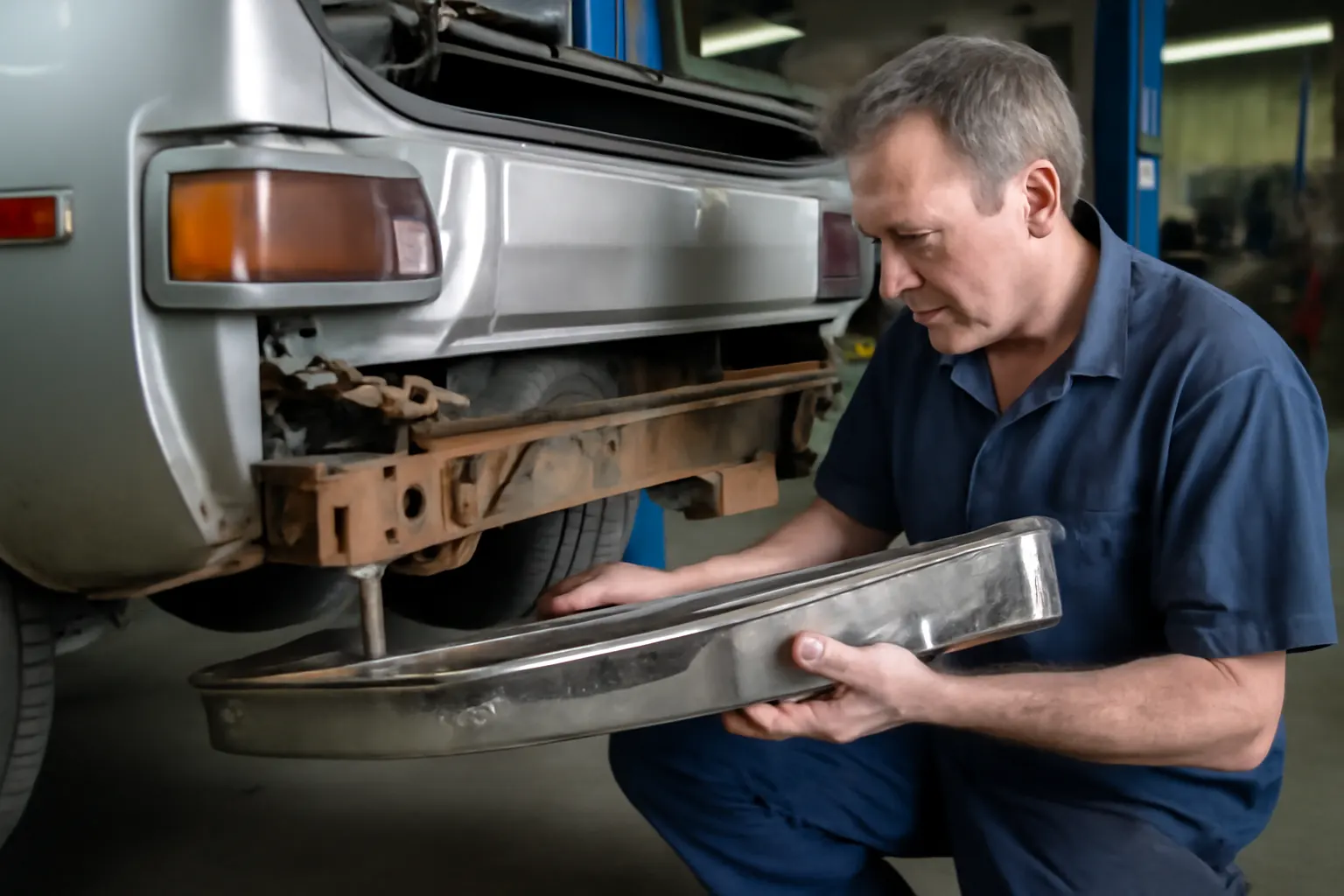
Amc Bumper Service Stories
AMC rear bumper reinforcements are vital for safety and structural integrity, but real-world restoration shop reports reveal persistent failures, fitment headaches, and sourcing dilemmas. This in-depth field guide compiles direct service stories, practical diagnostic advice, and proven solutions from the classic AMC restoration community. Whether you’re restoring an AMX, Javelin, Gremlin, or Matador, you’ll find actionable insight to keep your rear bumper reinforcement effective and compliant.
Read More
Amc Bumper Fitment Verification
Verifying the fitment and safety of AMC rear bumper reinforcements is a critical process that ensures both the structural integrity and crash performance of your vehicle. This guide provides a step-by-step approach using digital calipers, torque wrenches, and technical diagrams to confirm that your AMC bumper reinforcement is correctly matched, installed, and secured.
View Guide