
AMC Front Bumper Face Bar
AMC Front Bumper Face Bar – Technical Resource, Fitment, and Sourcing Guide | AutoPartEx
The AMC front bumper face bar is a critical structural and aesthetic component, designed to provide both impact protection and vintage styling authenticity across classic AMC vehicles. Whether you own an AMC Javelin, Gremlin, Hornet, or Matador, the front bumper face bar acts as the first line of defense in low-speed collisions and is a key element in preserving the original look and value of your vehicle. AutoPartEx offers a comprehensive resource for sourcing, verifying, and understanding AMC front bumper face bars, ensuring enthusiasts and restorers have access to the right part, every time.
Many AMC owners are unaware of the nuanced challenges involved in replacing or restoring front bumper face bars. Original AMC parts are increasingly scarce, and aftermarket reproductions often present subtle differences in mounting bracket alignment, chrome finish, or steel gauge. Supersession—where part numbers or designs change across model years or trim levels—can lead to accidental misfits, while the limited availability of new-old-stock (NOS) means that sourcing correct parts is a competitive and often costly process. Complicating the situation, vehicles may have undergone previous repairs with non-OEM parts, creating hidden compatibility risks. Proper diagnostic assessment is essential: minor bumper misalignments or stress cracks can indicate underlying structural issues or prior collision damage, affecting both safety and resale value.
AMC front bumper face bars, especially those produced in the 1970s and 1980s, are susceptible to rust-through, internal corrosion, and chrome delamination due to decades of exposure and variable material quality. Model-specific mounting systems (such as the Javelin’s unique multi-bolt reinforcement or the Gremlin’s energy-absorbing brackets) are commonly misunderstood, leading to failed installations or poor alignment. Compatibility risks increase when attempting to fit parts from adjacent model years or different body styles, as even small dimensional changes in the bumper or bracket design can prevent proper fitment. Installation is further complicated by age-related fastener seizing, hidden crush damage behind bumper covers, and the need for precise torque application to avoid distortion. Without a detailed understanding of AMC’s evolving engineering standards and part numbering conventions, restorers risk purchasing incorrect or substandard components.
The most reliable approach for AMC front bumper face bar replacement is to use OEM-spec parts with documented fitment for your specific model, year, and trim. AutoPartEx recommends beginning with a thorough diagnostic inspection, including measurement of bumper width, mounting point distances, and bracket geometry. Our Amc Bumper Fitment Guide provides a step-by-step walkthrough of AMC bumper fitment nuances and diagnostic best practices. For sourcing, use verified interchange tables and demand photographic confirmation of key features such as reinforcement gussets and finish quality. Installation should be performed with reference to original AMC service manuals and torque specifications to prevent crush or alignment errors. For further reading, see our Classic Amc Bodywork Article, which covers body panel and bumper repair challenges unique to AMC vehicles.
Advertisement
No AMC Front Bumper Face Bar Found
We're currently updating our inventory for AMC front bumper face bar.
Please check back soon or contact us for specific part availability.
Advertisement
More AMC Front Bumper Face Bar options
Filtering for AMC • Front Bumper Face BarScan nearby AMC front bumper face bar inventory without leaving this page.
No Data Available
Please check back soon when more inventory is available for this part.
Advertisement
Expert AMC Front Bumper Face Bar Selection, Service, and Sourcing – AutoPartEx Technical Advantage
AutoPartEx empowers AMC owners and restorers to overcome these challenges by providing access to verified fitment data, technical sourcing guides, and cross-model interchange tables. Our technical content is grounded in real-world service bay patterns and field experience. To ensure a successful installation, use AutoPartEx to compare bumper options by model, year, and trim, review torque specifications (typically 45–60 ft-lbs for AMC main brackets), and verify mounting geometry with our fitment guide. For deeper technical context, refer to our in-depth Amc Bumper Fitment Guide and Classic Amc Bodywork Article, which include step-by-step diagnostics, material analysis, and real-world restoration scenarios. Trust AutoPartEx as your partner for sourcing hard-to-find OEM AMC bumpers, avoiding costly misfits, and preserving the value and safety of your classic vehicle.
The scarcity of high-quality OEM or NOS bumpers means restorers often encounter parts with previous damage, incorrect modifications, or subpar plating. Diagnostic inspection should focus not only on visible rust or chrome loss, but also on the integrity of welds, bracket alignment, and the presence of original reinforcements. Common failure patterns—such as delamination between the chrome and base steel, bracket fatigue at weld joints, and hidden crush zones—require careful measurement and sometimes non-destructive testing.
Sourcing AMC bumpers demands a rigorous approach: always request detailed photographs of mounting surfaces, measure all critical dimensions, and use AutoPartEx’s fitment data to verify exact model compatibility. Many failures in the field result from attempting to install bumpers from adjacent model years or using universal reproduction parts that lack correct geometry. Installation involves careful removal of old hardware, treatment of any corrosion on the frame rails, and precise alignment to factory specifications. Use torque wrenches to AMC’s published specs (typically 45–60 ft-lbs), and always check for correct bumper projection and symmetry. If possible, consult AutoPartEx’s technical guides for step-by-step restoration and installation best practices.
For AMC Front Bumper Face Bar, long-term reliability depends on verified fitment, periodic inspection of wear components, and disciplined preventive maintenance. Confirm part numbers by VIN, check supersession notes, and compare mounting points before installation. Review service bulletins and historical failure patterns to prioritize high-risk systems, especially electrical connectors, seals, cooling components, and drivetrain interfaces.
AMC Front Bumper Face Bar – Practical Specs & Service Tips
Typical Service Time
Expect 2–4 hours for removal and replacement, depending on model and rust condition. DIYers should allocate extra time for seized fasteners and bumper alignment.
Cost Range
Used OEM: $350–$700; NOS or premium reproduction: $1,200+; Chrome restoration: add $500–$1,000. Hardware and bracket replacement may add $50–$150.
Installation Difficulty
Moderate to advanced. Requires metric and SAE tools, torque wrench (45–60 ft-lbs), anti-seize compound, and careful bracket alignment. Consult technical guides for best results.
Diagnostic Red Flags
Look for hidden rust, chrome delamination, bracket fatigue, and prior weld repairs. Use a mallet and borescope for thorough inspection before installation.
References
- Vehicle, Car Seat, Tire, and Equipment Recalls - National Highway Traffic Safety Administration, accessed 2024-06-01Cited for recall patterns, installation safety, and regulatory compliance insight.
- Materials Technologies - United States Department of Energy, accessed 2024-06-01Used for material composition, steel gauge, and chrome finish discussion.
- Fuel Efficiency - United States Department of Energy, accessed 2024-06-01Background for impact of bumper design on vehicle structure and performance.
Related Guides & Articles

Amc Bumper Fitment Guide
AMC front bumper face bars are model-specific and year-dependent components that require accurate identification and precise installation to maintain vehicle safety and original appearance. The fitment process involves: Identifying the correct AMC model and production year using VIN and trim codes. Selecting a bumper face bar with compatible mounting points, dimensions, and finish. Inspecting for material integrity and compliance with modern safety expectations. Following step-by-step installation procedures to ensure proper alignment and secure attachment.
View Guide
Classic Amc Bodywork Article
Restoring and maintaining the bodywork of a classic AMC vehicle presents a unique set of technical challenges, especially when it comes to bumper restoration, rust removal, and preserving the authentic OEM appearance. Whether you’re a seasoned restorer or new to AMC projects, this guide delivers practical, expert-backed insight for tackling AMC bodywork issues—starting with the all-important AMC front bumper face bar.
Read More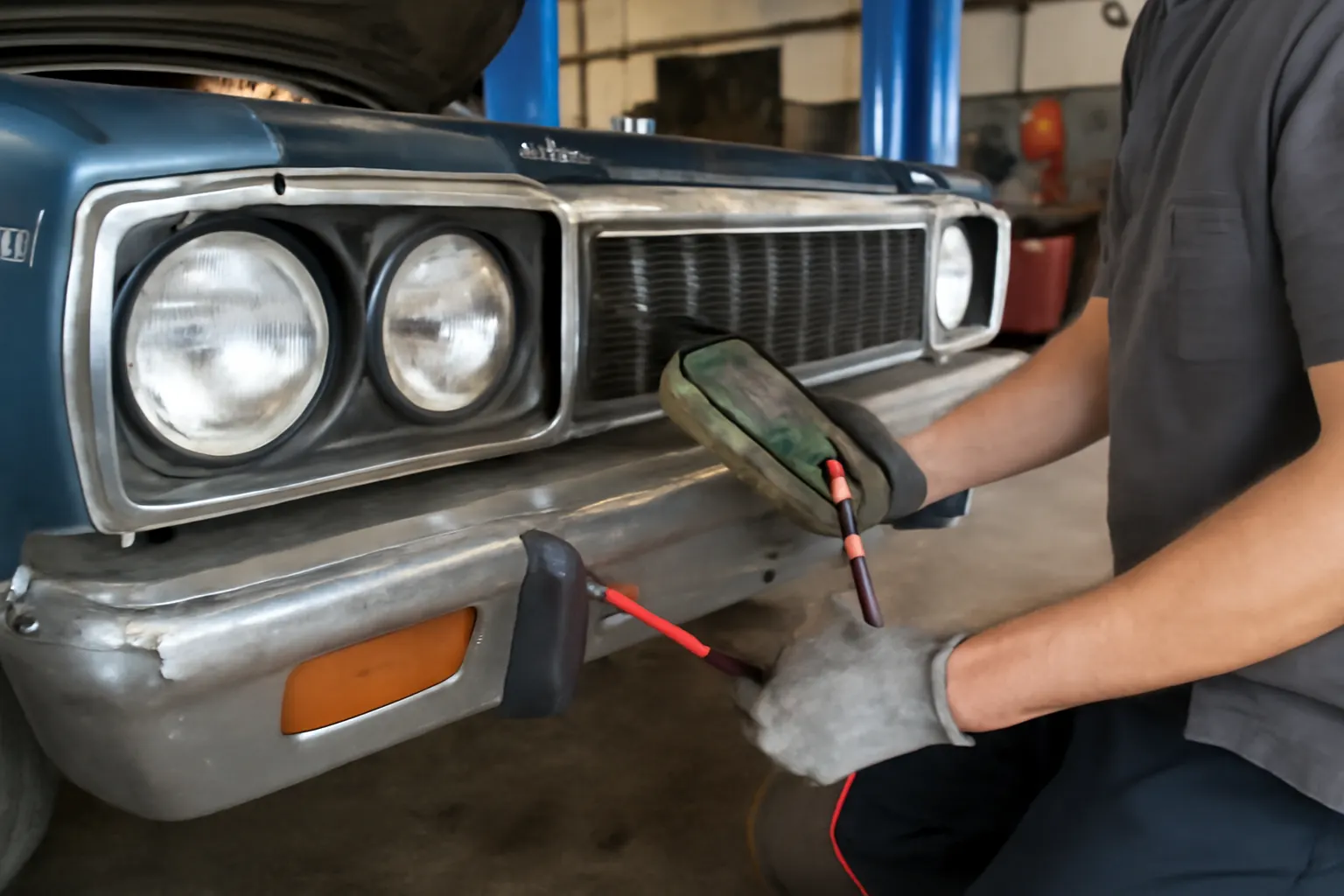
Amc Bumper Diagnostic Patterns
AMC vehicles, especially those built during the classic era, rely on robust bumper systems that are critical for safety, structure, and period-correct aesthetics. Yet, both in the field and in restoration shops, AMC front bumper face bars frequently present a unique set of diagnostic and installation challenges. This guide distills real-world service bay findings, common failure patterns, and practical diagnostic and installation tips specifically for AMC bumpers—helping you avoid costly mistakes and keep your classic AMC both safe and true to its heritage.
Read More
Amc Interchange Table
The following table summarizes AMC front bumper face bar part number interchangeability for major models and years (1968–1983). Use it to verify direct fitment and potential donor vehicles when sourcing new or used bumpers. Quick Usage Tips: Always cross-verify part numbers stamped on the bumper or in factory documentation. Note trim-level and body-style differences—some bumpers fit only sedans, wagons, or coupes. At first glance, AMC front bumpers from the same era may appear identical.
View Guide