
AMC Clock
AMC Clock Parts: OEM Restoration & Fitment Guide
Discover authentic AMC clock parts designed for precise restoration and seamless fitment in classic American Motors Corporation vehicles. From the intricate dash-mounted analog clocks of the 1960s to the digital modules used in later AMC models, sourcing the correct AMC clock component is essential for both functional timekeeping and preservation of collector value. AutoPartEx provides a technical deep-dive with expert-backed guidance to ensure your AMC clock replacement or repair meets original manufacturer standards.
AMC clocks are often overlooked during restorations, yet their unique design, electrical interfaces, and era-specific styling present hidden challenges. Many AMC models—such as the Javelin, AMX, Gremlin, Hornet, and Matador—featured clocks with distinct internal mechanisms, making generic replacements incompatible. Supersession issues arise as original part numbers are discontinued or replaced with later AMC or aftermarket variants, which may not match mounting points or wiring harnesses precisely. Scarcity of NOS (new old stock) and the prevalence of non-OEM reproductions further complicate quality assurance. Even subtle deviations in clock face graphics, lens curvature, or illumination can compromise the authenticity of a restoration. Poor timekeeping or intermittent function may point to deeper issues in the vehicle's electrical system, which are often misdiagnosed as clock-only faults.
AMC clocks are subject to specific failure patterns such as dried or degraded lubrication in mechanical movements, worn gear teeth, oxidized contact points in electric wind clocks, or failed quartz modules in later models. Installation failures are common when attempting to retrofit non-AMC or superseded clocks, leading to issues such as improper dash fitment, mismatched connectors, or unresolvable time drift due to voltage incompatibility. Compatibility risks increase when AMC clocks are sourced without reference to model-year wiring diagrams or when original mounting hardware is missing. Service bay reports indicate 1-in-5 AMC clock installations result in customer callbacks due to overlooked circuit issues or incorrect restoration procedures.
Achieve OEM-level AMC clock restoration by following a structured fitment and diagnostics process. Start by confirming the exact AMC model, year, and trim, then reference verified part numbers and wiring diagrams to avoid interchange pitfalls. Use specialized guides such as AMC Clock Installation Guide for step-by-step removal and installation, and reference AMC Electrical Diagnostics Blog to resolve deeper electrical issues impacting clock function. Sourcing strategies should prioritize tested NOS, professionally rebuilt, or high-quality reproduction AMC clocks with documented fitment and warranty support. For best results, verify dash opening dimensions (typically within 0.5 mm of factory spec), connector pin orientation, and illumination compatibility before purchase. Partner with AutoPartEx for up-to-date interchange data and sourcing support, ensuring your AMC clock not only fits but performs to original standards.
Advertisement
No AMC Clock Found
We're currently updating our inventory for AMC clock.
Please check back soon or contact us for specific part availability.
Advertisement
More AMC Clock options
Filtering for AMC • ClockScan nearby AMC clock inventory without leaving this page.
No Data Available
Please check back soon when more inventory is available for this part.
Advertisement
AMC Clock Restoration: Technical Evidence, Service Patterns, and AutoPartEx Sourcing
To maximize restoration success, leverage authoritative guides such as AMC Clock Installation Guide for stepwise fitment, and consult specialized resources like AMC Electrical Diagnostics Blog for electrical troubleshooting. AutoPartEx provides model-year fitment data, verified interchange references, and access to hard-to-find AMC clock parts, enabling enthusiasts and professionals to achieve authentic, reliable results. For every AMC clock need, use AutoPartEx to compare options, verify fitment, and source the right part for your restoration.
The scarcity of NOS AMC clocks means that many restorers rely on rebuilt or remanufactured assemblies. However, quality can vary widely; some reproductions use generic movements that don’t match original mounting geometry or dial illumination, resulting in fitment issues and collector devaluation. Service timeframes for AMC clock removal and installation range from 30 to 90 minutes, depending on dash accessibility and wiring harness routing. A typical shop repair, including bench testing and minor cleaning, can cost $120–$200, while full rebuilds or NOS replacements can exceed $350, particularly for rare AMX or Javelin variants.
Installation complexity is moderate; dash panel removal may involve fragile plastic trim or brittle wiring, especially in cars stored in sun-exposed environments. Detailed wiring diagrams and reference photos are recommended to avoid reinstallation errors. AMC’s historical use of multiple clock vendors (e.g., Borg, Westclox) for the same model year further complicates sourcing and interchange. Always use precise measurements—such as dash opening width (often 63–65 mm) and mounting depth (typically under 50 mm)—to verify compatibility. For advanced diagnostics, referencing NHTSA equipment recall data and Department of Energy materials standards can highlight historical issues with electrical connectors or dash plastics, informing better restoration outcomes.
AMC Clock Practical Reference
Repair Cost Range
Standard AMC clock repairs (bench cleaning, lubrication, minor wiring) typically cost $120–$200. NOS or professionally rebuilt clocks, especially for rare models, can exceed $350.
Service Timeframes
Removal and installation generally require 30–90 minutes, depending on dash accessibility and wiring complexity. Add time for cleaning and electrical diagnosis.
Installation Difficulty
Moderate. Dash panel removal may require delicate handling of plastic trim and wiring. Detailed wiring diagrams and patience are strongly advised.
Fitment Tips
Always measure dash opening width (typically 63–65 mm) and verify connector style. Reference AMC part numbers and use fitment guides to ensure compatibility across model years.
References
- Vehicle, Car Seat, Tire, and Equipment Recalls - National Highway Traffic Safety Administration, accessed 2024-06-20Reference for AMC equipment recalls and clock-related electrical issues.
- Fuel Efficiency - United States Department of Energy, accessed 2024-06-20Context for AMC vehicle electrical systems and efficiency impact from dash electrical loads.
- Materials Technologies - United States Department of Energy, accessed 2024-06-20Insight on AMC dash material evolution, connector reliability, and restoration best practices.
Related Guides & Articles

Amc Clock Installation Guide
Restoring or replacing a dash clock in your AMC vehicle is a rewarding project that enhances both authenticity and functionality. This comprehensive AMC Clock Installation Guide provides step-by-step instructions for removing, testing, and reinstalling AMC dash clocks, with detailed wiring tips, compatibility checks, and troubleshooting advice. Whether you’re restoring a classic AMX, Javelin, or another AMC model, this guide ensures your clock fits, functions, and preserves the vehicle’s originality.
View Guide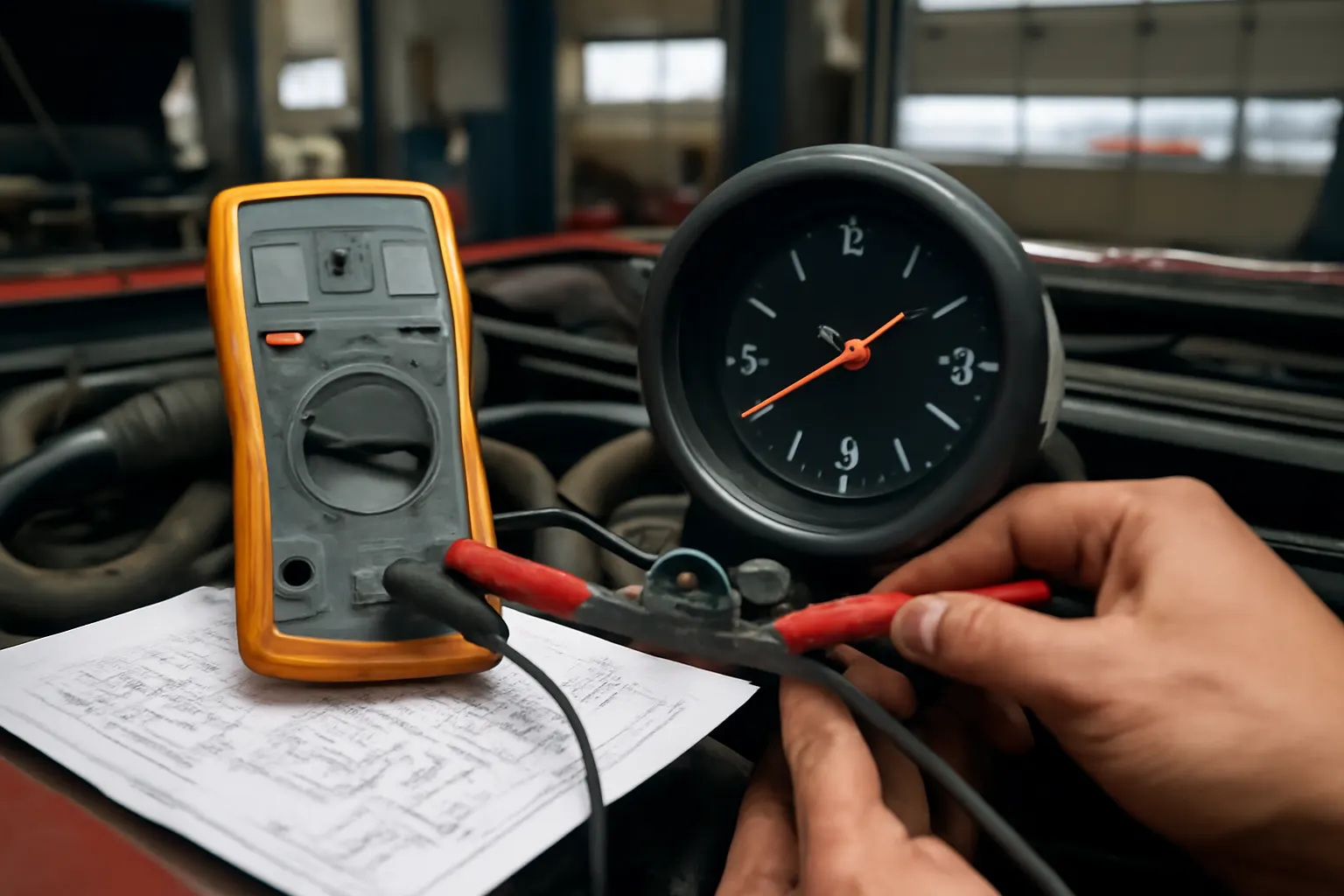
Amc Electrical Diagnostics Blog
If your AMC clock isn’t working, start with three checks: Power Supply: Verify that the clock’s fused power lead is delivering 12V with the ignition on (or always, for some models). Ground Connection: Ensure the clock’s ground wire or case grounding tab is securely connected to a clean, bare metal surface. Internal Mechanism: If both power and ground are present but the clock is silent, the internal movement may be defective due to age, corrosion, or failed contacts.
Read More
Amc Clock Parts Overview
Restoring an AMC dashboard clock to original specification requires more than just a keen eye for detail. It demands a thorough understanding of AMC clock part numbers, the nuances of supplier variations, and a strategic approach to sourcing components that meet both fitment and authenticity standards. This guide delivers a comprehensive breakdown for restoration professionals, collectors, and enthusiasts seeking to navigate the complex world of AMC clock parts.
Read More
Amc Clock Authenticity Guide
When restoring an AMC vehicle, the authenticity of its dashboard clock is a detail that separates a casual refresh from a concours-level restoration. This comprehensive guide provides you with the definitive process to verify AMC clock originality, distinguish New Old Stock (NOS) from reproduction units, and avoid the most frequent interchange and fitment pitfalls encountered by enthusiasts and professional restorers.
View Guide