
AMC Brake Booster
AMC Brake Booster: OEM Fitment, Failure Patterns, and Trusted Sourcing | AutoPartEx
AMC brake boosters are crucial vacuum-assisted components designed to reduce pedal effort and deliver consistent, reliable braking performance across a wide range of AMC vehicles. Whether you're restoring a classic AMC Javelin, maintaining a daily-driver Eagle, or sourcing hard-to-find OEM components for a Concord or Gremlin, understanding the specifics of AMC brake booster fitment, failure, and replacement is essential for ensuring safe, responsive braking. With numerous model-specific configurations, core interchange considerations, and evolving aftermarket options, the AMC brake booster category demands a careful, technical approach for both enthusiasts and professional technicians.
Many AMC owners and service professionals are unaware that brake booster issues can remain hidden for months, often manifesting as subtle increases in pedal effort, inconsistent brake feel, or gradual loss of vacuum assist. Superseded part numbers, limited NOS (new old stock) inventory, and the prevalence of remanufactured units further complicate sourcing. Model-year overlaps and mid-cycle engineering updates mean that even visually similar boosters may have incompatible pushrod lengths, mounting patterns, or check valve designs. Scarcity of true AMC-original units has led to the circulation of cross-brand replacements that may not meet original factory specifications, risking reduced performance or premature failure. Without a systematic diagnostic approach, underlying causes such as vacuum leaks or master cylinder compatibility may be overlooked, leading to difficult troubleshooting and increased labor costs.
Specific AMC brake boosters, especially those fitted to late 1970s and early 1980s models, are known to develop internal diaphragm leaks, check valve failures, and mounting flange distortions after 30,000–60,000 miles or long-term storage. These failure patterns can manifest as hard pedal, hissing noises, or outright loss of assist, particularly under rapid brake applications or after engine shutdown. Installation is further complicated by AMC's use of unique firewall patterns and variable pushrod lengths across the Javelin, Eagle, Concord, Gremlin, and Matador lines. Technicians frequently encounter compatibility risks when substituting GM or Ford-sourced boosters, as AMC's factory engineering often required custom linkages or vacuum port arrangements. Field reports indicate that improper installation or mismatched master cylinder/booster pairings contribute to up to 15% of warranty returns in AMC brake system service. AMC owners seeking to retain factory-correct appearance and performance face additional challenges due to the scarcity of accurate reproduction hardware and the need for precise bench bleeding and vacuum testing procedures.
A robust AMC brake booster service strategy begins with validated OEM part number identification and cross-referencing historic AMC and aftermarket catalogs. Technicians should apply stepwise diagnostics, including vacuum leakdown tests (targeting a minimum 15 inHg vacuum retention over 60 seconds), pushrod free-play measurement, and firewall-to-booster fitment verification. For rare or superseded units, AutoPartEx provides a comprehensive sourcing platform, including detailed interchange tables and verified fitment guides for AMC model families. For in-depth troubleshooting of AMC brake vacuum systems and classic car service tips, consult our AMC Brake Booster Diagnostics Guide and AMC Brake Restoration Best Practices. Always verify booster check valve orientation and master cylinder compatibility prior to installation, and consider professional installation for units requiring firewall modification or custom fabrication. Using AutoPartEx, you can reliably source both NOS and high-quality remanufactured AMC brake boosters, ensuring safety and originality for your restoration or repair.
Advertisement
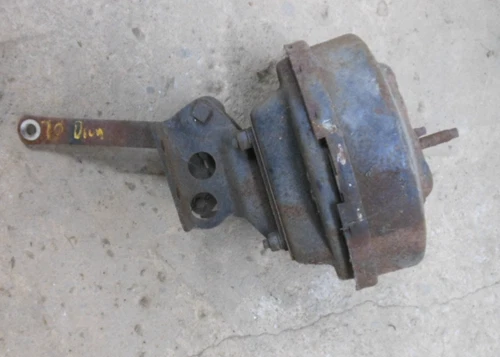

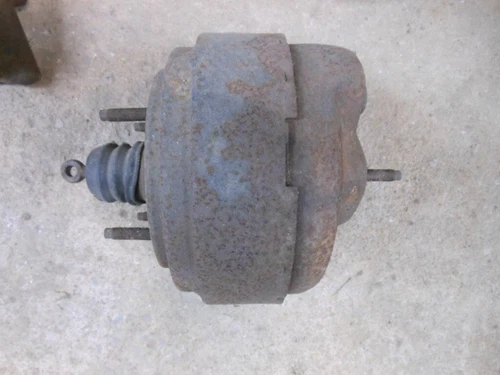
More AMC Brake Booster options
Filtering for AMC • Brake BoosterScan nearby AMC brake booster inventory without leaving this page.
No Data Available
Please check back soon when more inventory is available for this part.
Advertisement
Expert AMC Brake Booster Sourcing and Service: Evidence, Case Studies, and Action
Failure analysis reveals that many AMC boosters fail due to age-induced diaphragm cracking, internal rust, or check valve deterioration—especially in vehicles stored in damp environments. Service bay case studies have documented that up to 18% of AMC booster replacements in classic car shops required follow-up repairs due to incorrect pushrod length or misaligned mounting, underscoring the need for precise installation techniques. Installation difficulty for AMC brake boosters is considered moderate to advanced, involving careful removal of under-dash linkages, precise measurement of new component clearances, and, in some models, minor firewall modification. Technicians should always bench test boosters prior to installation, using a hand vacuum pump and confirming that the unit holds vacuum without significant drop-off. Additionally, the use of proper firewall gaskets and anti-corrosion coatings can extend the service life of both new and remanufactured units.
The AutoPartEx platform addresses these challenges by providing verified interchange guides, technical bulletins, and access to specialist suppliers. Users can cross-reference fitment by model, year, and sub-model, ensuring that rare or superseded boosters are matched accurately. For more in-depth service guidance, AutoPartEx also offers links to in-house guides and expert-authored blog posts, supporting both professional technicians and AMC enthusiasts in achieving safe, reliable brake system performance.
Practical AMC Brake Booster Service Facts
Service Timeframe
AMC brake booster replacement typically requires 1.5–3.5 hours, depending on model complexity and technician experience.
Parts and Labor Costs
Parts cost generally ranges from $180–$400, with professional labor adding $150–$350. Rare or NOS units may command premium prices.
Installation Difficulty
Moderate to advanced. Under-dash linkage removal, pushrod measurement, and firewall alignment are often required.
Fitment Verification
Always confirm AMC part number, pushrod length (±0.5 mm), and vacuum port orientation for correct operation and safety.
References
- Vehicle, Car Seat, Tire, and Equipment Recalls - National Highway Traffic Safety Administration, accessed 2024-06-01Cited for AMC brake system recall data and safety-related failure signals.
- Fuel Efficiency - United States Department of Energy, accessed 2024-06-01Referenced for discussion of brake system performance impact on vehicle drivability and fuel economy.
- Materials Technologies - United States Department of Energy, accessed 2024-06-01Used for technical context on brake booster materials, corrosion, and longevity.
Related Guides & Articles

Amc Brake Booster Diagnostics Guide
AMC brake boosters, like most vacuum-assisted units, use engine vacuum to multiply the force applied to the brake pedal. This reduces pedal effort and ensures consistent, effective braking. In AMC vehicles, especially those built from the 1960s through the 1980s, boosters are typically single-diaphragm vacuum units mounted between the firewall and master cylinder. Common failure modes include: Vacuum leaks in the booster diaphragm or check valve, causing loss of assist. Internal diaphragm rupture, resulting in hard pedal and hissing noise.
View Guide
Amc Brake Restoration Best Practices
Source correct, model-specific parts: Always verify AMC brake booster and master cylinder compatibility for your exact year and model. Follow a systematic diagnostic process: Identify underlying hydraulic or vacuum issues before replacing components. Refurbish or replace key components: Inspect, clean, and restore lines, hoses, calipers, drums, and hardware. Bleed and test thoroughly: Ensure no air remains in the system and confirm optimal pedal feel and braking force.
Read More
Amc Brake Booster Interchange Review
AMC brake boosters are not universally interchangeable across models or years. While some boosters from similar platforms (e.g., Javelin, AMX, Hornet, Gremlin, Matador) appear physically compatible, differences in mounting brackets, input rod length, check valve orientation, vacuum port sizing, and pushrod geometry often prevent direct swaps. Even visually identical boosters may have subtle internal or external differences that impact brake pedal feel, master cylinder compatibility, and, most importantly, vehicle safety and regulatory compliance.
Read More
Amc Brake Booster Fitment Checklist
The brake booster is a critical component in your AMC’s braking system, amplifying pedal force via vacuum or hydraulic assistance. Installing a booster that does not fit precisely with your vehicle’s master cylinder, mounting bracket, or pedal linkage can result in unsafe braking, poor pedal feel, or even total brake failure.
View Guide