
Advertisement
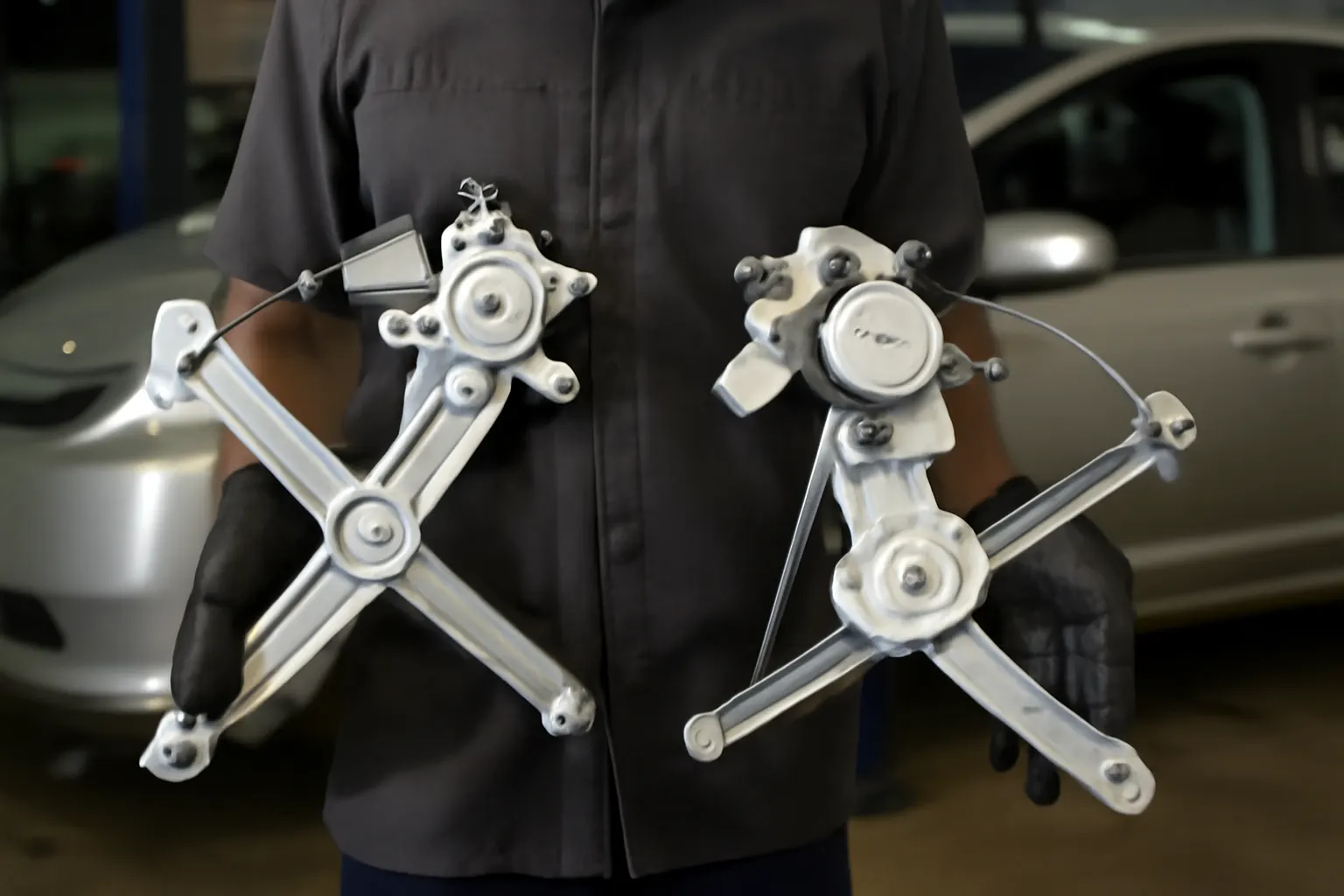
When your Toyota’s front door window regulator starts to fail, you’re faced with a crucial choice: should you source an Original Equipment (OE), Original Equipment Manufacturer (OEM), or aftermarket door regulator? The answer directly impacts fitment, durability, long-term reliability, and even your vehicle’s safety and performance. In this comprehensive guide, AutoPartEx cuts through the confusion and provides a technical, practical roadmap for selecting the right Toyota door regulator for your needs.
For a broader overview of fitment, diagnosis, and sourcing, see our Toyota Front Door Regulator: OEM Fitment, Diagnosis, and Sourcing Guide.
Immediate Answer: What’s the Real Difference Between OE, OEM, and Aftermarket Toyota Door Regulators?
OE (Original Equipment) door regulators are the exact parts installed by Toyota at the factory—designed, engineered, and produced to Toyota’s precise standards. OEM (Original Equipment Manufacturer) regulators are made by the same supplier as the OE part, often on the same production line, but may be sold under the supplier’s brand. Aftermarket regulators are produced by third-party companies and vary widely in quality, fit, and performance.
- OE: Guaranteed Toyota fitment, materials, and engineering.
- OEM: Usually matches OE quality and fit; may differ in branding or packaging.
- Aftermarket: Quality and fitment can range from excellent to poor; price is generally lower but performance may vary.
Bottom line: For critical door functions like window lift, precise fitment and durability are essential. OE and high-quality OEM regulators offer the closest match to original Toyota performance, while aftermarket options require careful vetting.
The Hidden Problem: Why Regulator Choice Matters More Than You Think
A door regulator isn’t just a convenience—it’s a key safety and structural component. Poor fitment can lead to rattling, water intrusion, window misalignment, or even glass breakage. Inadequate materials or design can cause premature wear, leading to failure at the worst time—such as when you need to close the window quickly during inclement weather or for security.
Critical risks with a poor-quality or ill-fitting door regulator:
- Window glass may detach from the regulator, potentially shattering.
- Regulator cables or gears can bind, causing the motor to burn out.
- Water ingress from poor sealing can damage door electronics and wiring.
- Increased cabin noise and vibration due to improper fit.
- Compromised side-impact protection if the window or door structure is affected.
The regulator is not simply a “lift and lower” mechanism; it is integral to the door assembly’s function, safety, and comfort.
Deeper Technical Explanation: What Sets OE, OEM, and Aftermarket Regulators Apart?
OE Toyota Door Regulators
OE regulators are designed, engineered, and tested by Toyota to meet strict performance, noise, and durability standards. They use Toyota-approved materials and are manufactured under rigorous quality control.
- Materials & Coatings: OE units often use corrosion-resistant steel, precision-formed gears, and high-strength cables or tracks, with coatings that meet Toyota’s environmental and longevity requirements. See the DOE Materials Technologies for more on automotive material advancements.
- Engineering & Fitment: Every OE regulator is built to match the exact geometry of the door, ensuring smooth, quiet operation and perfect alignment with the glass.
- Testing: Subjected to thousands of cycles and environmental tests, as required by Toyota and industry standards (see SAE Standards).
OEM Door Regulators
OEM regulators are produced by the same supplier as the OE part (e.g., Denso, Aisin), often using identical tooling and materials. The only difference may be the absence of Toyota branding or packaging.
- Quality Control: Generally matches OE, though some OEMs may offer “value” lines with minor material or finish changes.
- Fitment: Almost always a direct fit, as the design is derived from the OE blueprint.
- Warranty & Support: May differ from Toyota’s OE warranty, but generally robust.
Aftermarket Door Regulators
Aftermarket regulators are engineered and produced by third-party companies. Quality varies widely:
- Materials: Some use lower-grade metals, plastic gears, or thinner cables. Corrosion resistance can be inconsistent.
- Design & Fit: Some are reverse-engineered, which can introduce minor—but significant—dimensional inaccuracies. This can affect window travel, sealing, and noise.
- Testing: Not all aftermarket parts undergo the same level of cycling, environmental, or safety testing as OE/OEM parts (see NHTSA Equipment Guidelines).
Toyota Door Regulator Functionality: More Than Meets the Eye
The front door regulator is a complex assembly that converts the rotational motion of the window motor (or manual crank) into vertical glass movement. It must:
Advertisement
- Support the weight of the glass.
- Maintain precise alignment throughout the window’s travel.
- Withstand thousands of up/down cycles without stretching, binding, or wearing out.
- Seal tightly against weatherstripping to prevent water ingress and wind noise.
Even a minor deviation in regulator geometry or material quality can lead to:
- Uneven window movement.
- Slow or noisy operation.
- Premature cable, gear, or motor failure.
- Water leaks and increased cabin noise.
Durability and Longevity: What the Data Shows
OE and OEM regulators are built for longevity, typically rated for 10,000 or more cycles in laboratory testing (about 10 years of typical use). High-quality aftermarket regulators may approach this, but many budget models fail at a fraction of that lifespan due to:
- Inferior cable or gear materials (leading to stretching or tooth wear).
- Poor corrosion protection (accelerating rust in humid or salted environments).
- Inadequate lubrication or bushing materials (causing binding and noise).
Signs of premature wear in lower-quality regulators:
- Window “slips” or drops unexpectedly.
- Grinding, clicking, or popping sounds during operation.
- Window fails to fully close or open, or moves unevenly.
Fitment and Installation: Why Precision Matters
OE/OEM Fitment
- Direct Bolt-On: OE and OEM regulators are designed for a precise, direct bolt-in installation using factory mounting points.
- No Modifications Required: All mounting holes, cable lengths, and attachment points align perfectly with the door and window glass.
- Plug-and-Play Electrical Connectors: For power window models, OE/OEM regulators use Toyota’s exact connector types and pinouts.
Aftermarket Fitment
- Potential Issues: Even a 1-2mm difference in mounting geometry can cause:
- Window glass misalignment.
- Increased friction or binding.
- Difficulty reattaching door panels or trim.
- Electrical Compatibility: Some aftermarket regulators may require splicing or adapter harnesses.
- Extra Steps: May require minor trimming, slotting, or adjustment during installation.
Installation Checklist:
- Verify Part Number: Match the regulator’s part number to your Toyota’s VIN or application guide.
- Inspect All Mounting Points: Ensure holes and brackets align with the door shell.
- Test Window Travel: Before reassembling the door, run the window up/down to check for smooth, full-range movement.
- Check for Noise: Listen for grinding or binding noises.
- Inspect Weather Seals: Ensure the window seals tightly against the weatherstripping.
For step-by-step removal and installation, refer to Toyota Door Panel Removal.
Safety and Regulatory Considerations
The National Highway Traffic Safety Administration (NHTSA) considers door hardware—including regulators—part of a vehicle’s safety equipment. Regulators that fail or malfunction can compromise:
- Side-Impact Protection: Misaligned glass or loose hardware can affect the door’s structural rigidity.
- Egress in Emergencies: A stuck window can impede exit in the event of a crash or submersion.
- Weather and Theft Protection: A regulator that won’t fully close can leave your vehicle vulnerable.
While OE and OEM regulators are engineered to meet or exceed Toyota’s safety specifications, not all aftermarket parts are held to the same standards. Always check for compliance with NHTSA equipment guidelines.
Cost Analysis: Is Aftermarket Really Cheaper?
Upfront Cost
- OE: Typically the most expensive option, reflecting Toyota’s engineering, materials, and testing.
- OEM: Slightly less than OE, but often close in price.
- Aftermarket: Can be 30-60% cheaper than OE/OEM, but with wide quality variation.
Total Cost of Ownership
A lower upfront cost can be offset by:
- Reduced Lifespan: More frequent replacements, especially in high-use vehicles.
- Increased Labor: Poor fitment can require extra installation time or rework.
- Collateral Damage: A failed regulator can damage the window glass, motor, or door electronics, leading to higher repair bills.
Case Example: A budget aftermarket regulator that fails within two years may require a second replacement, doubling labor and part costs—potentially exceeding the price of a single OE or high-quality OEM part.
Diagnostic Checklist: Is It the Regulator or Something Else?
Before replacing your door regulator, confirm the root cause of window issues:
| Symptom | Possible Cause | Diagnostic Step |
|---|---|---|
| Window won’t move | Blown fuse, bad switch, motor, regulator | Test switch and motor with multimeter |
| Slow/jerky movement | Binding regulator, weak motor | Disconnect glass, move regulator by hand |
| Grinding/clicking noise | Stripped gear, broken cable | Inspect regulator mechanism |
| Window drops in door | Detached glass, broken clip/regulator | Remove door panel, check glass attachment |
| Window tilts/falls out | Regulator arm or track failure | Inspect regulator arms/tracks for breakage |
Advertisement
For a detailed diagnostic and replacement guide, see Toyota Window Regulator Diagnosis Replacement.
Sourcing Guide: How to Identify Quality Regulators
OE Regulators
- Purchase from Toyota dealers or authorized distributors.
- Verify Toyota part number and packaging.
- Expect a premium price, but assured fit and quality.
OEM Regulators
- Buy from reputable auto parts stores or online retailers specializing in OEM components.
- Look for the original manufacturer’s name (e.g., Denso, Aisin).
- Check for identical design and materials to OE.
Aftermarket Regulators
- Research the manufacturer’s reputation and reviews.
- Look for certifications or compliance with industry standards (e.g., ISO, SAE).
- Avoid no-name brands or “universal fit” models for best results.
Checklist: What to Look For in a Quality Regulator
- Material Quality: Heavy-gauge steel, robust gears, corrosion-resistant coatings.
- Precision Manufacturing: Clean welds, exact mounting hole placement.
- Warranty: At least 1-year coverage; longer is better.
- Installation Instructions: Clear, Toyota-specific guidance.
Maintenance and Longevity Tips
Regardless of regulator type, proper maintenance extends lifespan:
- Keep window channels clean: Dirt and debris increase resistance, straining the regulator.
- Lubricate moving parts: Use silicone spray on tracks and pivot points (avoid over-lubricating, which can attract dirt).
- Avoid excessive force: Don’t operate windows with ice buildup or obstructions.
- Listen for changes: Unusual noises or resistance signal early failure—address promptly.
Tip: If installing a new regulator, clean and lubricate all window tracks and guides during installation.
When to Choose OE, OEM, or Aftermarket: Application-Specific Scenarios
OE: When Only Factory Will Do
- Leased or under-warranty vehicles
- Show-quality or collector vehicles
- When absolute fit and finish is required
OEM: Best Value for Most Owners
- Daily drivers seeking OE quality at a lower price
- High-mileage vehicles where longevity is a priority
- DIYers wanting a direct-fit, no-hassle replacement
Aftermarket: Budget or Temporary Fix
- Older vehicles where cost is a primary concern
- Temporary repairs or vehicles destined for resale
- When a high-quality aftermarket brand is well-reviewed and proven
Advertisement
The Evolution of Toyota Regulator Design
Toyota has continuously refined regulator design for improved durability, noise reduction, and weight savings. Recent advancements include:
- Stronger, lighter materials: Use of high-strength steels and composites to reduce weight and increase corrosion resistance (DOE Materials Technologies).
- Enhanced sealing and insulation: Improved weatherstripping interfaces for quieter operation.
- Smarter electronics: Integration with anti-pinch and auto-up/down features.
For an in-depth look at these improvements, see Evolution Toyota Regulator Design.
Troubleshooting Installation: Common Pitfalls and Solutions
Common Issues
- Glass won’t attach securely: Check for correct clips and glass alignment.
- Window doesn’t travel full range: Inspect for obstructions or misaligned tracks.
- Electrical connector mismatch: Use only regulators specified for your model year and trim.
- Door panel won’t fit: Ensure regulator and cables are routed as per Toyota’s design.
Solutions
- Always compare the new regulator to the old part before installation.
- Test window operation before reassembling the door.
- If problems persist, consult factory service manuals or seek professional installation.
Why AutoPartEx Recommends OE or Proven OEM for Most Toyota Door Regulator Replacements
At AutoPartEx, our technical editors and field experts consistently find that OE and reputable OEM regulators deliver the best combination of fit, function, and reliability for Toyota vehicles. While high-quality aftermarket options exist, the risk of poor fitment or early failure is higher—especially in critical door assemblies where safety and comfort are at stake.
We recommend:
- Prioritizing OE or OEM regulators for daily-driven, late-model, or high-value Toyotas.
- Considering proven aftermarket brands only after verifying fitment, materials, and reviews.
- Consulting our Toyota Front Door Regulator: OEM Fitment, Diagnosis, and Sourcing Guide for detailed application charts, sourcing tips, and installation resources.
Expert Action: Your Next Steps for Reliable Toyota Door Regulator Replacement
- Diagnose the Issue: Confirm the regulator is at fault using our diagnostic checklist.
- Select Quality Parts: Choose OE or OEM for best results; vet aftermarket options carefully.
- Prepare for Installation: Gather tools, review Toyota Door Panel Removal, and inspect all mounting points.
- Install and Test: Follow step-by-step procedures, test window operation, and ensure proper sealing.
- Monitor Performance: Listen for noise, check for smooth operation, and maintain window tracks for long-term reliability.
For Toyota owners and professional technicians alike, investing in the right door regulator means fewer headaches, lower long-term costs, and a safer, quieter ride.
References
Advertisement
