
Advertisement
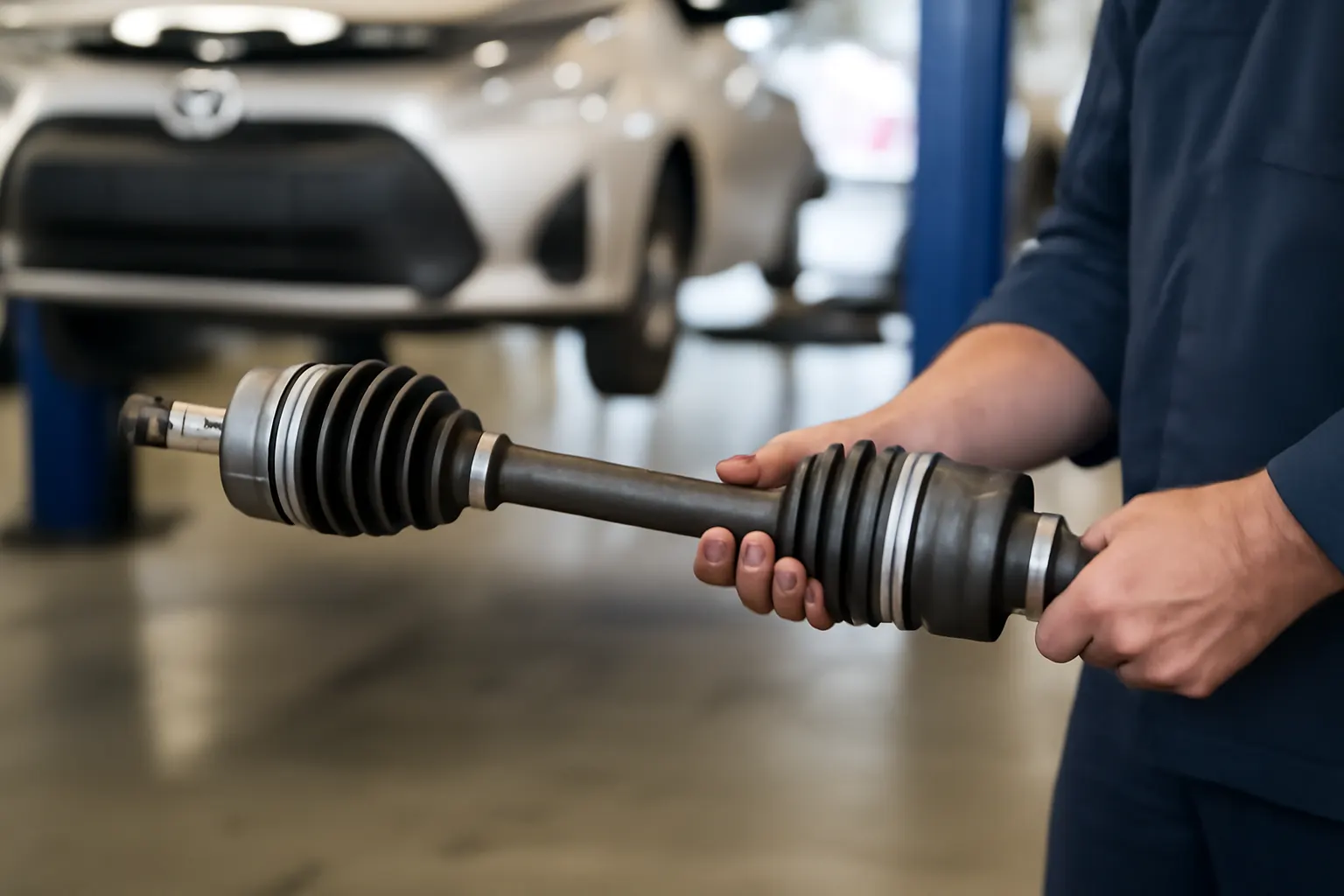
Toyota’s drive shaft material evolution is a quiet revolution in automotive reliability, efficiency, and safety. Modern Toyota front drive shafts are no longer just simple steel tubes: today’s designs leverage advanced alloys, composite materials, and precision manufacturing to deliver improved service life, reduced weight, and measurable gains in fuel economy. If you’re seeking to understand what’s inside your Toyota’s drivetrain—and how material choices impact performance and maintenance—this guide provides the expert breakdown you need.
For in-depth fitment, diagnostics, and quality sourcing, see our Toyota Front Drive Shaft: Expert Fitment, Diagnostics & Quality Sourcing category page.
Immediate Answer: What Are the Most Common Toyota Front Drive Shaft Materials?
Modern Toyota front drive shafts are typically constructed from one or more of the following materials:
- High-strength steel alloys: The industry standard for decades, now often enhanced with specific alloying elements for better fatigue resistance.
- Aluminum alloys: Used in select models to reduce rotational mass and improve fuel efficiency.
- Composite materials (carbon fiber reinforced polymers): Increasingly present in performance and hybrid models for ultra-lightweight, high-strength applications.
Each material is chosen for its balance of strength, weight, cost, and compatibility with Toyota’s engineering and safety requirements. The specific material in your vehicle affects not only the drive shaft’s durability and performance, but also fuel economy and long-term maintenance costs.
The Hidden Problem: Material Choices Affect More Than Just Weight
While it’s easy to focus on strength or weight when evaluating drive shaft materials, the real-world impacts go much deeper:
- Service Life: The wrong material can accelerate wear, corrosion, or fatigue, leading to premature failure.
- NVH (Noise, Vibration, Harshness): Material selection directly affects how vibrations and road noise are transmitted into the cabin.
- Fuel Efficiency: Heavier materials increase rotational inertia, forcing the engine to work harder.
- Safety: Subpar or incorrect materials may compromise crashworthiness or fail to meet regulatory standards.
Many Toyota owners and even some repair shops overlook these secondary effects, focusing only on immediate fit or cost. But understanding material properties is critical to ensuring long-term reliability and performance.
Deeper Dive: How Toyota’s Material Evolution Drives Performance
High-Strength Steel Alloys: The Backbone of Durability
For decades, high-strength steel has been the mainstay of Toyota front drive shaft construction. Modern steel shafts are not generic mild steel tubes—they’re engineered using specific alloying elements (like chromium, molybdenum, and vanadium) to maximize tensile strength and resistance to torsional fatigue. Toyota’s quality control ensures consistent wall thickness, precise balancing, and corrosion-resistant coatings.
Advantages:
- Excellent fatigue and impact resistance
- Predictable performance under high torque
- Cost-effective for mass production
Limitations:
- Heavier than alternatives, which can reduce fuel efficiency
- Susceptible to corrosion if coatings are damaged
Aluminum Alloys: Lightweight and Efficient
To meet tightening fuel economy standards, Toyota has increasingly adopted aluminum alloys in select models (especially hybrids and crossovers). Aluminum’s lower density means a lighter drive shaft, reducing rotational mass and enabling quicker acceleration with less engine load.
Advantages:
- Significant weight reduction (up to 40% lighter than steel)
- Corrosion resistance
- Improved fuel efficiency due to reduced inertia
Limitations:
- Lower ultimate strength compared to steel
- More susceptible to deformation from impact or improper installation
- Higher material and manufacturing costs
Composite Materials: The Frontier of Performance
In performance-oriented and hybrid Toyota models, carbon fiber reinforced polymer (CFRP) drive shafts are making inroads. These composites offer unmatched strength-to-weight ratios and exceptional resistance to fatigue.
Advantages:
- Ultra-lightweight for maximum fuel economy and performance
- Superior vibration damping (reducing NVH)
- Extreme fatigue resistance
Advertisement
Limitations:
- High cost (both material and fabrication)
- Specialized repair/replacement procedures
- Sensitivity to impact damage
Fuel Efficiency: The Real-World Impact of Material Choices
Reducing drive shaft weight has a direct, measurable effect on fuel efficiency. According to the United States Department of Energy, every 10% reduction in vehicle weight can improve fuel economy by 6–8%. While the drive shaft is only a small portion of overall vehicle mass, its rotational inertia means weight savings here are especially valuable.
Aluminum and composite shafts allow Toyota engineers to optimize the balance between strength and efficiency, helping meet stringent emissions and fuel economy regulations without sacrificing reliability. For owners, this translates to tangible savings at the pump and lower lifetime emissions.
Service Life and Durability: How Materials Determine Longevity
The service life of a Toyota front drive shaft is not just a function of mileage—it’s a direct result of material quality, manufacturing precision, and maintenance. Steel shafts, when properly coated and maintained, can easily last 150,000 miles or more. Aluminum and composite shafts, while lighter, require closer attention to installation torque and impact protection.
Key factors affecting drive shaft service life:
- Corrosion resistance: Steel shafts need robust coatings; aluminum and composites are naturally more resistant.
- Fatigue strength: Alloys and composites must be engineered to withstand millions of load cycles.
- Joint compatibility: The interface between shaft and CV/U-joints must match material expansion rates to prevent premature wear.
Safety and Regulatory Compliance: Meeting Modern Standards
Every Toyota drive shaft must meet stringent safety and durability standards set by organizations like the National Highway Traffic Safety Administration (NHTSA) and industry groups such as SAE International. Material selection is a core part of this compliance:
- Crashworthiness: Drive shafts must not fragment or intrude into the passenger compartment during a collision.
- Component recalls: Substandard or defective materials are a leading cause of drive shaft recalls.
- Diagnostic reliability: Materials must enable accurate diagnosis of faults, such as cracks or imbalance, using modern shop equipment.
Toyota invests heavily in material science to ensure every drive shaft meets or exceeds these requirements, protecting both drivers and technicians.
Diagnosing Material-Related Issues: What to Watch For
Material selection influences not only how a drive shaft performs, but also how it fails. Recognizing the signs of material-related issues can prevent catastrophic failure and costly repairs.
Common Symptoms of Material-Driven Problems
- Unusual vibrations: May indicate imbalance due to material deformation or fatigue.
- Corrosion spots: Especially on steel shafts, point to compromised coatings.
- Dents or bends: Aluminum and composite shafts are more susceptible to impact damage.
- Audible clicks or clunks: Can result from joint wear accelerated by incorrect material pairing.
Diagnostic Checklist for Toyota Front Drive Shaft Materials
Use this checklist during inspection or troubleshooting:
| Checkpoint | Steel Shaft | Aluminum Shaft | Composite Shaft |
|---|---|---|---|
| Surface corrosion | Common | Rare | Very rare |
| Dents/bends from impact | Possible | More likely | Most likely |
| Fatigue cracks near welds | Possible | Less likely | Uncommon |
| Joint compatibility issues | Rare | Possible | Possible |
| Weight (rough estimate) | Heaviest | Lighter | Lightest |
| NVH (vibration, noise) | Moderate | Lower | Lowest |
Installation and Replacement: Material-Specific Best Practices
When installing or replacing a Toyota front drive shaft, the material dictates several critical steps:
Steel Shafts
- Check for corrosion and coating integrity.
- Ensure precise torque on all fasteners to prevent fatigue.
- Use manufacturer-specified lubricants for joints.
Aluminum Shafts
- Inspect for pre-existing dents or bends before installation.
- Avoid over-tightening, which can deform the shaft.
- Use anti-seize compounds to prevent galvanic corrosion with steel components.
Advertisement
Composite Shafts
- Handle with care—avoid dropping or striking the shaft.
- Follow Toyota’s torque and installation procedures exactly.
- Inspect for delamination or cracks before and after installation.
For a step-by-step installation guide, refer to our Toyota Front Drive Shaft Install article.
Maintenance and Inspection: Keeping Your Toyota Drive Shaft at Peak Performance
Routine inspection is essential to maximize the service life of any drive shaft, especially as materials become more advanced and specialized.
Maintenance Tips by Material
- Steel: Inspect for rust, pitting, and coating wear every 30,000 miles. Touch up coatings as needed.
- Aluminum: Check for dents, bends, and surface corrosion (especially at joints).
- Composite: Examine for surface cracks, delamination, or unusual flexibility.
General Inspection Points
- Check CV and U-joints for play or leakage.
- Listen for new noises or vibrations during acceleration or turning.
- Monitor for signs of imbalance, especially after impacts or off-road use.
Sourcing the Right Replacement: How Material Impacts Buying Decisions
Not all replacement drive shafts are created equal. Choosing the correct material is essential for restoring original performance and reliability.
Key Sourcing Considerations:
- Match OEM specifications: Use Toyota’s part number and material description.
- Consider your driving profile: Heavy-duty use may favor steel; efficiency-focused drivers may prefer aluminum or composite.
- Buy from reputable suppliers: Avoid low-cost, non-OEM shafts that may use inferior materials.
- Check for updates: Toyota periodically upgrades shaft materials; newer replacements may differ from original equipment.
For the most accurate fitment and sourcing guidance, consult our Toyota Front Drive Shaft Fitment resource.
Material Technology Trends: What’s Next for Toyota Drive Shafts?
Material science is a fast-moving field, and Toyota is at the forefront of adopting new technologies:
- Advanced high-strength steels (AHSS): Delivering better strength-to-weight ratios with improved fatigue life.
- Hybrid composite-metal shafts: Combining the best properties of both materials for specialized applications.
- Recyclable and sustainable materials: As environmental regulations tighten, Toyota is testing new eco-friendly alloys and composites.
For more on the latest automotive materials, see the U.S. Department of Energy's Materials Technologies overview.
Toyota Front Drive Shaft Material Upgrades: When and Why to Consider an Upgrade
While most Toyota owners stick with OEM materials, there are scenarios where an upgrade makes sense:
- Performance builds: Swapping to a composite shaft can reduce weight and improve responsiveness.
- High-mileage vehicles: Upgrading to a newer, corrosion-resistant shaft can extend service life.
- Frequent off-road use: Steel shafts provide the best impact resistance for rugged conditions.
Always verify compatibility and consult Toyota technical documentation or an experienced technician before making material changes.
AutoPartEx: Your Partner in Toyota Drive Shaft Excellence
At AutoPartEx, we understand that material selection is at the heart of every successful drive shaft repair or upgrade. Our curated inventory includes OEM and premium aftermarket Toyota front drive shafts in all major materials, backed by expert fitment support and technical guidance.
Whether you’re seeking to restore factory performance, boost efficiency, or solve a persistent NVH issue, our team and resources—like the Toyota Front Drive Shaft: Expert Fitment, Diagnostics & Quality Sourcing hub—are here to help you make the right choice, every time.
Expert Action: Next Steps for Toyota Owners and Technicians
- Identify your vehicle’s original drive shaft material using VIN or Toyota’s part catalog.
- Inspect your current shaft for material-specific wear, corrosion, or damage.
- Select a replacement or upgrade that matches your driving needs, budget, and performance goals.
- Follow material-specific installation and torque procedures for maximum service life.
- Consult AutoPartEx resources or speak with our technical team for sourcing, fitment, or diagnostic guidance.
References
- Fuel Efficiency — United States Department of Energy
- Materials Technologies — United States Department of Energy
- Vehicle Safety and Equipment — National Highway Traffic Safety Administration
Advertisement
