Spotting Counterfeit Kia Parts: Visual & Batch Traceability Clues
Counterfeit Kia parts are a rising challenge for vehicle owners and service professionals alike. Spotting fake components quickly can save you from costly repairs, compromised safety, and reduced vehicle performance. This in-depth guide provides practical, step-by-step methods for identifying counterfeit Kia parts using visual cues, packaging inspection, batch code verification, and material quality checks—helping you make informed, confident purchases every time.
If you’re seeking the most reliable fitment and performance for your Kia, always start by referencing trusted resources like our Kia OEM Auto Parts: Engineering Heritage, Fitment Precision & Sourcing Guide | AutoPartEx. Early detection of counterfeit parts preserves your vehicle’s integrity, safety, and long-term value.
Why Counterfeit Kia Parts Pose Immediate Risks
Counterfeit Kia parts are not just a nuisance—they can directly undermine your vehicle’s safety, reliability, and efficiency. Unlike genuine Kia components, fake parts may lack proper engineering tolerances, fail to meet regulatory standards, and utilize subpar materials. This can result in:
- Safety hazards: Braking, steering, and restraint systems may not perform as intended.
- Premature wear: Substandard materials accelerate component failure.
- Fuel efficiency loss: Inaccurate sensors or ill-fitting parts disrupt optimal engine and drivetrain operation (DOE Fuel Efficiency).
- Warranty and recall complications: Use of counterfeit parts can void manufacturer support and complicate recall eligibility (NHTSA Equipment).
Understanding these risks reinforces the importance of thorough part inspection before installation.
The Hidden Problem: Counterfeiting Techniques Are Evolving
Today’s counterfeiters have become adept at mimicking the look and feel of genuine Kia parts. Modern fakes often feature convincing packaging, near-identical logos, and even falsified batch codes. As a result, superficial checks are no longer sufficient—owners and technicians must employ a layered approach, scrutinizing every detail from box to batch traceability.
Some counterfeits are so advanced that only careful material analysis or batch number verification can distinguish them from authentic components. This sophistication means that quick visual checks, while necessary, must be supplemented by deeper investigation using manufacturer databases and technical standards (SAE Standards).
How to Visually Identify Counterfeit Kia Parts: A Practical Overview
1. Packaging Inspection: First Line of Defense
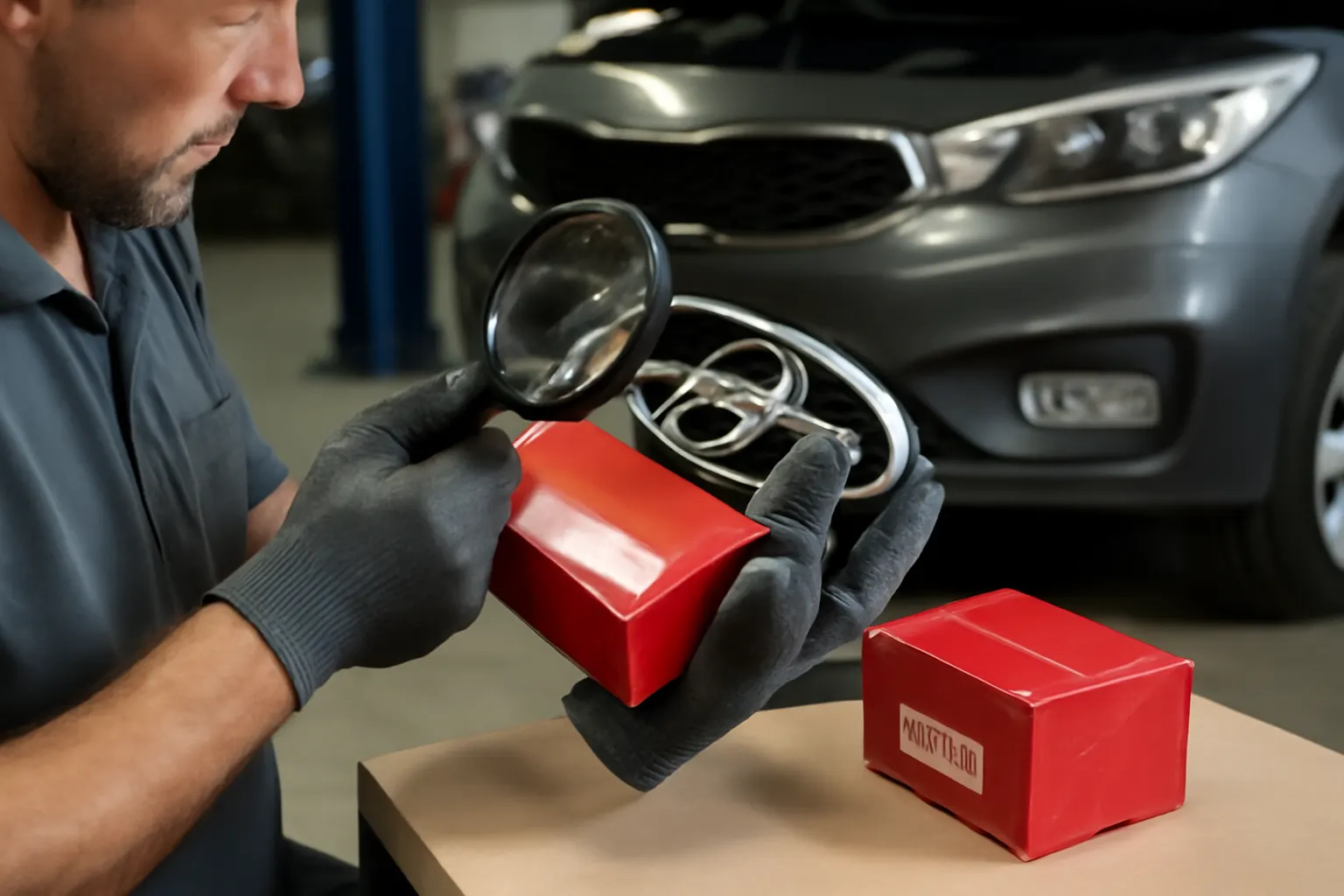
Genuine Kia parts come in high-quality packaging that reflects the brand’s attention to detail. When inspecting a part:
- Material quality: Authentic boxes use sturdy cardboard with crisp, vibrant printing and consistent colors.
- Brand logos: The Kia logo should be sharp, correctly proportioned, and free of spelling errors or misalignments.
- Security features: Many genuine boxes include holographic stickers, tamper-evident seals, or QR codes for verification.
- Labeling: Genuine labels are consistent, with clear part numbers, barcodes, and manufacturing information.
Red flags: Faded printing, blurry logos, inconsistent fonts, or missing security features often indicate a counterfeit.
2. Batch Code and Serial Number Verification
Each genuine Kia part is marked with a unique batch code or serial number. This code is critical for traceability and quality control.
- Location: Batch codes are typically found on both the packaging and the part itself.
- Format: Authentic codes follow a standardized Kia format—often a combination of letters and numbers that can be cross-referenced with official databases.
- Verification: Use Kia’s online resources or contact an authorized dealer to confirm the code matches production records.
Counterfeit clues: Codes that are missing, poorly printed, or fail to match Kia’s database are strong indicators of a fake.
Material Quality Checks: Going Beyond the Surface
Counterfeiters frequently cut corners on materials, leading to measurable differences in weight, finish, and durability:
- Weight: Genuine parts use high-grade metals or plastics, resulting in a specific, consistent weight. Counterfeits may feel lighter or heavier due to inferior alloys or fillers.
- Finish: Authentic components have precise machining, smooth edges, and uniform coatings. Rough casting, uneven paint, or excess flash are typical of fakes.
- Fasteners and connectors: Genuine fasteners are robust, corrosion-resistant, and fit perfectly. Counterfeit parts may use cheap screws, mismatched threads, or ill-fitting connectors.
Expert tip: When in doubt, compare the suspect part side-by-side with a known genuine component.
Critical Components Most at Risk for Counterfeiting
While any part can be counterfeited, certain high-demand components are more frequently targeted:
- Brake pads and rotors: Safety-critical and replaced often.
- Oil filters and air filters: Popular maintenance items.
- Electronic sensors: Oxygen sensors, MAF sensors, and ABS modules are lucrative for counterfeiters.
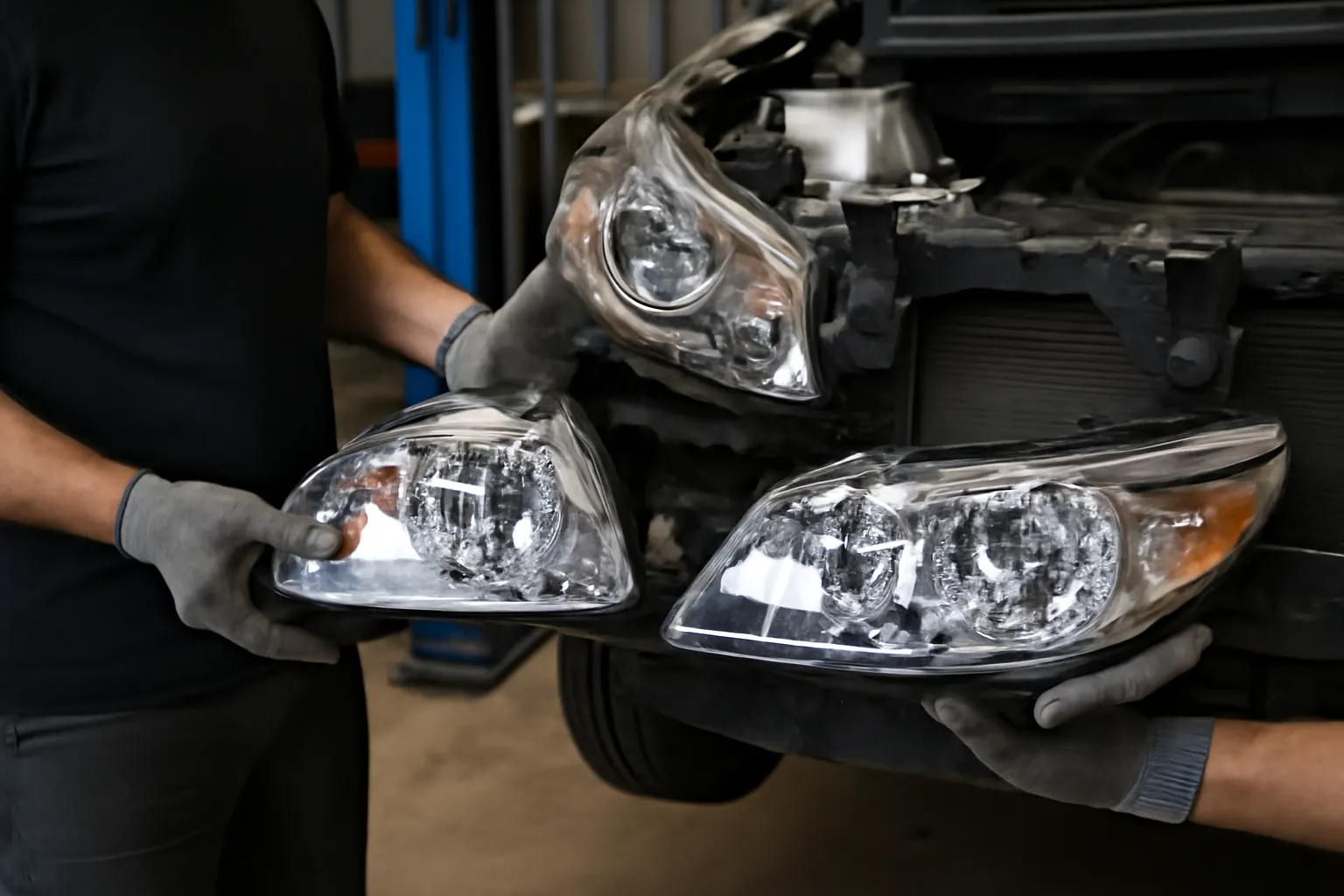
- Exterior lighting: Headlight assemblies and bulbs are easy targets due to high replacement rates.
- Body panels and trim: Visually simple but easy to fake.
Each of these components, if counterfeit, can pose significant safety and performance risks (NHTSA Equipment).
Checklist: How to Spot a Counterfeit Kia Part
Use this comprehensive checklist every time you source Kia parts:
| Inspection Step | Genuine Kia Part | Potential Counterfeit Clues |
|---|---|---|
| Packaging Material | Sturdy, high-quality, crisp print | Thin, flimsy, faded or blurry print |
| Logos and Branding | Sharp, accurate, consistent logo placement | Off-center, misspelled, or poorly rendered logos |
| Security Features | Hologram, tamper-evident seal, QR code | Missing or poorly executed security elements |
| Labeling | Clear part number, barcode, and batch code | Missing, smudged, or inconsistent labeling |
| Batch Code/Serial Number | Matches Kia’s format and database | Absent, incorrect format, or unverifiable |
| Part Weight | Consistent with OEM sample | Noticeably lighter or heavier |
| Machining & Finish | Smooth edges, uniform finish | Rough, uneven, or excess material |
| Fasteners/Connectors | Robust, corrosion-resistant, perfect fit | Cheap, mismatched, or poor fit |
| Price | Consistent with authorized dealer pricing | Significantly cheaper than market average |
| Source | Authorized Kia dealer or reputable supplier | Unknown, grey-market, or unverified sellers |
Batch Traceability: Verifying Authenticity with Codes
Batch codes and serial numbers are your link to Kia’s manufacturing and quality assurance systems. Here’s how to leverage them:
- Locate the code: On the packaging label and stamped or etched directly on the part.
- Format check: Kia batch codes typically use a specific sequence of letters and numbers. Cross-check the format with official Kia documentation or dealer reference.
- Database verification: Contact your local Kia dealership or use the manufacturer’s online portal to verify the code. Genuine codes will match Kia’s internal records, including production date, plant, and part revision.
- Recall and safety checks: Batch codes allow you to check for recalls or safety bulletins using NHTSA’s recall database.
Warning: If a seller refuses to provide batch code information or the code cannot be verified, treat the part as suspect.
Technical Standards: Why SAE and OEM Specifications Matter
Genuine Kia parts are engineered to meet rigorous SAE (Society of Automotive Engineers) and OEM standards. These standards dictate:
- Dimensional accuracy: Ensures proper fitment and function.
- Material composition: Specifies alloys, plastics, and coatings for durability and safety (DOE Materials Technologies).
- Testing protocols: Components are tested for fatigue, impact, corrosion, and thermal cycling (SAE Standards).
Counterfeit parts rarely meet these benchmarks, leading to unpredictable performance and a higher risk of failure. Always verify that your part references the correct SAE or Kia OEM standard on its documentation or labeling.
Buying Guidance: Sourcing Genuine Kia Parts
To minimize the risk of counterfeits, follow these best practices when sourcing Kia parts:
- Purchase from authorized Kia dealers: These outlets guarantee authenticity and provide full batch traceability.
- Use reputable online platforms: Only buy from sites with verified supply chains and robust return policies.
- Avoid deals that seem too good to be true: Deep discounts, especially from unknown sellers, are a hallmark of counterfeit operations.
- Request documentation: Ask for invoices, certificates of authenticity, and batch code details before purchase.
For a comprehensive sourcing strategy, consult our Kia Genuine vs Aftermarket Parts: Fitment & Quality Risks editorial for an in-depth risk assessment.
Fitment and Installation: Why Precision Matters
Improperly fitted parts—whether due to counterfeit construction or poor manufacturing—can cause cascading failures:
- Brake systems: Incorrect pad thickness or rotor dimensions can reduce stopping power or cause uneven wear.
- Sensors: Counterfeit sensors may send erroneous signals, triggering warning lights or limp mode.
- Engine and drivetrain: Ill-fitting gaskets, filters, or belts can cause leaks, overheating, or loss of power.
Always verify fitment using your vehicle’s VIN and cross-reference with Kia OEM Auto Parts: Engineering Heritage, Fitment Precision & Sourcing Guide | AutoPartEx to ensure compatibility.
Maintenance Implications: The Long-Term Cost of Counterfeit Parts
While counterfeit parts may offer short-term savings, they typically result in higher long-term costs due to:
- Frequent replacements: Subpar materials wear out faster, necessitating more frequent service.
- Collateral damage: A failed counterfeit part can damage adjacent systems, multiplying repair costs.
- Fuel efficiency loss: Poorly engineered parts can disrupt engine management, increasing fuel consumption (DOE Fuel Efficiency).
- Potential safety recalls: Use of non-genuine parts may exclude you from manufacturer recalls or service campaigns (NHTSA Recalls).
For tailored maintenance schedules and part selection, see our Kia Maintenance Guide: Service Intervals & OEM Part Selection.
What to Do If You Suspect a Counterfeit Kia Part
If you suspect a part is counterfeit:
- Remove and quarantine: Do not install or use the part until confirmed genuine.
- Contact the seller: Request proof of authenticity, batch code, and sourcing documentation.
- Report to authorities: Notify Kia, the National Highway Traffic Safety Administration (NHTSA Equipment), or local consumer protection agencies.
- Document evidence: Take clear photos of the packaging, part, batch code, and any correspondence with the seller.
- Consult a professional: Have a certified Kia technician inspect the part for further verification.
Frequently Asked Questions: Counterfeit Kia Parts
Q: Are all aftermarket Kia parts counterfeit?
A: No. Aftermarket parts are produced by third-party manufacturers and can be high-quality, but they are not the same as genuine Kia OEM parts. Counterfeit parts, however, are intended to deceive by mimicking OEM appearance and branding.
Q: How can I tell if a part is included in a recall?
A: Use your part’s batch code and the NHTSA recall database to check for any safety recalls. Only genuine parts will be traceable in recall systems.
Q: What’s the risk of using a counterfeit filter or sensor?
A: Counterfeit filters may not properly trap contaminants, risking engine damage. Fake sensors can disrupt engine management, reduce fuel efficiency, and trigger false warning lights.
AutoPartEx: Your Partner in Authentic Kia Parts Sourcing
AutoPartEx is committed to empowering Kia owners and service professionals with the knowledge and resources needed to source, verify, and install genuine OEM parts. Our expert guides, fitment databases, and curated supplier network ensure you always have access to authentic components, reliable technical data, and ongoing support.
For more information on sourcing, fitment, and maintenance for your Kia, explore our dedicated Kia OEM Auto Parts: Engineering Heritage, Fitment Precision & Sourcing Guide | AutoPartEx and related technical content. Trust AutoPartEx to keep your Kia performing at its best—safely and efficiently.