Kia Genuine vs Aftermarket Parts: Fitment & Quality Risks
When maintaining or repairing your Kia, the critical decision between choosing genuine Kia OEM parts or aftermarket alternatives can have far-reaching implications for fitment, performance, safety, and long-term reliability. This article delivers a technical, practical review—grounded in engineering standards and real-world data—of the fitment and quality risks associated with each option. If you’re weighing your parts strategy, this guide gives you the clarity needed to avoid costly mistakes and ensure your Kia operates as the manufacturer intended.
For a broader look at Kia’s engineering heritage and sourcing strategies, see Kia OEM Auto Parts: Engineering Heritage, Fitment Precision & Sourcing Guide | AutoPartEx.
Immediate Answer: Why Kia Genuine Parts Dominate on Fitment & Quality
Kia genuine (OEM) parts are engineered, tested, and manufactured to precise specifications set by Kia and validated by global automotive standards. This ensures that each component fits exactly as intended, integrates seamlessly with vehicle systems, and maintains the original performance and safety profile. Aftermarket parts, while often less expensive and more widely available, can introduce fitment challenges, material inconsistencies, and unknowns in quality assurance. These differences can affect everything from brake responsiveness to fuel efficiency, and even vehicle safety.
Bottom line: For critical systems—brakes, suspension, electronics, and safety equipment—OEM parts are the only way to guarantee the factory fit and function that your Kia was designed for.
The Hidden Problem: Compatibility Gaps and Quality Variability
While aftermarket parts can seem like a cost-effective alternative, hidden risks often emerge after installation. These include:
- Subtle misfit: Even a millimeter difference in mounting points or connector pinouts can result in rattles, leaks, or system errors.
- Material downgrades: Cheaper alloys, plastics, or rubber compounds may not withstand heat, stress, or chemical exposure as well as OEM-specified materials.
- Lack of integrated testing: Aftermarket manufacturers may not perform the same rigorous system-level tests, increasing the risk of unforeseen interactions.
These issues become especially acute in modern Kia vehicles, where interconnected electronic modules, advanced driver-assistance systems (ADAS), and turbocharged engines demand uncompromising part precision.
Deeper Technical Explanation: Standards, Testing, and Engineering Controls
OEM Parts: Engineered for the System
Kia OEM parts are designed alongside the vehicle itself, following strict engineering protocols. Each component is:
- Validated to global standards: Including SAE (Society of Automotive Engineers) and ISO requirements for strength, durability, and performance SAE Standards.
- Subjected to full-vehicle testing: Ensuring seamless integration with other systems, such as anti-lock brakes, stability control, and emissions modules.
- Material-matched: Using metals, polymers, and coatings specified for exact thermal, mechanical, and chemical properties.
Aftermarket Parts: Variable Standards and Limited Validation
Aftermarket parts may be produced to a wide range of standards:
- Some adhere to SAE or ISO specs, but many do not, especially for less-regulated components.
- Testing is often performed in isolation, not as part of a complete vehicle system, leaving room for compatibility gaps.
- Material substitutions are common, driven by cost pressures, which can compromise longevity and performance.
Fitment Risks: Where Aftermarket Parts Can Fail
1. Mounting and Alignment Issues
Aftermarket parts may look similar but can have:
- Slightly different bolt patterns or bracket geometry
- Variations in connector design or wire gauge
- Inconsistent gasket or sealing surfaces
These differences can result in:
- Difficult or impossible installation
- Leaks or vibration
- Premature wear of adjacent components
2. Tolerances and Clearances
OEM parts are manufactured to tight tolerances—sometimes within fractions of a millimeter. Aftermarket tolerances can be looser, leading to:
- Brake pads that drag or rattle
- Suspension bushings that accelerate tire wear
- Body panels that misalign, increasing wind noise or water intrusion
3. Electronics and Sensors
Modern Kias rely on tightly integrated electronic systems:
- ABS, airbag, and ADAS modules require precise connector pinouts and signal ranges.
- Aftermarket sensors may trigger warning lights or fail to calibrate, disabling safety features.
Quality Risks: Material Science and Durability
1. Metals and Alloys
OEM parts use materials specified for:
- Corrosion resistance
- Tensile strength
- Weight optimization (contributing to fuel efficiency Fuel Efficiency)
Aftermarket parts may substitute:
- Lower-grade steel or aluminum
- Inferior coatings
- Heavier or lighter materials that alter performance
2. Polymers and Elastomers
Critical for:
- Engine mounts
- Seals and gaskets
- Bushings
Aftermarket substitutions may:
- Degrade faster under heat or oil exposure
- Lose elasticity, leading to leaks or NVH (noise, vibration, harshness) issues
3. Electronics and Microchips
OEM sensors and modules:
- Meet electromagnetic compatibility (EMC) standards
- Are validated for long-term reliability
Aftermarket electronics:
- May lack shielding or quality control
- Introduce intermittent faults or communication errors
Safety Implications: Beyond Fit and Finish
The National Highway Traffic Safety Administration (NHTSA) emphasizes that safety-critical equipment—brakes, airbags, seatbelts, lighting—must meet stringent performance standards NHTSA Vehicle Safety and Equipment. Non-OEM parts may not always meet these requirements, especially if:
- Testing is limited to basic functionality, not crash or system integration
- Materials fail under real-world stress (e.g., impact, heat, vibration)
- Electronics do not communicate properly with vehicle safety systems
Result: Using non-OEM parts in safety systems can compromise occupant protection and increase legal liability in the event of a collision.
Real-World Examples: Where Aftermarket Parts Fall Short
Brake System Components
- Aftermarket rotors and pads may be dimensionally compatible but use different friction materials, affecting stopping distance and rotor wear.
- ABS sensors sourced from generic suppliers often fail to communicate with Kia’s control modules, triggering warning lights and disabling advanced safety features.
Engine Sensors
- Mass airflow and oxygen sensors from non-OEM sources can cause check engine lights, rough running, or failed emissions tests due to signal discrepancies.
Body and Lighting Parts
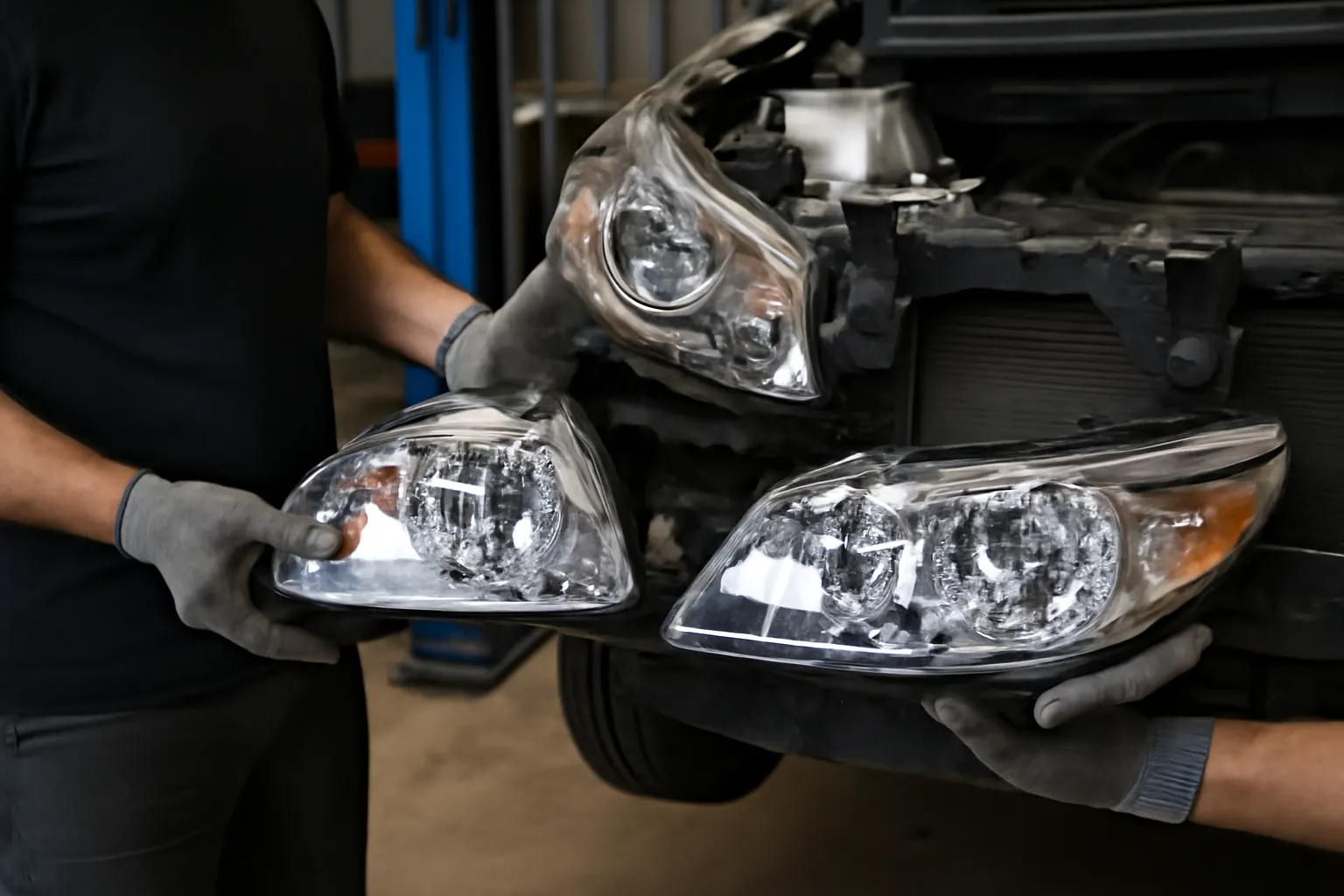
- Aftermarket bumpers and headlamps may not align with factory mounting points, leading to gaps, rattles, or moisture intrusion.
- Lighting assemblies that do not meet OEM beam pattern or brightness specs can reduce nighttime visibility and fail inspection.
Diagnostic Checklist: Spotting Fitment and Quality Risks
Before installing any non-OEM part, use this diagnostic checklist to minimize risk:
| Step | What to Check | OEM vs. Aftermarket Red Flags |
|---|---|---|
| 1 | Compare part numbers and physical dimensions | Any mismatch in length, width, or connectors |
| 2 | Inspect material quality | Flimsy plastics, rough casting, poor coatings |
| 3 | Test-fit to mounting points | Misaligned holes, gaps, or forced fit |
| 4 | Check electronic compatibility | Warning lights, no communication, error codes |
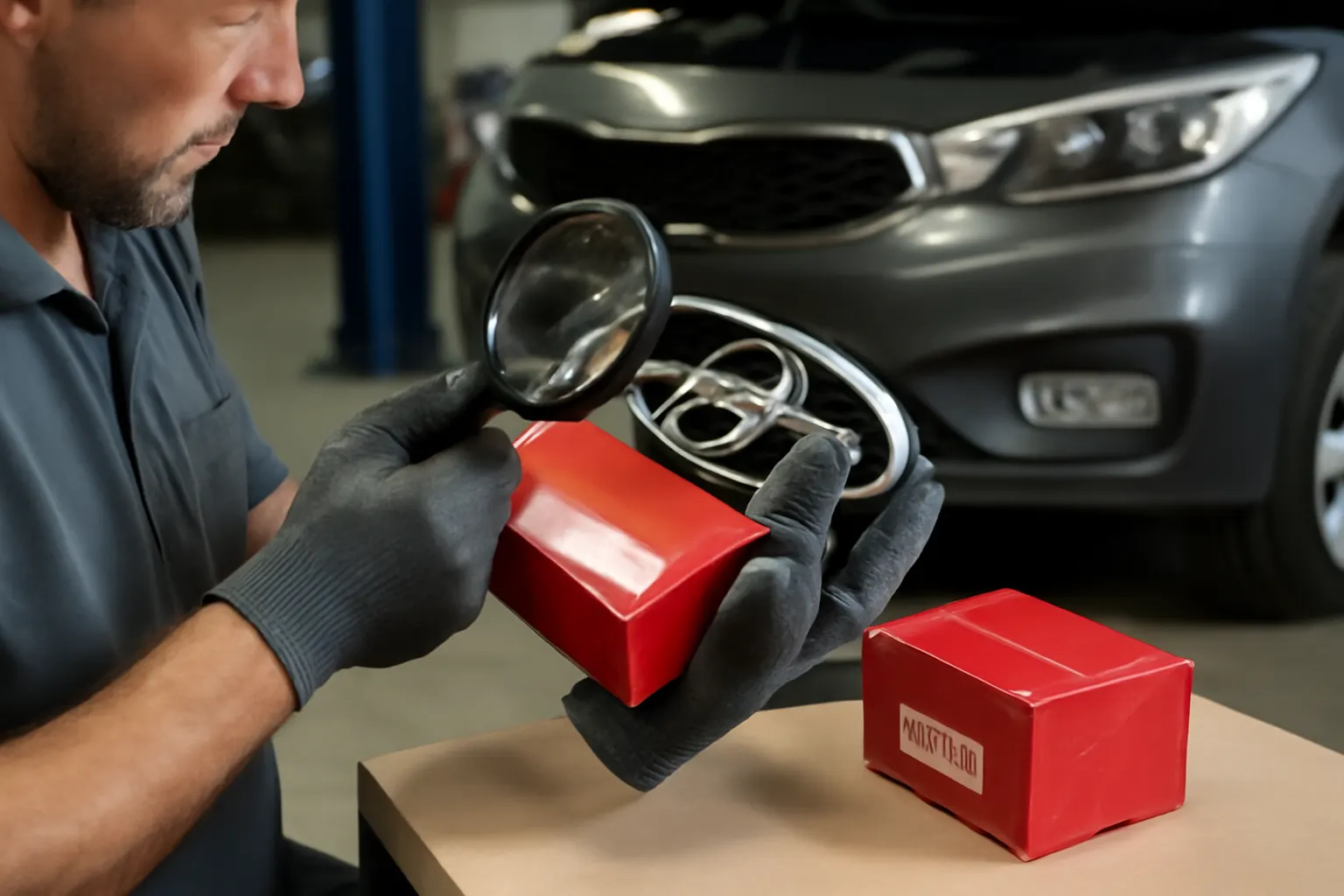
| 5 | Review packaging and labeling | Missing batch codes, vague manufacturer info |
| 6 | Consult technical service bulletins (TSBs) | OEM warnings against aftermarket substitution |
For advanced tips on identifying counterfeit or substandard parts, see Spotting Counterfeit Kia Parts: Visual & Batch Traceability Clues.
Sourcing Strategies: When and How to Use Aftermarket Parts
When Aftermarket Parts Can Be Acceptable
- Non-critical components: Air filters, wiper blades, or cosmetic trim, provided they meet SAE or equivalent standards.
- Older vehicles: Where OEM support is discontinued, high-quality aftermarket parts from reputable brands may be the only option.
- Upgrades: Performance exhausts, wheels, or lighting, as long as they are engineered for your exact Kia model.
How to Reduce Risk with Aftermarket Parts
- Select parts certified to SAE or ISO standards and verified by independent testing agencies.
- Buy from reputable suppliers with transparent manufacturing and quality control practices.
- Check for fitment guarantees and customer support in case of installation issues.
Installation Guidance: Ensuring Proper Fit and Function
Proper installation is critical, especially when using aftermarket components. Follow these best practices:
- Pre-fit parts before final installation. Look for any signs of misalignment, forced fit, or missing hardware.
- Torque all fasteners to Kia specifications. Use a calibrated torque wrench and refer to the factory service manual.
- Perform system checks after installation. For electronic or safety-related parts, run diagnostic scans to verify proper operation.
- Monitor for warning lights or unusual noises. Address any issues immediately; do not ignore system errors.
Maintenance Implications: Long-Term Costs and Reliability
Using non-OEM parts may save money initially but can introduce hidden long-term costs:
- Accelerated wear of adjacent components (e.g., bushings, rotors, sensors)
- More frequent repairs or replacements
- Potential for voided insurance coverage if safety systems are compromised
- Reduced resale value due to non-factory parts or visible fitment issues
For a comprehensive approach to Kia upkeep, consult the Kia Maintenance Guide: Service Intervals & OEM Part Selection.
Fuel Efficiency and Performance: Why Material and Fitment Matter
The U.S. Department of Energy highlights that small deviations in part weight, friction, or alignment can impact overall fuel economy Fuel Efficiency. For example:
- Heavier aftermarket wheels or brakes increase rolling resistance and reduce mpg.
- Poorly-fitting aerodynamic panels increase drag.
- Non-OEM engine sensors can cause the ECU to run richer or leaner than intended, degrading both performance and efficiency.
Regulatory and Recall Considerations
OEM parts are subject to recall and safety oversight by regulatory agencies such as NHTSA NHTSA Recalls. Aftermarket parts may not be included in such campaigns, leaving owners exposed to unresolved defects.
- OEM recalls: If a safety issue is discovered, Kia will notify owners and provide a free fix.
- Aftermarket issues: No such safety net exists, and tracking defects is much harder.
Choosing the Right Path: OEM vs. Aftermarket Decision Matrix
| Criteria | Kia OEM Parts | Aftermarket Parts |
|---|---|---|
| Fitment | Guaranteed | Variable |
| Material Quality | Manufacturer-specified | Ranges from OEM-equivalent to inferior |
| Safety Compliance | Fully tested and certified | Not always tested to OEM standards |
| System Integration | Seamless | May cause errors or malfunctions |
| Cost | Higher upfront | Lower upfront, possible higher lifetime |
| Availability | Dealer and authorized suppliers | Wide, but with quality variability |
| Recall Coverage | Yes | Rarely |
AutoPartEx Positioning: Your Source for Kia OEM Precision
At AutoPartEx, we recognize that the integrity of your Kia depends on using parts engineered for exact fit and uncompromised quality. Our Kia OEM Auto Parts: Engineering Heritage, Fitment Precision & Sourcing Guide is your trusted resource for sourcing genuine components—whether you’re a DIY enthusiast, a professional technician, or a fleet operator. We provide technical data, fitment charts, and sourcing transparency unmatched in the industry. When safety, reliability, and performance matter, insist on OEM.
Expert Call to Action: Protect Your Kia—Choose with Confidence
Before your next repair or upgrade, scrutinize every part for fitment, material quality, and safety compliance. For critical components—brakes, suspension, electronics, and body structure—always opt for Kia genuine parts. Use our diagnostic checklist to vet any aftermarket alternatives, and consult AutoPartEx for engineering-verified guidance. Your Kia’s longevity, safety, and performance depend on making the right choice at the parts counter.