How to Spot Counterfeit Renault Parts
Counterfeit Renault parts have become a significant concern for vehicle owners, technicians, and parts distributors worldwide. Recognizing fake components quickly is essential to protect your Renault’s safety, performance, and long-term value. This guide delivers the critical signs of imitation Renault parts, actionable authentication tips, and a step-by-step approach to ensure you only install genuine components. For a comprehensive selection of authentic Renault parts and further technical resources, visit the Renault Genuine Auto Parts | OEM Fitment, Engineering, and Sourcing Guide.
The Immediate Answer: Key Signs of Counterfeit Renault Parts
Counterfeit Renault parts can be identified through a combination of visual inspection, packaging analysis, and sourcing diligence. The most reliable warning signs include:
- Inconsistent or poor-quality packaging: Misspelled words, faded logos, or unusual color schemes.
- Absence of Renault holograms or security labels: Genuine parts often feature security stickers or holographic seals.
- Incorrect or missing part numbers: Part numbers should match Renault’s catalog and be printed clearly.
- Inferior materials or finish: Look for rough casting marks, uneven surfaces, or lightweight construction.
- Suspiciously low prices: If a part is significantly cheaper than market value, it may be counterfeit.
- Lack of documentation: Authentic parts typically include installation instructions, warranty cards, or certificates of authenticity.
Identifying these red flags at the point of purchase or before installation can prevent costly and dangerous outcomes for your Renault.
The Hidden Problem: The Real Risks of Counterfeit Parts
While counterfeit Renault parts may appear similar to genuine components, their hidden dangers are substantial. Imitation parts often lack compliance with critical safety, engineering, and materials standards set by Renault and international regulatory bodies. This can lead to:
- Compromised vehicle safety: Non-genuine parts may fail under stress, increasing the risk of accidents (NHTSA Equipment).
- Reduced fuel efficiency: Poorly engineered components can negatively impact engine and drivetrain performance (DOE Fuel Efficiency).
- Accelerated wear and tear: Inferior materials degrade faster, leading to premature part failure.
- Invalidated maintenance schedules: Counterfeit parts can disrupt recommended service intervals and diagnostic routines.
The unseen consequences of installing fake parts extend beyond immediate mechanical issues—they can threaten the very reliability and safety of your Renault.
Why Counterfeit Renault Parts Are a Growing Threat
The global automotive aftermarket has experienced a surge in counterfeit parts, fueled by online marketplaces and unscrupulous distributors. Renault’s popularity, especially in regions with high vehicle density, makes its parts a prime target for counterfeiters. The problem is compounded by:
- Global supply chains: The ease of international shipping allows fake parts to circulate widely.
- Sophisticated forgeries: Counterfeiters increasingly mimic Renault’s packaging and branding, making detection harder.
- Lack of consumer awareness: Many buyers are unaware of the subtle differences between genuine and fake parts.
These factors mean that even experienced mechanics and parts buyers can be deceived without up-to-date authentication knowledge.
The Technical Reality: How Genuine Renault Parts Are Engineered
Understanding what sets genuine Renault parts apart is crucial for authentication. Renault OEM components are engineered and produced under rigorous standards, including:
- SAE and international standards compliance: Genuine parts adhere to standards like those published by SAE International.
- Materials selection: Renault uses advanced alloys, plastics, and composites tested for strength, weight, and heat resistance (DOE Materials Technologies).
- Precision manufacturing: Tight tolerances ensure proper fitment and integration with Renault’s modular platforms.
- Quality control: Each part undergoes multiple inspections, batch tracking, and serialization.
Counterfeiters rarely replicate these technical requirements, resulting in visually subtle but functionally significant differences.
Visual Inspection: The First Line of Defense
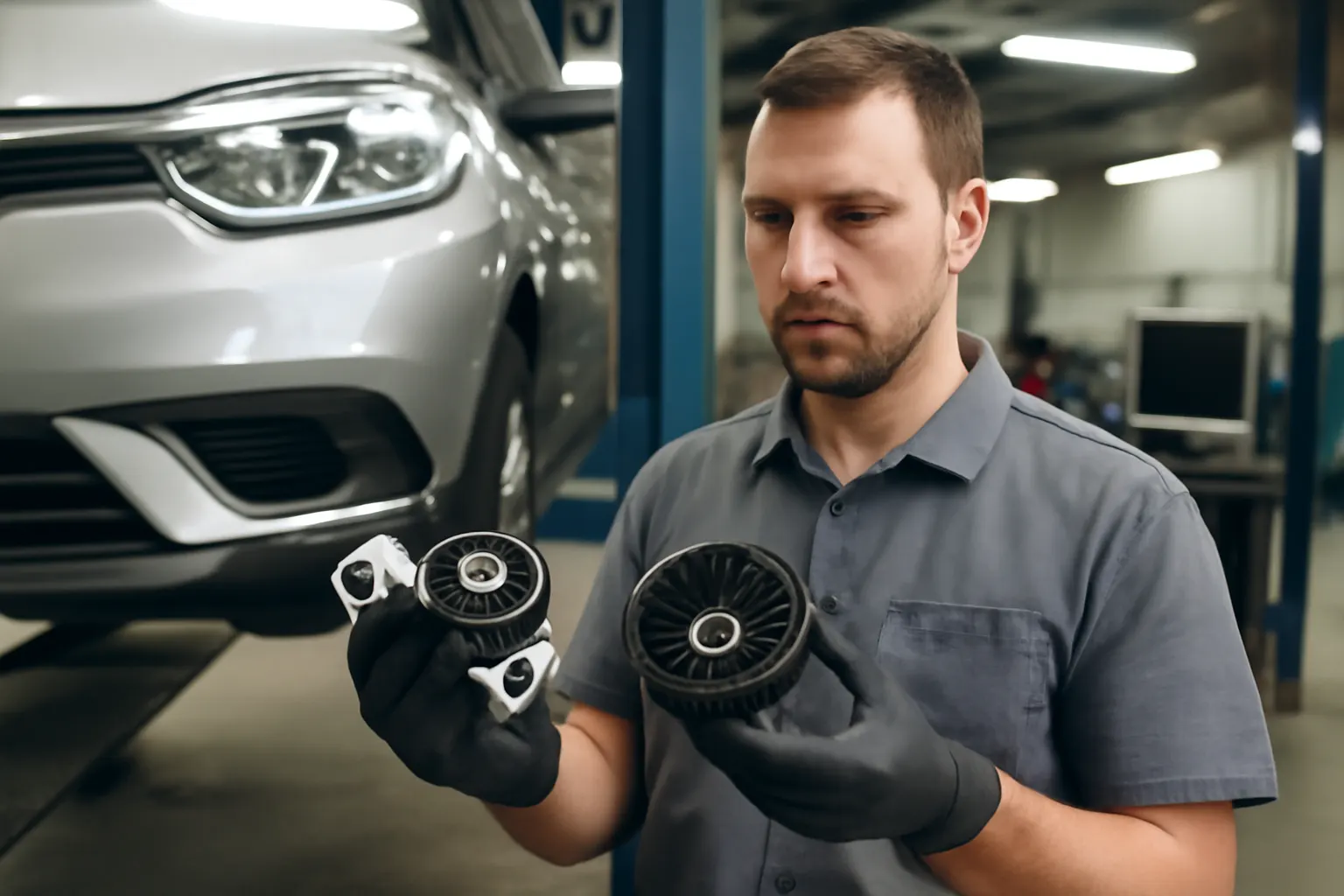
A thorough visual check is the quickest way to screen for counterfeit Renault parts. Focus on the following aspects:
- Branding and logos: Compare the Renault diamond logo and font to official imagery. Look for inconsistencies in shape, size, or spacing.
- Packaging quality: Genuine packaging features crisp printing, durable materials, and precise color matching.
- Security features: Many Renault parts include holographic stickers, QR codes, or tamper-evident seals.
- Casting and mold marks: Inspect for sharp, clean lines and consistent surface finishes. Counterfeit parts often have rough edges or visible casting flaws.
If in doubt, compare the suspect part to a verified OEM component or reference images from Renault’s official catalog.
Packaging and Documentation Checklist
Use this checklist to systematically verify Renault part authenticity:
| Item | Genuine Renault Part | Counterfeit Warning Signs |
|---|---|---|
| Renault Logo | Crisp, correct | Fuzzy, misshapen, or off-color |
| Part Number | Matches catalog | Missing, altered, or incorrect |
| Hologram/Security Seal | Present, intact | Absent, damaged, or generic |
| Packaging Material | Sturdy, premium | Thin, flimsy, or inconsistent |
| Instruction Manual | Included, in French/English | Missing, poorly translated |
| Warranty Card/Certificate | Present | Absent or generic |
| Batch/Serial Number | Clearly printed | Missing or smudged |
Cross-reference each item before installation or accepting delivery.
Sourcing: Where You Buy Matters
The source of your Renault parts is often the most decisive factor in avoiding counterfeits. Follow these sourcing best practices:
- Purchase from authorized Renault dealers: They maintain direct supply chains with Renault and use traceable inventory systems.
- Use reputable online platforms: Prefer sites with verified seller programs and transparent return policies.
- Request proof of authenticity: Ask for invoices, batch numbers, and supplier certifications.
- Beware of “too good to be true” deals: Extremely low prices or bulk offers from unknown sellers are red flags.
For a curated list of trusted sources and detailed fitment information, see our Renault parts categories.
Fitment and Engineering: How Counterfeit Parts Undermine Performance
Genuine Renault parts are designed for precise fitment, especially on vehicles built on Renault’s modular platforms. Counterfeit parts can cause:
- Misalignment during installation: Incorrect dimensions or mounting points lead to improper assembly.
- Interference with adjacent systems: Fake parts may not clear adjacent components, causing vibration or noise.
- Sensor and electronics compatibility issues: Non-OEM sensors, ECUs, or connectors can trigger warning lights or malfunction.
These issues can compromise both short-term drivability and long-term reliability. For more on Renault’s engineering approach, read The Evolution of Renault’s Modular Platforms.
Diagnostic Tips: Confirming Authenticity Before Installation
Before installing any Renault part, perform these diagnostic checks:
- Compare part numbers: Use Renault’s online catalog or VIN-based lookup tools.
- Check for security features: Scan QR codes or verify hologram authenticity where available.
- Physical test fit: Without forcing, check alignment and clearances against the original part.
- Weight and material assessment: Genuine parts often have a distinct weight and finish due to specific alloys or plastics.
- Consult technical bulletins: Renault and automotive technical forums may highlight known counterfeit batches or problem suppliers.
If any check fails, do not proceed with installation—return the part and notify the supplier.
The Impact on Safety and Fuel Efficiency
Counterfeit parts can directly undermine the safety systems and efficiency of your Renault. For example:
- Braking components: Fake brake pads or discs may have substandard friction material, leading to increased stopping distances or brake fade (NHTSA Equipment).
- Engine sensors: Counterfeit oxygen sensors or MAF sensors can disrupt fuel-air mixture, reducing fuel efficiency and increasing emissions (DOE Fuel Efficiency).
- Suspension and steering: Imitation bushings or tie rods can fail prematurely, risking loss of control.
Always prioritize authentic, standards-compliant parts to maintain the safety and efficiency engineered into your Renault.
Maintenance Intervals and the Dangers of Counterfeit Parts
Using counterfeit parts can throw off your Renault’s maintenance schedule and diagnostic accuracy. Problems include:
- Premature failure: Fake filters, belts, or spark plugs may not last until the next scheduled service.
- Diagnostic confusion: Non-OEM sensors can trigger false error codes, complicating troubleshooting.
- Warranty complications: Although not a legal guarantee, many service centers may refuse warranty repairs if counterfeit parts are detected.
For optimal service life and reliability, follow the Renault Maintenance Intervals & Service Checklist and use only verified parts.
VIN Decoding and Part Authentication
Your Renault’s Vehicle Identification Number (VIN) is a powerful tool for part verification. Here’s how to use it:
- VIN-based catalog lookup: Enter your VIN into Renault’s official parts catalog to retrieve the exact part numbers for your vehicle.
- Cross-check part numbers: Ensure the part you receive matches the OEM number for your VIN.
- Authentication services: Some Renault dealers offer VIN-based authentication for critical components.
For a step-by-step guide, consult our Renault VIN Decoding & Fitment Guide.
What to Do If You Suspect a Counterfeit Renault Part
If you discover or suspect a counterfeit part, take the following steps:
- Do not install the part: Using a fake component can cause immediate or long-term damage.
- Contact the supplier: Request a return, refund, and explanation.
- Notify Renault or the relevant authorities: Reporting helps prevent further distribution and may trigger recalls or investigations (NHTSA Recalls).
- Document everything: Keep packaging, receipts, and correspondence as evidence.
Prompt action protects your vehicle and contributes to industry-wide safety.
AutoPartEx: Your Partner in Genuine Renault Parts Sourcing
At AutoPartEx, we recognize the critical importance of authentic components for every Renault owner and technician. Our platform connects you with a network of verified suppliers, technical resources, and fitment tools to ensure every part you install is genuine, standards-compliant, and engineered for your exact model. We continuously update our guides and sourcing lists to reflect the latest in counterfeit detection and industry best practices.
For further exploration of Renault’s engineering, fitment, and sourcing, start with our Renault Genuine Auto Parts | OEM Fitment, Engineering, and Sourcing Guide.
References
- Vehicle Safety and Equipment – National Highway Traffic Safety Administration
- Fuel Efficiency – United States Department of Energy
- SAE Standards – SAE International
By following the diagnostic, sourcing, and authentication steps detailed above, you can confidently safeguard your Renault against the risks of counterfeit parts—preserving its safety, efficiency, and value for years to come.