Porsche Parts Authentication: Spotting Counterfeits
Genuine Porsche parts are essential for maintaining performance, safety, and the unique driving experience that defines the brand. However, the global automotive parts market faces a growing issue: the proliferation of counterfeit and substandard components that threaten your Porsche’s reliability, safety, and value. This in-depth AutoPartEx guide provides the strategies and checklists you need to confidently authenticate Porsche parts, recognize counterfeits, and verify components using OEM resources. Whether you’re a Porsche owner, technician, or enthusiast, this article will empower you to protect your investment and ensure every part on your vehicle meets the highest standards.
For more on Porsche’s heritage and the value of OEM fitment, visit our Porsche OEM Parts: Heritage, Engineering, and Precision Fitment page.
Why Porsche Parts Authentication Matters
Counterfeit automotive parts are not just an economic nuisance—they can directly compromise vehicle safety, performance, and longevity. According to the National Highway Traffic Safety Administration (NHTSA), the use of non-genuine or substandard parts increases the risk of component failure, which can lead to accidents or costly repairs [NHTSA Equipment]. For Porsche vehicles, which are engineered to exacting standards, even minor deviations in materials or manufacturing can undermine the refined driving dynamics and advanced safety systems that set the brand apart.
Authenticating Porsche parts is therefore not only a matter of preserving resale value and appearance; it’s fundamental to ensuring that systems like brakes, suspension, and engine components perform as designed. In a market flooded with lookalike components, robust authentication practices are more important than ever.
The Hidden Problem: Counterfeit Porsche Parts on the Rise
The global market for counterfeit auto parts is estimated in the tens of billions of dollars annually. Porsche, as a premium marque, is a prime target for counterfeiters. These fake components range from obvious knock-offs to highly convincing replicas that are difficult to distinguish from genuine parts without specialized knowledge.
Counterfeiters exploit online marketplaces, unregulated third-party sellers, and even some brick-and-mortar shops. They often mimic OEM packaging, branding, and labeling, making it challenging for owners and even experienced technicians to spot the difference. The threat is not limited to cosmetic parts; critical safety components such as brake pads, air filters, and electronic modules are frequently counterfeited, putting vehicle occupants at risk.
How Counterfeit Porsche Parts Threaten Safety and Performance
Fake Porsche parts can have cascading effects on vehicle safety, efficiency, and reliability:
- Material Deficiency: Counterfeit parts often use inferior materials that fail to meet Porsche’s strict engineering and safety standards. This can lead to premature wear, corrosion, or outright failure under load.
- Inadequate Fitment: Poorly manufactured components may not fit correctly, leading to installation challenges, leaks, or misalignment that affects handling and performance.
- Compromised Safety Systems: Substandard sensors, brake components, or airbags may not deploy or function as intended, increasing accident risk [NHTSA Equipment].
- Reduced Fuel Efficiency: Engine management and drivetrain components that don’t conform to original specifications can negatively impact fuel economy and emissions [DOE Fuel Efficiency].
- Diagnostic Challenges: Non-genuine electronic modules may not communicate reliably with onboard diagnostics, complicating maintenance and troubleshooting.
Understanding Porsche OEM Standards and Certification
Porsche Original Equipment Manufacturer (OEM) parts are engineered, tested, and certified to meet or exceed stringent international standards, including those set by the Society of Automotive Engineers (SAE) [SAE Standards]. Every genuine Porsche part undergoes rigorous quality control, including:
- Material Verification: Ensuring metals, plastics, and composites meet precise tolerances and chemical compositions.
- Fitment Testing: Confirming dimensions and attachment points match factory specifications for seamless installation.
- Performance Validation: Subjecting components to stress, fatigue, and environmental testing to simulate real-world conditions.
- Safety Compliance: Meeting or exceeding federal safety regulations for critical systems.
OEM certification is your assurance that a part will perform as Porsche intended, preserving the marque’s legendary driving experience and engineering integrity.
Key Indicators of Genuine vs. Counterfeit Porsche Parts
Identifying counterfeit Porsche parts requires a systematic approach. Here are the most reliable indicators to watch for:
1. Packaging and Labeling
- OEM Packaging: Genuine Porsche parts come in high-quality packaging, often with holographic seals, tamper-evident features, and consistent branding.
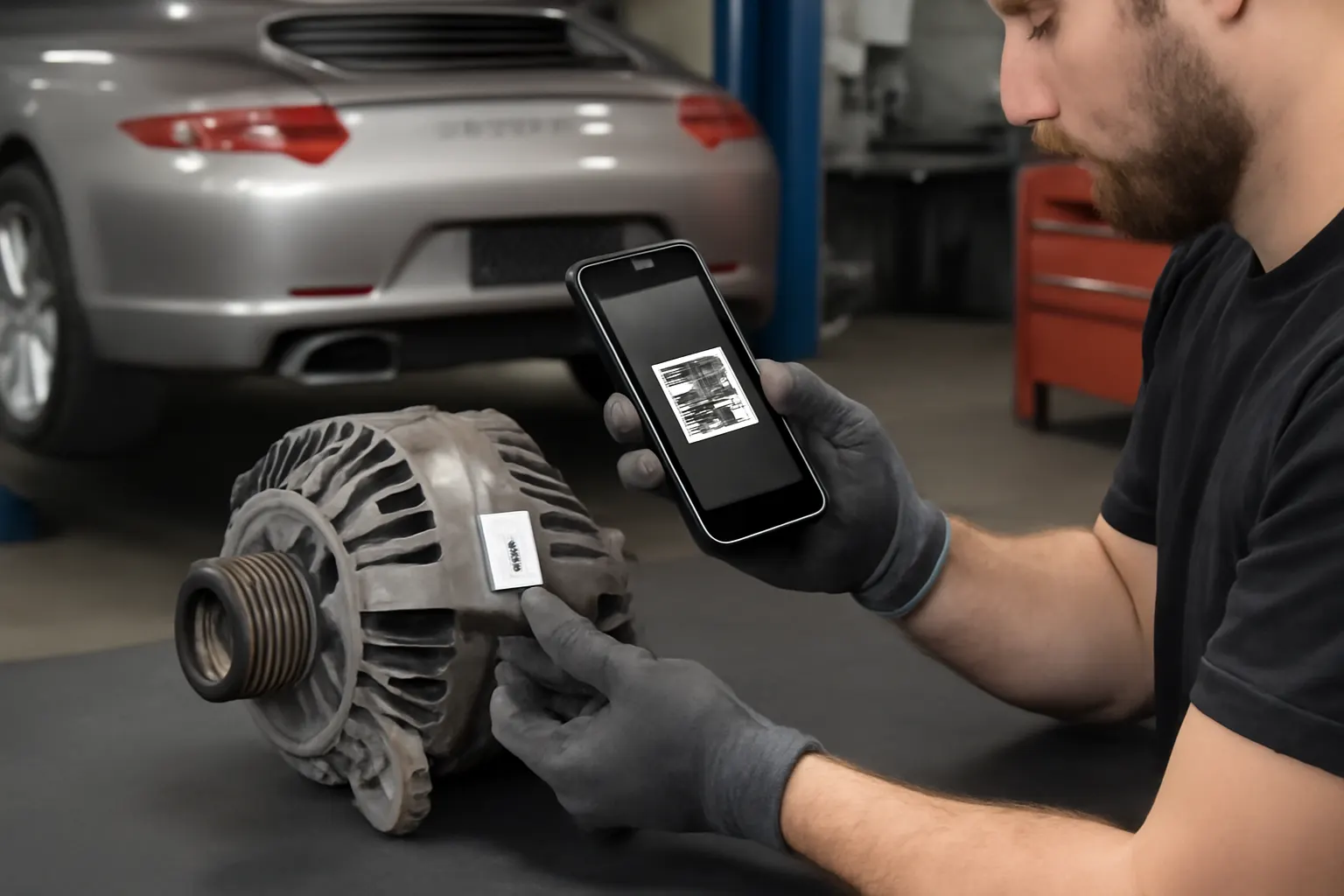
- Part Numbers and Barcodes: Authentic packaging includes precise part numbers, barcodes, and, in many cases, QR codes that can be verified against Porsche’s official parts catalog.
- Labels: Watch for spelling errors, inconsistent fonts, or missing Porsche logos—these are classic signs of counterfeiting.
2. Physical Quality and Markings
- Material Finish: Inspect the surface finish, paint, and casting quality. Genuine parts have a uniform, high-quality appearance.
- OEM Stamps: Look for Porsche logos, part numbers, and country-of-origin markings etched or stamped into the part itself.
- Weight and Dimensions: Counterfeit parts may feel lighter or heavier than expected and may not match the exact dimensions of the original.
3. Documentation and Provenance
- Certificate of Authenticity: Some high-value Porsche parts (such as body panels or electronics) are accompanied by a certificate or documentation verifying authenticity.
- Purchase Source: Only purchase from authorized Porsche dealerships, reputable suppliers, or trusted sources with clear return and verification policies.
Porsche Parts Authentication Checklist
Use the following checklist to systematically evaluate Porsche parts before purchase or installation:
| Authentication Step | What to Check | Pass/Fail |
|---|---|---|
| Packaging Quality | OEM branding, holograms, tamper seals | |
| Part Number Consistency | Matches Porsche EPC and vehicle application | |
| Label Accuracy | No spelling errors, clear Porsche logo | |
| Material Quality | Uniform finish, correct weight | |
| OEM Stamps/Markings | Porsche logo, part number, country of origin | |
| Documentation | Certificate of authenticity (if applicable) | |
| Supplier Reputation | Authorized dealer or reputable supplier | |
| Price Too Good to Be True? | Beware of significant underpricing | |
| Fitment Verification | Confirmed by Porsche fitment guide |
For detailed fitment information, consult our Porsche Fitment Guide: Model-Specific Parts Selection.
Using OEM Resources to Verify Porsche Parts
Porsche offers several resources to help owners and technicians authenticate parts:
- Porsche Electronic Parts Catalog (EPC): The official EPC allows users to cross-reference part numbers and applications for every Porsche model.
- Authorized Dealer Network: Only authorized Porsche dealerships and service centers have direct access to OEM parts databases and can confirm part authenticity.
- Official Porsche Website: Many parts can be verified using QR codes or serial numbers through Porsche’s online platforms.
- SAE and NHTSA Databases: For safety-critical components, consult the NHTSA equipment database and SAE standards to ensure compliance [NHTSA Equipment], [SAE Standards].
How to Avoid Common Counterfeit Porsche Parts
Counterfeiters are constantly evolving their tactics. Protect yourself with these best practices:
Buy Only from Trusted Sources
- Authorized Dealerships: The safest route is always through a Porsche dealer or authorized parts specialist.
- Reputable Online Retailers: If buying online, verify the seller’s credentials, return policy, and customer reviews.
- Avoid Unregulated Marketplaces: Be wary of listings on auction sites, classified ads, or unknown e-commerce platforms, especially if prices are far below market value.
Scrutinize Pricing
- Market-Consistent Pricing: Genuine Porsche parts command a premium. Deep discounts or “wholesale” pricing from unknown sellers is a red flag.
- Bundle Deals: Be cautious of bulk or bundle offers that mix genuine and non-genuine parts.
Inspect Before Installation
- Visual Inspection: Always inspect the part before installation, checking for the indicators listed above.
- Fitment Testing: Test-fit the component when possible before final installation.
Diagnostic Guidance: Identifying Installed Counterfeit Parts
Sometimes, a Porsche may already have counterfeit parts installed—especially if it was previously serviced outside the official network. Here’s how to diagnose potential issues:
- Unusual Wear or Failure: Premature failure of brakes, suspension, or engine components is a common sign.
- Check Engine Lights: Electronics or sensors that trigger warning lights may be non-genuine or incompatible.
- Fitment Issues: Parts that don’t align, require excessive force to install, or cause new noises may be counterfeit.
- Service Records: Review past service history for documentation of part sources.
If you suspect counterfeit parts, consult a Porsche-certified technician for a comprehensive inspection.
The Role of Regulatory Standards: SAE, NHTSA, and Porsche
Genuine Porsche parts are not only engineered to internal specifications but are also designed to meet or exceed industry and regulatory standards:
- SAE Standards: SAE International sets widely recognized benchmarks for materials, testing, and performance in automotive systems [SAE Standards].
- NHTSA Regulations: Safety-critical components must comply with federal regulations enforced by the NHTSA [NHTSA Equipment].
- Porsche Engineering: Porsche’s internal requirements often surpass industry minimums, ensuring superior performance and safety.
Counterfeit parts rarely, if ever, conform to these standards, making compliance verification a critical step in authentication.
Maintenance Risks: Hidden Costs of Counterfeit Parts
Using counterfeit parts may seem like a way to save money upfront, but the hidden costs can be severe:
- Accelerated Wear: Substandard materials lead to more frequent replacement cycles.
- Safety Hazards: Failure of critical systems can result in accidents or costly damage.
- Invalidated Insurance: Some insurers may deny claims if non-genuine parts are found after an accident.
- Diagnostic Complexity: Non-OEM electronics can cause persistent error codes and complicate future repairs.
For tips on keeping your Porsche in top shape, see our Porsche Maintenance: Preventing Common Issues.
Installation Guidance: Ensuring Proper Fitment
Even genuine Porsche parts require precise installation to perform optimally. Here’s how to ensure correct fitment:
- Follow OEM Procedures: Use Porsche’s official repair manuals and service bulletins.
- Torque Specifications: Adhere to recommended torque values for fasteners to avoid over- or under-tightening.
- Calibration: For electronic modules and sensors, follow OEM calibration procedures to ensure proper integration.
- Post-Installation Testing: Perform functional checks and road tests after installation.
For cooling system-specific installation tips, refer to Porsche Cooling System Replacement Best Practices.
Advanced Authentication: Serial Numbers and Digital Verification
Many newer Porsche parts now include advanced authentication features:
- QR Codes and RFID Tags: Scan these codes using Porsche’s official app or website to verify part origin.
- Digital Certificates: High-value components may feature digital authentication linked to your vehicle’s VIN.
- Blockchain Tracking: Select markets are piloting blockchain-based tracking for critical components, providing a tamper-proof record of origin and ownership.
Always utilize these technologies when available for the highest level of assurance.
Expert Solution Path: What To Do If You Suspect a Counterfeit Part
If you believe you have received or installed a counterfeit Porsche part:
- Cease Use Immediately: Do not operate the vehicle if the part is safety-critical (e.g., brakes, suspension).
- Contact an Authorized Porsche Dealer: Schedule an inspection and request part authentication.
- Report the Seller: Inform Porsche, NHTSA, and local authorities to help prevent further distribution.
- Replace with Genuine Parts: Remove and replace any suspect components with OEM-certified parts.
- Document Everything: Keep records of correspondence, receipts, and part numbers for your protection.
AutoPartEx Commitment: Trusted Source for Porsche Parts
At AutoPartEx, we understand the importance of authenticity, precision, and peace of mind for every Porsche owner. Our curated inventory features only genuine and OEM-certified Porsche parts, sourced directly from authorized suppliers and rigorously verified for quality and fitment. Our technical support team is ready to assist with authentication questions, fitment guidance, and installation best practices—empowering you to enjoy your Porsche as its engineers intended.
For a comprehensive selection of factory-fit Porsche components, visit our Porsche OEM Parts: Heritage, Engineering, and Precision Fitment hub.
Conclusion: Protecting Your Porsche Investment
In a landscape where counterfeit parts are increasingly sophisticated, knowledge and vigilance are your best defenses. By understanding the hallmarks of genuine Porsche parts, leveraging OEM resources, and insisting on trusted suppliers, you can safeguard your vehicle’s performance, safety, and value for years to come. Make authentication a routine part of your maintenance and repair process—your Porsche deserves nothing less.