OEM vs Aftermarket Hood Latches: What You Need to Know
When it comes to replacing a hood latch, the decision between OEM (Original Equipment Manufacturer) and aftermarket options can be more significant than many drivers realize. The hood latch is a critical safety component that ensures your vehicle’s hood remains securely closed during operation—failure can result in catastrophic safety hazards. This detailed guide from AutoPartEx delivers a practical, technical comparison of OEM vs aftermarket hood latches, focusing on fitment, quality, value, and the hidden pitfalls that can impact both safety and vehicle integrity. For a broader look at hood latch systems and their engineering, visit our Hood Latch Systems: Safety, Security, and Precision Engineering category page.
Immediate Answer: Which Hood Latch Should You Choose?
If absolute reliability, precise fitment, and manufacturer-grade safety are your top priorities, OEM hood latches remain the gold standard. They are engineered and tested to match your vehicle’s original specifications, often making them the safest bet for critical components like hood latches. However, high-quality aftermarket latches can offer comparable performance at a lower price point—if you know what to look for and how to avoid subpar products. The right choice depends on your vehicle’s age, your budget, and your willingness to invest time in careful product selection.
The Hidden Problem: Not All Latches Are Created Equal
The hood latch may seem like a straightforward part, but its role in vehicle safety is anything but trivial. Poor fitment, inconsistent locking mechanisms, and substandard materials in a replacement hood latch can result in accidental hood release at speed, risking driver visibility and causing severe accidents. According to the National Highway Traffic Safety Administration, equipment failures—including latches—are a critical focus of vehicle safety standards and recalls. Choosing the wrong latch can introduce hidden risks that only manifest under stress, such as during a collision or at highway speeds.
How OEM and Aftermarket Latches Differ: The Technical Landscape
Engineering Standards and Testing
OEM hood latches are designed and tested to meet the vehicle manufacturer’s specific requirements. This includes material strength, corrosion resistance, and precise tolerances for engagement and release mechanisms. They are also validated under industry standards such as those set by SAE International, ensuring consistent performance under a wide range of conditions.
Aftermarket latches, on the other hand, vary widely in quality. Reputable aftermarket manufacturers often reverse-engineer OEM parts and may even exceed original specifications, but lower-tier suppliers may cut corners on materials, tolerances, or testing. This variability can lead to issues with fitment, durability, and safety performance.
Materials and Corrosion Resistance
The material composition of a hood latch directly impacts its longevity and reliability. OEM latches typically use high-grade steel with protective coatings to resist corrosion, especially in areas exposed to moisture, road salt, and engine heat. The United States Department of Energy highlights the importance of materials technology for structural integrity and weight management in modern vehicles.
Aftermarket latches may use similar or inferior materials. Lower-quality latches often suffer from premature rusting, sticking, or failure of the spring and catch mechanisms. Always verify the material specifications and look for anti-corrosion treatments in any aftermarket option.
Fitment and Compatibility
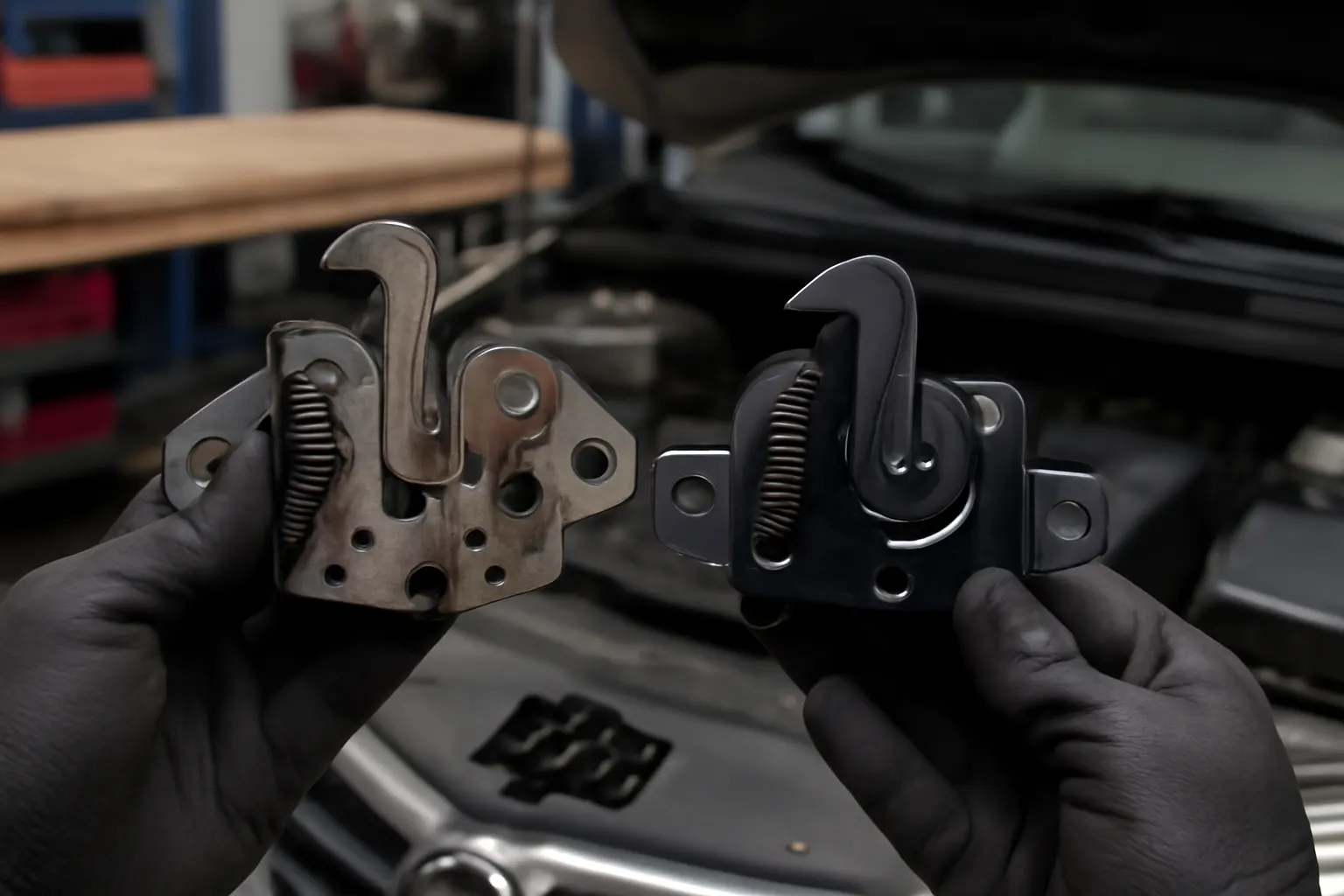
One of the most common complaints with aftermarket hood latches is imperfect fitment. OEM parts are made to exact specifications for your vehicle’s year, make, and model, ensuring seamless installation and operation. Aftermarket products may claim compatibility but can require adjustment, shimming, or modification to achieve proper alignment and secure closure.
Improper fitment can result in a hood that doesn’t close flush, rattles, or even pops open unexpectedly. For guidance on adjustment, see our Hood Latch Adjustment: Ensuring Proper Fit and Function.
Safety and Recall Considerations
OEM latches are subject to manufacturer recalls and regulatory oversight. If a defect is discovered, you’ll be notified and eligible for a free replacement. Aftermarket latches are less likely to be recalled unless they are part of a widespread safety issue. Always check the NHTSA recall database before purchasing any critical safety component.
Fitment Checklist: Ensuring Your Hood Latch Is the Right Match
Before purchasing and installing a new hood latch—OEM or aftermarket—use this fitment checklist to avoid common pitfalls:
- Verify Vehicle Application: Confirm the latch is designed for your exact year, make, and model.
- Compare Part Numbers: Cross-reference OEM part numbers with the replacement to ensure compatibility.
- Inspect Mounting Points: Check that all mounting holes and brackets match your vehicle’s hood and chassis.
- Latch Mechanism Alignment: Ensure the latch aligns correctly with the striker and secondary safety catch.
- Test Engagement: After installation, test the latch by gently pulling up on the hood to confirm secure engagement.
- Check Release Function: Operate the hood release lever inside the cabin to verify smooth operation.
- Evaluate Secondary Catch: Make sure the secondary safety catch engages and releases properly.
- Inspect for Interference: Look for any contact with adjacent components like the Air Box/Air Cleaner or radiator support.
The Value Equation: Cost vs. Quality
OEM Hood Latch Pricing
OEM hood latches are generally more expensive, reflecting the cost of engineering, material quality, and manufacturer branding. Prices can range from $60 to over $200 depending on the vehicle. While the initial investment is higher, the assurance of perfect fitment and compliance with manufacturer safety standards often justifies the cost—especially for newer vehicles or those under warranty.
Aftermarket Hood Latch Pricing
Aftermarket latches can cost as little as $20 to $80. The lower price is attractive, but buyers must be diligent about sourcing from reputable brands. The savings can quickly evaporate if a poorly fitting latch causes hood misalignment, rattling, or, worse, a safety incident.
When Does Aftermarket Make Sense?
- For older vehicles where OEM parts are discontinued or prohibitively expensive.
- As a temporary solution during repairs, provided the latch meets or exceeds OEM specifications.
- When upgrading or customizing, such as using performance or lightweight latches for motorsport applications (ensure compliance with safety regulations).
Quality Assurance: How to Vet Aftermarket Latches
Supplier Reputation
Always purchase from reputable suppliers with clear return policies and positive customer reviews. Look for brands that publish test data or certifications demonstrating compliance with SAE or equivalent standards.
Material and Construction
Inspect product descriptions for details on materials (e.g., high-tensile steel, zinc plating, stainless hardware). Avoid latches that use uncoated metals, plastic catches, or underspecified springs.
Warranty and Support
A robust warranty indicates confidence in product quality. Favor aftermarket latches with at least a 1-year warranty and accessible customer support.
Certification and Testing
Check for evidence of independent testing or certification. While not all aftermarket parts will carry OEM-level certifications, many reputable brands test their products for cycle durability, corrosion resistance, and impact performance.
Installation Process: DIY or Professional?
DIY Installation Steps
Replacing a hood latch is often within reach for experienced DIYers. Here’s an overview of the process:
- Safety First: Disconnect the battery to prevent accidental electrical shorts.
- Remove Old Latch: Unbolt the old latch from the hood or radiator support, disconnecting any release cables.
- Inspect Cable and Secondary Catch: Replace frayed cables or worn secondary catches.
- Install New Latch: Bolt the new latch in place, ensuring all mounting points align.
- Reconnect Release Cable: Attach and test the cable for smooth operation.
- Test Fitment: Gently close the hood and test for secure engagement and release.
- Fine Tune: Adjust latch position as needed for perfect alignment.
For a detailed walkthrough, see our How to Diagnose and Replace a Faulty Hood Latch guide.
When to Seek Professional Help
- If the latch mounting points are damaged or misaligned.
- If the release cable is routed through complex trim or firewall grommets.
- If you lack the tools or experience to safely test and adjust the latch.
- For vehicles with advanced hood sensors or integrated security systems.
Maintenance Tips for Long-Term Reliability
Proper maintenance can extend the life of any hood latch, OEM or aftermarket:
- Lubricate Moving Parts: Use a dry lubricant or light grease on latch pivots and springs every 6-12 months.
- Inspect for Corrosion: Check for rust or pitting, especially after winter driving.
- Monitor Cable Condition: Replace frayed or sticky release cables promptly.
- Test Regularly: Open and close the hood monthly to ensure smooth operation and secondary catch engagement.
- Clean Surrounding Area: Remove debris or buildup that could interfere with latch movement.
Diagnosing Hood Latch Issues: Symptoms and Solutions
Common hood latch problems include:
- Hood Won’t Close or Stay Shut: Check for misalignment, worn springs, or bent latch arms.
- Hood Release Stuck or Non-Functional: Inspect the cable for binding, fraying, or detachment.
- Hood Pops Open Unexpectedly: Verify both primary and secondary catches are engaging. Replace weak springs or corroded components.
- Rattling or Vibration: Ensure all bolts are tight and the latch is correctly aligned with the striker.
For more on the risks of a failing latch, read The Hidden Dangers of a Failing Hood Latch.
Safety and Regulatory Compliance
Why Compliance Matters
Hood latches are regulated safety components. According to NHTSA Vehicle Safety and Equipment, all replacement latches must meet minimum standards for strength, durability, and failure prevention. Non-compliant latches can jeopardize not only your safety but also vehicle inspection status and insurance coverage.
How to Ensure Compliance
- Purchase from Trusted Sources: Major retailers and certified auto parts distributors are more likely to sell compliant parts.
- Check for Recalls: Before installing any latch, OEM or aftermarket, consult the NHTSA recall database for known issues.
- Verify Documentation: Look for packaging or documentation indicating compliance with federal or SAE standards.
Real-World Scenarios: When Each Option Makes Sense
OEM Latch: Best for Daily Drivers and Newer Vehicles
If your vehicle is less than 10 years old, under warranty, or used as a daily driver, the safest choice is an OEM latch. The peace of mind from perfect fitment and manufacturer-backed safety is worth the investment.
Aftermarket Latch: Viable for Older Vehicles and Budget Repairs
For vehicles out of warranty or those with discontinued OEM support, high-quality aftermarket latches offer a practical solution. Just be meticulous in your selection process, prioritizing safety and documented performance.
Specialty Applications: Performance and Custom Builds
Some aftermarket latches are designed for motorsport or off-road use, offering lightweight construction or quick-release functionality. Always ensure these specialty latches meet or exceed the original safety requirements for your intended use.
The AutoPartEx Advantage: Trusted Guidance and Parts
At AutoPartEx, we understand that safety, fitment, and value are paramount when choosing a hood latch. Our curated selection of both OEM and rigorously vetted aftermarket latches ensures you get the right part for your vehicle—without compromise. Our technical guides, such as How to Diagnose and Replace a Faulty Hood Latch, empower you to make informed installation and maintenance decisions.
Explore our Hood Latch Systems: Safety, Security, and Precision Engineering category for more insights and the latest parts, or browse by manufacturer for tailored recommendations.
Conclusion: Making the Right Choice for Your Vehicle
The decision between OEM and aftermarket hood latches hinges on your priorities: uncompromising safety and fitment (OEM), or cost-effective, well-researched alternatives (aftermarket). By understanding the technical differences, vetting your options, and following best practices for installation and maintenance, you can confidently secure your hood—and your safety—for the road ahead.