OEM vs. Aftermarket ECUs: What You Need to Know
When it comes to replacing or upgrading your vehicle’s engine computer (ECU/ECM), one of the most crucial decisions you’ll face is whether to choose an Original Equipment Manufacturer (OEM) unit or an aftermarket alternative. The right choice can mean the difference between seamless performance and ongoing headaches. This guide provides a clear, practical comparison of OEM and aftermarket ECUs, focusing on quality, compatibility, diagnostics, and performance, so you can make an informed decision for your vehicle. For a broader look at engine computer systems and their role in modern vehicles, see our Engine Computer (ECU/ECM) Technical Guide: Diagnostics, Replacement, and Performance Insights.
The Immediate Answer: OEM vs. Aftermarket ECUs at a Glance
- OEM ECUs are produced by the vehicle’s original manufacturer or their licensed suppliers, designed to work seamlessly with your specific make, model, and year.
- Aftermarket ECUs are produced by third-party companies and may offer additional features or cost savings, but can introduce challenges in compatibility, diagnostics, and vehicle integration.
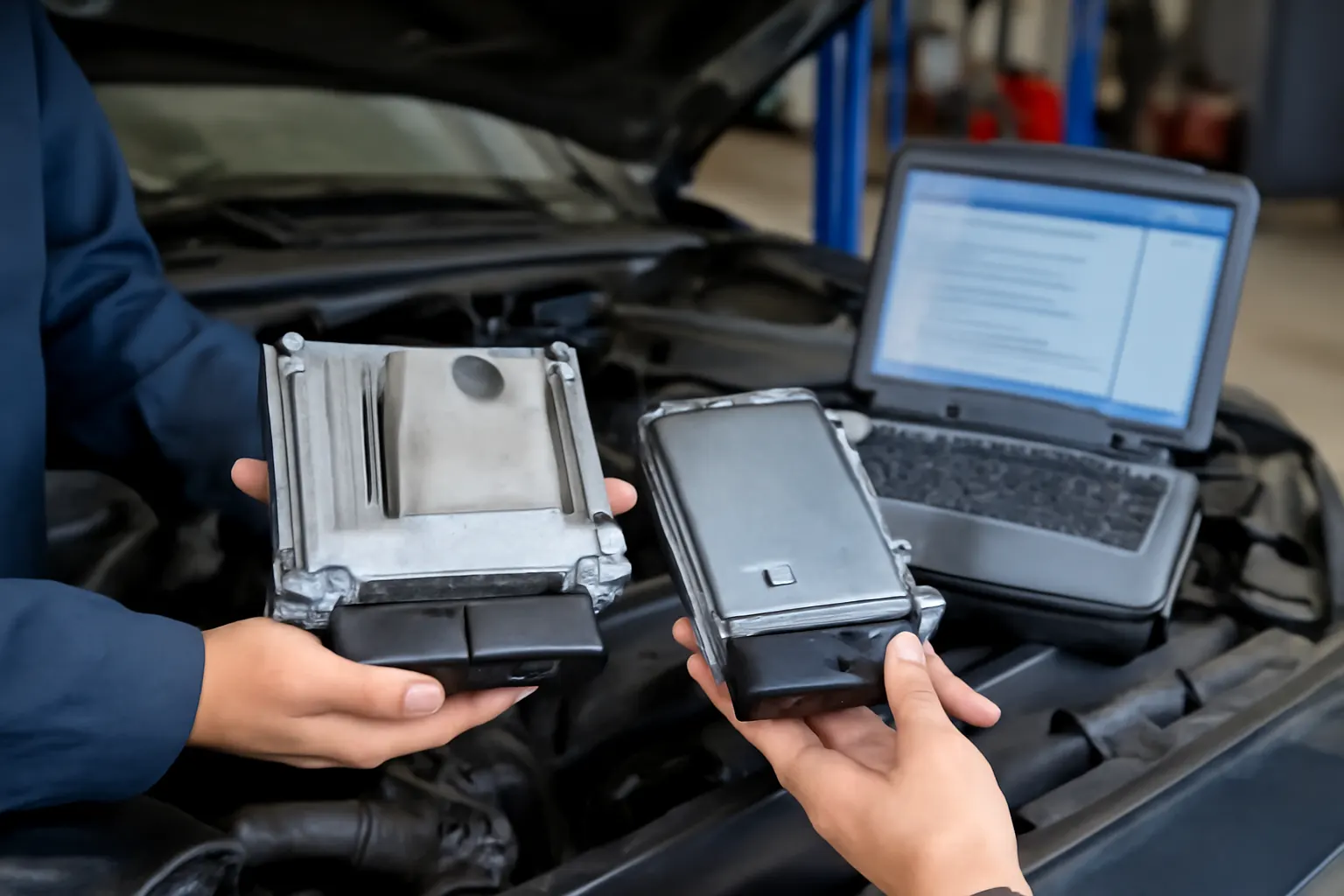
If your priority is guaranteed fitment, factory-level integration, and maintaining original driving characteristics, OEM is typically the safest route. If you’re seeking custom tuning, performance enhancements, or cost savings—and are willing to navigate potential hurdles—aftermarket ECUs might be your solution.
The Hidden Problem: It’s Not Just Plug-and-Play
Choosing between OEM and aftermarket ECUs isn’t as simple as comparing price tags or feature lists. The hidden complexity lies in:
- Compatibility with vehicle systems (immobilizers, security, emissions, sensors)
- Quality assurance and reliability
- Diagnostic support and troubleshooting
- Long-term parts availability and support
- Impact on safety systems and compliance
Vehicle electronics have become highly integrated. An ECU that “fits” physically may not communicate properly with other modules or may trigger error codes, limp modes, or even safety recalls. The result? A seemingly minor decision can cascade into diagnostic puzzles, drivability issues, or costly secondary repairs.
Understanding the Engine Computer’s Role
The ECU (Engine Control Unit) or ECM (Engine Control Module) is the brain of your vehicle’s powertrain. It manages:
- Fuel injection and air-fuel mixture
- Ignition timing and spark control
- Variable valve timing and emissions systems
- Idle speed and throttle response
- Interaction with transmission, ABS, and stability controls
Modern ECUs also handle anti-theft, adaptive learning, and “drive-by-wire” systems. This central role means any misstep in ECU selection or installation can have far-reaching effects on performance, fuel efficiency, and safety. According to the National Highway Traffic Safety Administration (NHTSA), the reliability and safety of replacement parts—including ECUs—are critical for maintaining vehicle safety and compliance.
OEM ECUs: Factory Fit, Predictable Results
What Are OEM ECUs?
OEM ECUs are either the exact unit installed at the factory or an identical replacement built to the original specifications. They are supplied by the automaker or their licensed parts partners, ensuring:
- Exact hardware and software match
- Tested for compatibility with your VIN, engine, and transmission codes
- Compliance with manufacturer and federal safety standards
Pros of OEM ECUs
- Guaranteed Compatibility: OEM ECUs are programmed for your specific vehicle configuration—no guesswork or custom wiring.
- Full Diagnostic Support: Dealership and professional scan tools can access all data and perform advanced functions.
- Reliability: Built to strict quality standards and subjected to rigorous testing; less risk of early failure or random glitches.
- Regulatory Compliance: Meets all original safety, emissions, and performance standards set by NHTSA and EPA.
- Software Updates: Eligible for manufacturer software updates and recalls.
Cons of OEM ECUs
- Cost: Typically more expensive than aftermarket options.
- Limited Customization: Locked to factory settings; custom tuning often not supported without specialized reprogramming.
- Availability: For older or rare vehicles, OEM ECUs may be discontinued or backordered.
Aftermarket ECUs: Flexibility, Tuning, and Trade-Offs
What Are Aftermarket ECUs?
Aftermarket ECUs are designed and manufactured by third-party companies. They come in two main types:
- Direct Replacement: Intended to mimic OEM functionality at a lower cost.
- Standalone/Programmable: Offer advanced tuning, custom features, and support for performance modifications.
Pros of Aftermarket ECUs
- Cost Savings: Direct-replacement units often cost less than OEM.
- Custom Features: Programmable ECUs allow for tuning, forced induction, and support for engine swaps.
- Availability: Options for discontinued or rare vehicles may exist when OEM is unavailable.
- Performance Potential: Unlocks features not available in factory ECUs, such as launch control, boost mapping, or flex-fuel tuning.
Cons of Aftermarket ECUs
- Compatibility Risks: May require custom wiring, sensor adapters, or additional programming.
- Diagnostic Limitations: Some aftermarket ECUs are not fully compatible with factory scan tools or OBD-II diagnostics.
- Quality Variability: Standards differ widely; some units may have lower reliability or limited support.
- Regulatory and Safety Concerns: Not all aftermarket ECUs meet NHTSA safety or EPA emissions standards.
Quality and Reliability: What the Data Says
The NHTSA emphasizes that safety and equipment quality are non-negotiable for critical components like ECUs. OEM ECUs are subject to manufacturer recalls, federal safety standards, and rigorous testing (NHTSA Equipment). Aftermarket ECUs, while sometimes tested to similar standards, may not go through the same level of scrutiny. Issues such as water ingress, thermal cycling, and electromagnetic interference can all affect longevity.
Checklist: Key Quality Considerations
- Is the ECU certified to meet OEM or SAE standards?
- Has it been tested for your specific vehicle application?
- Does the manufacturer provide a warranty or technical support?
- Are there documented cases of recalls or common failures?
- Does it comply with emissions and safety regulations?
Compatibility: The Devil Is in the Details
Hardware and Software Matching
Modern vehicles use a network of control modules. The ECU must communicate with:
- Transmission control modules
- ABS and stability control
- Airbag and body control modules
- Immobilizer and anti-theft systems
A mismatch in hardware version, firmware, or immobilizer coding can prevent the vehicle from starting or cause persistent warning lights.
VIN and Immobilizer Programming
OEM ECUs are typically “plug and play” but may still require immobilizer programming or VIN matching. Many aftermarket ECUs require manual programming, and some may not support immobilizer functions at all—posing a theft risk or causing starting issues.
Emissions and Inspection Readiness
Some aftermarket ECUs do not support all OBD-II readiness monitors, which can cause your vehicle to fail emissions testing or trigger check engine lights.
Performance: Factory Baseline vs. Custom Potential
OEM Performance
OEM ECUs are calibrated for a balance of performance, fuel efficiency, emissions, and reliability. They are optimized for:
- Factory engine and drivetrain configuration
- Standard fuel and environmental conditions
- Longevity and consistent drivability
Aftermarket Performance
Aftermarket programmable ECUs can deliver:
- Higher power outputs (with supporting modifications)
- Custom ignition and fuel maps
- Support for turbo/superchargers, nitrous, or engine swaps
However, aggressive tuning can compromise reliability, fuel efficiency, and emissions. The U.S. Department of Energy notes that factory calibrations are designed for optimal fuel efficiency and emissions compliance, which may be altered by aftermarket tuning.
Diagnostics and Troubleshooting: Tools and Support
OEM ECUs
- Compatible with dealership and advanced scan tools
- Support for all manufacturer-specific diagnostic codes and procedures
- Full access to data streams for troubleshooting
Aftermarket ECUs
- May require proprietary software or hardware for tuning and diagnostics
- Limited compatibility with factory scan tools
- Some universal codes may be unsupported, complicating repairs
For more on diagnostics, see our guide: How to Diagnose ECU and Sensor Failures.
Installation: What to Expect
OEM ECU Installation
- Remove battery power to prevent electrical damage.
- Unplug old ECU (usually under the hood or dashboard).
- Install new OEM ECU—connect all harnesses securely.
- Program immobilizer/VIN if required (may need dealer or advanced scan tool).
- Clear error codes and verify vehicle starts and runs as expected.
Aftermarket ECU Installation
- Remove battery power.
- Unplug old ECU.
- Install new ECU—may require custom harness or adapters.
- Program ECU via proprietary software (for standalone/tunable units).
- Configure sensors and base maps.
- Test all vehicle systems for compatibility and error codes.
Installation Checklist
- Confirm ECU part number compatibility with your vehicle’s VIN and engine code.
- Verify immobilizer and anti-theft system compatibility.
- Have access to required programming or tuning software.
- Test all vehicle systems (engine, transmission, ABS, airbag) after installation.
- Save original ECU in case of issues or for future reference.
Maintenance and Support: What Happens After Installation?
OEM ECU Support
- Covered by manufacturer warranty (if new or remanufactured)
- Eligible for software updates and recalls
- Supported by dealer and independent repair shops
Aftermarket ECU Support
- Warranty terms vary widely by manufacturer
- Support may be limited to online forums or the vendor
- Software updates may be less frequent or require additional purchase
Tip: Always keep documentation of your ECU purchase, programming steps, and any software used. This is vital for future diagnostics or resale.
Buying Guidance: How to Make the Right Choice
Step 1: Identify Your Needs
- Is your goal to restore original performance and reliability?
- Are you planning performance upgrades or custom tuning?
- Is your vehicle daily-driven, a track car, or a project build?
Step 2: Research Compatibility
- Use your VIN, engine code, and transmission type to verify fitment.
- Check for immobilizer and emissions requirements in your region.
Step 3: Source from Trusted Vendors
- For OEM, buy from authorized dealerships or reputable parts suppliers.
- For aftermarket, research manufacturer reputation, support, and user reviews.
Step 4: Plan for Diagnostics
- Ensure you have access to the necessary scan tools or tuning software.
- Consider future maintenance and troubleshooting needs.
Step 5: Evaluate Cost vs. Risk
- Factor in potential hidden costs (programming, adapters, labor, failed emissions tests).
- Weigh savings against potential downtime or drivability issues.
Real-World Scenarios: When Each Option Makes Sense
When to Choose OEM
- Your vehicle is under factory warranty.
- You want the highest assurance of compatibility and reliability.
- Your vehicle must pass strict emissions or safety inspections.
- You have a late-model vehicle with advanced integration (ADAS, drive-by-wire, etc.).
When to Consider Aftermarket
- OEM ECU is discontinued, backordered, or prohibitively expensive.
- You need custom tuning for engine swaps or major performance upgrades.
- Your vehicle is a dedicated race or off-road build, not subject to emissions testing.
- You have access to tuning expertise and diagnostic resources.
Common Pitfalls and How to Avoid Them
- Buying “universal” ECUs for a complex, modern vehicle: Always match part numbers and check for immobilizer compatibility.
- Skipping immobilizer/VIN programming: This can lead to start failures or anti-theft lockouts.
- Ignoring emissions and safety compliance: Failing an inspection can result in costly repairs or legal issues.
- Assuming all aftermarket ECUs are “plug and play”: Many require substantial wiring and programming effort.
AutoPartEx Expert Action: Your Next Steps
At AutoPartEx, our technical team recommends starting with a clear understanding of your vehicle’s needs and your long-term goals. For most daily-driven vehicles, especially those within the last decade, OEM ECUs offer the highest assurance of trouble-free operation. For custom builds or performance projects, reputable aftermarket ECUs can deliver transformative results—but only with careful planning, installation, and ongoing support.
We offer a curated selection of OEM and high-quality aftermarket engine computers, along with detailed fitment guides and access to Programming and Adapting Replacement ECUs. Our team is available to help you match the right ECU to your application and provide resources for diagnostics, installation, and tuning.
For more in-depth information on how engine computers have evolved and their impact on modern vehicles, see The Evolution of Engine Computers: From Analog to Digital.
Conclusion
The decision between OEM and aftermarket ECUs is more than a question of price—it’s about balancing reliability, performance, compatibility, and long-term support. By understanding the unique advantages and trade-offs of each option, you can make an informed choice that aligns with your vehicle’s requirements and your automotive goals.
For further reading, technical guides, and a full catalog of compatible ECUs, visit our Engine Computer (ECU/ECM) Technical Guide: Diagnostics, Replacement, and Performance Insights.