Advertisement
When your vehicle’s front end sustains damage or corrosion, few parts are as critical to address as the radiator core support. As the structural backbone for your cooling system, this component directly affects radiator and condenser alignment, crash safety, and even long-term fuel efficiency. The choice between OEM (Original Equipment Manufacturer) and aftermarket radiator core supports is more than a matter of price—it’s a decision that impacts fitment, material quality, and the durability of your entire front-end assembly. In this guide, AutoPartEx delivers a comprehensive, technical comparison to help you make the right choice for your vehicle, whether you’re restoring a daily driver or rebuilding after a collision.
If you’re new to radiator core supports or want to understand their role in the broader system, start by reviewing our Radiator Core Support: The Backbone of Front-End Cooling and Structural Integrity category overview.
Immediate Answer: OEM vs. Aftermarket—Which One Should You Choose?
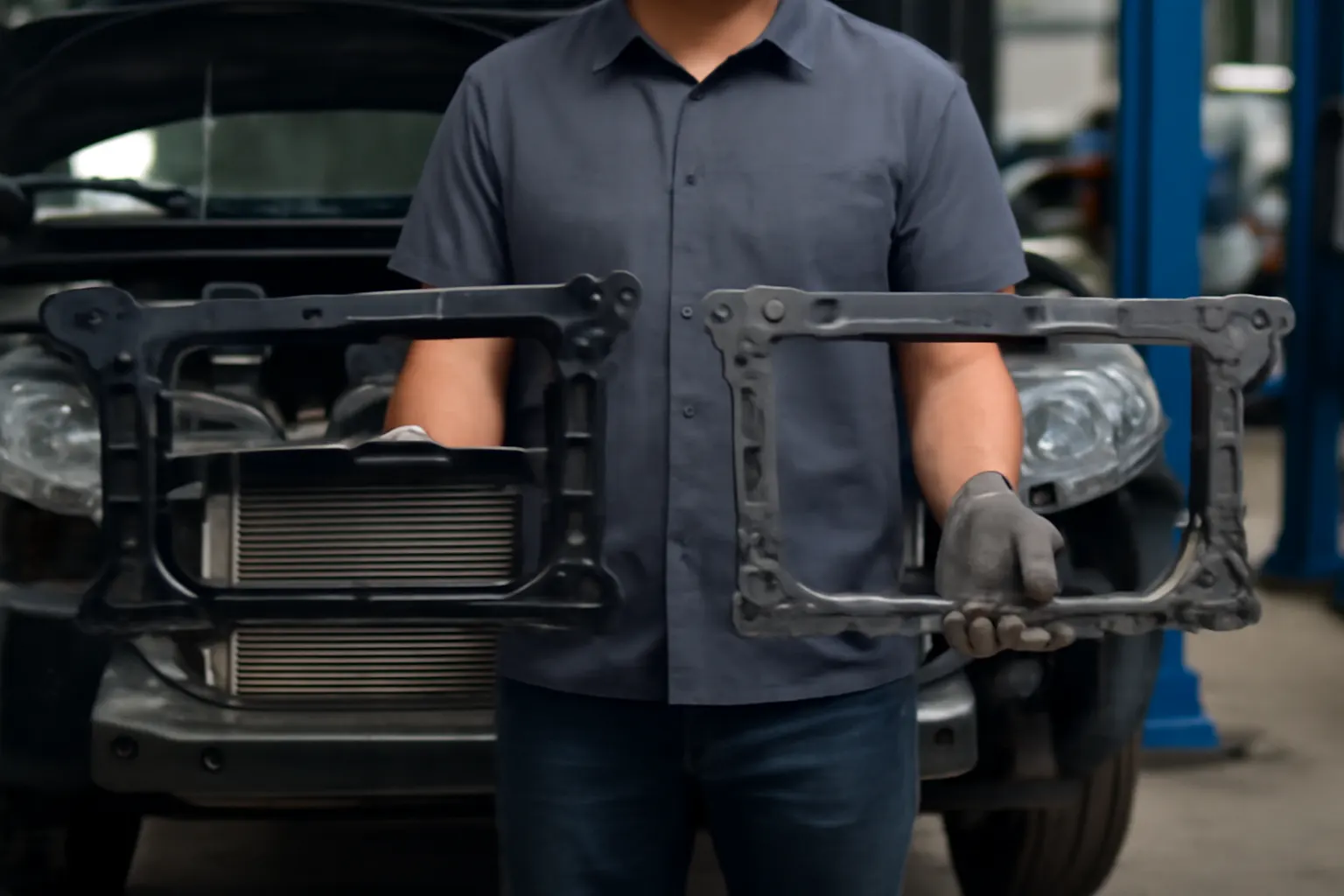
OEM radiator core supports are engineered to the exact specifications of your vehicle’s manufacturer, ensuring precise fitment, tested material quality, and compliance with all original safety standards. Aftermarket supports, on the other hand, offer a wide range of price points and material choices, but can vary significantly in fit, finish, and long-term reliability.
Choose OEM if:
- You demand perfect fitment and original crash safety.
- Material quality and corrosion resistance are top priorities.
- You want seamless integration with adjacent parts (radiator, condenser, AC components).
Consider high-quality aftermarket if:
- You’re budget-conscious but willing to research reputable brands.
- Your vehicle is older, and OEM parts are scarce or cost-prohibitive.
- You are prepared to verify fitment and possibly modify mounting points.
Hidden Problem: Not All Core Supports Are Created Equal
While many assume a radiator core support is a simple, interchangeable bracket, the reality is far more complex. The hidden problem is that subtle differences in design, material, and construction quality can have cascading effects, from radiator leaks to misaligned headlights and compromised crashworthiness.
Some aftermarket supports cut corners on material gauge, corrosion protection, or welding quality. These shortcuts can lead to premature rust, structural fatigue, and even failure to absorb impact energy in a collision. Meanwhile, even an OEM part can be problematic if it’s a “service replacement” with design updates that differ from your vehicle’s production run.
Problem Expansion: The Technical Stakes of Core Support Selection
The Role of the Radiator Core Support
The radiator core support is not just a mounting bracket. It serves multiple structural and functional roles:
- Structural Integrity: Forms the front crossmember, tying together frame rails, fenders, and the upper/lower radiator mounts.
- Cooling System Alignment: Precisely positions the radiator, AC condenser, and sometimes the AC compressor for optimal airflow.
- Crash Safety: Acts as part of the vehicle’s front crumple zone, engineered to deform in a controlled manner.
- Accessory Mounting: Provides attachment points for headlights, grilles, and hood latches.
Material Science and Manufacturing Differences
According to the U.S. Department of Energy’s Materials Technologies research, modern core supports are engineered from a blend of high-strength steel, aluminum, and sometimes composites for weight reduction and performance. OEMs use computer-aided design and rigorous testing to ensure compatibility with crash standards and long-term corrosion resistance.
Aftermarket manufacturers, however, may use lower-grade steel, thinner gauge, or substitute materials to cut costs. Welds may not meet OEM standards, and corrosion protection (galvanizing, e-coating) can be inconsistent.
Safety and Regulatory Implications
The National Highway Traffic Safety Administration (NHTSA) requires all vehicle safety equipment, including structural components like core supports, to meet minimum safety standards. However, not all aftermarket parts are subject to the same level of scrutiny or testing as original equipment.
Advertisement
Key Comparison: Fitment, Material Quality, and Durability
1. Fitment
- OEM: Guaranteed to match original mounting points, radiator and condenser alignment, and hood latch geometry.
- Aftermarket: May require slotting holes, bending tabs, or shimming to achieve proper fit. Poor fitment can lead to radiator leaks, misaligned body panels, or compromised hood latching.
2. Material Quality
- OEM: Uses manufacturer-specified steel or aluminum alloys, thickness, and corrosion protection.
- Aftermarket: Material quality varies; some reputable brands match OEM specs, but lower-cost options may use thinner, softer metals or skip rustproof coatings.
3. Durability
- OEM: Designed for the vehicle’s expected service life, with proven resistance to fatigue and rust.
- Aftermarket: Durability depends on manufacturing standards; some supports rust or crack within a few years, especially in harsh climates.
Diagnostic Checklist: Is Your Core Support Failing?
Before deciding on OEM or aftermarket, use this checklist to diagnose core support issues:
Visual Inspection:
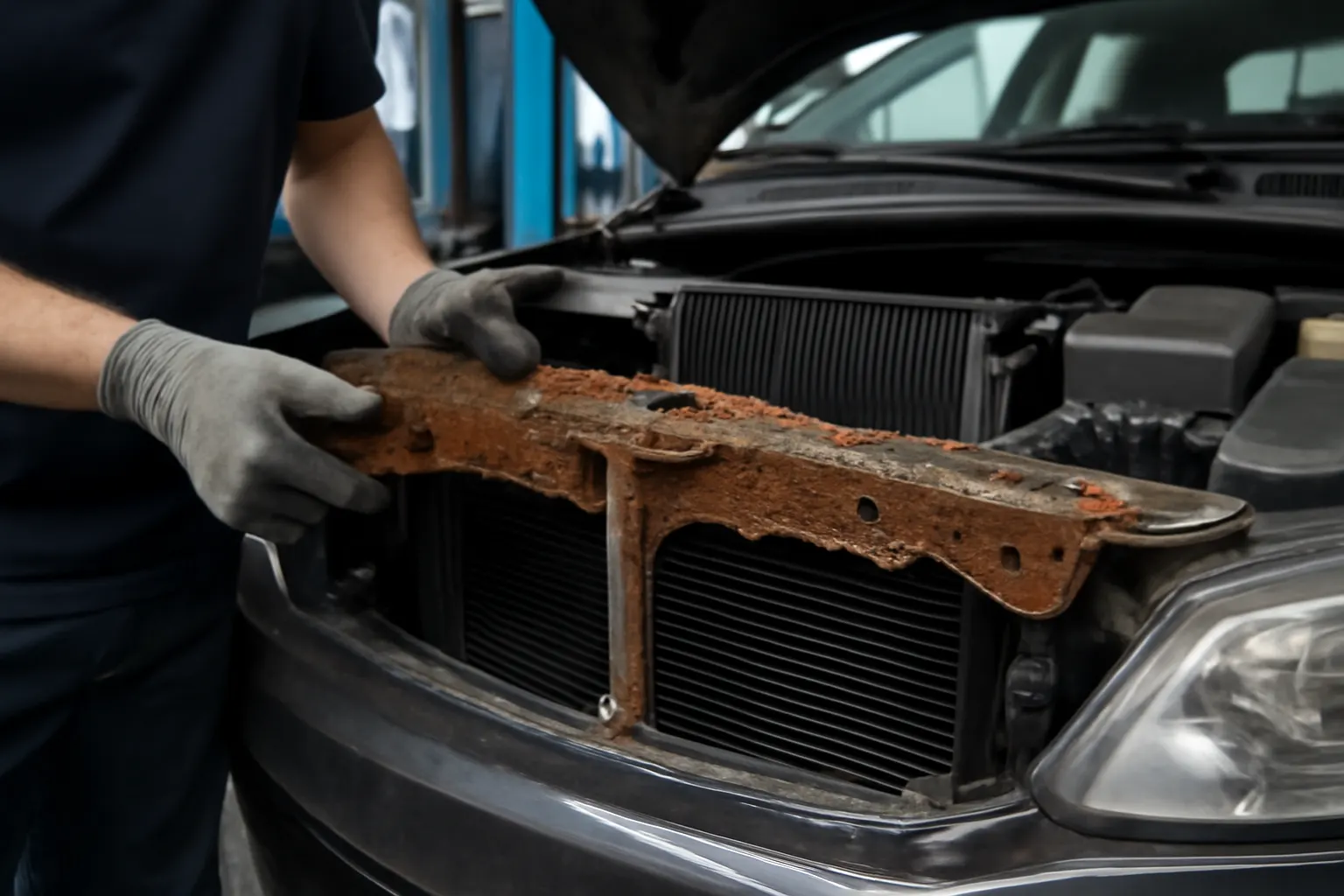
- Look for visible rust, cracks, or bent sections.
- Inspect weld points for separation or fatigue.
- Check for missing or broken mounting tabs.
Fitment Issues:
- Radiator or condenser does not sit flush or is loose.
- Hood latch misalignment or difficulty closing the hood.
- Headlights, grille, or bumper gaps appear uneven.
Cooling and AC Performance:
- Overheating or AC system inefficiency due to misaligned components.
- Unusual vibrations or noises from the front end.
Crash Damage:
- Evidence of previous accident repair (non-factory welds, uneven paint).
- Core support appears twisted or distorted.
If you observe any of the above, replacement is likely necessary. For guidance on related issues, see How to Diagnose Front-End Cooling Issues.
The OEM Advantage: Precision Engineering and Proven Reliability
OEM radiator core supports are engineered as a structural component of your vehicle’s front end. Here’s what sets them apart:
- Exacting Tolerances: OEM parts are built to millimeter-precise specifications, ensuring that all bolt holes, tabs, and mounting surfaces line up perfectly with adjacent components.
- Material Traceability: Automakers source metals and coatings that meet strict standards for strength, ductility, and corrosion resistance, as detailed by the U.S. Department of Energy.
- Crash Testing: OEM core supports are crash-tested as part of the complete vehicle structure, ensuring they deform predictably in an accident.
- Integrated Design: All accessory mounting points, from the air box/air cleaner to the hood latch, are located exactly as intended, reducing the risk of misalignment.
The Aftermarket Landscape: Pros, Cons, and Quality Spectrum
Not all aftermarket radiator core supports are created equal. The aftermarket segment ranges from high-quality, OE-style replacements to budget products with questionable engineering.
Pros:
- Cost Savings: Aftermarket supports often cost 30–60% less than OEM.
- Availability: Wider selection, especially for older or discontinued models.
- Material Innovation: Some reputable brands use advanced materials or coatings, sometimes exceeding OEM corrosion resistance.
Cons:
- Variable Fitment: Even “direct fit” parts may require adjustment.
- Inconsistent Quality: Lower-cost options may use thinner metals, skip surface treatments, or have poor welds.
- Limited Testing: Most aftermarket supports are not crash-tested as part of the full vehicle structure.
Tip: Research brands thoroughly. Look for aftermarket suppliers that are certified to ISO/TS 16949 or SAE standards (SAE International).
Installation Realities: What to Expect with OEM and Aftermarket Core Supports
OEM Installation
- Plug-and-Play: All mounting points line up with minimal adjustment.
- Faster Labor: Technicians can install OEM supports quickly, reducing labor costs.
- Predictable Outcomes: Less risk of misaligned panels, radiator leaks, or hood latch issues.
Aftermarket Installation
- Test Fit Required: Always dry-fit the support before fully bolting in place.
- Potential Modifications: May require slotting holes, adding shims, or adjusting tabs.
- Accessory Alignment: Double-check radiator, condenser, hood latch, and headlight alignment before final tightening.
Installation Checklist:
- Compare new support with old for all mounting points.
- Test fit radiator, condenser, and hood latch before final install.
- Torque all fasteners to manufacturer specifications.
- Apply anti-corrosion compound to bare metal after installation.
For advanced alignment tips, see Radiator and Condenser Alignment Best Practices.
Advertisement
Corrosion and Longevity: Why Material and Coating Matter
One of the most common failure points for both OEM and aftermarket core supports is corrosion, especially in salt-belt regions. The DOE’s Materials Technologies program emphasizes the importance of galvanizing, e-coating, and proper metal selection for longevity.
OEM Approach
- Galvanized or e-coated steel for maximum rust resistance.
- Seam-sealed welds to prevent moisture intrusion.
- Consistent paint finish to match the original vehicle.
Aftermarket Approach
- Varies by brand: Some use bare steel or minimal primer, which rusts quickly.
- Premium lines: May offer zinc-coated or powder-coated options, but always verify.
Expert Tip: If using an aftermarket support, consider applying additional rust protection before installation.
Safety Implications: Crashworthiness and Regulatory Compliance
Crash safety is a non-negotiable factor in core support selection. According to the NHTSA, structural components like radiator core supports are integral to a vehicle’s ability to absorb and redirect crash forces.
- OEM supports are tested as part of the complete front-end crash structure.
- Aftermarket supports may not be crash-tested, and differences in material or geometry can alter crumple zone behavior.
Warning: Using a low-quality aftermarket support can compromise airbag deployment timing, occupant protection, and even insurance claim outcomes.
Sourcing Strategies: How to Choose the Right Core Support
Step 1: Identify Your Vehicle Specs
- VIN number (for precise trim and build date)
- Engine and cooling package
- AC and accessory configuration
Step 2: Research Part Numbers
- OEM part number from dealer or manufacturer’s parts catalog
- Cross-reference with reputable aftermarket brands
Step 3: Evaluate Aftermarket Brands
- Look for certifications (ISO/TS, SAE)
- Read technical reviews and user feedback
- Compare material gauge, coating, and weld quality
Step 4: Inspect Before Installing
- Match all mounting points and dimensions to your old support
- Check for full welds and uniform coating
- Test fit with radiator, condenser, and hood latch
Maintenance and Longevity: Keeping Your Core Support in Top Condition
Proper maintenance extends the life of your core support, whether OEM or aftermarket:
- Regularly inspect for rust, cracks, or loose fasteners.
- Clean debris from radiator and condenser mounts to prevent moisture buildup.
- Touch up paint or apply rust inhibitor to any exposed metal.
- After a collision, always check the core support, even if the damage appears minor.
For rust prevention tips, see The Hidden Dangers of Rusted Core Supports.
The Bottom Line: Making the Right Choice for Your Vehicle
- For late-model vehicles or daily drivers: OEM is the gold standard for fitment, safety, and long-term value.
- For older vehicles or budget builds: High-quality aftermarket supports can be a smart choice, but require careful vetting.
- Never compromise on material quality or fitment: The cost savings of a cheap support can be wiped out by premature failure, radiator leaks, or compromised safety.
Remember, the radiator core support is more than a mounting bracket—it’s a structural and safety-critical component.
AutoPartEx Positioning: Your Partner in Informed Core Support Replacement
At AutoPartEx, we bridge the gap between technical accuracy and practical guidance. Our experts rigorously vet both OEM and aftermarket radiator core supports, ensuring you have access to components that meet or exceed industry standards. Whether you’re shopping by manufacturer—such as Acura or AMC—or by part category, we provide detailed fitment data, material specs, and installation resources to support your repair or restoration project.
Expert Action: Next Steps for Your Core Support Replacement
- Diagnose your current core support using the checklist above.
- Research OEM and high-quality aftermarket options using your vehicle’s exact specifications.
- Inspect all parts before installation for material and weld quality.
- Follow best practices for installation, alignment, and rust protection.
- Consult AutoPartEx for technical support, sourcing, and detailed guides tailored to your vehicle.
Take action now: Review our Radiator Core Support: The Backbone of Front-End Cooling and Structural Integrity hub to begin your replacement journey with confidence.
References
Advertisement