Mitsubishi Outlander Hybrid: Battery & Electrical Parts Guide
The Mitsubishi Outlander Plug-in Hybrid Electric Vehicle (PHEV) stands out for its efficiency, innovative drivetrain, and unique electrical architecture. Owners and technicians face a new set of challenges when it comes to sourcing, diagnosing, and maintaining battery and electrical parts for this advanced platform. This comprehensive guide delivers immediate, actionable answers on Outlander Hybrid battery and electrical service, best sourcing practices, and the long-term considerations that every hybrid owner and technician should know.
If you’re looking for genuine or high-quality aftermarket Mitsubishi Outlander Hybrid parts, visit our Mitsubishi Auto Parts: Genuine OEM & Aftermarket Solutions | AutoPartEx page for the widest selection and up-to-date fitment data.
Fast Answers: What Makes Outlander PHEV Electrical Parts Unique?
The Mitsubishi Outlander Hybrid’s dual-motor AWD system, high-voltage lithium-ion battery, and complex power electronics set it apart from conventional SUVs. Here’s what you need to know:
- Battery Type: Uses a high-capacity lithium-ion battery (typically 12–13.8 kWh, depending on model year) with a separate 12V auxiliary battery for standard electrical functions.
- Hybrid System Components: Includes power control unit (PCU), DC-DC converter, onboard charger, and electric drive motors.
- Critical Service Parts: High-voltage battery modules, battery management system (BMS), inverter, relays, contactors, and high-voltage cabling.
- Diagnostics: Requires hybrid-capable scan tools and safety procedures for high-voltage systems.
- Sourcing: OEM and select aftermarket parts are available, but careful VIN-based matching is crucial for compatibility and safety.
The Hidden Problem: Hybrid Electrical Parts Are Not Like Conventional Components
While some Outlander PHEV electrical parts—like bulbs, fuses, and relays—may resemble those found in gasoline models, most battery and hybrid system components are model-specific and engineered for the demands of high-voltage operation. Sourcing the wrong part can lead to incompatibility, diagnostic headaches, or even unsafe situations.
Why Standard Practices Can Fail
- Parts Counter Confusion: Many parts stores default to generic “Outlander” listings, missing critical hybrid-specific details.
- Aftermarket Gaps: Not all suppliers stock or support hybrid-specific components, especially for recent model years.
- Risk of Counterfeits: High-voltage battery modules and electronic controls are increasingly targeted by counterfeiters. Learn how to avoid these risks in our Spotting Counterfeit Mitsubishi Parts guide.
Understanding the Outlander PHEV Electrical System
To service or source parts for the Outlander Hybrid, it’s essential to understand its electrical system layout:
Key Components
- High-Voltage Battery Pack
- Located beneath the floor, typically 300+ volts.
- Manages propulsion, regenerative braking, and charging.
- Battery Management System (BMS)
- Monitors cell health, temperature, and charge/discharge cycles.
- Power Control Unit (PCU)
- Controls energy flow between battery, motors, and generator.
- Electric Motors
- Front and rear motors for AWD capability.
- DC-DC Converter
- Steps down high-voltage to 12V for accessories.
- Onboard Charger
- Manages AC charging from wall outlets or Level 2 stations.
- 12V Auxiliary Battery
- Powers conventional electronics and starts hybrid system.
System Integration
The Outlander PHEV’s systems are tightly integrated. A fault in one area (such as a failed DC-DC converter) can trigger warning lights, disable charging, or even immobilize the vehicle until resolved.
Diagnosing Outlander PHEV Battery & Electrical Issues
Diagnosing electrical problems in the Outlander Hybrid requires hybrid-specific tools and procedures. Here’s what to expect:
Common Diagnostic Scenarios
- Warning Lights: Hybrid system, battery, or EV warning indicators may illuminate for faults ranging from sensor errors to battery degradation.
- Reduced Performance: Loss of electric drive capability, reduced range, or failure to charge.
- No Start: 12V battery failure can prevent the hybrid system from initializing, even if the high-voltage battery is healthy.
Diagnostic Steps Checklist
| Step | Action |
|---|---|
| 1 | Use a hybrid-capable scan tool to retrieve Diagnostic Trouble Codes (DTCs). |
| 2 | Visually inspect high-voltage cabling and connectors for damage or corrosion. |
| 3 | Test 12V auxiliary battery health and voltage. |
| 4 | Review BMS data for cell voltages, temperatures, and state of charge. |
| 5 | Check for software updates or recalls related to battery or electrical systems (NHTSA Recalls). |
| 6 | Follow manufacturer safety procedures for high-voltage systems. |
If you’re unfamiliar with high-voltage safety, always refer work to a qualified hybrid technician.
Sourcing Genuine and Quality Aftermarket Battery & Electrical Parts
The Outlander PHEV’s hybrid system parts are not interchangeable with standard Outlander components. Here’s how to source the right parts:
OEM vs. Aftermarket
- OEM (Original Equipment Manufacturer): Ensures compatibility, safety, and warranty compliance. Best for high-voltage battery modules, BMS, and PCU.
- Aftermarket: Suitable for some relays, sensors, or 12V components. Only use reputable brands with proven hybrid experience.
VIN-Based Sourcing
Always use your full VIN when searching for Outlander PHEV parts. Model year, trim, and market can affect part numbers—especially for battery modules and electronic controllers.
Avoiding Counterfeits
- Purchase from authorized dealers or trusted suppliers like AutoPartEx.
- Verify part numbers and packaging.
- Cross-reference with official Mitsubishi VIN Lookup for OEM Parts.
Outlander Hybrid Battery Pack: Service, Replacement, and Longevity
Battery Pack Construction
The Outlander PHEV’s lithium-ion battery pack is designed for durability but is a consumable component. It consists of multiple modules, each monitored by the BMS for voltage and temperature.
Lifespan and Degradation
- Typical Life: 8–10 years or 100,000–150,000 miles is common, but climate, charging habits, and driving style impact longevity.
- Signs of Degradation: Reduced electric range, frequent forced engine starts, or battery-related DTCs.
Replacement Options
- OEM New: Most reliable, but expensive.
- Remanufactured: Lower cost, but ensure modules are professionally balanced and tested.
- Used: Riskier—always check history and state of health.
Installation Safety
Battery replacement is not a DIY job for most owners. High-voltage systems require specialized tools, PPE, and procedures to avoid injury or damage.
Battery Management System (BMS): Role and Failure Modes
The BMS is the “brain” of the battery, ensuring safe operation and maximizing lifespan.
Functions
- Monitors individual cell voltages, temperatures, and charge/discharge rates.
- Balances cells to prevent overcharging or deep discharge.
- Communicates with the PCU and vehicle ECU for optimal performance.
Failure Symptoms
- Battery warning lights.
- Inaccurate state-of-charge readings.
- Charging or power delivery issues.
Service Tips
- Always update BMS software to the latest version if issues arise.
- Faulty BMS modules must be replaced with exact-match parts; VIN-based lookup is essential.
Power Control Unit (PCU) and Inverter: Function and Sourcing
What It Does
The PCU manages the flow of high-voltage electricity between the battery, electric motors, and onboard charger. The inverter converts DC battery power to AC for the motors.
Failure Signs
- Inverter failure can cause no-start, loss of power, or warning lights.
- PCU issues may manifest as erratic hybrid operation or charging failures.
Sourcing and Installation
- Only use OEM or hybrid-specialist remanufactured PCUs/inverters.
- Ensure compatibility by matching part numbers and software calibration.
DC-DC Converter and 12V Battery: Overlooked Essentials
DC-DC Converter
Converts high-voltage battery output to 12V for accessories, lights, and control modules.
- Failure Symptoms: Dead 12V battery, electrical glitches, warning lights.
- Replacement: Must match output rating and connector style; verify with VIN.
12V Auxiliary Battery
- Role: Powers vehicle electronics and initializes hybrid system.
- Maintenance: Replace every 3–5 years or when voltage drops below 12.2V.
- Tip: A weak 12V battery can mimic hybrid system faults—always check first.
High-Voltage Cabling, Contactors, and Relays: Safety and Service
High-Voltage Cabling
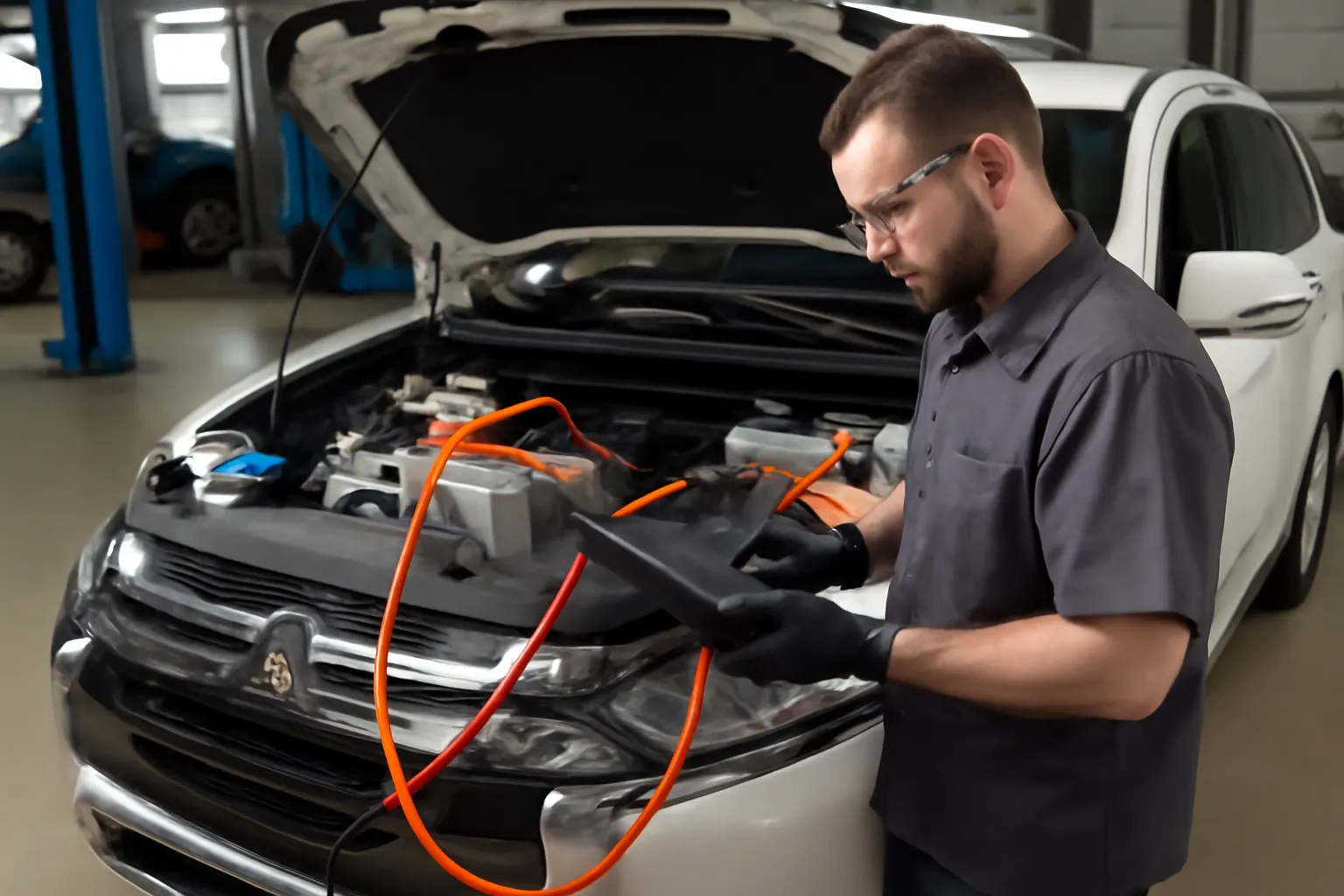
- Construction: Shielded, color-coded (typically orange), and routed to minimize risk.
- Inspection: Look for damage, corrosion, or signs of overheating.
Contactors and Relays
- Function: Safely connect/disconnect high-voltage circuits during operation and charging.
- Failure: Can cause no-start, inability to charge, or safety lockouts.
Service Precautions
- Always disconnect the 12V battery and follow high-voltage lockout/tagout procedures.
- Replace with OEM-grade components to ensure reliability and safety.
Charging System: Onboard Charger and Charge Port Components
Onboard Charger
- Role: Converts AC wall power to DC for battery charging.
- Failure Symptoms: Slow or no charging, error messages on charge port.
Charge Port/Connector
- Wear Points: Physical damage, corrosion, or broken pins can interrupt charging.
Sourcing
- Use only parts rated for the Outlander PHEV’s charging specifications.
- Verify compatibility with your region’s charging standards (Type 1, Type 2, etc.).
Routine Maintenance for Outlander Hybrid Electrical Systems
Regular maintenance keeps your Outlander PHEV’s electrical system healthy and reliable.
Maintenance Checklist
| Interval | Task |
|---|---|
| Every 6–12 months | Test 12V battery voltage and replace if weak. |
| Annually | Inspect high-voltage cabling and connectors for damage or corrosion. |
| Annually | Check for hybrid system software updates. |
| Every 2–3 years | Replace cabin and engine air filters to reduce electrical load. |
| Every 5 years | Inspect and, if needed, replace DC-DC converter and relays. |
| As needed | Scan for DTCs and address any warning lights promptly. |
Best Practices
- Keep charging ports clean and dry.
- Avoid deep discharges and rapid charging cycles when possible to maximize battery life.
- Store the vehicle in moderate temperatures to reduce battery stress.
Long-Term Reliability: What Outlander Hybrid Owners Should Expect
Common Longevity Issues
- Gradual battery capacity loss (typical for all hybrids).
- Occasional inverter or DC-DC converter failures.
- Wear on relays/contactors from repeated cycling.
What’s Built to Last
- Electric motors and main drive electronics are robust when maintained.
- Most high-voltage cabling and connectors are engineered for the vehicle’s lifespan.
Proactive Ownership
- Address warning lights immediately; don’t ignore hybrid system alerts.
- Schedule regular hybrid system health checks, especially as the vehicle ages.
Expert Sourcing and Service: The AutoPartEx Advantage
When it comes to Outlander PHEV battery and electrical parts, precision matters. AutoPartEx offers:
- VIN-Based Part Matching: Ensures every part fits your exact Outlander Hybrid model and build.
- Genuine and Quality Aftermarket Parts: Sourced from trusted manufacturers with proven hybrid expertise.
- Technical Support: Our team can help decode DTCs, source hard-to-find components, and guide safe installation.
- Educational Resources: From Essential Mitsubishi Maintenance Intervals to hybrid-specific troubleshooting, our editorial library keeps you informed.
Visit Mitsubishi Auto Parts: Genuine OEM & Aftermarket Solutions | AutoPartEx for the latest inventory and expert guidance on Outlander Hybrid components.
Final Checklist: Mitsubishi Outlander Hybrid Battery & Electrical Parts
Before you buy or install any electrical part for your Outlander PHEV, review this expert checklist:
- Use your full VIN to confirm part compatibility.
- Source high-voltage and hybrid-specific parts from authorized suppliers.
- Verify battery pack state of health before replacing modules.
- Inspect and test the 12V auxiliary battery regularly.
- Follow all high-voltage safety procedures during service.
- Update hybrid system software as recommended.
- Address any warning lights or DTCs immediately.
- Consult professional hybrid technicians for battery or PCU replacement.