Isuzu D-Max Performance Upgrades: What Works?
Looking to enhance your Isuzu D-Max’s performance without sacrificing its legendary reliability? Proven upgrades—like intake, exhaust, ECU tuning, and suspension enhancements—can deliver noticeable gains in power, drivability, and efficiency. However, the key is balancing performance with the D-Max’s robust OEM engineering. This guide breaks down which upgrades genuinely work, where pitfalls lie, and how to maintain the reliability that makes the D-Max a global favorite.
Early in your upgrade journey, ensure any modifications are compatible with genuine Isuzu parts. For a full catalog of OEM and high-quality aftermarket options, visit our Isuzu Parts Catalog.
Immediate Answer: Top Proven Upgrades for Isuzu D-Max
What performance upgrades actually work for the Isuzu D-Max? The most effective and reliable upgrades for the Isuzu D-Max include:
- High-flow air intakes: Improve engine breathing for better throttle response.
- Turbo-back or cat-back exhaust systems: Reduce backpressure, increasing power and efficiency.
- ECU remapping/tuning: Unlocks extra torque and horsepower, especially on turbo-diesel models.
- Upgraded intercoolers: Lower intake temperatures for sustained performance.
- Suspension lifts and shock upgrades: Enhance off-road capability and load handling.
- Performance brake kits: Shorten stopping distances and resist fade under heavy use.
- Lightweight wheels and all-terrain tires: Improve grip and reduce unsprung mass.
Each of these upgrades can deliver measurable improvements, provided they are selected, installed, and maintained with OEM standards in mind.
The Hidden Problem: Compromising Reliability and Safety
The D-Max’s reputation for reliability and durability is no accident—it's the result of rigorous OEM engineering, quality control, and safety validation. The most common pitfall for owners seeking performance upgrades is inadvertently undermining this foundation. Poorly matched aftermarket parts, improper installation, or inadequate supporting modifications can lead to:
- Engine or drivetrain stress: Over-tuning or mismatched intake/exhaust can increase wear or cause failure.
- Reduced fuel efficiency: Some upgrades, if not properly calibrated, can decrease MPG instead of improving it.
- Safety system interference: Non-compliant parts may compromise braking, stability, or airbag systems (NHTSA Equipment).
- Premature component wear: Lower-quality upgrades can accelerate wear on bushings, mounts, or sensors.
Maintaining a balance between performance and OEM reliability is essential. This means understanding not just what “works,” but what works well within the D-Max’s engineering envelope.
Understanding the D-Max’s Engineering: Why OEM Fitment Matters
Isuzu engineers design the D-Max for a unique blend of global market demands: toughness, efficiency, and safety. Every component—from the intake manifold to the rear leaf springs—undergoes extensive validation for:
- Fitment and compatibility: Ensuring every part integrates seamlessly with the vehicle’s architecture.
- Materials technology: Using advanced alloys and composites for strength and weight savings (DOE Materials Technologies).
- Safety compliance: Meeting strict standards for crashworthiness and system reliability (NHTSA Equipment).
Aftermarket upgrades must respect these OEM parameters. Deviating too far can create hidden problems—such as sensor errors, excessive vibration, or even voided safety features.
Intake and Exhaust Upgrades: Breathing New Life Into the D-Max
High-Flow Air Intakes
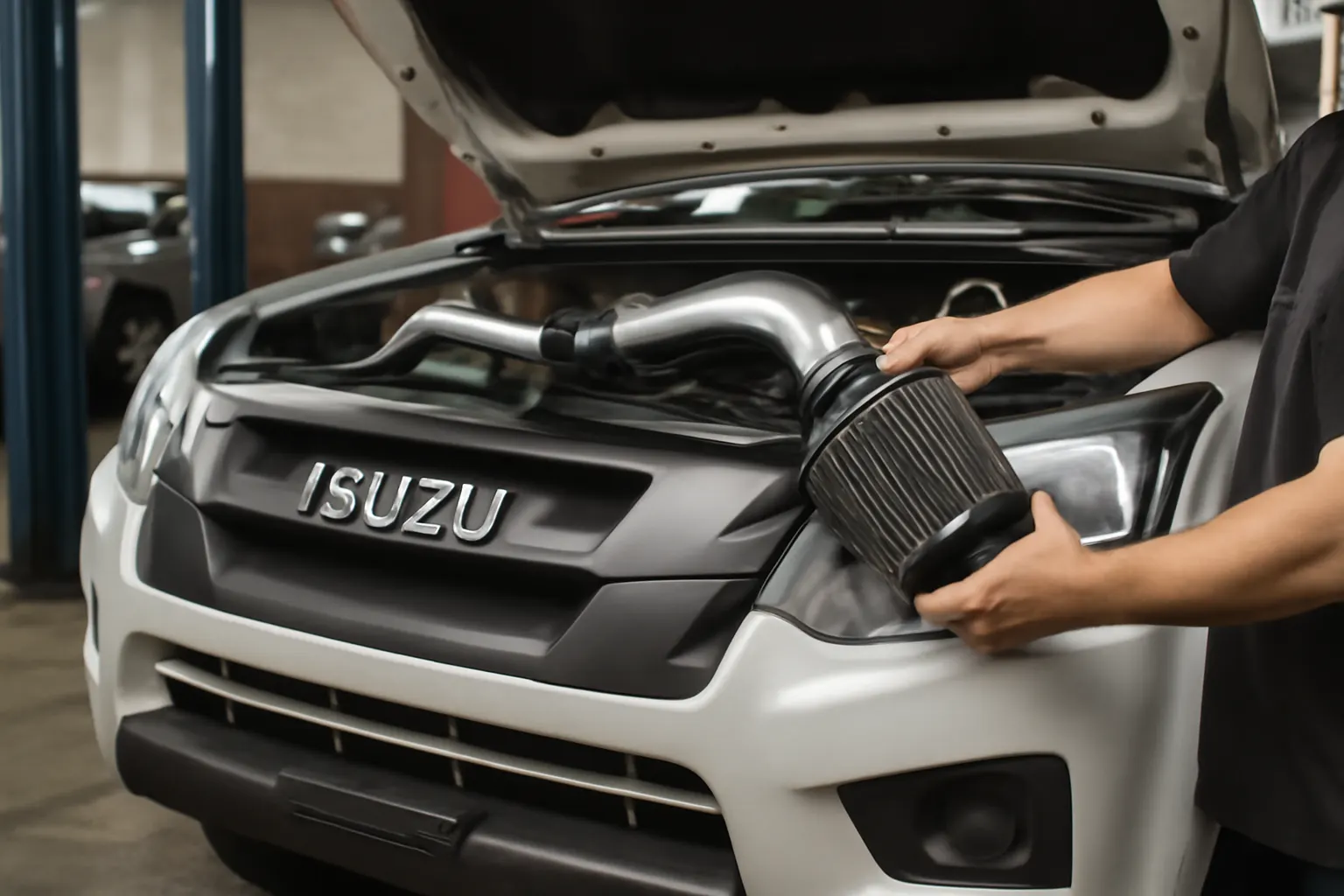
A quality high-flow air intake can improve throttle response and add modest horsepower gains. Look for:
- OEM-style fitment: Ensures correct sensor placement and avoids check engine lights.
- Heat shielding: Reduces intake air temperatures, preserving power and efficiency.
- Reusable filters: Offer long-term savings and consistent airflow.
Turbo-Back and Cat-Back Exhaust Systems
Upgrading to a turbo-back or cat-back exhaust system reduces exhaust restriction, particularly beneficial for turbo-diesel D-Max models. Key considerations:
- Mandrel-bent tubing: Provides smooth flow, reducing backpressure.
- Stainless steel construction: Resists corrosion for long-term durability.
- OEM sensor compatibility: Maintains proper emissions and avoids error codes.
Checklist: Intake & Exhaust Upgrade Best Practices
- Verify part numbers and fitment for your D-Max’s model year and engine.
- Retain or properly relocate all factory sensors (MAF, O2, EGT).
- Use new gaskets and torque fasteners to spec.
- Inspect for leaks and check for warning lights after installation.
ECU Remapping and Tuning: Power Gains With Caution
What Is ECU Remapping?
ECU remapping involves reprogramming the engine control unit to optimize fuel delivery, boost pressure, and ignition timing. For the D-Max, especially turbo-diesel variants, this can unlock significant torque and horsepower.
Risks and Safeguards
- Thermal management: Increased power can raise exhaust gas temperatures; monitor with gauges.
- Supporting modifications: Pair tuning with appropriate intake, exhaust, and intercooler upgrades.
- Reversible tunes: Choose tuners that can restore factory settings for diagnostics or resale.
Selecting a Tuner
- Reputation and support: Opt for established brands with D-Max-specific experience.
- Diagnostic compatibility: Ensure the tune allows standard OBD-II diagnostics.
- Compliance: Avoid tunes that disable emissions systems or safety features.
Intercooler and Turbo Upgrades: Managing Heat for Consistent Power
Upgraded Intercoolers
An efficient intercooler lowers intake air temperatures, improving combustion and reducing the risk of detonation—crucial for tuned or heavily loaded D-Max models.
- Larger core volume: Offers more cooling capacity.
- OEM mounting points: Simplifies installation and maintains airflow paths.
- Pressure-tested construction: Prevents boost leaks.
Turbocharger Upgrades
While stock D-Max turbos are robust, performance units can provide more airflow and higher boost. However, these upgrades require:
- Fuel system upgrades: Larger injectors or pumps may be needed.
- Exhaust and intake matching: Avoid bottlenecks that negate turbo gains.
- Professional tuning: Essential to prevent overboost and engine damage.
Suspension and Chassis: Handling Power and Payload
Suspension Lifts and Upgrades
Whether for off-road adventures or heavy towing, D-Max owners often seek suspension enhancements:
- Lift kits: Improve ground clearance but must maintain proper driveline angles.
- Upgraded shocks and springs: Enhance load carrying and ride quality.
- Polyurethane bushings: Resist wear and maintain alignment under stress.
Chassis Bracing
- Strut braces and underbody reinforcements: Reduce chassis flex and improve handling.
- Bolt-on solutions: Prefer options that require no cutting or welding for easier reversibility.
Brakes and Wheels: Stopping and Traction Upgrades
Performance Brake Kits
Increased power and payload demand better braking. Upgrades include:
- Larger rotors and calipers: Improve heat dissipation and stopping power.
- High-friction pads: Reduce fade under repeated heavy braking.
- Stainless brake lines: Offer firmer pedal feel and resist expansion.
Wheels and Tires
- Lightweight alloys: Reduce unsprung mass for better response.
- All-terrain or performance tires: Tailor grip to your driving environment.
- Correct offset and diameter: Ensure clearance and maintain speedometer accuracy.
Fuel Efficiency and Weight Reduction: Smarter Performance
Reducing Weight for Efficiency
Performance isn’t just about power—reducing weight can improve acceleration, braking, and fuel economy. Consider:
- Aluminum or composite body panels
- Lightweight wheels
- Removal of unnecessary accessories when not needed
According to the U.S. Department of Energy, reducing vehicle weight directly improves fuel efficiency and handling.
Aerodynamic Enhancements
- Low-profile roof racks or tonneau covers: Reduce drag.
- Side steps and bull bars: Choose designs with minimal airflow disruption.
Diagnostic Guidance: Evaluating Upgrades and Their Impact
Before and after any upgrade, it’s critical to assess your D-Max’s condition and monitor for unintended consequences. Use this diagnostic approach:
- Baseline scan: Use an OBD-II scanner to check for existing fault codes.
- Monitor key parameters: Track intake temps, boost pressure, fuel trims, and exhaust temps.
- Test drive: Evaluate performance, noise levels, and ride quality.
- Post-install inspection: Look for leaks, loose fasteners, or abnormal vibrations.
If you’re unsure about interpreting scan tool data or troubleshooting issues, consult a qualified technician familiar with Isuzu systems.
Sourcing Genuine and Quality Aftermarket Parts
Why Genuine Parts Matter
Genuine Isuzu parts ensure the highest level of compatibility, durability, and safety. When selecting upgrades, prioritize:
- OEM or OEM-equivalent brands: These meet strict fitment and quality standards.
- Parts with SAE or international certification: These have passed rigorous testing (SAE Standards).
- Supplier reputation: Use trusted sources like Isuzu Auto Parts: Genuine OEM Engineering, Fitment, and Quality | AutoPartEx.
Aftermarket Considerations
- Warranty and support: Choose manufacturers who stand behind their products.
- Installation documentation: Look for upgrades with detailed instructions and technical support.
- Community feedback: User reviews and forum discussions can reveal real-world performance and fitment experiences.
For further guidance on distinguishing genuine from imitation components, see our Identifying Genuine Isuzu Parts: A Buyer’s Guide.
Installation and Fitment: Ensuring Seamless Upgrades
Professional vs. DIY Installation
- Professional installation: Recommended for complex upgrades (ECU tuning, turbo swaps, suspension lifts).
- DIY-friendly upgrades: Air filters, cat-back exhausts, and bolt-on accessories can often be installed with basic tools and mechanical knowledge.
Fitment Checklist
Pre-Installation Checklist
- Confirm part numbers match your D-Max’s VIN, engine, and year.
- Inspect new parts for defects or shipping damage.
- Gather all required tools and fasteners before starting.
- Review installation instructions or service manuals.
- Plan for post-installation alignment or calibration if needed.
Maintenance Considerations After Upgrading
Performance upgrades can alter your D-Max’s maintenance needs. Adjust your service schedule to include:
- More frequent oil changes: Especially with increased power or turbo upgrades.
- Regular inspection of upgraded components: Look for wear, leaks, or loose hardware.
- Brake and tire checks: Higher speeds and loads accelerate wear.
- Software updates: Some ECUs may require periodic updates for optimal performance.
For a comprehensive schedule, refer to our Isuzu Maintenance Intervals and Service Checklist.
Avoiding Common Upgrade Pitfalls
Even well-intentioned upgrades can go wrong. Common mistakes include:
- Ignoring supporting mods: Upgrading a turbo without fuel system or intercooler improvements can cause failures.
- Chasing peak numbers: Maximum dyno figures often come at the expense of longevity and driveability.
- Neglecting safety systems: Disabling traction control or ABS for performance can compromise safety (NHTSA Equipment).
- Improper wheel/tire sizing: Can affect speedometer accuracy, ABS function, and fender clearance.
Always prioritize balanced, well-matched upgrades, and consult with experts or experienced D-Max tuners before making major changes.
AutoPartEx: Your Partner in Reliable Isuzu Upgrades
At AutoPartEx, we believe in performance without compromise. Our curated selection of genuine Isuzu and high-quality aftermarket parts is backed by technical expertise and fitment support. Whether you’re seeking a modest intake upgrade or a full suspension overhaul, our team can guide you through:
- Selecting compatible upgrades
- Diagnosing fitment or installation challenges
- Maintaining OEM reliability and safety standards
Explore our Isuzu Parts Catalog for everything from air filters to performance brakes. For more in-depth repair and upgrade insights, see our Isuzu NPR Series: Common Repairs and Upgrades.
Expert Action: Building a Balanced, Reliable D-Max
Ready to upgrade your Isuzu D-Max? Follow these steps for a successful, reliable build:
- Define your goals: Power, off-road capability, towing, or all-around performance.
- Research proven upgrades: Focus on intake, exhaust, ECU tuning, suspension, and brakes.
- Source quality parts: Prioritize genuine or certified aftermarket components.
- Plan supporting modifications: Don’t overlook intercoolers, fuel systems, or chassis bracing.
- Monitor and maintain: Use diagnostics and regular inspections to catch issues early.
- Consult experts: When in doubt, seek advice from Isuzu specialists or the AutoPartEx team.
Performance and reliability are not mutually exclusive—when you upgrade with care, your D-Max can deliver more of what you love, mile after mile.