Advertisement
Authentic FWD (Four Wheel Drive Auto Company) parts are critical for ensuring the safety, performance, and longevity of classic and modern FWD trucks. Whether you’re restoring a legacy fire apparatus, maintaining a military-grade FWD chassis, or sourcing drivetrain components for a commercial fleet, knowing how to verify genuine OEM parts is essential. In this comprehensive guide, the AutoPartEx Technical Editorial Team details proven methods—ranging from stampings and casting numbers to supplier validation—so you can confidently source and install the right parts every time.
For a broader look at FWD’s heritage, technical references, and expert sourcing, see our FWD Trucks OEM Parts: Heritage, Technical Reference & Expert Sourcing | AutoPartEx page.
Why Authentic FWD Parts Matter: Immediate Answers for Owners and Fleet Managers
FWD trucks have a storied legacy in municipal, military, and industrial service. Using authentic OEM components is not just a matter of historical accuracy or pride—it’s a direct contributor to vehicle safety, operational reliability, and regulatory compliance. Authentic FWD parts are manufactured to precise specifications, tested for compatibility, and certified to meet safety and performance standards set by organizations such as the National Highway Traffic Safety Administration (NHTSA) and SAE International. Counterfeit or non-OEM parts may introduce hidden safety risks, reduce fuel efficiency, and compromise structural integrity.
The Hidden Problem: Counterfeit and Non-OEM Parts in the FWD Supply Chain
The restoration and maintenance of FWD trucks, especially heritage and specialty models, are complicated by the prevalence of counterfeit, “will-fit,” or non-OEM replacement parts. These components may be visually similar but can differ in metallurgy, tolerances, or engineering standards. The risk isn’t just hypothetical—counterfeit parts have been implicated in premature failures, safety recalls, and even catastrophic breakdowns in fleet service. For FWD owners, mechanics, and parts buyers, the challenge is distinguishing genuine parts from high-quality replicas and outright fakes.
For a deeper investigation of this issue, see our dedicated article: Counterfeit Parts Risks in Legacy FWD Fleets.
Understanding FWD OEM Markings: Stampings, Casting Numbers, and Tags
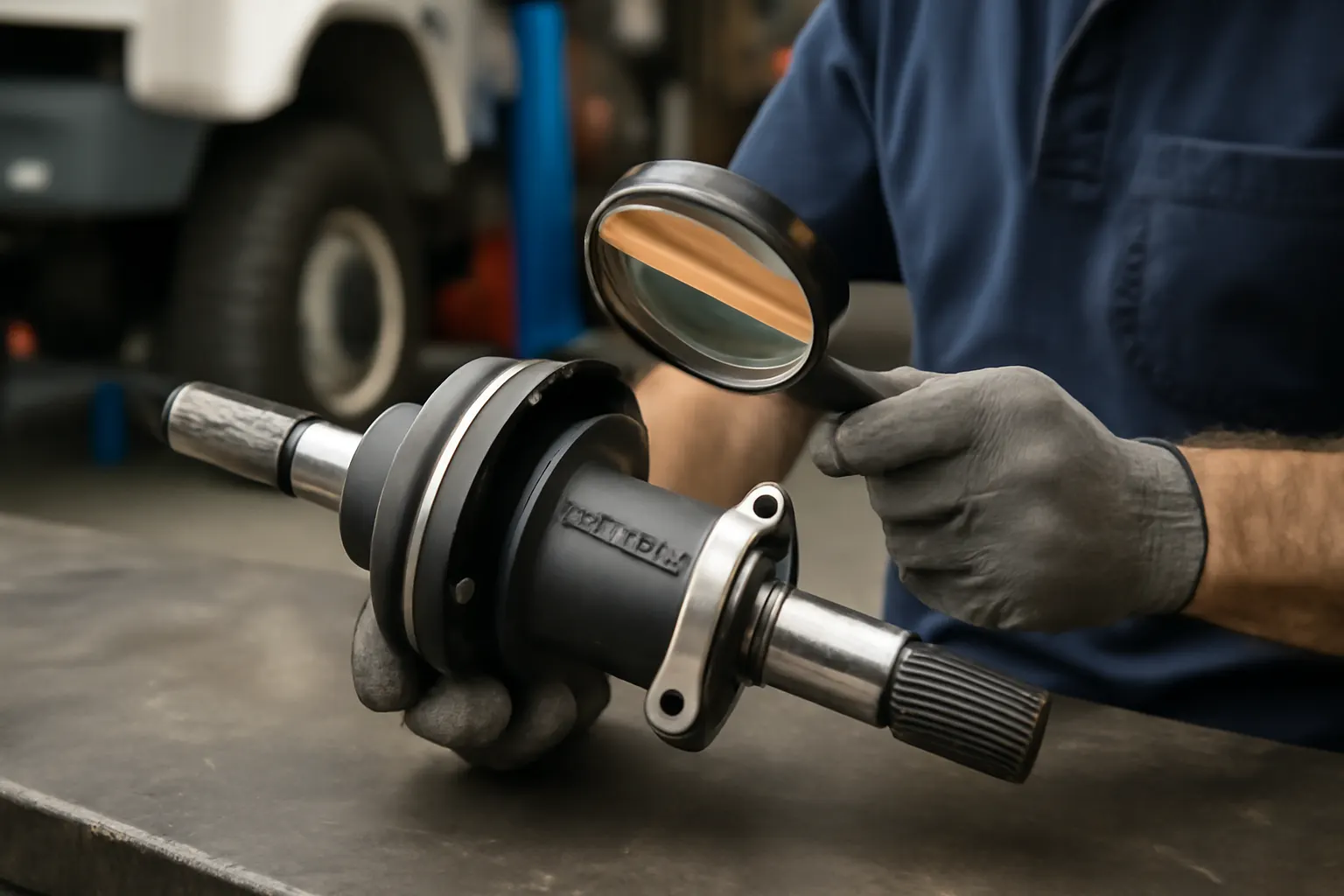
One of the most reliable ways to verify an authentic FWD part is by examining its manufacturer markings. FWD, like most OEMs, used a combination of stampings, casting numbers, and identification tags to track production and ensure traceability.
Key Marking Types
- Stampings: Often found on steel components such as chassis rails, crossmembers, and brackets, these are typically alphanumeric codes pressed directly into the metal. They indicate part number, batch, and sometimes production date.
- Casting Numbers: Cast iron and aluminum parts (engine blocks, housings, axle carriers) bear unique numbers in raised or recessed relief. These identify the mold and production run.
- Tags/Plates: Some assemblies (transmissions, differentials, transfer cases) use riveted or screwed-on metal tags with serial numbers, part numbers, and manufacturer information.
What to Look For
- Consistency of font, size, and placement with known FWD standards.
- Presence of the “FWD” logo, especially on older parts.
- Clean, uniform markings without signs of re-stamping or tampering.
Decoding FWD Part Numbers and Engineering Codes
FWD part numbers and engineering codes are not arbitrary—they follow specific patterns that can be cross-referenced with technical manuals, parts catalogs, and OEM databases. Understanding these codes is essential for verifying authenticity and ensuring correct fitment.
Typical FWD Part Number Format
- Prefix: Often indicates the vehicle series or system (e.g., “FWD-”, “F4”, “M” for military).
- Core Digits: Unique identifier for the part itself.
- Suffix: May denote revision, material, or supplier.
How to Use These Codes
- Cross-reference with OEM Literature: Use FWD parts catalogs, technical bulletins, or digital databases.
- Consult FWD Heritage Experts: Many FWD clubs and museums maintain archives of part number references.
- Check for Revisions: Genuine parts may have superseded numbers, but changes will be documented in official FWD literature.
Advertisement
Materials and Manufacturing: Why Metallurgy Matters
The United States Department of Energy (DOE) emphasizes the importance of advanced materials in vehicle structure and performance DOE Materials Technologies. Authentic FWD parts are manufactured with specific materials—such as high-strength steel, ductile iron, or proprietary alloys—chosen for their mechanical properties and durability.
Telltale Signs of Genuine Materials
- Weight and Density: Counterfeit parts may be lighter or heavier due to incorrect material use.
- Surface Finish: OEM parts typically exhibit uniform machining marks and corrosion resistance.
- Non-Destructive Testing: Magnetic, ultrasonic, or dye-penetrant tests can reveal inconsistencies in metallurgy.
Why It Matters
Non-OEM materials can lead to premature wear, cracking, or catastrophic failure, especially in critical drivetrain and suspension components. Authentic FWD parts are engineered for the demanding environments these trucks encounter.
Supplier Validation: How to Confirm OEM Provenance
Not all parts sellers are created equal. Validating the source of your FWD parts is as important as inspecting the part itself. FWD’s original suppliers—whether for axles, transmissions, or electrical components—were vetted for quality and consistency.
Supplier Validation Checklist
- Authorized Dealer Status: Confirm the seller is recognized by FWD or its successor entities.
- Documentation: Request invoices, certificates of authenticity, or provenance records.
- Supplier Markings: Look for secondary markings identifying the original sub-supplier (e.g., Timken, Spicer, Bendix).
- Return Policy and Warranty: Reputable suppliers stand behind the authenticity and quality of their inventory.
Red Flags
- No documentation or vague sourcing claims.
- Prices significantly below market average.
- “New old stock” that lacks original packaging or markings.
Comparing OEM vs. Aftermarket vs. Counterfeit FWD Parts
Understanding the differences between OEM, aftermarket, and counterfeit parts is fundamental when evaluating FWD components.
OEM (Original Equipment Manufacturer)
- Produced by or for FWD to exact specifications.
- Full compatibility and compliance with safety standards.
- Typically includes FWD part numbers, logos, and supplier marks.
Aftermarket
- Produced by third parties, may or may not meet OEM specifications.
- Quality varies—some are high-quality replacements, others are “will-fit” solutions.
- May lack OEM markings, or use generic part numbers.
Counterfeit
- Intentionally misrepresented as OEM.
- May copy markings, but materials and tolerances often substandard.
- High risk for safety, reliability, and legal compliance.
Table: OEM vs. Aftermarket vs. Counterfeit
| Feature | OEM | Aftermarket | Counterfeit |
|---|---|---|---|
| Markings | FWD part #, logo | Generic or none | Faked or copied |
| Materials | OEM-specified | Varies | Substandard |
| Fitment | Guaranteed | May require modification | Often incorrect |
| Supplier | Authorized | Independent | Unverified |
| Risk Level | Lowest | Medium | Highest |
Visual and Physical Inspection: Practical Steps for Parts Verification
Even without advanced tools, a detailed visual and physical inspection can reveal much about a part’s authenticity.
Step-by-Step Inspection Checklist
- Markings: Inspect all visible surfaces for correct stampings, casting numbers, and tags.
- Surface Quality: Look for uniform machining, paint, plating, or corrosion resistance.
- Dimensions: Measure critical features against OEM specifications.
- Weight: Compare with known authentic parts or published values.
- Packaging: Genuine FWD parts often come in branded packaging with part number labels.
- Documentation: Review any included instructions, warranty cards, or certificates.
Common Red Flags
- Inconsistent or missing markings.
- Rough or pitted casting surfaces.
- Incorrect fastener types or finishes.
- Evidence of tampering, grinding, or re-stamping.
Cross-Referencing with Technical Documentation and Standards
Always corroborate your findings with official technical references. FWD issued detailed parts catalogs, service manuals, and engineering drawings for most models. Additionally, safety and equipment standards from the NHTSA and SAE provide benchmarks for critical systems NHTSA Equipment, SAE Standards.
How to Use Documentation Effectively
- Match Part Numbers: Confirm every digit and suffix matches OEM listings.
- Check Fitment Notes: Some parts are model- or year-specific; cross-check against your VIN or chassis number.
- Review Engineering Drawings: These can reveal subtle differences in dimensions or features not visible in photos.
Advertisement
Fitment Testing: Trial Installation and Functional Checks
After visual and documentation checks, trial fitting is the most conclusive way to ensure authenticity and compatibility.
Fitment Testing Process
- Dry Fit: Install the part without final tightening to check alignment, clearances, and fastener engagement.
- Functional Test: For moving parts (bearings, gears, linkages), check for smooth operation and correct engagement.
- Torque Testing: Verify that fasteners reach specified torque without issues.
- System Integration: For assemblies (axles, transmissions), ensure correct mating with adjoining systems.
When to Reject a Part
- Misalignment, binding, or excessive play.
- Inability to achieve correct torque.
- Interference with other components.
- Evidence of premature wear after limited use.
Regulatory Compliance and Safety Recall Checks
Authentic FWD parts are built to meet federal safety standards. Always check for relevant safety recalls and compliance documentation. The NHTSA recalls database is an invaluable tool for confirming whether specific FWD parts or assemblies have been subject to recalls or safety bulletins.
How to Use Recall Data
- Enter Part or VIN: Search for your specific model or part number.
- Review Recall Details: Note the nature of the recall, affected production ranges, and recommended actions.
- Document Compliance: Keep records of recall clearance or compliance for fleet and regulatory reviews.
Sourcing Authentic FWD Parts: Where to Buy with Confidence
Finding genuine FWD parts requires diligence and an understanding of the FWD supplier network. Here’s how to maximize your chances of sourcing authentic components:
Trusted Sources
- Authorized FWD Dealers: These maintain direct relationships with OEM or legacy FWD parts distributors.
- Reputable Vintage Truck Specialists: Many classic truck parts houses specialize in FWD and maintain provenance records.
- OEM Surplus and NOS (New Old Stock) Dealers: Seek out vendors with verifiable inventory and original packaging.
Questions to Ask Suppliers
- Can you provide OEM documentation or provenance?
- Do you offer a guarantee of authenticity?
- Are returns accepted for non-authentic parts?
- How do you source your FWD inventory?
Avoiding Pitfalls
- Be wary of online auction sites or classified ads without detailed photos and documentation.
- Avoid “too good to be true” deals on high-value components (e.g., axles, transmissions).
- Always request detailed photos of markings and packaging before purchase.
Maintenance and Documentation: Keeping Authenticity Records
Maintaining a record of your truck’s parts authenticity is valuable for resale, insurance, and regulatory purposes.
Best Practices
- Photograph Markings: Document all stampings, tags, and packaging before installation.
- Keep Receipts and Certificates: File all provenance and purchase documents.
- Log Installations: Maintain a maintenance log with part numbers, installation dates, and supplier details.
- Share with Future Owners: Pass on documentation to subsequent owners or fleet managers.
AutoPartEx: Your Partner in FWD Authenticity, Sourcing, and Technical Support
AutoPartEx is dedicated to supporting FWD truck owners, restorers, and fleet managers with the technical resources, sourcing expertise, and OEM documentation needed to ensure authenticity and reliability. Our curated supplier network, technical reference materials, and diagnostic guidance are designed to take the guesswork out of FWD parts identification and procurement.
Explore our FWD Trucks OEM Parts: Heritage, Technical Reference & Expert Sourcing | AutoPartEx page for authoritative information, or consult our FWD Trucks Maintenance & Service Guide for hands-on technical support.
Expert Action: Steps to Take Right Now
- Inspect Existing Parts: Review stampings, casting numbers, and supplier tags on your FWD truck’s critical components.
- Audit Your Inventory: Cross-reference all spare parts against OEM catalogs and technical documentation.
- Vet Your Suppliers: Only purchase from trusted, documented sources with a track record of authenticity.
- Document Everything: Keep detailed, photographic records and provenance for every part installed.
- Stay Informed: Monitor NHTSA recall data and technical bulletins relevant to your FWD model.
For personalized technical support or sourcing assistance, contact the AutoPartEx team. Our experts are ready to help you ensure the authenticity, safety, and performance of your FWD truck.
References
Advertisement