Why Engine Cradle Alignment Matters for Suspension and Steering
Engine cradle alignment is not just a technical detail—it’s a foundational element for maintaining precise suspension geometry and responsive steering in modern vehicles. When the engine cradle (or subframe) is properly aligned, it ensures that all connected suspension and steering components operate as designed, delivering optimal handling, safety, and tire wear. Conversely, misalignment can unleash a cascade of issues, from poor steering response to accelerated component wear and compromised safety. In this article, we’ll explore why engine cradle alignment is so critical, how misalignment can undermine your vehicle’s performance and safety, and what steps you can take to diagnose, correct, and prevent these issues.
If you’re interested in the broader role of the engine cradle, see our Engine Cradle: The Structural Backbone of Modern Powertrains category for a comprehensive overview.
Engine Cradle Alignment: The Immediate Impact
The alignment of your engine cradle directly governs the positioning of lower suspension arms, steering racks, and crucial mounting points. When the cradle is out of alignment, even by a few millimeters, it shifts the geometry of the front suspension and steering system. This affects toe, camber, and caster angles, which in turn influence:
- Steering accuracy and response
- Vehicle tracking and stability under braking and acceleration
- Tire wear patterns
- Safety systems’ effectiveness
Proper alignment ensures that the forces generated during driving, cornering, and braking are distributed as intended by the manufacturer. This is essential for maintaining the original ride and handling characteristics of your vehicle.
The Hidden Problem: Misalignment’s Domino Effect
Many drivers and even some technicians overlook the engine cradle as a source of persistent handling or steering issues. Symptoms like off-center steering wheels, uneven tire wear, or a vehicle that “pulls” to one side are often attributed to wheel alignment or worn suspension bushings. However, if the cradle itself is not correctly aligned to the body, no amount of wheel alignment will fully resolve these issues.
The root cause can be subtle—an engine cradle shifted during a collision, incorrectly installed after repairs, or even the result of corroded mounting points. Left unaddressed, cradle misalignment can amplify other problems, masking the real culprit and leading to repeated, costly repairs.
Understanding the Engine Cradle’s Structural Role
The engine cradle, sometimes called the subframe or crossmember, serves as the mounting platform for the powertrain, steering rack, and lower suspension arms. In modern unibody vehicles, it’s a removable structural element engineered to:
- Distribute engine and suspension loads to the body shell
- Absorb and channel impact forces in a collision
- Provide precise mounting points for suspension geometry
According to the United States Department of Energy’s Materials Technologies, advancements in cradle materials and manufacturing have enabled lighter, stiffer, and safer structures, but they also demand tighter tolerances during installation and repair. Even small deviations in cradle alignment can have outsized effects on performance and safety.
How Misalignment Affects Suspension Geometry
Suspension geometry refers to the angles and positions of suspension components relative to the vehicle chassis and each other. The engine cradle’s mounting points define the baseline for crucial geometry settings:
- Toe: The angle at which the wheels point inward or outward
- Camber: The tilt of the wheels in or out from vertical
- Caster: The angle of the steering axis relative to vertical
When the cradle is misaligned, all these angles can be thrown off, resulting in:
- Increased rolling resistance and uneven tire wear
- Poor steering return and unpredictable handling
- Reduced traction and braking stability
A misaligned cradle can also cause the steering rack to sit off-center, resulting in a crooked steering wheel even after a standard alignment.
Steering Response and Driver Feedback
Steering feel and response are directly tied to the relationship between the steering rack, suspension arms, and the vehicle’s centerline. Proper cradle alignment ensures that:
- The steering rack is centered relative to the wheels
- Rack travel is equal in both directions, preventing “bump steer”
- The driver receives accurate feedback from the road
Misalignment can cause vague or inconsistent steering, excessive play, or a tendency for the vehicle to wander at highway speeds. These issues compromise driver confidence and can be dangerous in emergency maneuvers.
Safety Implications: Beyond Handling
According to the National Highway Traffic Safety Administration, the structural integrity and alignment of chassis components are fundamental to vehicle safety. Misaligned cradles can:
- Compromise the effectiveness of crumple zones in a collision
- Cause airbag sensors or crash detection systems to misinterpret impact forces
- Lead to unexpected failures in suspension or steering components
For vehicles equipped with advanced driver assistance systems (ADAS), even small misalignments can disrupt sensor calibration and system performance, further elevating safety risks.
Diagnosing Engine Cradle Misalignment
Identifying a misaligned engine cradle requires a combination of visual inspection, measurement, and sometimes specialized equipment. Here’s a step-by-step checklist for diagnosis:
Engine Cradle Alignment Diagnostic Checklist
- Visual Inspection
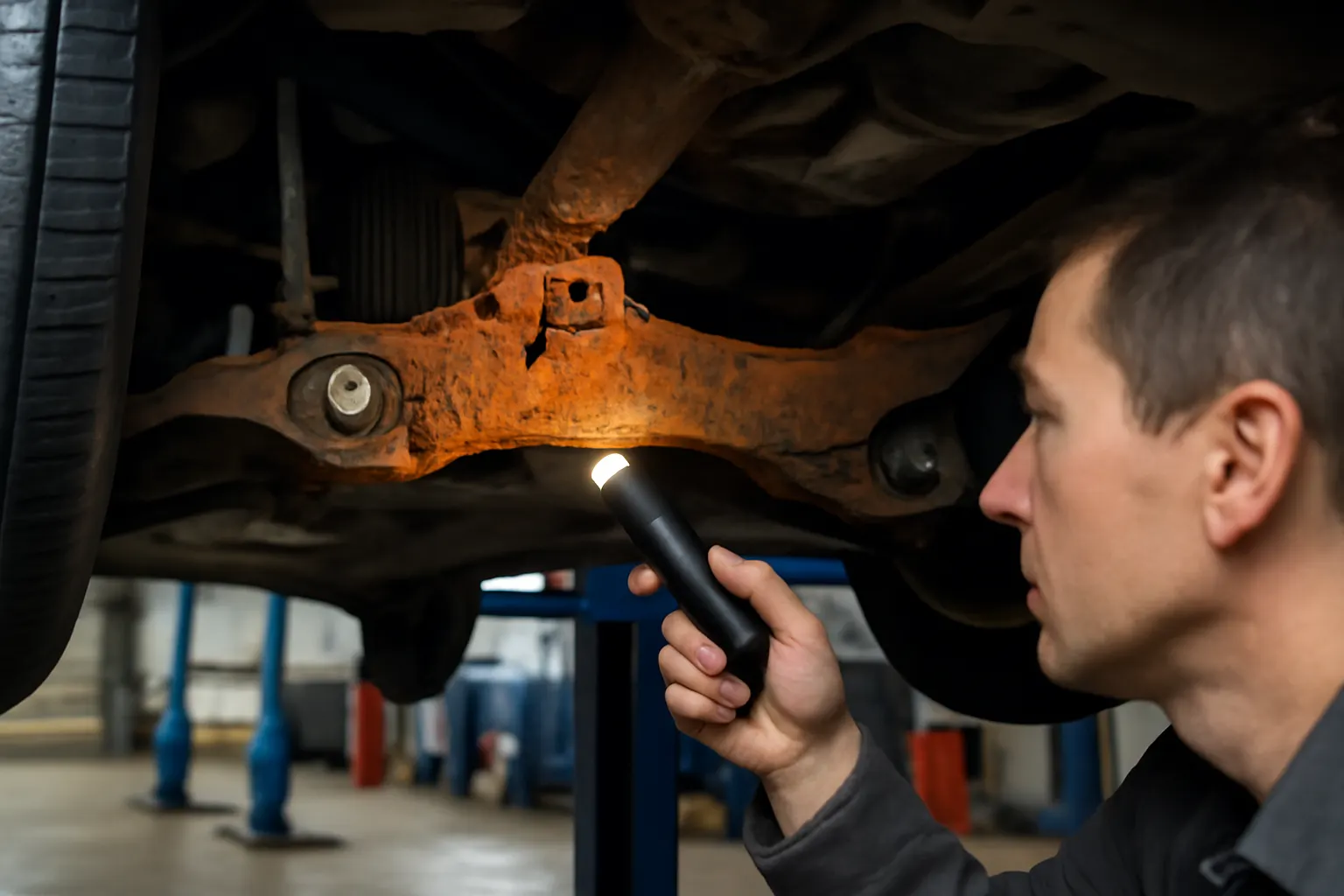
- Check for evidence of collision damage, bent mounting tabs, or rust at cradle mounts.
- Inspect for uneven gaps between the cradle and body.
- Steering Wheel Center
- Is the steering wheel off-center when driving straight?
- Uneven Tire Wear
- Are front tires wearing unevenly, especially on the inner or outer edges?
- Wheel Alignment History
- Has the vehicle required repeated alignments with limited improvement?
- Suspension and Steering Symmetry
- Measure distances from key suspension points to body reference points on both sides.
- Frame/Chassis Alignment Check
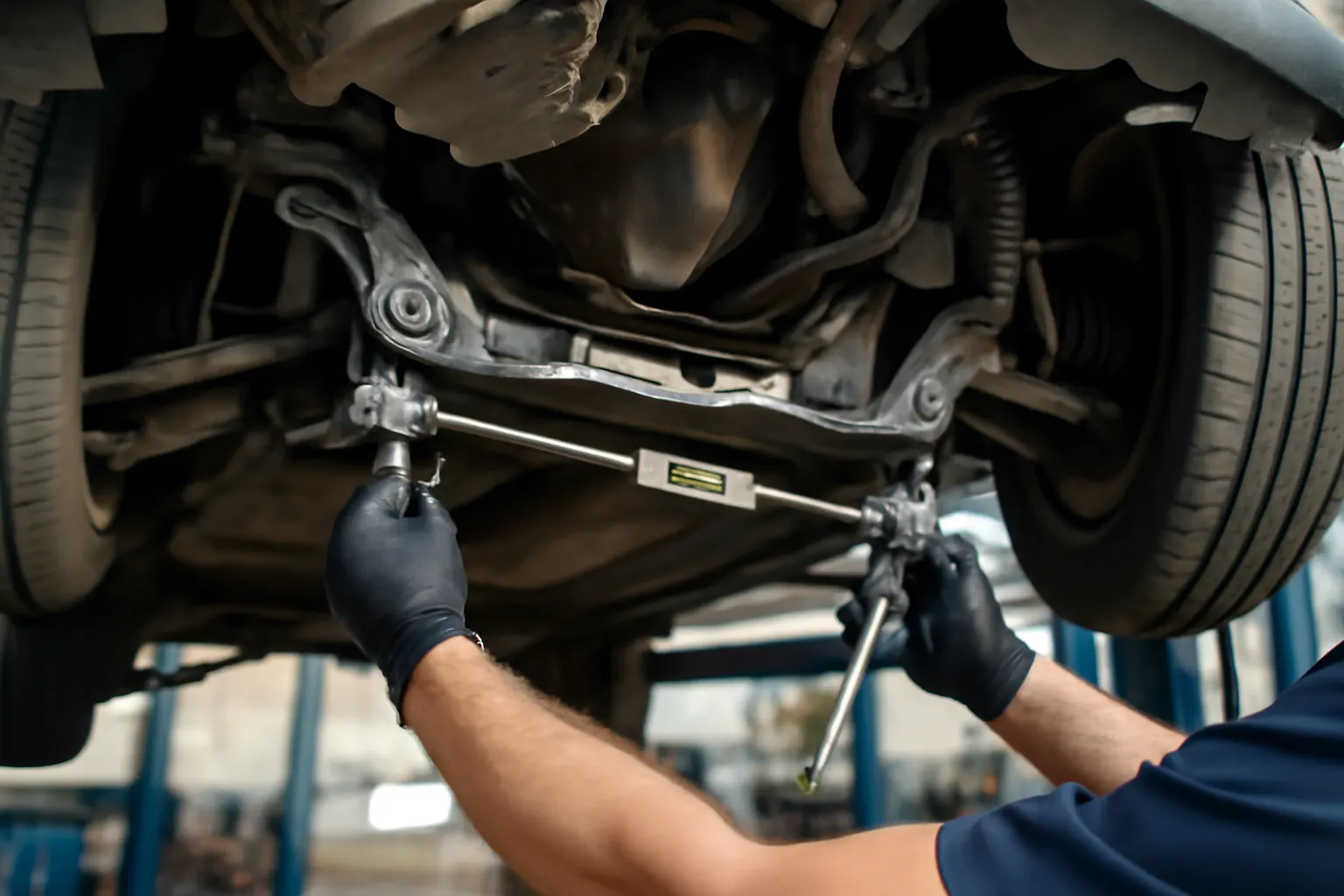
- Use a laser or tram gauge to verify cradle mounting points relative to manufacturer specs.
- Test Drive
- Note any pulling, wandering, or instability at various speeds.
If several of these symptoms are present, the cradle should be measured and, if necessary, realigned by a qualified technician.
Common Causes of Engine Cradle Misalignment
Engine cradle misalignment can result from several scenarios:
- Collision Damage: Even minor front-end impacts can shift the cradle on its mounts.
- Incorrect Installation: After engine, transmission, or suspension repairs, the cradle may not be reinstalled to factory tolerances.
- Corrosion and Rust: In regions with harsh winters or salted roads, rust can degrade mounting points, allowing the cradle to shift.
- Component Wear: Worn or collapsed cradle bushings can introduce play and misalignment over time.
For more on corrosion prevention, see our deep dive: Rust Belt Realities: Protecting Your Engine Cradle from Corrosion.
Correcting Engine Cradle Alignment: The Solution Path
Addressing cradle misalignment is a precise process that often requires a combination of mechanical skill and specialized equipment. Here’s how professionals approach the task:
1. Secure the Vehicle and Prepare for Measurement
- Lift the vehicle on a level surface.
- Remove underbody shields and components obstructing cradle mounts.
2. Reference Factory Specifications
- Obtain the manufacturer’s cradle alignment specs, typically found in service manuals or SAE Standards.
3. Measure Cradle Position
- Use tram gauges, plumb bobs, or laser alignment tools to measure distances between cradle mounting points and fixed body reference points.
- Compare measurements side-to-side and against factory tolerances.
4. Loosen and Adjust
- Loosen cradle mounting bolts without fully removing them.
- Shift the cradle using pry bars or alignment pins until measurements match specifications.
5. Torque and Recheck
- Tighten all bolts to factory torque specs, then re-measure to confirm alignment.
- Reinstall all removed components and shields.
6. Final Wheel Alignment
- Perform a full four-wheel alignment to restore proper suspension geometry.
Preventing Future Misalignment
Prevention is always preferable to correction. Here’s how to keep your engine cradle aligned:
- Routine Inspections: Check cradle mounts and bushings during regular maintenance.
- Torque Checks: After any major engine, transmission, or suspension work, confirm cradle bolts are torqued to spec.
- Rust Protection: Treat mounting points with rust inhibitors, especially in salt-prone regions.
- Professional Repairs: Insist on precise measurements and alignment after collision repairs or subframe removal.
The Role of Materials and Manufacturing Tolerances
Modern engine cradles are engineered from advanced materials such as high-strength steel, aluminum alloys, or composites. According to the DOE’s Materials Technologies, these materials offer superior strength-to-weight ratios but demand tighter manufacturing and installation tolerances.
- High-strength steel: Allows thinner sections, reducing weight but increasing sensitivity to mounting accuracy.
- Aluminum/composite cradles: Resist corrosion but can be damaged by improper handling or over-torquing.
As a result, even minor deviations during repair or assembly can have amplified effects on alignment and performance.
Alignment and Fuel Efficiency: An Overlooked Link
Few drivers realize that engine cradle alignment can impact fuel economy. When suspension geometry is off, rolling resistance increases, and the engine must work harder to maintain speed. The DOE’s Fuel Efficiency research highlights the importance of minimizing parasitic losses—misalignment is a hidden contributor to this inefficiency.
- Proper alignment: Reduces drag and improves straight-line tracking, maximizing fuel economy.
- Misalignment: Causes “scrubbing” of tires and increased mechanical resistance.
Regular alignment checks, including cradle position verification, can help maintain peak efficiency.
Engine Cradle Alignment and Advanced Driver Assistance Systems (ADAS)
Modern vehicles increasingly rely on ADAS technologies—lane-keeping assist, adaptive cruise control, collision avoidance—that depend on precise chassis geometry. A misaligned engine cradle can:
- Shift sensor mounting points, leading to inaccurate readings
- Complicate calibration of cameras, radar, and lidar
- Trigger warning lights or system faults
After any cradle-related repair, recalibration of ADAS systems is often mandatory. This must be performed with the vehicle on a level surface and after confirming correct cradle alignment.
Sourcing Quality Engine Cradles and Mounting Hardware
When replacement is required, sourcing a high-quality engine cradle and mounting hardware is critical. Here’s what to look for:
- OEM or Certified Aftermarket Parts: Ensure compatibility and structural integrity.
- Rust-Resistant Coatings: Especially important in humid or salt-exposed regions.
- Precision Machining: Mounting holes and bushings should match factory specs.
- Included Hardware: New bolts, nuts, and bushings prevent reuse of fatigued components.
AutoPartEx partners with leading manufacturers to offer a range of engine cradle assemblies and hardware, ensuring a perfect fit and long-term durability.
Installation and Alignment: DIY or Professional?
While basic visual inspections can be performed by experienced DIYers, cradle alignment and installation are best left to professionals equipped with:
- Frame alignment benches or laser alignment systems
- Access to OEM service data and specifications
- Experience with torque procedures and safety-critical fasteners
Improper installation can result in persistent alignment and handling problems, or even safety system malfunctions. For those determined to tackle the job themselves, see our Engine Cradle Replacement: Tools, Tips, and Best Practices for a detailed walkthrough.
AutoPartEx: Your Partner in Chassis Precision
At AutoPartEx, we understand that the engine cradle is more than just a mounting platform—it’s a critical structural link that underpins your vehicle’s handling, safety, and efficiency. Whether you’re sourcing a replacement cradle, investigating persistent alignment issues, or seeking expert diagnostic support, our technical team and curated parts catalog are here to help.
Explore our Engine Cradle: The Structural Backbone of Modern Powertrains category for in-depth guides, technical specifications, and the highest-quality parts—so your suspension and steering perform exactly as engineered.