Advertisement
Electric vs. Mechanical Cooling Fans: Which Is Better?
When it comes to keeping your engine at optimal temperature, the choice between electric and mechanical cooling fans is crucial. Both fan types play a vital role in your vehicle’s cooling system, but their performance, reliability, and maintenance requirements differ significantly. If you’re considering an upgrade, replacement, or simply want to understand which fan is best for your application, this comprehensive guide breaks down the pros and cons, technical differences, and practical considerations to help you make an informed decision.
For a deeper dive into all aspects of cooling fan systems, visit our Comprehensive Cooling Fan Guide: Performance, Diagnostics, and Replacement.
Immediate Answer: The Quick Verdict
Which cooling fan is better—electric or mechanical?
The answer depends on your vehicle type, driving habits, performance goals, and maintenance preferences:
- Electric fans offer superior efficiency, precise temperature control, and are ideal for modern vehicles, high-performance builds, and stop-and-go traffic.
- Mechanical fans are robust, straightforward, and favored in heavy-duty, older, or off-road vehicles where simplicity and reliability are paramount.
For most daily drivers and performance enthusiasts, electric fans are the better choice, thanks to improved fuel efficiency, reduced parasitic loss, and flexible control. However, for classic trucks, certain SUVs, and vehicles regularly subjected to harsh environments, a mechanical fan’s durability can be preferable.
Hidden Problem: Why the Choice Matters More Than You Think
Choosing between electric and mechanical cooling fans is not just a matter of swapping parts. The wrong fan type can lead to:
- Overheating or undercooling due to mismatched airflow characteristics.
- Unnecessary strain on your engine or electrical system.
- Reduced fuel efficiency or increased engine wear.
- Complex installation or compatibility issues with your radiator, shroud, or engine bay layout.
Many vehicle owners underestimate the impact of their cooling fan selection on overall engine health, AC performance, and long-term reliability. Let’s uncover what’s at stake.
Understanding the Core Differences
How Mechanical Cooling Fans Work
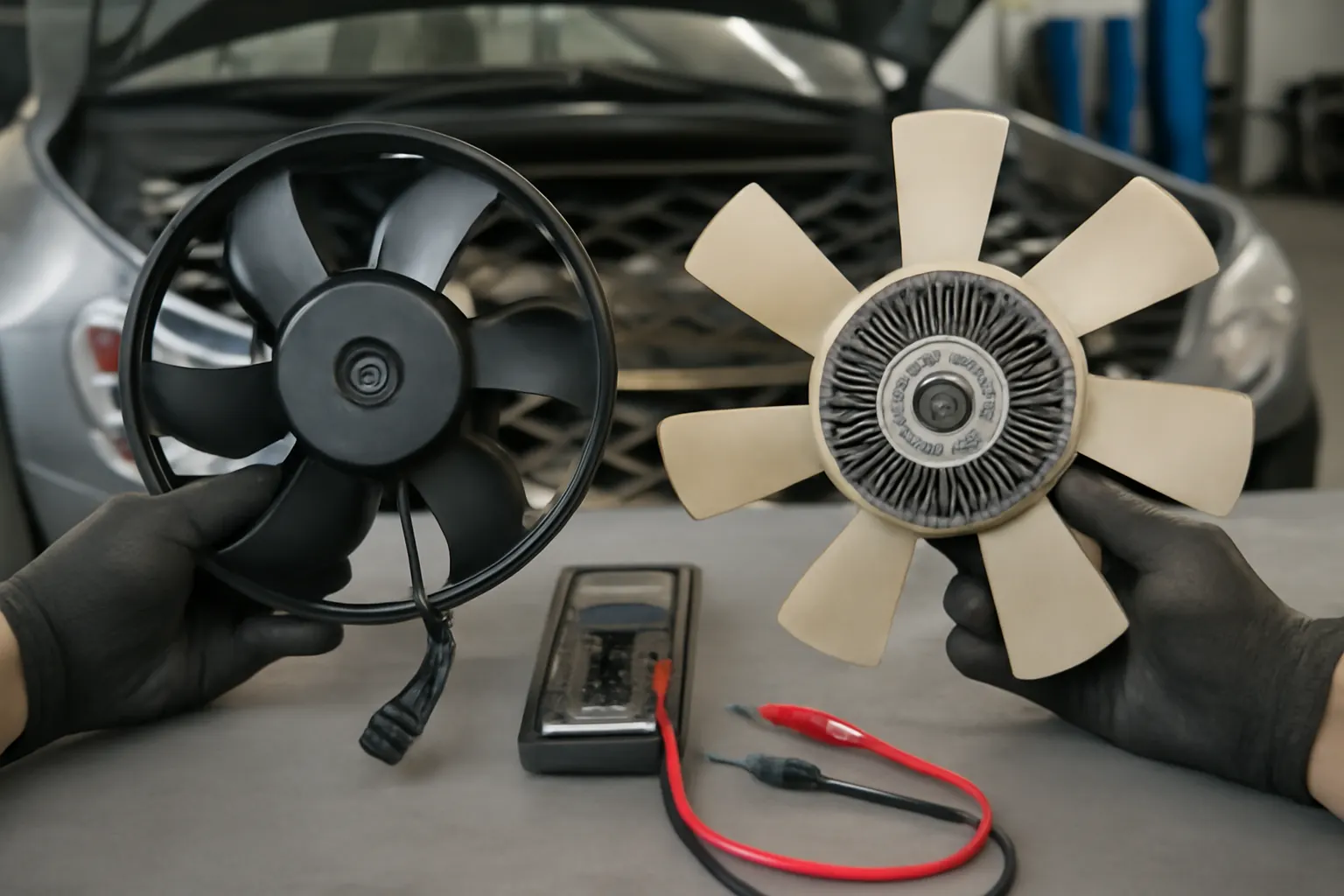
Mechanical fans are driven directly by the engine, typically via a belt and pulley system attached to the water pump or crankshaft. Fan speed is directly proportional to engine RPM, and many use a viscous clutch to engage or disengage the fan based on temperature.
Key features:
- Simple, rugged design.
- No electrical components.
- Always provides airflow when the engine is running.
How Electric Cooling Fans Work
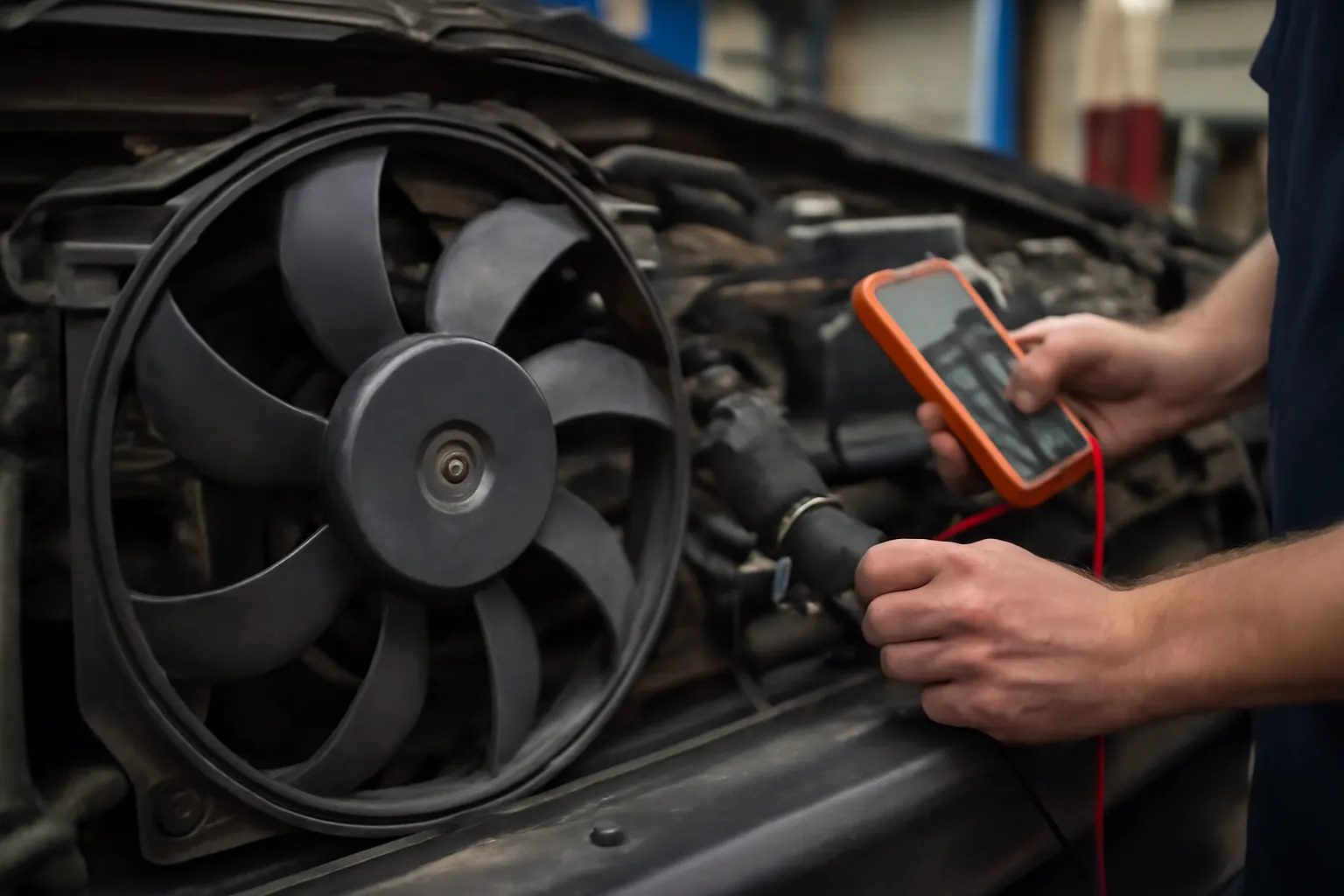
Electric fans are powered by the vehicle’s electrical system, controlled by thermostatic switches, engine control modules (ECMs), or relays. They can be programmed to activate at specific temperatures or when AC is engaged, regardless of engine speed.
Key features:
- Variable speed and on-demand operation.
- Independent of engine RPM.
- Precise temperature management.
Performance Comparison: Airflow, Efficiency, and Engine Load
Airflow and Cooling Capacity
- Mechanical fans deliver high airflow at higher RPMs but can underperform at idle or low speed, especially in traffic.
- Electric fans provide consistent, programmable airflow, ensuring optimal cooling even when stationary or during low-speed operation.
Engine Load and Efficiency
- Mechanical fans consume engine power (parasitic loss), reducing overall fuel efficiency and engine output—especially noticeable in high-RPM scenarios.
- Electric fans draw power from the alternator but only when needed, minimizing impact on fuel economy and freeing up horsepower.
According to the United States Department of Energy’s research on fuel efficiency, reducing parasitic losses (like those from engine-driven fans) can significantly improve vehicle efficiency, especially in light-duty vehicles.
Reliability and Maintenance: What Lasts Longer?
Mechanical Fan Reliability
- Pros: Fewer components to fail; can run for decades with minimal intervention.
- Cons: Fan clutches wear out; belts can break; always spinning means constant wear.
Advertisement
Electric Fan Reliability
- Pros: Fewer moving parts; no belts or clutches to fail; modern brushless motors are highly durable.
- Cons: Relays, sensors, or wiring can fail; motor brushes (in older designs) may wear.
Maintenance Tip:
Mechanical fans require periodic inspection of belts, pulleys, and clutches. Electric fans should have connections, relays, and fuse boxes checked regularly.
Installation and Fitment: Direct Swap or Custom Work?
Mechanical Fan Installation
- Usually a direct fit for vehicles originally equipped with mechanical fans.
- Requires proper alignment with engine pulleys and radiator shroud.
- Limited flexibility in modern engine bays due to size and clearance.
Electric Fan Installation
- May require custom brackets, wiring, and temperature sensors.
- Allows for flexible mounting and can free up engine bay space.
- Essential for engine swaps, classic car modernizations, or performance upgrades.
Checklist: Electric Fan Conversion Essentials
- Correct fan size for radiator core
- Proper CFM (cubic feet per minute) rating
- Reliable relay and fuse setup
- Quality thermostat or ECM control integration
- Secure mounting and shroud compatibility
- Adequate alternator capacity
Application-Specific Guidance
Daily Drivers and Commuters
- Electric fans are generally superior: quieter, more efficient, and better suited for stop-and-go traffic.
- Improved AC performance, as fans can run independently of engine speed (see The Role of the Cooling Fan in AC Performance).
Performance Builds and Track Cars
- Electric fans free up horsepower and allow precise control over engine temperature.
- Programmable dual-fan setups can target both radiator and auxiliary coolers.
Heavy-Duty and Off-Road Vehicles
- Mechanical fans excel in severe environments: no reliance on electrical systems, robust against water, mud, and debris.
- Some modern trucks use hybrid systems, combining the best of both worlds.
Classic and Vintage Vehicles
- Retaining a mechanical fan preserves originality and period-correct function.
- Electric conversions are possible for restomods or where improved cooling is needed.
Diagnostic Considerations: Spotting Fan-Related Cooling Problems
If your vehicle is overheating, undercooling, or the AC is underperforming, the cooling fan could be the culprit. Here’s how to diagnose common issues:
Mechanical Fans
- Check for worn or broken belts.
- Inspect the fan clutch: If the fan spins freely when cold and doesn’t stiffen when hot, the clutch may be faulty.
- Look for cracked or damaged fan blades.
- Listen for excessive fan noise (indicates a stuck clutch).
Electric Fans
- Verify fan operation: Does it spin when the engine reaches operating temperature or AC is on?
- Check fuses and relays in the fan circuit.
- Test temperature sensors and wiring harnesses.
- Listen for abnormal noises or intermittent operation.
For a step-by-step troubleshooting guide, see Diagnosing Cooling System Overheating.
Fuel Efficiency and Environmental Impact
The Department of Energy highlights that reducing engine-driven accessory loads is a key strategy for improving fuel economy. Electric fans, by eliminating the constant drag of a mechanical fan, can contribute to:
- Better fuel efficiency (especially in city driving).
- Reduced emissions, as the engine works less to drive accessories.
- Lower overall vehicle weight, when paired with lightweight fan assemblies (see DOE Materials Technologies).
This is particularly important for hybrid and electric vehicles, where every watt counts.
Safety, Standards, and Recalls
Both electric and mechanical fans are subject to rigorous safety and equipment standards. The National Highway Traffic Safety Administration (NHTSA) monitors fan-related recalls and sets guidelines for:
- Blade containment in case of failure.
- Safe wiring and relay design (for electric fans).
- Proper shroud and mounting hardware to prevent injury or debris damage.
Before purchasing or installing a replacement fan, check for any open recalls or manufacturer bulletins affecting your vehicle.
Maintenance Best Practices
Mechanical Fan Maintenance
- Inspect belts and pulleys every oil change.
- Check fan clutch for leaks or excessive play.
- Tighten mounting bolts and inspect shrouds for cracks.
Advertisement
Electric Fan Maintenance
- Test fan operation at both idle and high engine temperature.
- Clean electrical connectors and check for corrosion.
- Inspect wiring harnesses for fraying or heat damage.
- Verify relay and fuse function at least annually.
Regular maintenance not only extends fan life but also prevents catastrophic overheating events.
Buying Guidance: Choosing the Right Fan for Your Vehicle
When sourcing a replacement or upgrade, consider:
1. Fitment:
- Ensure the fan matches your radiator dimensions and shroud design.
- For electric fans, check clearance with engine accessories and hoses.
2. Performance:
- Select a fan with adequate CFM for your engine size and intended use.
- For high-performance or turbocharged engines, dual-fan setups may be necessary.
3. Quality:
- Choose fans from reputable manufacturers meeting SAE standards.
- Avoid generic or poorly reviewed aftermarket units.
4. Compatibility:
- Check alternator output before adding high-draw electric fans.
- For mechanical fans, verify clutch type (thermal vs. non-thermal) and pulley ratios.
For more on fan replacement, see How to Replace a Radiator Cooling Fan.
Checklist: Is an Electric or Mechanical Fan Right for You?
| Criteria | Electric Fan | Mechanical Fan |
|---|---|---|
| Vehicle Age | Modern/Upgraded | Classic/Stock |
| Driving Style | City/Performance | Towing/Off-Road |
| Installation | Moderate/Custom | Simple/Direct Fit |
| Maintenance | Electrical Checks | Belt/Clutch Checks |
| Power Draw | Electrical System | Engine Driven |
| Cooling Control | Precise/Programmable | RPM Dependent |
| AC Performance | Excellent | Variable |
| Fuel Efficiency | Improved | Lower |
| Reliability | High (modern) | Very High |
| Cost (Initial) | Moderate | Low |
| Cost (Long Term) | Low | Moderate |
Deeper Technical Considerations
Materials and Construction
Modern electric fans often use lightweight composite blades and brushless motors, which reduce weight and increase efficiency (DOE Materials Technologies). Mechanical fans may use metal or heavy-duty plastic, optimized for durability under high-load conditions.
Control Strategies
- Electric fans can be managed by standalone thermostats, engine control modules, or multi-speed relays.
- Mechanical fans rely on thermal clutches or direct drive, with limited modulation.
Hybrid Systems
Some vehicles use both fan types—a mechanical fan for baseline cooling and an auxiliary electric fan for peak demand (e.g., towing or AC operation).
Common Pitfalls and How to Avoid Them
- Undersized electric fans can lead to chronic overheating.
- Overloading electrical systems without upgrading the alternator can cause battery drain or fuse failures.
- Improper shroud fitment reduces airflow efficiency, whether electric or mechanical.
- Neglecting maintenance of fan clutches or electrical connectors leads to sudden failures.
Always consult your vehicle’s service manual and, when in doubt, seek expert installation or diagnosis.
AutoPartEx: Your Partner in Cooling System Excellence
At AutoPartEx, we understand that the right cooling fan makes all the difference in engine performance, reliability, and driving comfort. Our curated selection of electric and mechanical fans, along with detailed guides and diagnostic resources, empowers you to make the best choice for your vehicle. Whether you drive an Acura, a classic AMC, or a modern performance car, our technical support and fitment tools ensure you get the right part the first time.
Explore our Comprehensive Cooling Fan Guide: Performance, Diagnostics, and Replacement for even more resources, or reach out to our team for personalized help.
Conclusion: Make the Right Cooling Fan Choice
The debate between electric and mechanical cooling fans is more than academic—it’s a matter of engine health, efficiency, and long-term ownership satisfaction. Electric fans dominate in modern vehicles and performance builds, offering precise control and efficiency gains. Mechanical fans remain the workhorse for heavy-duty, off-road, and classic applications.
Evaluate your vehicle’s needs, driving environment, and maintenance preferences. Invest in quality components, follow best practices for installation and maintenance, and rely on trusted experts like AutoPartEx for guidance and support. Your engine—and your peace of mind—depend on it.
References
Advertisement