Advertisement
Sourcing authentic parts for classic Diamond Reo trucks is a high-stakes challenge. Counterfeit or substandard components can undermine safety, reliability, and restoration value. This comprehensive guide delivers best practices, field-proven diagnostic tips, and real-world shop stories to help you identify, avoid, and outsmart counterfeiters—ensuring your Diamond Reo restoration or repair project stays true to its legendary heritage.
Whether you’re a restorer, fleet manager, or enthusiast, the stakes are clear: only authentic, properly engineered parts can guarantee the safety and performance standards that Diamond Reo trucks are known for. For a fast track to authentic, OEM-fitment parts, start with the Diamond Reo Auto Parts: Heritage, Authenticity & OEM Fitment | AutoPartEx category.
The Immediate Answer: Why Counterfeit Parts Are a Hidden Threat to Classic Diamond Reo Trucks
Counterfeit parts are not just a nuisance—they are a direct threat to the safety, reliability, and long-term value of classic Diamond Reo trucks. These subpar components often fail to meet OEM specifications, putting your vehicle’s performance, your investment, and even your safety at risk. The National Highway Traffic Safety Administration (NHTSA) consistently warns that non-genuine parts can lead to catastrophic failures, especially in critical systems such as brakes, steering, and suspension [^1].
For classic truck owners, the authenticity of every replacement part is paramount. Whether you’re sourcing a rare transmission mount, a period-correct fuel tank, or a cab corner panel, ensuring each component is genuine is the only way to preserve your truck’s heritage and roadworthiness.
The Hidden Problem: Counterfeiters Targeting Classic Truck Parts
The classic truck restoration market has experienced a surge in demand for rare parts. This demand has attracted counterfeiters who produce lookalike components that may pass a casual visual inspection but fail under real-world conditions. Diamond Reo trucks, with their cult status and limited OEM supply, are a prime target.
Counterfeit parts often enter the supply chain through online marketplaces, swap meets, and even some brick-and-mortar stores. These parts can be difficult to distinguish from authentic components, especially when documentation or provenance is lacking. The problem is compounded by the age of Diamond Reo trucks: many original parts are no longer manufactured, making it tempting to take a risk on a questionable source.
How Counterfeit Parts Undermine Safety, Performance, and Value
Counterfeit truck parts are more than just a cosmetic issue. They undermine:
- Safety: Counterfeit brake linings, steering components, and suspension bushings may fail without warning, leading to loss of vehicle control.
- Performance: Engine and drivetrain counterfeits can cause erratic operation, poor fuel economy, and premature wear.
- Value: A restoration project using non-authentic parts loses resale value and credibility among collectors.
- Legal Compliance: Non-genuine parts may not meet federal safety standards or pass routine inspections.
The NHTSA’s database of recalls and safety bulletins is replete with cases where non-compliant parts have led to serious accidents [^1]. Even a seemingly minor part—like a fastener or gasket—can have outsized consequences when it fails.
Recognizing the Telltale Signs of Counterfeit Diamond Reo Parts
Spotting a counterfeit isn’t always straightforward, but seasoned restorers and shop techs use a combination of documentation, physical inspection, and supplier vetting to reduce risk. Here are the most common red flags:
- Unusual Packaging: Misspellings, low-quality print, or missing logos on packaging.
- Incorrect Markings: Lack of OEM part numbers, incorrect casting marks, or inconsistent fonts.
- Material Quality: Inferior metals, plastics, or finishes that don’t match factory specs. The U.S. Department of Energy notes that advanced materials are crucial for structural integrity and performance [^3].
- Weight Discrepancies: Counterfeit parts often weigh less (or more) due to poor materials or missing reinforcements.
- Fit and Finish: Misaligned mounting holes, poor surface finish, or rough edges.
- Suspiciously Low Price: If a deal seems too good to be true, it probably is.
Advertisement
For deeper insight into identifying authentic Diamond Reo parts, see How to Identify Authentic Diamond Reo Parts.
Field Diagnostics: Hands-On Tests for Authenticity
Professional shops and experienced restorers employ a range of diagnostic techniques to confirm part authenticity before installation:
Visual and Physical Inspection
- Compare with Original: Whenever possible, compare the suspect part to an original or known-authentic component.
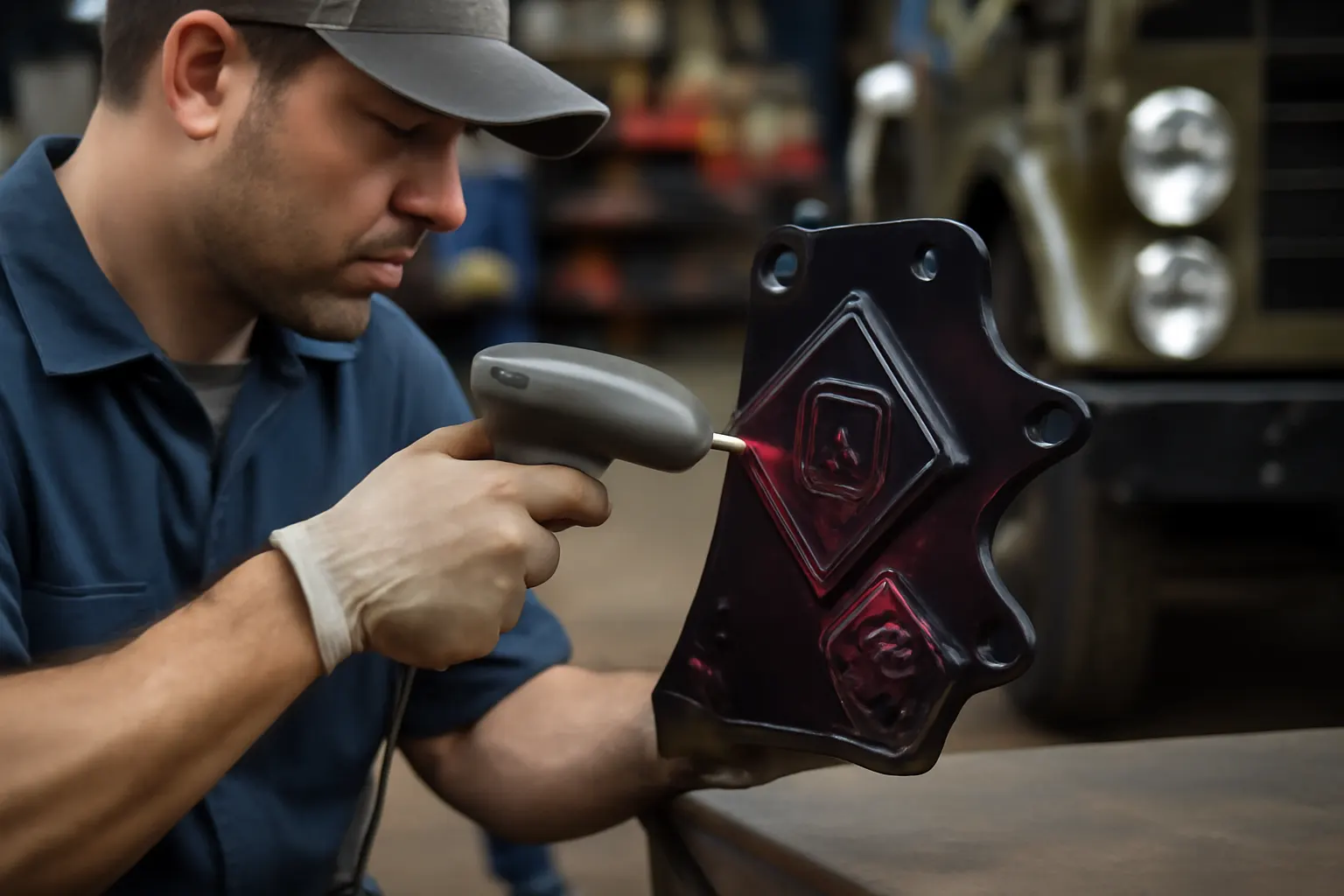
- Check Casting and Stamping: Authentic parts have precise, consistent markings. Counterfeits often have fuzzy or missing identifiers.
- Test Fitment: Dry-fit the part before committing to installation. Genuine parts should align perfectly with factory mounting points and interfaces.
Material and Weight Testing
- Magnet Test: For steel components, check magnetic properties; some counterfeits use lower-grade alloys.
- Caliper Measurements: Use digital calipers to measure critical dimensions and compare to OEM specs.
- Weigh the Part: Differences in weight can indicate missing reinforcements or inferior materials.
Functional Testing (Where Safe)
- Bench Test: For electrical or hydraulic parts, bench-test before installation.
- Torque Test: For fasteners and critical hardware, verify that the part withstands specified torque without deformation.
The Role of Documentation and Provenance
Paperwork matters. Authentic parts are often accompanied by:
- OEM Packaging: With manufacturer logos, part numbers, and barcodes.
- Certificates of Authenticity: Particularly for high-value or rare components.
- Supplier Invoices: Reputable suppliers provide detailed invoices listing manufacturer, part number, and batch/lot codes.
Whenever you source a rare Diamond Reo part, document its origin. Keep receipts, photographs, and correspondence. This not only helps with future resale but also aids in tracing any issues back to the supplier.
Sourcing Diamond Reo Parts: Best Practices for Avoiding Counterfeits
Finding genuine Diamond Reo parts is a challenge, but these field-proven sourcing strategies work:
Buy from Reputable Suppliers
- Specialty Distributors: Use suppliers specializing in classic Diamond Reo and heavy truck parts.
- OEM Channels: When available, buy directly from original manufacturers or their authorized licensees.
- Trusted Networks: Leverage restoration clubs and online forums to vet suppliers.
Avoid High-Risk Channels
- Online Marketplaces: Exercise caution with auction sites, classified ads, and global e-commerce platforms.
- Unverified Swap Meets: While swap meets can yield treasures, verify the credentials of sellers before purchase.
Request Documentation
- Ask for Proof: Don’t hesitate to request photos, part numbers, and documentation before buying.
- Check Return Policies: Reliable suppliers stand behind their products with clear return and exchange policies.
For a curated selection of authentic, fitment-guaranteed parts, visit the Diamond Reo parts category.
Checklist: How to Vet a Diamond Reo Part Supplier
Use this field checklist before committing to a purchase:
| Step | Action Item | Pass/Fail |
|---|---|---|
| Supplier Reputation | Check reviews, industry reputation, and club/forum feedback | |
| OEM Documentation | Request part numbers, certificates, and packaging details | |
| Return Policy | Confirm clear, written return/exchange policy | |
| Part Inspection | Ask for detailed photos, measurements, and weight | |
| Price Comparison | Compare to known market value; beware of deep discounts | |
| Communication | Evaluate responsiveness and technical knowledge | |
| Payment Security | Use secure, traceable payment methods | |
| Provenance | Request history/provenance for rare or high-value parts |
Real-World Shop Stories: Lessons from the Field
The Case of the Failing Brake Drum
A Pennsylvania restorer sourced a “NOS” (new old stock) brake drum for a 1975 Diamond Reo dump truck from a well-known online marketplace. Within 500 miles, the drum cracked catastrophically. Post-mortem analysis revealed substandard casting with air pockets—a classic sign of counterfeit manufacturing.
The Mystery of the Misfit Cab Mount
A Midwest fleet operator ordered a batch of cab mounts from a new supplier. The parts arrived with correct part numbers but failed to align with factory mounting holes. Investigation showed the mounting brackets were stamped from thinner, lower-grade steel, compromising cab stability and safety.
Both cases underscore the importance of physical inspection, supplier vetting, and documentation. One shop now maintains a reference library of original parts and only buys from vetted sources, reducing failure rates and warranty claims.
Advertisement
Technical Deep Dive: Materials, Performance, and Standards
Counterfeiters often cut corners in material selection and manufacturing processes. The U.S. Department of Energy emphasizes advanced material technologies as key to vehicle safety, structural integrity, and performance 1. Authentic Diamond Reo parts were engineered for heavy-duty applications, with specific alloys, heat treatments, and quality controls.
Counterfeit components may use:
- Inferior Metals: Lower-grade steel or aluminum, leading to reduced strength and corrosion resistance.
- Subpar Plastics: Weak polymers that degrade quickly under thermal or UV stress.
- Improper Coatings: Missing or inadequate surface treatments, accelerating wear and rust.
OEM Diamond Reo parts were built to standards that often exceed minimum regulatory requirements. The Society of Automotive Engineers (SAE) maintains rigorous standards for everything from fastener strength to brake lining composition 2. Counterfeits rarely meet these benchmarks.
Fitment and Compatibility: Why Only Authentic Parts Deliver OEM Performance
Diamond Reo trucks are known for their robust engineering and precise fitment. Using authentic parts ensures:
- Correct Geometry: Proper alignment of suspension, steering, and drivetrain components.
- Consistent Performance: Predictable braking, handling, and load-carrying capability.
- Fuel Efficiency: The U.S. Department of Energy notes that component integrity directly impacts fuel economy and emissions 3.
Counterfeit parts often have subtle dimensional errors that can cause:
- Noise and Vibration: Misaligned mounts or bushings.
- Premature Wear: Incorrect tolerances leading to accelerated component failure.
- Safety Hazards: Incomplete engagement of critical fasteners or connectors.
For advanced guidance on drivetrain swaps and compatibility, reference the Diamond Reo Drivetrain Compatibility Guide.
The Long-Term Cost of Counterfeit Parts
While counterfeit parts may offer an upfront cost advantage, the long-term risks far outweigh the savings:
- Frequent Replacements: Inferior parts fail sooner, increasing labor and downtime.
- Collateral Damage: A failed counterfeit can damage adjacent systems (e.g., a faulty water pump taking out a head gasket).
- Insurance and Liability: Non-genuine parts may void insurance coverage or increase liability in the event of an accident.
Seasoned restorers and fleet managers have learned that “buying cheap means buying twice”—or worse, risking catastrophic failure on the road.
Maintenance and Inspection: Keeping Counterfeits Out of Your Fleet
Even with the best sourcing practices, it’s possible for counterfeit parts to slip through. Implement these ongoing maintenance strategies:
- Routine Inspections: Schedule regular checks for critical systems—brakes, steering, suspension, and drivetrain.
- Track Part Lifecycles: Maintain detailed records of installation dates, sources, and performance history.
- Replace on Suspicion: If a part shows premature wear or unusual behavior, replace it with a verified authentic component.
- Educate Your Team: Train mechanics and operators to recognize the signs of counterfeit parts and report concerns.
These steps not only protect your investment but also align with NHTSA-recommended best practices for vehicle safety 4.
AutoPartEx: Your Partner in Authentic Diamond Reo Parts
At AutoPartEx, we understand the unique challenges of sourcing authentic parts for classic Diamond Reo trucks. Our inventory is curated for fitment, authenticity, and performance—backed by technical documentation and a network of trusted suppliers. Whether you’re tackling a frame-off restoration or keeping a workhorse on the road, our team is ready to help you verify parts, troubleshoot fitment, and share best practices from the field.
Explore our Diamond Reo Auto Parts: Heritage, Authenticity & OEM Fitment | AutoPartEx page for the latest inventory, technical guides, and field stories from restorers across the country. For hands-on restoration insights, see Field Notes: Restoring a 1973 Diamond Reo Dump Truck.
Expert Action: What to Do Next
- Audit Your Inventory: Review your current stock for documentation and provenance.
- Vet Your Suppliers: Use the checklist above to ensure you’re buying from reputable sources.
- Educate Your Team: Share this guide and train your crew to spot counterfeit parts.
- Stay Informed: Subscribe to NHTSA safety bulletins and AutoPartEx updates.
- Connect with the Community: Join Diamond Reo forums and restoration clubs to share sourcing tips and warnings.
By taking these proactive steps, you’ll protect your classic truck, your investment, and your reputation.
References
- Vehicle Safety and Equipment – National Highway Traffic Safety Administration
- Fuel Efficiency – United States Department of Energy
- Materials Technologies – United States Department of Energy
- Vehicle, Car Seat, Tire, and Equipment Recalls – National Highway Traffic Safety Administration
- SAE Standards – SAE International
Footnotes
Advertisement