The Impact of Crankshaft Balance on Engine Longevity
Crankshaft balance is a decisive factor in engine performance and durability. A properly balanced crankshaft minimizes vibration, reduces component wear, and directly extends the life of your engine. Whether you drive a daily commuter or a high-performance machine, understanding the role of crankshaft balance is essential for maximizing reliability and safeguarding your investment. This article explores the science behind crankshaft balance, its hidden dangers, and practical steps you can take to ensure your engine runs smoother, longer, and more efficiently.
If you’re looking to deepen your knowledge on crankshafts, don’t miss our Crankshaft Technical Guide: The Heart of Engine Performance and Reliability for a comprehensive overview of crankshaft types, failures, and upgrades.
Why Crankshaft Balance Matters: The Immediate Answer
At its core, crankshaft balance is about achieving smooth engine operation. The crankshaft converts the linear motion of the pistons into rotational motion, but this process naturally creates uneven forces. If these forces are not precisely balanced, the resulting vibrations can cause premature bearing wear, fatigue cracks, and even catastrophic engine failure.
A properly balanced crankshaft:
- Reduces engine vibration
- Minimizes wear on bearings and other internal components
- Improves fuel efficiency by reducing energy losses
- Increases the longevity of the engine
Ignoring crankshaft balance is not just an issue for high-performance or racing engines—every internal combustion engine, from compact cars to heavy-duty trucks, relies on crankshaft balance for optimal operation and lifespan.
The Hidden Problem: Unbalanced Forces and Their Consequences
While many drivers and even some technicians focus on visible engine issues, crankshaft imbalance is a silent destroyer. Its effects accumulate over thousands of miles, often going unnoticed until major damage has occurred.
What Happens When a Crankshaft is Out of Balance?
- Increased Vibration: Unbalanced crankshafts transmit excessive vibration through the engine block and vehicle chassis. This can lead to discomfort, noise, and, more importantly, stress on engine mounts and ancillary components.
- Accelerated Bearing Wear: Excessive vibration translates to uneven loading on main and rod bearings. Over time, this causes abnormal wear patterns, increasing the risk of bearing failure.
- Fatigue Cracks: Repeated flexing from imbalance can cause microcracks in the crankshaft or connecting rods, eventually leading to catastrophic failure.
- Accessory Damage: Components such as the AC Compressor, alternator, and pulleys can suffer accelerated wear or failure due to vibration.
These issues are often masked by other symptoms, such as increased noise or slight drops in performance, making crankshaft balance a hidden but critical concern for engine longevity.
Crankshaft Balance: Technical Foundations
To fully appreciate the importance of crankshaft balance, it’s crucial to understand the underlying mechanics. Crankshaft balance addresses two main types of imbalance:
- Static Imbalance: Occurs when the crankshaft mass is not evenly distributed around its rotational axis, causing it to “want” to rotate to a heavy spot when suspended.
- Dynamic Imbalance: Refers to uneven mass distribution along the length of the crankshaft, leading to wobbling or “whipping” at speed.
Modern engines rely on sophisticated balancing techniques, including:
- Counterweights: Integrated into the crankshaft to offset the mass of the crank throws and pistons.
- Harmonic Dampers: Absorb and dissipate vibrational energy.
- Precision Machining: Advances in materials and manufacturing, as highlighted by the United States Department of Energy’s Materials Technologies, have enabled tighter tolerances and lighter rotating assemblies, further reducing imbalance.
The Society of Automotive Engineers (SAE) sets strict standards for crankshaft balance (see SAE Standards), especially in modern engines where higher RPMs and tighter emission standards demand greater precision.
How Imbalance Reduces Engine Longevity
Unbalanced crankshafts create a cascade of mechanical stresses that shorten engine life. Here’s how:
1. Bearing Life Reduction
Vibration from imbalance causes the oil film between bearings and journals to break down more quickly, leading to increased metal-to-metal contact. This accelerates wear and can lead to bearing seizure.
2. Fatigue and Crack Propagation
Repeated vibration flexes the crankshaft and connecting rods, initiating microcracks. Over thousands of cycles, these cracks grow, potentially causing catastrophic breakage.
3. Increased Friction and Heat
Imbalance increases frictional losses, raising oil and component temperatures. Higher temperatures degrade oil faster and can warp or damage critical engine parts.
4. Ancillary Component Failure
Vibrations from an unbalanced crankshaft are transmitted to accessories like the AC Compressor Bracket and the drive belt system, leading to premature failure of these components.
Diagnosing Crankshaft Imbalance: Symptoms and Testing
Identifying a crankshaft imbalance early can prevent costly repairs. Here are the most common symptoms and diagnostic steps:
Common Symptoms
- Noticeable engine vibration, especially at certain RPMs
- Unusual noises (knocking, rattling, or droning)
- Premature bearing or accessory failures
- Oil leaks from seals due to vibration
- Increased driver fatigue or discomfort
Diagnostic Checklist
Visual and Physical Inspection:
- Inspect the crankshaft for visible damage, missing counterweights, or signs of previous repairs.
- Check for loose or damaged harmonic balancers.
- Examine engine mounts for signs of excessive movement or failure.
Measurement and Testing:
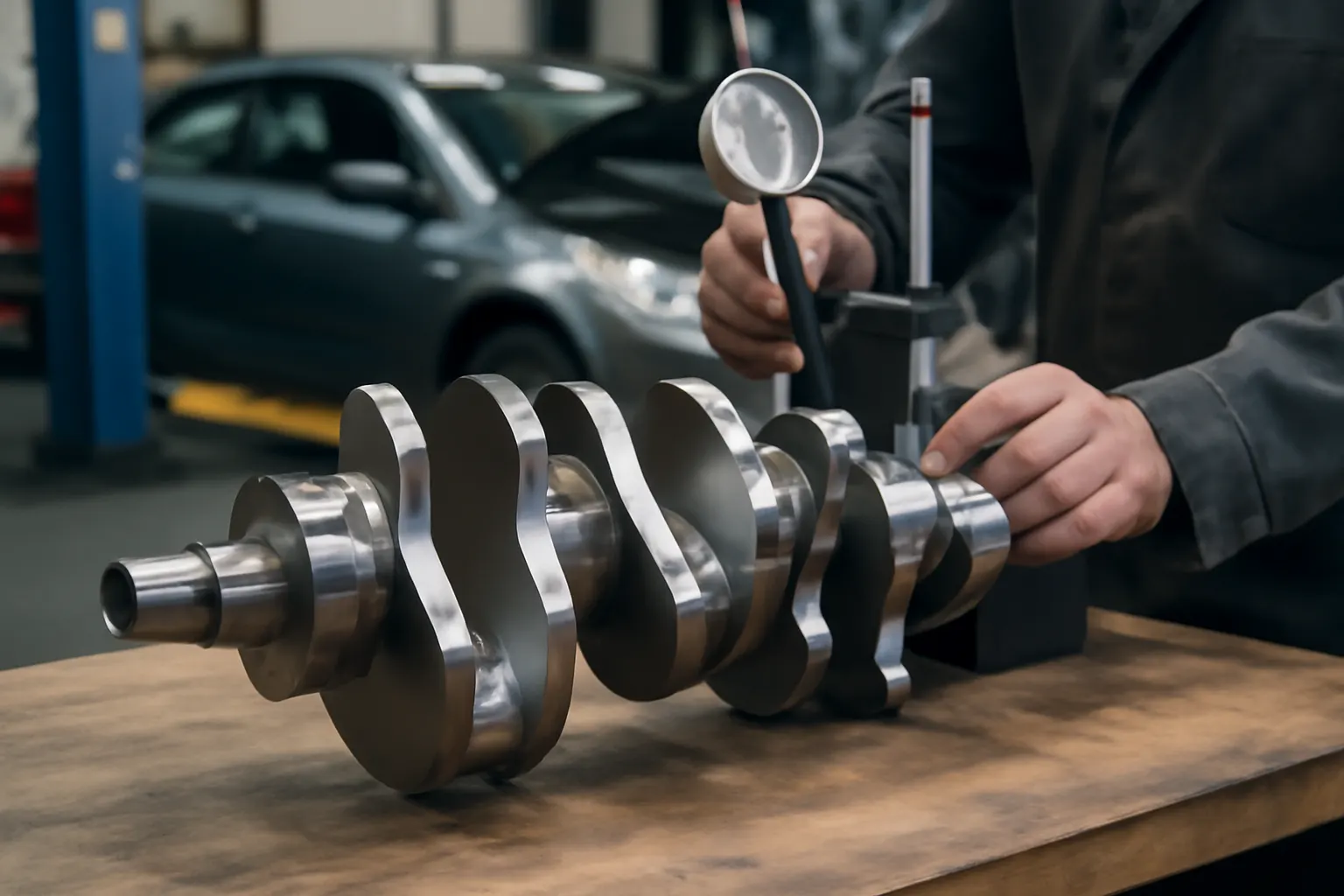
- Use dial indicators to check for crankshaft runout (bending).
- Employ vibration analysis tools to pinpoint the frequency and source of vibration.
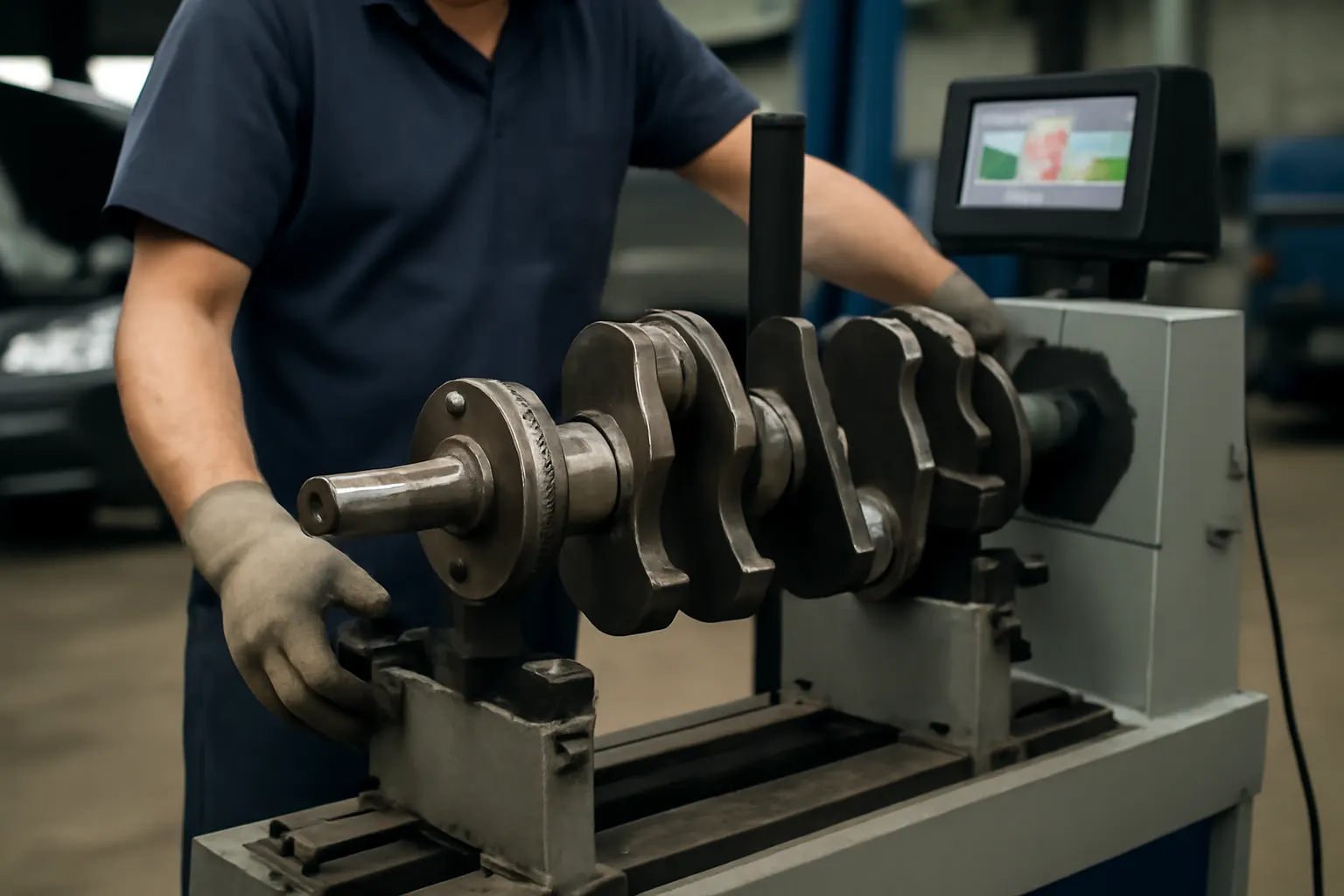
- Conduct dynamic balancing tests with specialized equipment during engine teardown.
For a step-by-step guide on diagnosing crankshaft-related issues, refer to our How to Diagnose Crankshaft Failures.
Balancing Methods: Factory vs. Aftermarket
Crankshafts are balanced both at the factory and, in some cases, after installation of performance parts or during rebuilds.
Factory Balancing
- OEM Standards: Manufacturers balance crankshafts to strict tolerances, often within a few grams.
- Integrated Balancing: Includes pistons, rods, and flywheels to ensure the entire rotating assembly is harmonized.
Aftermarket and Performance Balancing
- Custom Balancing: Essential when upgrading to forged internals, changing piston weights, or increasing RPM limits.
- Internal vs. External Balance: Some engines use external weights (flywheel, harmonic balancer) while others rely solely on internal counterweights.
Aftermarket balancing is especially important for engines that will see higher RPMs or increased loads. For more on performance upgrades, see Crankshaft Upgrades for Performance Engines.
Crankshaft Materials and Their Impact on Balance
The choice of crankshaft material directly affects balance, durability, and overall engine longevity.
Common Materials
- Cast Iron: Cost-effective but heavier and less tolerant of imbalance.
- Forged Steel: Stronger and more resilient to fatigue, making it ideal for high-performance or heavy-duty applications.
- Billet Steel: Offers the highest strength and precision, often used in racing engines.
Advances in materials—such as those described by the U.S. Department of Energy’s Materials Technologies—enable lighter, stiffer crankshafts that are easier to balance and less prone to fatigue.
Material Selection and Engine Life
- Lightweight materials reduce rotating mass, decreasing stress on bearings and improving response.
- Stronger materials tolerate minor imbalances better, but should never be a substitute for proper balancing.
For an in-depth comparison, consult our guide on Choosing Between Forged and Cast Crankshafts.
The Relationship Between Crankshaft Balance, Fuel Efficiency, and Emissions
A well-balanced crankshaft not only extends engine life but also improves fuel efficiency and reduces emissions.
Efficiency Gains
- Reduced Friction: Less energy lost to vibration means more power delivered to the wheels.
- Smoother Operation: Enables more precise fuel and ignition timing, optimizing combustion.
According to the United States Department of Energy, improvements in engine efficiency—including reduced internal friction—are key to achieving better fuel economy and lower emissions.
Environmental Impact
- Lower emissions due to more complete combustion and less wasted energy.
- Reduced need for frequent repairs and parts replacement, minimizing environmental waste.
Maintenance and Monitoring: Keeping Your Crankshaft in Check
Regular maintenance is essential to ensure your crankshaft remains balanced and your engine operates at peak longevity.
Maintenance Checklist
| Task | Frequency | Notes |
|---|---|---|
| Inspect harmonic balancer and pulleys | Every 30,000 miles | Replace if cracked, loose, or damaged |
| Check engine mounts | Every 30,000 miles or as needed | Replace if worn or broken |
| Monitor for vibration and noise | Ongoing | Address new symptoms promptly |
| Inspect crankshaft during rebuilds | At every engine overhaul | Check for cracks, wear, and balance |
| Replace worn or mismatched rotating components | As needed | Pistons, rods, flywheel should be weight-matched |
Tip: Any time you replace major rotating components (pistons, rods, flywheel), have the assembly balanced by a professional.
Installation and Fitment Guidance: Ensuring Correct Balance
Proper installation is just as important as initial balancing. Even a perfectly balanced crankshaft can become a source of vibration if installed incorrectly.
Key Installation Steps
- Cleanliness: Ensure all mating surfaces (crankshaft journals, bearings, block) are clean and free of debris.
- Torque Specs: Use manufacturer-recommended torque values for all fasteners.
- Component Matching: Use only weight-matched pistons, rods, and flywheels.
- Harmonic Balancer Fitment: Install the correct balancer for your engine’s balance type (internal or external).
- Lubrication: Apply assembly lube to bearings and journals before installation.
- Professional Balancing: If in doubt, have the entire rotating assembly balanced by a specialist.
Warning: Never mix components from different engines or manufacturers without verifying compatibility and balance.
When to Rebalance: Triggers and Best Practices
There are several scenarios where rebalancing your crankshaft is essential for engine longevity:
- Engine Rebuilds: Any time the engine is disassembled, especially if replacing pistons, rods, or crankshaft.
- Performance Upgrades: Installing aftermarket or high-performance parts.
- Damage or Wear: If the crankshaft, flywheel, or harmonic damper shows signs of damage.
- Persistent Vibration: Unexplained vibration after other causes have been ruled out.
Best Practices
- Always balance the entire rotating assembly, not just the crankshaft.
- Use reputable machine shops with experience in your engine type.
- Request a balance certificate for documentation.
The Cost of Neglect: Real-World Consequences
Ignoring crankshaft balance can lead to a range of costly and sometimes dangerous failures:
- Catastrophic Engine Failure: A cracked crankshaft or spun bearing can destroy an engine in seconds.
- Accessory Damage: Vibration can ruin expensive components like the AC Condenser or air conditioning system.
- Safety Risks: Severe vibration can compromise vehicle control or even cause parts to detach, as highlighted in Vehicle Safety and Equipment standards.
Investing in proper balancing and maintenance is always less expensive than repairing or replacing a failed engine.
AutoPartEx Expert Guidance: Your Partner in Engine Reliability
At AutoPartEx, we believe that every engine deserves the best chance at a long, reliable life. Our technical resources, curated parts catalog, and expert support help you make informed decisions—whether you’re sourcing a replacement crankshaft or upgrading for performance.
- Expert Sourcing: We offer OEM and performance crankshafts, harmonic balancers, and engine internals.
- Technical Support: Our editorial team and support staff can guide you through diagnosis, fitment, and installation.
- Educational Content: Explore our Crankshaft Technical Guide: The Heart of Engine Performance and Reliability for in-depth articles, or browse related topics like Crankshaft Upgrades for Performance Engines.
If you suspect crankshaft imbalance or are planning an engine overhaul, consult with an experienced technician or reach out to AutoPartEx for recommendations on parts and professional balancing services.
Take Action: Protect Your Engine’s Longevity Today
Crankshaft balance is not a luxury—it’s a necessity for anyone who values engine longevity, efficiency, and safety. Whether you’re maintaining a daily driver or building a performance machine, never overlook the impact of proper balancing.
Next Steps:
- Monitor your engine for signs of vibration or unusual noise.
- Schedule regular inspections of your crankshaft, bearings, and harmonic balancer.
- Insist on professional balancing during rebuilds or upgrades.
- Source quality, compatible parts from trusted suppliers like AutoPartEx.
By taking these steps, you’ll ensure your engine delivers reliable performance and maximum lifespan—mile after mile.