
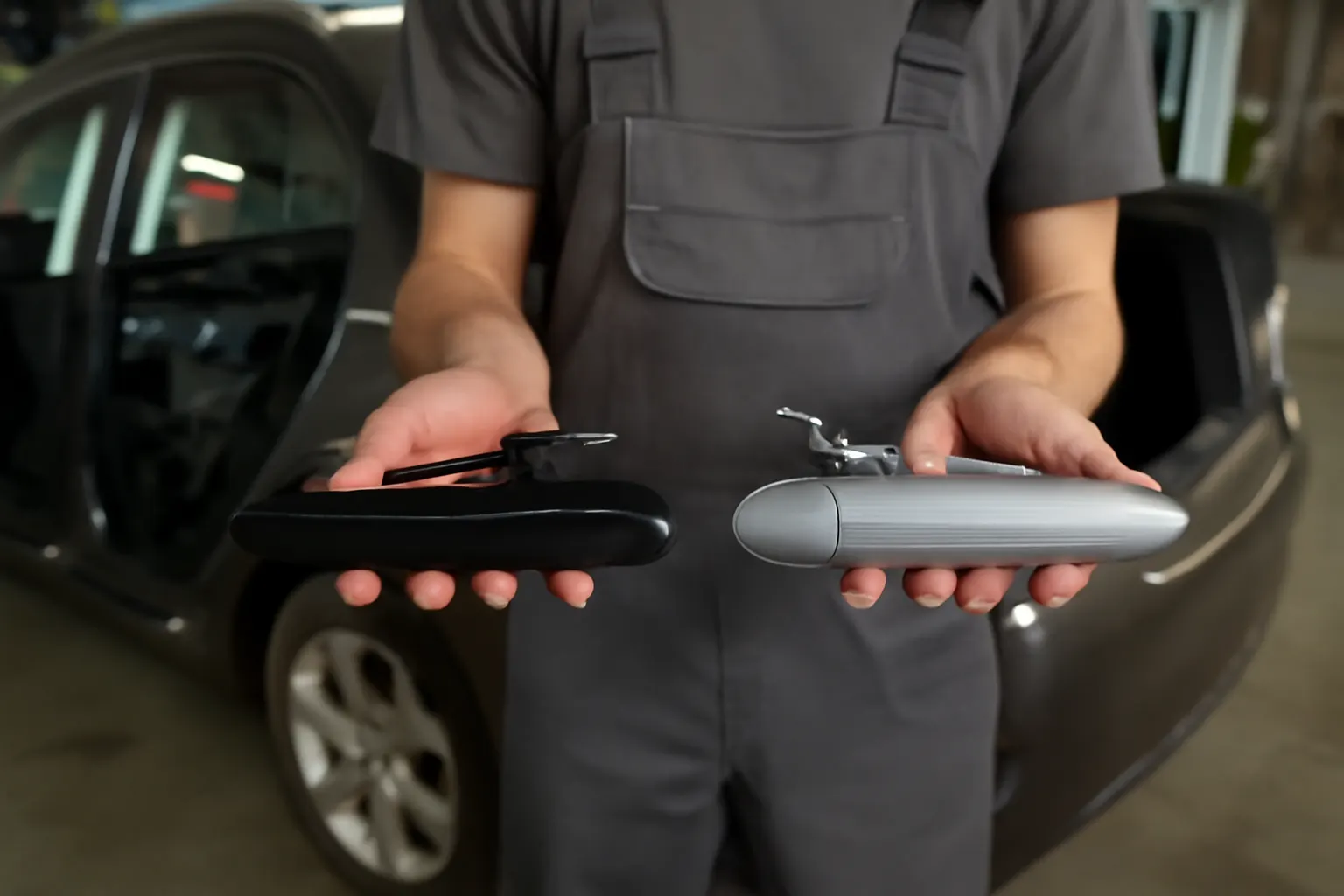
Choosing OEM vs. Aftermarket Outside Door Handles
When it comes time to replace an outside door handle, vehicle owners and repair professionals face a crucial decision: should you select an Original Equipment Manufacturer (OEM) handle or opt for an aftermarket alternative? This choice directly impacts your vehicle’s fit, security, aesthetics, and long-term maintenance costs. In this in-depth guide, AutoPartEx delivers a technical, practical comparison of OEM and aftermarket outside door handles—focusing on fitment, durability, material composition, and security features—so you can make a confident, well-informed decision.
Immediate Answer: OEM vs. Aftermarket—Which Door Handle Is Best for You?
OEM outside door handles are manufactured by or for the original vehicle maker, guaranteeing exact fitment, factory-matched finishes, and full compatibility with your vehicle’s locking and security systems. Aftermarket handles are produced by third-party companies, often at a lower price point, with a broad range of materials and finishes, and variable quality. For critical fitment, seamless integration, and maximum durability, OEM handles are the gold standard. However, quality aftermarket handles can be a cost-effective solution if you know what to look for and verify compatibility.
The Hidden Problem: Why the Wrong Handle Choice Can Undermine Security and Performance
Selecting the wrong outside door handle isn’t just a cosmetic or minor inconvenience—it can undermine your vehicle’s safety, structural integrity, and even fuel efficiency. Poorly fitting or low-quality handles can cause:
- Misaligned latches and locks, compromising door security
- Increased risk of handle breakage or failure under stress
- Water ingress, leading to corrosion or electrical issues inside the door
- Difficulty integrating with modern security or keyless entry systems
- Unintended gaps, wind noise, or even drag, which can marginally affect fuel efficiency (DOE Fuel Efficiency)
Many vehicle owners only discover these issues after installation, resulting in additional costs, wasted time, and potential safety hazards.
Problem Expansion: Technical Differences Between OEM and Aftermarket Handles
1. Fitment Precision
OEM handles are designed to match the exact specifications, mounting points, and tolerances of your vehicle’s make, model, and year. This ensures seamless installation without the need for modification. Aftermarket handles, while often marketed as “direct fit,” may have slight dimensional variances or require minor adjustments, especially for less common models.
2. Material Quality and Durability
OEM handles typically use materials that meet or exceed manufacturer and regulatory standards, such as reinforced ABS plastics, die-cast metals, or advanced composites. These materials are chosen for their strength, weather resistance, and longevity (DOE Materials Technologies). Aftermarket options range widely in material quality—some use inferior plastics or thin metals that may become brittle, fade, or corrode faster.
3. Security Features
Modern door handles often incorporate advanced security features, such as:
- Integrated electronic sensors
- Anti-theft lock cylinders
- Tamper-resistant fasteners
OEM handles are engineered to work flawlessly with your vehicle’s security system. Aftermarket handles may lack these features, or may not integrate cleanly, leaving vulnerabilities (NHTSA Vehicle Safety and Equipment).
4. Finish and Appearance
OEM handles are color-matched and finished to factory standards, ensuring a cohesive look. Aftermarket handles may offer a broader range of finishes, but color matching can be inconsistent, especially for older or custom paint codes.
Solution Path: How to Choose the Right Outside Door Handle
1. Diagnose Your Needs
Before purchasing, identify your priorities:
- Is perfect fitment and finish essential, or is cost savings more important?
- Does your vehicle use keyless entry, smart locks, or integrated sensors?
- Is your vehicle exposed to harsh weather, salt, or UV, which can accelerate wear?
- Are you concerned about resale value or maintaining a factory-correct appearance?
2. Evaluate Fitment and Compatibility
- Always verify the handle’s compatibility using your VIN, make, model, and year.
- Review technical drawings, mounting points, and latch mechanisms.
- For newer vehicles, check for sensor integration or special lock cylinder requirements.
3. Assess Material Construction
- Seek handles made from OEM-grade plastics or metals.
- Inspect for reinforcements at stress points (pivot, latch, mounting locations).
- Look for corrosion-resistant coatings or UV-protected finishes.
4. Scrutinize Security Features
- Ensure the handle supports your original locking system.
- For keyless vehicles, confirm sensor and wiring harness compatibility.
- Avoid handles with generic or weak lock cylinders.
5. Compare Warranties and Certifications
- OEM handles often include a manufacturer-backed warranty.
- Quality aftermarket handles may carry limited warranties—check the terms.
- Look for compliance with industry standards (e.g., SAE, NHTSA).
6. Installation Considerations
- Some aftermarket handles require minor modifications or additional hardware.
- Consult installation guides or seek professional installation for complex vehicles.
Fitment Checklist: Selecting the Correct Outside Door Handle
Use this checklist to streamline your handle selection:
| Step | Task | OEM Handles | Aftermarket Handles |
|---|---|---|---|
| 1 | Confirm vehicle make, model, year, and door position | ✔️ | ✔️ |
| 2 | Cross-check part number or VIN compatibility | ✔️ | ✔️ |
| 3 | Inspect mounting points and latch style | ✔️ | Sometimes varies |
| 4 | Verify finish/color match | Factory match | May require custom paint |
| 5 | Assess material construction | OEM standard | Varies—inspect specs |
| 6 | Check for integrated security/electronics | Included | May be absent |
| 7 | Review warranty details | OEM-backed | Varies by brand |
| 8 | Evaluate installation requirements | Direct fit | May need adjustment |
Technical Deep Dive: Material Science and Handle Performance
OEM Materials and Engineering
OEM handles are engineered with vehicle lifecycle in mind. Manufacturers use:
- Reinforced thermoplastics (often ABS or polycarbonate blends) for impact resistance and UV stability
- Die-cast zinc or aluminum for structural strength in high-stress applications
- Corrosion-resistant coatings to withstand years of weather and road salt exposure
These materials are chosen based on extensive testing for fatigue, thermal cycling, and chemical resistance (DOE Materials Technologies).
Aftermarket Variability
Aftermarket handle quality ranges from premium, OEM-equivalent parts to budget options that may use:
- Low-grade plastics prone to cracking or fading
- Thin-gauge metals susceptible to bending or corrosion
- Adhesive-bonded, rather than mechanically fastened, components
The lack of standardized material requirements means close inspection and brand research are critical.
Security Implications: Handles as the First Line of Defense
OEM Security Integration
Most modern vehicles integrate the outside door handle with sophisticated security systems:
- Keyless entry antennas or touch sensors
- Tamper-resistant mounting (hidden fasteners, shielded lock cylinders)
- Alarm triggers connected to handle movement
OEM handles are built with these features in mind, reducing the risk of forced entry or bypass.
Aftermarket Security Risks
Aftermarket handles may not always accommodate:
- Complex wiring harnesses or sensor mounts
- Factory anti-theft lock cylinders
- Proper shielding from tampering tools
This can create vulnerabilities, especially for newer vehicles. Always cross-check with your vehicle’s security system before installing an aftermarket handle.
Installation and Maintenance: What to Expect
OEM Handle Installation
- Typically bolts directly into existing mounting points
- Uses factory hardware and connectors
- Often includes detailed instructions or dealer support
Aftermarket Handle Installation
- May require drilling, trimming, or additional brackets
- Instructions can vary in clarity and completeness
- Some handles may not include necessary fasteners or gaskets
Tip: See our How to Replace an Outside Door Handle: Step-by-Step Guide for detailed procedures and best practices.
Maintenance Considerations
- Lubricate moving parts annually with silicone-based lubricant
- Inspect for play, cracks, or finish deterioration every 12 months
- For vehicles in coastal or northern climates, rinse handles to remove salt and debris
Cost Analysis: Price vs. Value
OEM Handles
- Higher initial cost, but predictable fit and finish
- Backed by manufacturer warranty
- May retain higher resale value
Aftermarket Handles
- Lower upfront cost; wide price range
- Quality varies by brand and supplier
- May incur extra costs for paint, installation, or replacement if fitment is poor
Long-term perspective: Cheap aftermarket handles that fail early can cost more in labor and repeated replacements than a single, high-quality OEM handle.
Regulatory and Safety Considerations
Standards and Testing
- OEM handles must meet federal and manufacturer safety standards (NHTSA Vehicle Safety and Equipment), including crashworthiness and child safety.
- Quality aftermarket handles should comply with Society of Automotive Engineers (SAE) standards, but not all do (SAE Standards).
Recall Awareness
- OEM and some reputable aftermarket suppliers will issue recalls for defective handles (NHTSA Recalls).
- Low-cost aftermarket brands may not have robust recall or support processes.
Diagnosing Handle Failure: When to Replace
Common symptoms indicating outside door handle replacement:
- Handle feels loose, wobbly, or unresponsive
- Door does not open from the outside, even when unlocked
- Visible cracks, corrosion, or peeling finish
- Keyless entry or lock functions malfunction
See our Common Causes of Outside Door Handle Failure for an in-depth look at failure modes and diagnostic tips.
Buying Guidance: How to Source the Right Handle
OEM Handle Sourcing
- Purchase from authorized dealerships, certified resellers, or reputable online platforms
- Use VIN or part number for accuracy
- Expect higher prices but guaranteed fitment
Aftermarket Handle Sourcing
- Research brands for reliability and compliance
- Confirm return policies and warranty support
- Inspect product reviews and user feedback for real-world fitment reports
Checklist for Buyers:
- Confirm compatibility with your vehicle’s security and locking system
- Verify finish and color match before purchase
- Ensure all necessary installation hardware is included
Integration with Modern Security Systems
For vehicles equipped with advanced security or keyless entry, handle replacement is more complex. Handles often contain:
- Proximity sensors
- Integrated lock actuators
- Electronic wiring harnesses
Improper integration can disable keyless entry or trigger warning lights. Always select a handle designed for your specific trim and electronic features, and consult our guide on Integrating New Door Handles with Security Systems for best practices.
AutoPartEx Positioning: Your Trusted Source for Precision Fitment
At AutoPartEx, we understand that outside door handle replacement is about more than just restoring function—it’s about ensuring safety, security, and lasting value. Our curated selection of outside door handles includes both OEM and high-quality aftermarket options, rigorously vetted for fitment, material quality, and security integration. Our technical support team is ready to guide you through compatibility checks, installation advice, and product selection, so you can repair with confidence.
Expert Action: Next Steps for Vehicle Owners and Professionals
- Assess your vehicle’s needs: Review your priorities—security, fitment, finish, and budget.
- Use the fitment checklist: Confirm compatibility before you buy.
- Source from trusted suppliers: Choose OEM or premium aftermarket handles with warranty and support.
- Follow best installation practices: Reference our installation guides or consult a professional for complex vehicles.
- Maintain your new handle: Regular inspection and lubrication will maximize lifespan and reliability.
Whether you drive a late-model luxury sedan or a rugged pickup, the right outside door handle is crucial for access, security, and peace of mind.