
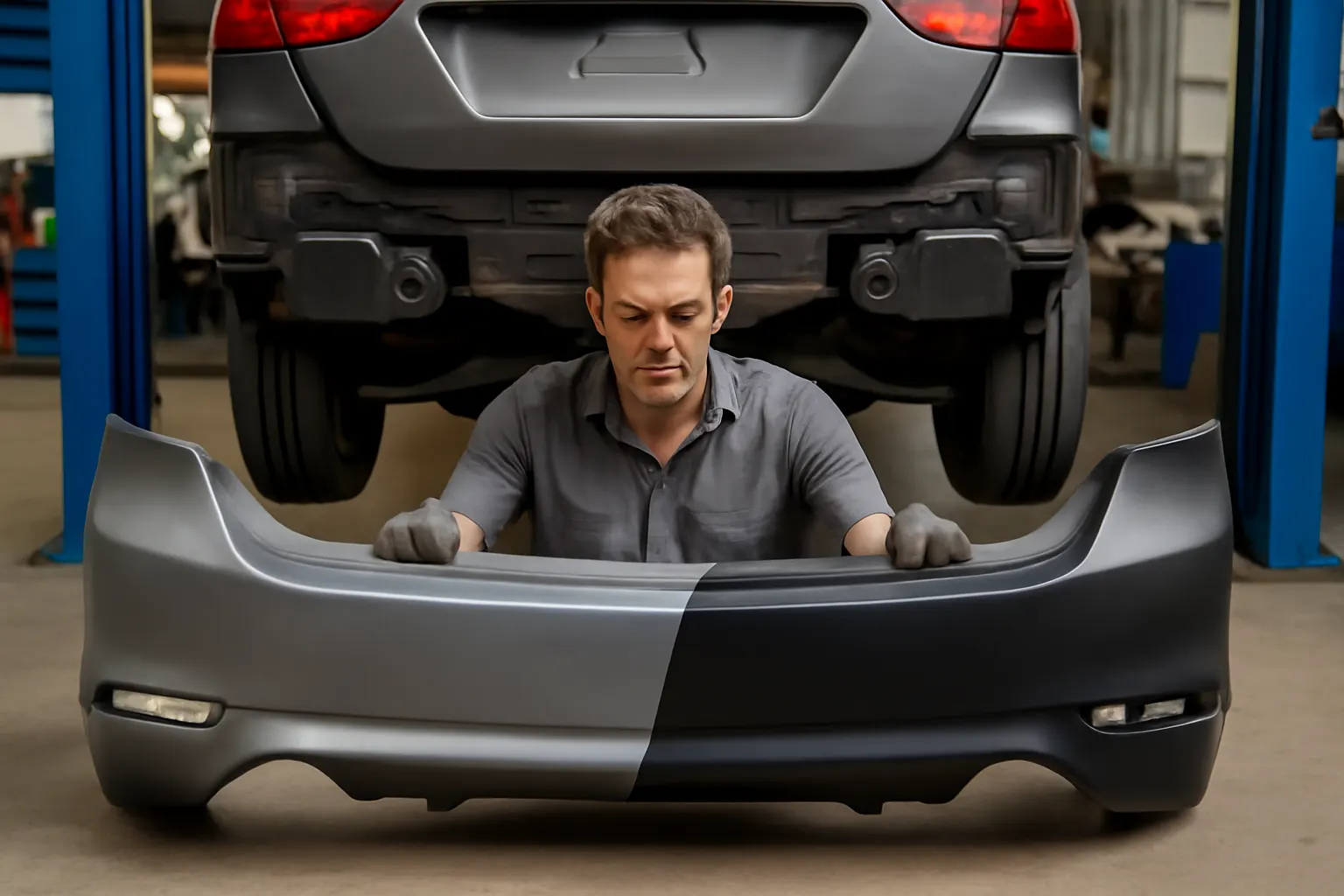
Choosing OEM vs Aftermarket Bumper Assemblies
When it comes to replacing your vehicle’s rear bumper assembly, the decision between OEM (Original Equipment Manufacturer) and aftermarket parts is critical. The right choice can affect your car’s safety, aesthetics, fitment, and long-term value. This AutoPartEx guide delivers an in-depth, technical comparison of OEM vs aftermarket rear bumper assemblies—covering fitment, materials, safety standards, warranty implications, and sourcing strategies. Whether you’re a professional installer, a shop manager, or a dedicated DIYer, this article provides the practical knowledge you need to make a confident, informed decision. For a comprehensive overview of all aspects of rear bumper assemblies, see our Rear Bumper Assembly (Includes Cover): Complete Technical Guide & Sourcing Strategies.
Immediate Answer: Should You Choose OEM or Aftermarket Rear Bumper Assemblies?
If you prioritize guaranteed fit, original material quality, and full manufacturer compatibility—especially for vehicles under warranty or with advanced safety features—OEM is the safer choice. OEM bumper assemblies are engineered to the exact specifications of your vehicle, ensuring proper alignment, sensor integration, and crash performance.
However, high-quality aftermarket bumper assemblies can offer substantial cost savings and, in some cases, upgraded material options. The best aftermarket options come from reputable brands that follow strict manufacturing standards and offer warranties. For older vehicles, or when budget is a primary concern, these can be a practical solution—as long as you verify fitment and material integrity.
The Hidden Problem: Not All Bumper Assemblies Are Created Equal
It’s tempting to base your decision solely on price or availability. But rear bumper assemblies are complex structural components, not mere cosmetic panels. Inferior bumper assemblies can lead to:
- Poor fitment, causing misalignment with body panels and trunk lids
- Compromised crash energy absorption
- Sensor or camera mounting issues (affecting parking assist or collision avoidance)
- Paint mismatch or premature corrosion
- Voided vehicle warranties or failed safety inspections
The problem is compounded by a crowded aftermarket, where quality varies drastically between suppliers. Without careful sourcing and technical scrutiny, you risk subpar safety and additional repair costs.
Technical Deep Dive: How Bumper Assemblies Differ
1. Materials and Construction
OEM rear bumper assemblies are manufactured with materials specified by the vehicle’s engineering team—often a blend of high-strength plastics (such as polypropylene or thermoplastic olefin), steel reinforcement bars, and energy-absorbing foams. These materials are chosen for their balance of impact performance, weight, corrosion resistance, and paint adhesion, as detailed by the U.S. Department of Energy’s Materials Technologies.
Aftermarket bumper assemblies may use similar materials, but the quality and formulation can vary. Some budget options cut corners with lower-grade plastics, thinner steel, or omit energy-absorbing structures. Others, especially premium aftermarket brands, match or even exceed OEM specs, sometimes offering lightweight composites or reinforced plastics for improved durability and fuel efficiency.
2. Fitment and Tolerances
OEM bumpers are made from original molds—fit is nearly always exact, with pre-drilled holes for fasteners, sensors, and trim. Aftermarket assemblies, especially those labeled “certified” or “CAPA-certified,” strive for close tolerances, but off-brand or generic parts may require modification, shimming, or even drilling to fit properly.
3. Paint and Surface Finish
The paintability and surface finish of bumper covers are critical for a seamless repair. OEM covers are primed and ready for color-matching. Aftermarket covers may have different primer formulations, affecting paint adhesion and longevity. Subpar surface prep can lead to peeling, bubbling, or mismatched gloss.
4. Safety and Crash Performance
Rear bumpers play a crucial role in absorbing impact energy and protecting trunk structure, fuel tanks, and rear sensors. The National Highway Traffic Safety Administration (NHTSA) sets minimum standards, but OEM parts are specifically validated for your vehicle’s crash profile. Some aftermarket bumpers are crash-tested, but many are not.
5. Sensor and Technology Integration
Modern vehicles often embed parking sensors, cameras, or radar modules in the rear bumper. OEM assemblies come with precise mounting points and shielding. Aftermarket options may lack exact placements or proper electromagnetic compatibility, leading to sensor errors or false alerts. Sensor Calibration After Bumper Replacement is a must for vehicles with advanced driver assistance systems (ADAS).
Key Differences: OEM vs Aftermarket Bumper Assemblies Table
| Feature | OEM Bumper Assembly | Aftermarket Bumper Assembly |
|---|---|---|
| Fitment | Guaranteed, exact | Varies; certified brands close, others may not |
| Material Quality | Vehicle-specific, validated | Ranges from OEM-grade to lower quality |
| Crash Performance | Tested for vehicle, meets all specs | May be tested (certified), often not |
| Sensor Integration | Designed for all OEM sensors | May require modification |
| Paint & Finish | Factory primer, smooth surface | Primer varies; surface may need prep |
| Warranty | OEM or vehicle warranty | Brand-specific, often limited |
| Cost | Higher | Lower to moderate |
| Availability | Dealer or OEM distributor | Broader, including online sources |
Assessing Your Needs: When OEM Is Essential
1. Late-Model or Leased Vehicles
For vehicles under factory warranty, or those leased with return conditions, OEM bumper assemblies are almost always required. Using aftermarket parts can impact warranty coverage or result in penalties at lease return.
2. Advanced Safety Systems
If your vehicle is equipped with rear sensors, cameras, or radar-based collision avoidance, OEM—or certified aftermarket assemblies with validated sensor compatibility—are strongly recommended. Improper sensor alignment can compromise both safety and convenience.
3. Insurance and Regulatory Requirements
Some insurance policies or local safety regulations specify OEM parts for repairs, especially after a collision. Check your policy and consult your repair facility.
When Aftermarket Bumper Assemblies Make Sense
1. Older Vehicles or Out-of-Warranty Repairs
For vehicles more than 5–7 years old, especially those with high mileage or diminished value, aftermarket assemblies can provide a cost-effective solution. Many reputable aftermarket brands offer solid fit and finish at a fraction of OEM prices.
2. Customization or Upgrades
Aftermarket bumpers may offer styling upgrades, integrated steps, or reinforced structures for towing or off-road use not available from the factory.
3. Availability and Lead Time
OEM parts may have long lead times or be discontinued for older models. Aftermarket options are widely available through online retailers and local distributors.
Diagnostic Considerations: Ensuring Proper Fit and Safety
Before purchasing any bumper assembly:
- Inspect the mounting points, bracket locations, and sensor/camera cutouts on your vehicle.
- Review the technical drawings or installation instructions for the replacement part.
- Check for CAPA or NSF certification for aftermarket options—these indicate independent testing for fit, material, and performance.
- For vehicles with ADAS, ensure the bumper is compatible and plan for sensor calibration after installation.
Installation and Fitment Checklist
Whether you’re a technician or a DIY installer, following a structured checklist ensures a successful bumper replacement:
Rear Bumper Assembly Installation Checklist
-
Verify Part Number and Compatibility
- Confirm the part number matches your vehicle’s make, model, and year.
- For aftermarket, check certification (CAPA, NSF, or equivalent).
-
Inspect the Assembly Before Installation
- Check for shipping damage, cracks, or missing mounting hardware.
- Compare mounting tabs, holes, and sensor/camera cutouts to the original.
-
Test Fit the Bumper
- Temporarily fit the bumper to the vehicle before painting or final assembly.
- Check for alignment with body panels, trunk, and taillights.
-
Prepare the Surface
- If painting, follow manufacturer’s primer and surface prep instructions.
- Clean with approved solvents to remove mold release agents.
-
Transfer Components
- Move all hardware, brackets, sensors, and trim from the old bumper.
- Ensure all wiring and connectors are properly routed.
-
Install and Torque Fasteners
- Use OEM torque specs for all bolts and clips.
- Avoid overtightening to prevent cracking plastic components.
-
Reconnect Sensors and Test
- Reconnect all electronics and verify operation before reassembling the trunk or rear trim.
- Perform ADAS calibration if required.
-
Final Inspection
- Check panel gaps, alignment, and paint finish.
- Test all lighting, sensors, and trunk operation.
For a step-by-step guide, see: How to Replace a Rear Bumper Assembly: Step-by-Step.
Material Science: Why Material Selection Matters
The U.S. Department of Energy highlights the importance of advanced materials in automotive body structures, focusing on reducing weight while maintaining crash performance and durability (Materials Technologies). OEM bumper assemblies use engineered plastics and metals tailored for each vehicle’s crash profile and aerodynamic requirements.
Aftermarket assemblies vary:
- Premium brands may use OEM-grade polypropylene or reinforced thermoplastics.
- Budget options may substitute lower-grade plastics, which can be more brittle and prone to cracking in cold weather or under impact.
- Reinforcement bars (behind the outer cover) are sometimes omitted or made of thinner steel in low-cost aftermarket assemblies, reducing crash protection.
Paint adhesion and corrosion resistance are also tied to material quality and surface preparation. OEM covers undergo rigorous testing for paint compatibility, while aftermarket covers may require additional prep or special primers.
Safety Standards and Certification
The NHTSA sets minimum safety requirements for replacement parts, but not all aftermarket products undergo the same validation as OEM components. Look for:
- CAPA Certification: Indicates the part has passed independent tests for fit, material, and performance.
- NSF Certification: Similar to CAPA, NSF International tests and certifies automotive parts.
- SAE Standards: Refer to SAE International’s standards for bumper design, materials, and testing procedures.
Uncertified aftermarket bumpers may not perform as required in a collision. Always request documentation from your parts supplier.
Warranty and Long-Term Considerations
OEM Assemblies
- Covered by vehicle or parts manufacturer warranty (duration varies).
- Installation by an authorized dealer may be required for full coverage.
Aftermarket Assemblies
- Warranties vary by manufacturer—read the fine print.
- Some cover only manufacturing defects, not paint or fitment issues.
- Insurance companies may offer limited coverage for aftermarket parts.
Keep all purchase and installation documentation for potential warranty or insurance claims.
Sourcing Strategies: How to Buy with Confidence
1. Work with Reputable Suppliers
Choose established dealers, trusted online retailers, or local distributors with transparent return policies. Avoid obscure brands with limited contact information.
2. Request Documentation
Ask for CAPA, NSF, or other certification details for any aftermarket assembly. Reputable sellers will provide these on request.
3. Cross-Reference Part Numbers
Use your vehicle’s VIN and OEM part number to cross-check compatibility. Many online catalogs and suppliers offer lookup tools.
4. Inspect Upon Arrival
Open shipments immediately and inspect for damage, missing parts, or discrepancies. Report issues before installation.
5. Plan for Paint and Prep
Coordinate with your body shop to confirm paint compatibility and prep requirements. Some aftermarket covers require additional sanding or priming.
Fuel Efficiency and Weight Considerations
Modern bumper assemblies contribute to overall vehicle weight and, by extension, fuel efficiency (DOE Fuel Efficiency). OEM engineers optimize bumper materials for minimal weight without sacrificing safety. Some aftermarket bumpers, especially steel or reinforced versions, may add weight—potentially reducing fuel economy. Lightweight composite aftermarket options, when validated, can offer a performance advantage for some applications.
Modern Crash Safety: The Rear Bumper’s Evolving Role
Rear bumper assemblies are now central to crash safety, not just cosmetic repair. They protect trunk structure, fuel tanks, and increasingly, embedded sensors and wiring. For more on the safety role of bumpers, see The Role of Rear Bumpers in Modern Crash Safety.
Cutting corners with inferior assemblies can compromise crash energy absorption, leading to more expensive secondary damage or injury risk. Always prioritize certified components for vehicles with high safety requirements.
Maintenance and Inspection Tips
- Inspect bumpers annually for cracks, loose trim, or corrosion—especially after minor impacts or parking lot bumps.
- Check sensor function regularly; false alerts or inoperative backup cameras may indicate improper bumper fit or damaged mounts.
- Repaint as needed to prevent corrosion of underlying metal reinforcement.
- Replace damaged energy absorbers or reinforcement bars—not just the outer cover—after any significant impact.
AutoPartEx Positioning: Your Source for Technical Guidance and Quality Parts
At AutoPartEx, we understand that the right rear bumper assembly is more than just a body panel—it’s a safety device, a structural component, and a reflection of your vehicle’s value. Our Rear Bumper Assembly (Includes Cover): Complete Technical Guide & Sourcing Strategies provides sourcing tips, technical specifications, and installation guidance for both OEM and high-quality aftermarket assemblies. We only recommend parts from suppliers who meet rigorous certification standards—so you can buy and install with confidence.
Expert Action: Making the Right Choice
For vehicles under warranty, with advanced safety tech, or where resale value is a concern, choose OEM or certified aftermarket assemblies. Always verify sensor compatibility and plan for calibration. For older or modified vehicles, reputable aftermarket options can offer value—provided you confirm certification, fitment, and material quality.
When in doubt, consult with an experienced body shop, review technical documentation, and don’t hesitate to reach out to AutoPartEx for sourcing and installation support. The right rear bumper assembly protects your investment, your safety, and your peace of mind.
