
Advertisement
Restoring AMC vehicles presents a unique challenge, especially when it comes to sourcing and installing brake shoes and pads. For restorers and enthusiasts, the scarcity of original AMC brake components and the risk of quality pitfalls require a focused, methodical approach. This guide delivers immediate, actionable strategies for AMC brake parts restoration—covering how to find, evaluate, and install components that meet safety and performance standards. For a deep dive into AMC brake fitment specifics and failure patterns, see our AMC Brake Shoes and Pads: Fitment, Failure Patterns, and Expert Sourcing page.
The Immediate Answer: Sourcing and Installing AMC Brake Parts
If you’re restoring an AMC classic, the fastest route to safe, reliable brakes is to:
- Identify the exact model, year, and brake configuration.
- Source parts from reputable suppliers specializing in AMC or vintage brake components.
- Prioritize new-old-stock (NOS) or high-quality reproduction brake shoes and pads.
- Cross-reference part numbers and fitment guides to ensure compatibility.
- Inspect all hardware and hydraulics for wear before installation.
- Test fit and measure all components before final assembly.
This approach minimizes downtime, ensures safety, and preserves the authenticity and value of your AMC restoration.
The Hidden Problem: Scarcity and Quality Pitfalls in AMC Brake Parts
What most AMC restorers quickly discover is that brake parts for these vehicles—especially for less common models or rare trim packages—are often no longer mass-produced. The market is flooded with generic or poorly made reproductions, and NOS parts are scarce, expensive, and sometimes degraded by age. Misfit components can compromise safety, violate federal equipment standards, and undermine the driving experience.
Why AMC Brake Parts Restoration Is Different
Unlike mainstream classics, AMC vehicles (from the American, Rebel, and Ambassador to the Javelin and AMX) use a mix of proprietary and sourced components. Over the years, AMC switched suppliers and designs, making it critical to match parts to specific build codes and production dates. This complexity is compounded by:
- Changes in brake shoe and pad dimensions across years and models.
- Uncommon hardware and backing plate designs.
- Variable use of drum and disc systems—even within the same model year.
Restorers must be vigilant to avoid mismatches that can lead to poor performance or safety issues. For a technical breakdown of AMC brake fitment, see our Amc Brake Fitment Guide.
Understanding AMC Brake System Evolution
To source the right parts, you must first understand how AMC brake systems evolved:
- Early 1960s: Most models used four-wheel drum brakes with riveted linings.
- Late 1960s–1970s: Front disc brakes became available, but with multiple caliper and rotor suppliers (Bendix, Kelsey-Hayes).
- 1970s–1980s: Ongoing changes in shoe width, pad material, and hardware; some models used hybrid systems during mid-year updates.
Each phase brought subtle but crucial differences in dimensions, mounting hardware, and friction material. Factory service manuals and period-correct parts catalogs are invaluable for decoding these details.
Identifying AMC Brake Shoe and Pad Fitment
Correct fitment starts with precise identification. Here’s a checklist for AMC brake part fitment:
Advertisement
AMC Brake Fitment Checklist
- Model and Year: Confirm VIN and production date.
- Axle/Brake Option: Identify drum or disc, shoe width, and pad type.
- Hardware Configuration: Inspect for unique springs, retainers, or adjusters.
- Backing Plate ID: Compare casting numbers and layout.
- Part Number Cross-Reference: Use AMC and aftermarket catalogs to match numbers.
- Test Fit: Dry-fit shoes/pads to drums/rotors before final install.
- Check for Interchangeability: Some Jeep or Ford parts may interchange—but always verify dimensions.
This process prevents costly mistakes and ensures both safety and originality.
Diagnosing AMC Brake System Failures
AMC brake systems are subject to age-related failures and unique wear patterns. Common issues include:
- Lining Separation: Old stock or low-quality shoes may delaminate.
- Uneven Wear: Caused by seized wheel cylinders, sticky calipers, or mismatched hardware.
- Glazing or Cracking: Inferior friction material or improper bedding-in.
- Noise and Vibration: Indicative of misfit pads/shoes or warped drums/rotors.
Before installing new components, thoroughly inspect the entire system—hydraulics, hardware, and friction surfaces. For in-depth brake troubleshooting, see our Brake Diagnosis Article.
Sourcing AMC Brake Shoes and Pads: NOS, Reproduction, or Modern?
When it comes to sourcing, you have three primary options:
1. New-Old-Stock (NOS)
- Pros: Factory-correct, matches original specs, maintains authenticity.
- Cons: May be degraded by age (hard linings, rusted metal), expensive.
2. High-Quality Reproduction
- Pros: Modern friction materials, new hardware, often improved performance.
- Cons: Quality varies; some lack correct dimensions or appearance.
3. Modern Aftermarket
- Pros: Readily available, cost-effective, improved materials.
- Cons: May require modification, often lack factory appearance.
Always prioritize suppliers with a reputation for accuracy and quality. Cross-reference with AMC part numbers and fitment guides. Beware of generic listings—many are incorrect or incomplete.
Evaluating Brake Material Quality and Safety
Brake shoes and pads are critical safety components. According to the National Highway Traffic Safety Administration, all replacement brake parts must meet federal safety standards for performance and durability. When evaluating AMC brake parts:
- Material: Seek out asbestos-free, high-friction composites for modern driving.
- Backing Plate Quality: Inspect for proper gauge steel and corrosion resistance.
- Riveting/Bonding: Ensure secure attachment of friction material; avoid delaminated or cracked linings.
- Certification: Look for parts tested to SAE or equivalent standards.
Never compromise on safety for the sake of originality. If in doubt, consult with a specialist or certified technician.
Installation Tips: AMC Brake Shoes and Pads
Proper installation is as important as sourcing the right parts. Here are field-proven tips for AMC brake installs:
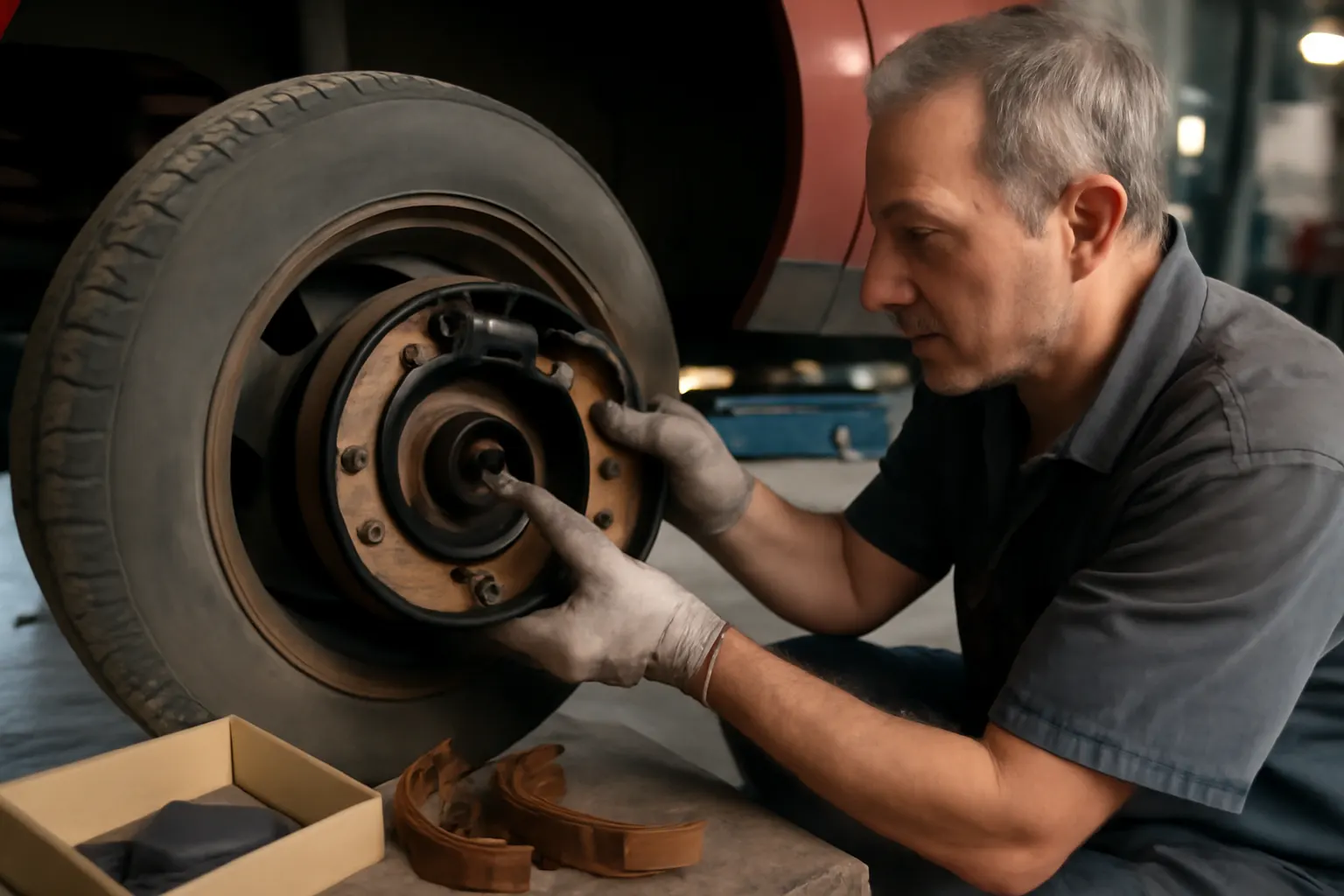
- Cleanliness: Thoroughly clean all mating surfaces—drums, rotors, backing plates.
- Lubrication: Apply high-temp brake grease to contact points (not friction surfaces).
- Hardware: Replace all springs, pins, and adjusting hardware with new or high-quality reproductions.
- Torque Specs: Use factory torque values for all fasteners.
- Adjustment: For drums, adjust shoes to light drag; for discs, ensure free movement and proper pad seating.
After installation, perform a careful bedding-in process to ensure optimal friction and longevity.
Addressing AMC Brake Hardware and Hydraulics
Brake shoes and pads are only as effective as the hardware and hydraulics behind them. AMC vehicles often used unique wheel cylinders, calipers, and master cylinders. When restoring:
- Inspect Wheel Cylinders/Calipers: Look for leaks, pitting, or seized pistons.
- Replace or Rebuild: Use quality rebuild kits or source NOS/reproduction units.
- Brake Lines: Inspect and replace any rusted or damaged lines; consider stainless upgrades for longevity.
- Proportioning Valves: Verify function if converting from drum to disc (see our Amc Drum To Disc Conversion guide).
Advertisement
Neglecting these components can lead to premature wear or dangerous brake failure.
Overcoming AMC Parts Scarcity: Strategies and Resources
Scarcity is the biggest challenge in AMC parts restoration. Here’s how seasoned restorers overcome it:
Sourcing Strategies
- Specialist Vendors: Seek out suppliers focused on AMC or orphan brands.
- Online Communities: Join AMC forums and social media groups for leads and advice.
- Swap Meets and Shows: Attend events for rare parts and networking.
- Cross-Referencing: Research potential interchange with Jeep, Ford, or Mopar components.
- Custom Fabrication: In extreme cases, have shoes relined or hardware reproduced by specialty shops.
Patience and persistence pay off—never settle for ill-fitting or questionable parts.
Quality Control: Testing and Validation
Before trusting your restored brakes on the road, perform rigorous testing:
- Visual Inspection: Check for correct fit, alignment, and hardware engagement.
- Manual Spin Test: Ensure wheels rotate freely without binding.
- Brake Pedal Feel: Firm, consistent pedal indicates proper hydraulic function.
- Road Test: Start with low-speed stops, gradually increasing speed and load.
- Follow-Up Inspection: After bedding-in, recheck all components for wear or looseness.
This process aligns with NHTSA equipment guidelines and ensures your AMC restoration meets modern safety expectations.
Maintenance Best Practices for AMC Brake Systems
Preserving your restored AMC brakes requires ongoing care:
- Regular Inspections: Check shoes, pads, and hardware every 12 months or 12,000 miles.
- Fluid Flush: Replace brake fluid every two years to prevent corrosion and maintain hydraulic integrity.
- Adjustment: Drum brakes may need periodic adjustment for optimal performance.
- Storage: For vehicles in long-term storage, periodically rotate wheels and check for sticking or corrosion.
Preventive maintenance extends the life of your restoration and keeps safety at the forefront.
Optimizing Performance: Materials, Weight, and Efficiency
Modern materials technology can enhance your AMC’s braking performance without sacrificing originality. According to the United States Department of Energy, advances in friction materials and component weight reduction translate to improved efficiency and handling. Consider:
- Upgraded Friction Materials: Modern composites offer better bite and fade resistance.
- Lightweight Hardware: Reduces unsprung weight, improving ride and stopping distance.
- Performance Linings: For spirited driving, performance linings can offer improved modulation and heat capacity.
Balance authenticity with safety and performance, especially if you plan to drive your AMC regularly.
AutoPartEx: Your Partner in AMC Brake Parts Restoration
At AutoPartEx, we specialize in supporting AMC restorers with expert fitment guidance, curated parts sourcing, and technical resources. Our in-depth AMC Brake Shoes and Pads: Fitment, Failure Patterns, and Expert Sourcing page is your starting point for part numbers, interchange data, and installation tips. Whether you’re chasing concours originality or building a daily driver, our editorial team and sourcing partners can help you avoid common pitfalls and achieve a safe, reliable restoration.
Taking the Next Step: Expert Action
Ready to restore your AMC’s braking performance? Start by gathering detailed model information and reviewing our Amc Brake Fitment Guide. Reach out to AMC-focused vendors, double-check all fitment and hardware details, and never compromise on quality or safety. If you encounter a rare or difficult-to-source part, consult with restoration forums or professional shops specializing in AMC vehicles.
For ongoing support, bookmark our AMC Brake Shoes and Pads: Fitment, Failure Patterns, and Expert Sourcing category page. There you’ll find the latest fitment updates, diagnostic tips, and sourcing solutions designed specifically for AMC enthusiasts.
References
Advertisement