
Advertisement
When it comes to restoring, maintaining, or upgrading classic AMC vehicles, understanding brake rotor material selection is essential for safety, performance, and authenticity. The material composition and venting patterns of AMC front brake rotors directly affect braking response, heat dissipation, rotor longevity, and even pedal feel. Whether you’re sourcing OEM replacements or considering performance upgrades, knowing the technical fundamentals behind AMC rotor materials gives you a decisive edge in diagnostics, fitment, and reliability.
If you’re seeking a comprehensive overview of AMC front brake rotors—including fitment, diagnostics, and sourcing—visit our AMC Front Brake Rotor: Fitment, Diagnostics, and Sourcing Guide for model-specific details. This article focuses specifically on the material science, engineering, and practical implications of AMC brake rotor materials and venting patterns, helping you make informed decisions for your classic AMC project.
The Immediate Answer: Why Rotor Material Matters for AMC Braking
The front brake rotors on AMC vehicles—ranging from the classic Javelin and AMX to the Gremlin and Eagle—were originally engineered with specific cast iron alloys. These materials were chosen for their balance of strength, heat capacity, manufacturability, and cost. Over time, aftermarket options have introduced a range of improved metallurgy and venting patterns, each with distinct effects on braking performance:
- Cast iron rotors (gray iron, typically SAE G3000): The OEM standard, prized for predictable friction and thermal properties.
- High-carbon cast iron: Offers improved heat dissipation and reduced risk of thermal cracking.
- Composite and lightweight alloys: Rare in AMC applications, but sometimes seen in custom or performance builds.
- Vented vs. solid rotors: Vented designs (with internal cooling vanes) are favored for better heat management, especially in heavier or performance-oriented AMC models.
Bottom line: Rotor material and venting pattern are not just technical trivia—they’re foundational to safe, effective, and long-lasting AMC brake performance.
The Hidden Problem: Outdated or Mismatched Rotor Materials in AMC Restorations
Many AMC owners and restorers face a hidden challenge: the risk of mismatched or subpar rotor materials entering the supply chain. With AMC’s original supplier base long gone and the proliferation of generic aftermarket rotors, it’s common to encounter:
- Inconsistent metallurgy: Some replacement rotors use lower-grade iron or untested alloys, compromising performance and safety.
- Incompatible venting patterns: Solid rotors substituted for vented originals (or vice versa), leading to overheating or poor pedal feel.
- Surface finish and hardness issues: Improper casting or finishing can cause premature wear, warping, or noise.
- Unverified fitment: Rotors intended for Jeep or other applications may be marketed as AMC-compatible without proper engineering validation.
This makes rotor material selection a critical—yet often overlooked—step in any AMC brake system project.
Technical Deep Dive: AMC Rotor Material Science and Engineering
1. Gray Cast Iron: The OEM Standard
AMC’s factory rotors were nearly always produced from gray cast iron, specifically in the SAE G3000 grade. Why?
- Thermal Conductivity: Gray iron’s graphite microstructure efficiently dissipates heat, critical for repeated stops.
- Friction Characteristics: The material’s surface structure and hardness offer consistent, predictable friction with standard brake pads.
- Machinability: Cast iron is easy to machine to tight tolerances, ensuring flatness and parallelism for optimal pad contact.
- Cost and Availability: At the time, cast iron was cost-effective and widely available, aligning with AMC’s value-driven engineering.
Drawback: Standard gray iron is susceptible to thermal cracking if severely overheated (e.g., repeated high-speed braking).
2. High-Carbon Cast Iron: Modern Aftermarket Upgrades
Some modern rotors marketed for AMC applications use high-carbon cast iron alloys. These offer:
- Enhanced Heat Resistance: Higher carbon content raises the material’s thermal capacity and reduces the risk of hot spots or cracking.
- Improved Noise Dampening: Carbon-rich alloys are less prone to “brake squeal.”
- Longer Rotor Life: Greater resistance to thermal cycling and wear.
Caveat: High-carbon rotors may be more expensive, and not all aftermarket “performance” rotors deliver genuine material improvements—always check manufacturer specifications.
3. Composite and Lightweight Rotors
While rare in AMC circles, some custom or racing builds experiment with:
Advertisement
- Composite rotors (iron hat, aluminum center): Reduce unsprung weight, but require careful engineering to avoid thermal expansion mismatches.
- Exotic materials (carbon-ceramic): Not period-correct, extremely costly, and generally unnecessary for street-driven AMCs.
4. Vented vs. Solid Rotor Construction
- Solid rotors: Single, thick disc; used on lighter or economy AMC models.
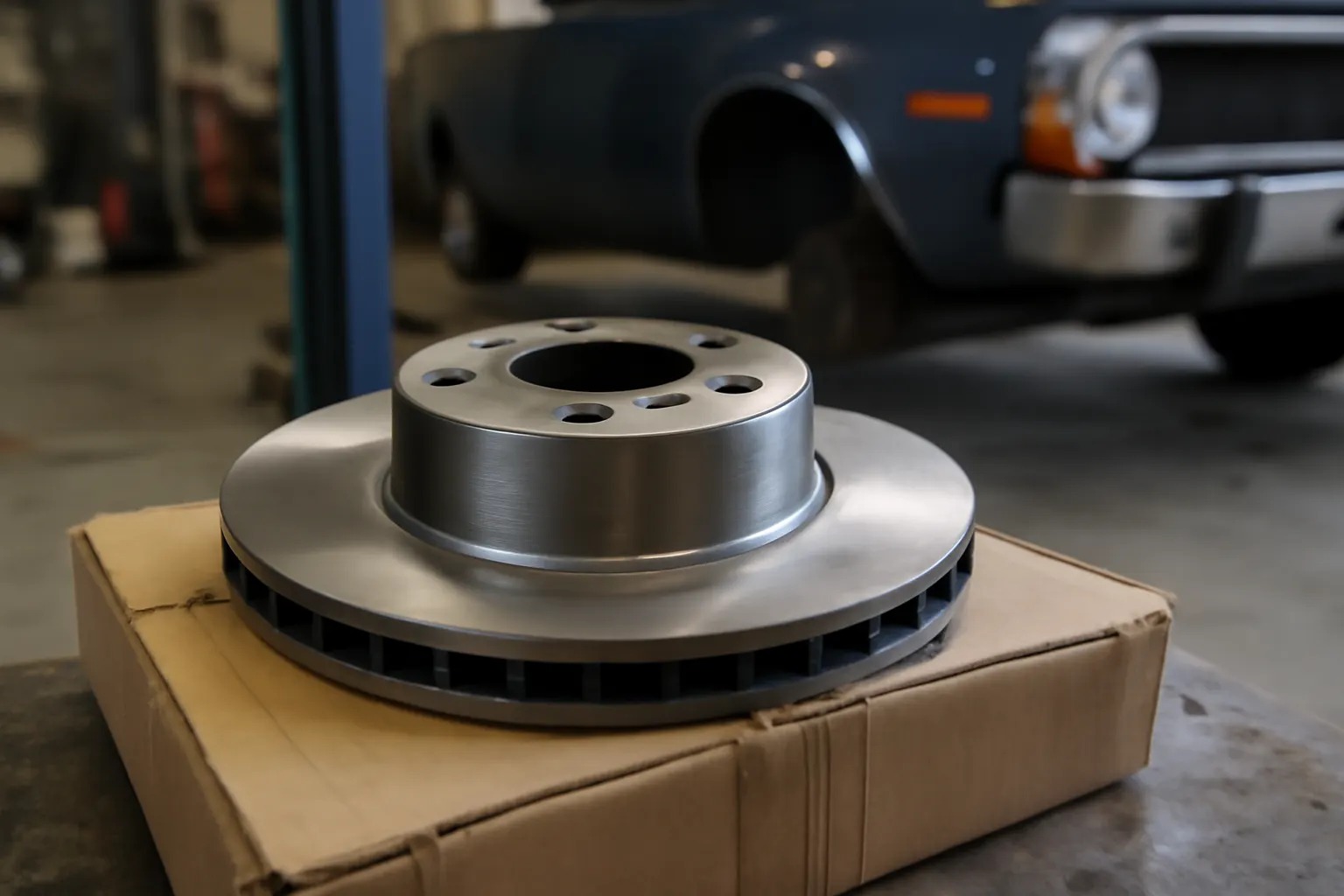
- Vented rotors: Two friction surfaces separated by internal vanes; standard on performance and heavier AMC vehicles.
Vented rotors dramatically improve cooling, reducing the risk of fade on repeated or high-load stops.
How Rotor Material and Venting Affect Braking Performance
Heat Dissipation and Fade Resistance
- Material Thermal Conductivity: Better heat management prevents brake fade and maintains pedal feel.
- Venting Patterns: Internal vanes act as air pumps, accelerating cooling and reducing surface temperatures.
Friction Stability
- Cast iron’s microstructure: Maintains a stable coefficient of friction over a wide temperature range, supporting consistent brake response.
- Surface hardness: Affects pad wear rate and resistance to scoring.
Durability and Service Life
- Resistance to Warping: High-quality iron and proper venting reduce the risk of rotor distortion under load.
- Crack Resistance: High-carbon and well-cast rotors are less likely to develop stress cracks.
Noise and Vibration
- Damping Properties: Cast iron’s natural vibration absorption helps minimize brake noise.
- Machining Quality: Poorly finished rotors can cause pulsation or “judder.”
Identifying Original vs. Aftermarket AMC Rotors
AMC’s original rotors have distinct casting marks, part numbers, and venting patterns. Here’s how to distinguish them:
Checklist: Spotting Genuine AMC Rotors
- Casting Numbers: Look for OEM part numbers or AMC logos cast into the rotor hat or edge.
- Vane Count and Shape: Original vented rotors have a specific number and shape of vanes; compare to factory service manual diagrams.
- Surface Finish: Factory rotors typically have a fine, even finish; rough or uneven surfaces may indicate aftermarket or remanufactured parts.
- Weight: Aftermarket rotors may be lighter (if using less material) or heavier (if using lower-grade iron).
- Fitment: Genuine rotors match hub and lug patterns exactly; minor differences can cause runout or mounting issues.
When in doubt, consult the AMC Front Brake Rotor: Fitment, Diagnostics, and Sourcing Guide for part number cross-references and visual identifiers.
Diagnosing Rotor Material Issues in AMC Vehicles
Rotor material problems often manifest as subtle or progressive symptoms. Watch for:
- Brake Fade: Pedal feels soft or braking power drops after repeated stops—often due to poor heat dissipation.
- Warping or Pulsation: Steering wheel shakes during braking, indicating rotor distortion (may be linked to subpar metallurgy).
- Cracking: Visual inspection reveals hairline or radial cracks, usually from thermal stress.
- Excessive Rust: Low-grade iron or poor surface coating is more prone to rapid corrosion.
- Unusual Noise: Squealing, grinding, or groaning can result from improper hardness or surface finish.
Diagnostic tip: If you experience any of these issues, inspect the rotor for casting marks, measure thickness, and check for visible defects before replacing.
Sourcing the Right AMC Brake Rotor Material
Navigating the modern parts market for AMC rotors requires vigilance:
What to Look For
- Material Specification: Seek rotors labeled as SAE G3000 or “high-carbon cast iron.”
- Venting Pattern: Match vented or solid designs to your original equipment.
- Supplier Reputation: Favor brands with clear technical data and positive reviews in the AMC community.
- Fitment Verification: Cross-check part numbers with AMC factory manuals and trusted sources.
Where to Buy
- Specialist AMC parts suppliers: Usually offer the best fitment and material accuracy.
- Reputable aftermarket brands: Some national brands offer period-correct rotors with improved metallurgy.
- Auto recyclers: For OEM rotors in restorable condition (rare, but possible for some models).
- Caution: Avoid generic “universal” rotors without detailed specs or application guides.
For a deeper dive into sourcing, see our Amc Front Brake Rotor Guides.
Installation Considerations: Material-Specific Tips
Proper installation is critical to maximizing the benefits of quality rotor materials:
Preparation
- Cleanliness: Remove all rust-inhibiting oils and debris from new rotors before installation.
- Check hub surfaces: Ensure hubs are clean and free of burrs to prevent runout.
- Measure rotor thickness: Confirm the new rotor meets or exceeds minimum thickness spec.
Advertisement
Torque and Bedding
- Proper torque: Use a calibrated torque wrench on lug nuts to avoid warping thin or lightweight rotors.
- Pad bedding: Follow manufacturer-recommended bedding procedures, especially for high-carbon or performance rotors.
Post-Installation Inspection
- Spin and check: After installation, spin the rotor by hand to check for drag or wobble.
- Test drive: Perform a series of gentle stops to verify smooth, consistent braking.
Maintenance: Maximizing Rotor Life in Classic AMC Models
Rotor material quality is only half the equation—maintenance practices are equally important for longevity:
Regular Inspection
- Visual checks: Inspect for cracks, scoring, or excessive rust every 6,000–12,000 miles.
- Thickness measurement: Use a micrometer to ensure rotors remain above minimum thickness.
Cleaning and Protection
- Avoid harsh chemicals: Use only approved brake cleaners; avoid acidic or abrasive products.
- Protect from moisture: Store spare rotors in a dry environment to prevent rust.
Pad Compatibility
- Match materials: Use brake pads compatible with your rotor material; avoid excessively abrasive pads on standard gray iron rotors.
When to Replace: Rotor Material Wear Limits
Knowing when to replace AMC brake rotors is key to safety and performance:
- Minimum Thickness: Stamped on the rotor hat or listed in the service manual; replace if below spec.
- Cracking: Any visible cracks, especially near vanes or edges, warrant immediate replacement.
- Blue Spots/Heat Checks: Indicate overheating; consider upgrading to high-carbon rotors if recurring.
- Severe Rust or Pitting: Deep rust compromises structural integrity—replace promptly.
Tip: Always replace rotors in pairs to maintain balanced braking.
Performance Upgrades: Should You Go Beyond OEM Materials?
For most AMC restorations and daily drivers, OEM-grade gray iron rotors offer ample performance. However, consider high-carbon or vented rotors if:
- You drive aggressively or in mountainous terrain.
- Your AMC is significantly heavier than stock (e.g., engine swaps).
- You participate in motorsports or spirited driving events.
Note: Exotic materials (e.g., carbon-ceramic) are not necessary for street use and may require custom caliper brackets or pads.
For a technical comparison, see our Amc Vs Jeep Brake Rotors.
Safety, Standards, and Recalls: What AMC Owners Need to Know
Rotor material quality is not just a matter of performance—it’s a critical safety issue. The National Highway Traffic Safety Administration (NHTSA) sets standards for brake system components, including rotors, to ensure minimum performance and durability. Substandard materials can lead to:
- Brake failure
- Increased stopping distances
- Premature wear or noise
Before purchasing, check for any recalls or safety advisories related to AMC brake components at the NHTSA Equipment Portal and NHTSA Recalls.
Troubleshooting Common AMC Brake Rotor Material Problems
If you’re experiencing persistent brake issues in your AMC, consider the following troubleshooting steps:
| Symptom | Likely Material Cause | Recommended Action |
|---|---|---|
| Brake fade | Low-grade iron, poor venting | Upgrade to high-carbon/vented rotor |
| Pulsation/judder | Warped rotor, uneven hardness | Replace with quality cast iron |
| Noise/squeal | Inconsistent surface, hard spots | Machine or replace rotor |
| Cracking | Inferior metallurgy, overheating | Replace with high-carbon rotor |
| Rapid rust | Low-alloy iron, poor coating | Use coated or higher-grade rotor |
AMC Brake Rotor Material Selection Checklist
Before purchasing or installing AMC front brake rotors, use this checklist to ensure optimal material and fitment:
- Confirm correct application (model, year, engine, trim).
- Verify rotor material (SAE G3000 or high-carbon cast iron).
- Match venting pattern (solid or vented) to original equipment.
- Check supplier reputation and technical data.
- Inspect for OEM casting numbers if authenticity is required.
- Measure new rotor thickness and compare to specs.
- Ensure pad compatibility with chosen rotor material.
- Review NHTSA database for recalls or safety advisories.
AutoPartEx: Your Partner for AMC Brake Rotor Expertise
At AutoPartEx, we understand the unique challenges of sourcing, restoring, and upgrading AMC braking systems. Our technical editorial team rigorously reviews material standards, fitment data, and supplier quality to support your classic AMC project—whether you’re chasing concours originality or modern performance. For further guidance on installation, diagnostics, and model-specific sourcing, explore our AMC Front Brake Rotor: Fitment, Diagnostics, and Sourcing Guide and Amc Front Brake Rotor Installation resources.
References
Advertisement